
Handwriting for Preschoolers: Where to Start
Get 30 days of free worksheet downloads
Key Takeaways
- Handwriting readiness is about fine motor strength and hand-eye coordination before pencil skills - pushing too early can backfire.
- Teach uppercase letters before lowercase because they are all the same height and start from the top, making formation more consistent.
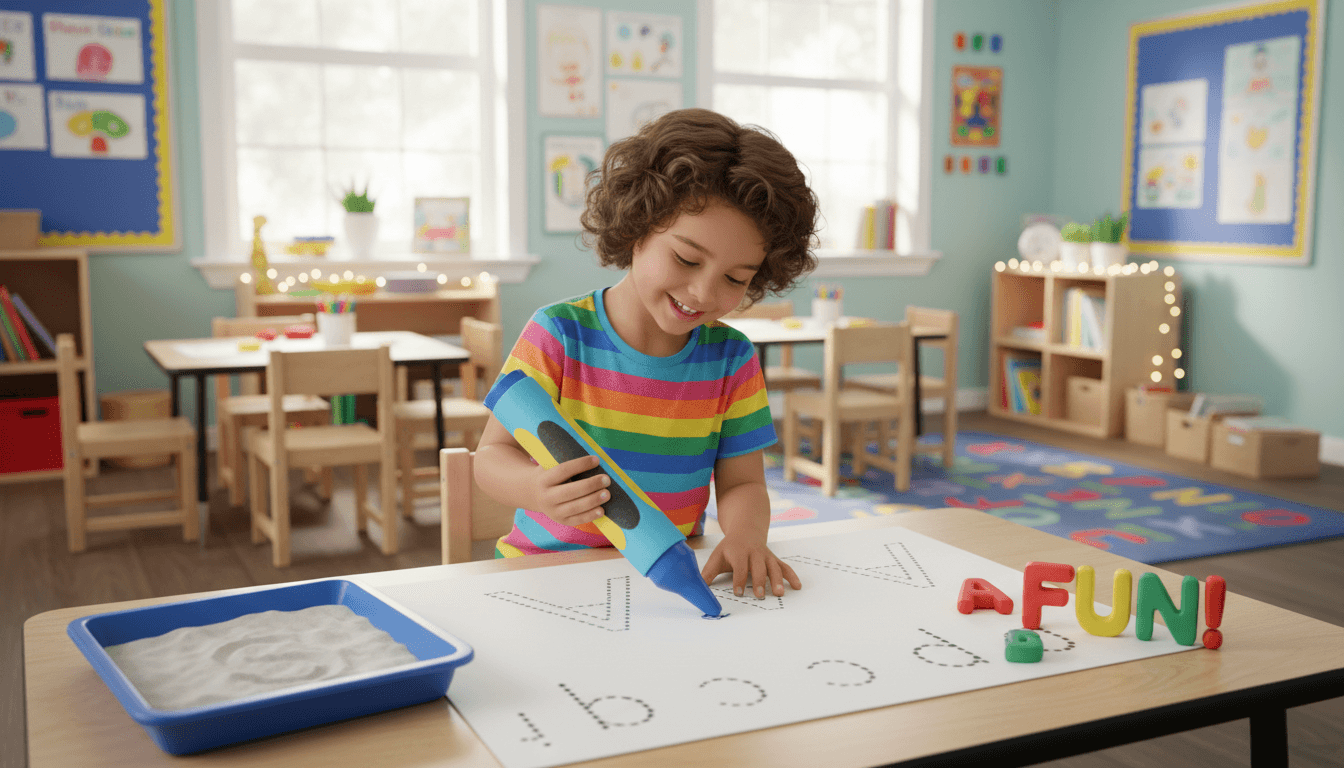
- Letter formation should progress from large movements (sand tracing, sidewalk painting) down to small movements (worksheets, lined paper).
- Teach straight-line letters first (L, T, I, H, E, F), then curved letters, then combination and diagonal letters - not alphabetical order.
- Preschool handwriting practice should be kept to 5-10 minutes maximum to prevent frustration and avoid negative associations with writing.

Let's talk about something that worries a lot of preschool parents: handwriting. Your little one is 3 or 4 years old, and you're wondering when they should start writing letters. Maybe you've seen other kids their age tracing their name, and you're feeling a bit behind.
Take a deep breath. Here's what we know: handwriting readiness is about so much more than holding a pencil. And pushing too early can actually backfire.
Is Your Child Ready?
Before any letter tracing, look for these signs of readiness:
- They can hold a crayon with a pincer grip (not a fist)
- They can draw basic shapes (circles, lines, crosses)
- They show interest in letters and writing
- They can sit and focus for 5-10 minutes
If your child is there, great. If not, that's completely fine. Focus on the pre-writing skills below and the letters will come naturally.
Free Letter Tracing Worksheets


Free Handwriting Worksheets


Pre-Writing Skills Come First
Think of handwriting as the top of a pyramid. The base is made up of skills that have nothing to do with pencils:
Fine motor strength. Little hands need strength before they need precision.
That said, flexibility is key. If something isn't working, try the next idea on the list.
- Play with playdough (squeezing, rolling, pinching)
- Use clothespins to pick up small objects
- String beads on a pipe cleaner
- Tear paper into small pieces (kids love this one)
Hand-eye coordination. The hand needs to go where the eyes are looking.
- Puzzles
- Stacking blocks
- Pouring water between cups
- Catching and throwing soft balls
Pencil grip development. This is its own progression:
- Fist grip (age 1-2)
- Palmer grip (age 2-3)
- Modified tripod grip (age 3-4)
- Mature tripod grip (age 4-5)
Don't correct the grip too aggressively. If your child can draw a recognizable circle, their grip is probably fine for their age.
When to Introduce Letters
Most children are ready to start learning letter formation between ages 4 and 5. But "learning letters" doesn't mean "writing letters on lined paper."
Here's a better progression:
Start Big
- Trace letters in sand or salt trays
- Paint letters with water on the sidewalk
- Form letters with playdough snakes
- Draw letters in shaving cream on a table
Big movements come before small movements. Let those arms and shoulders do the work first.
Then Go Medium
- Finger paint letters on large paper
- Use chunky markers on unlined paper
- Trace giant letters (at least 3 inches tall)
- Practice on whiteboards with dry-erase markers
Then Go Small
- Trace letters on worksheets
- Write letters in workbooks
- Practice on lined paper
- Write their name independently
Which Letters to Teach First
Not alphabetical order. That's the biggest misconception.
Teach in this order based on difficulty of formation:
- Straight line letters first: L, T, I, H, E, F
- Curved letters next: C, O, S, U
- Combination letters: B, D, P, R, G
- Diagonal letters last: K, V, W, X, Y, Z
And always start with uppercase letters. They're easier to form than lowercase because they all start from the same position (top) and they're all the same height.
The Name Trick
Here's something that works beautifully: teach your child to write their own name first, even before learning the whole alphabet.
Why? Few reasons:
- It's meaningful to them (that's MY name!)
- It gives them a sense of pride and ownership
- They'll practice it constantly (signing artwork, labeling their cubby)
- It teaches several letters in a personally motivating context
Just make sure they learn the correct letter formation from the start. Bad habits formed with a beloved name are hard to unlearn.
How Long Should Practice Be?
For preschoolers, keep it short:
- 3-4 year olds: 5 minutes max
- 4-5 year olds: 5-10 minutes
- Never more than one page of tracing in a sitting
Forced writing leads to frustration, poor grip, and (worst case) kids who say "I hate writing" before they even start kindergarten. That's the opposite of what we want.
Signs of Trouble
Talk to your pediatrician or occupational therapist if:
- Your child avoids all fine motor activities
- They can't hold a crayon by age 3
- They show consistent hand dominance switching after age 5
- Letters are persistently reversed after age 6 (note: reversal is normal before 6)
Early intervention for fine motor delays makes a huge difference. Don't wait and wonder.
Keep Reading
- How to Improve Kids' Handwriting: Tips for Every Age
- How to Teach Handwriting to Kindergartners
- Letter Formation for Kindergarten: Tips for Clean Confident Writing
Your Starting Point
If your preschooler hasn't started writing yet, don't start with worksheets. Start with playdough. Start with sand tracing. Start with big, messy, fun activities that build the muscles and coordination they'll need.
Then, when those little hands are ready, try our pre-K tracing worksheets for gentle, structured practice. Dotted letters, plenty of space, and a progression that respects where your child actually is.
Every child's handwriting journey starts differently. And that's exactly how it should be. 😊

Adi Ackerman
Head Teacher
Adi is the Head Teacher at ClassWeekly, with years of experience teaching elementary students. She designs our curriculum-aligned worksheets and writes practical guides for teachers and parents.
Keep Reading
Ready to download? Try ClassWeekly free for 30 days.
Unlimited worksheets for PreK through 5th grade. Cancel anytime.