What Is Turn and Talk?
Taught in US schools
Key Takeaways
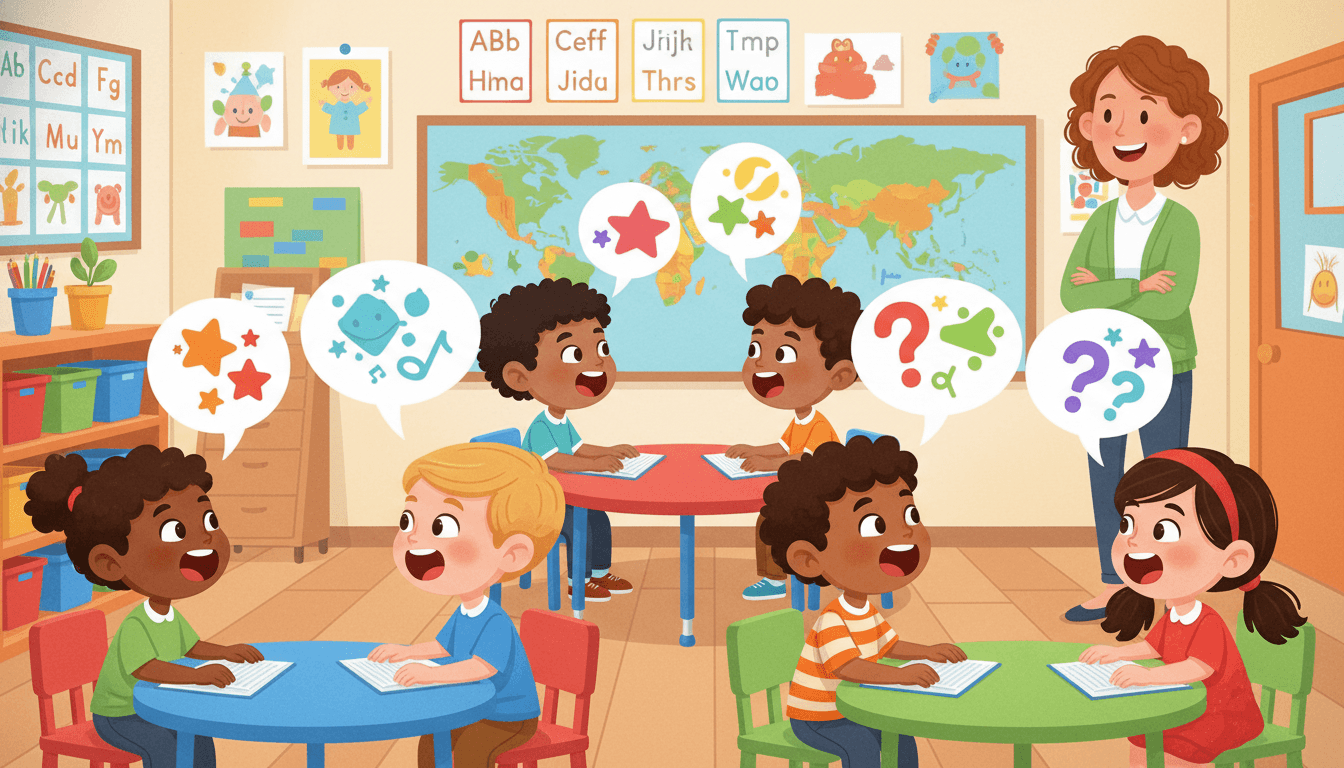
- Turn and Talk is a discussion strategy where students briefly talk with a partner about a prompt or question before sharing with the whole class.
- The key benefit is that ALL students practice oral language simultaneously - not just the few who raise their hands.
- Best practices include providing a sentence stem, pre-assigning partners, setting a 1-2 minute timer, and having partners share their discussion with the class afterward.
What Is Turn and Talk?
Turn and Talk (also called Think-Pair-Share) is a simple but powerful discussion strategy used in classrooms from kindergarten through graduate school. Instead of asking a question and calling on one student to answer, the teacher poses a question and gives every student a brief opportunity to discuss it with a nearby partner before sharing with the class.
The strategy was formalized by educator Frank Lyman in 1981 as Think-Pair-Share and has become one of the most widely used engagement techniques in K–12 education.
The Problem Turn and Talk Solves
In a traditional question-and-answer format, the teacher asks a question and 3-5 students raise their hands. One student answers. The rest of the class has been passive.
Turn and Talk transforms this dynamic:
-
Every student practices oral language at the same time.
-
Quieter students get a lower-stakes opportunity to express ideas before sharing publicly.
-
All students must think actively rather than waiting for someone else to answer.
-
Teachers can circulate and listen to many conversations at once, informally assessing understanding.
The Three Steps
Step 1: Think (Individual)
The teacher poses a prompt and gives students 30–60 seconds of silent think time. Students formulate their thinking before talking. Skipping this step often leads to one partner doing all the talking.
Step 2: Pair (Partner Discussion)
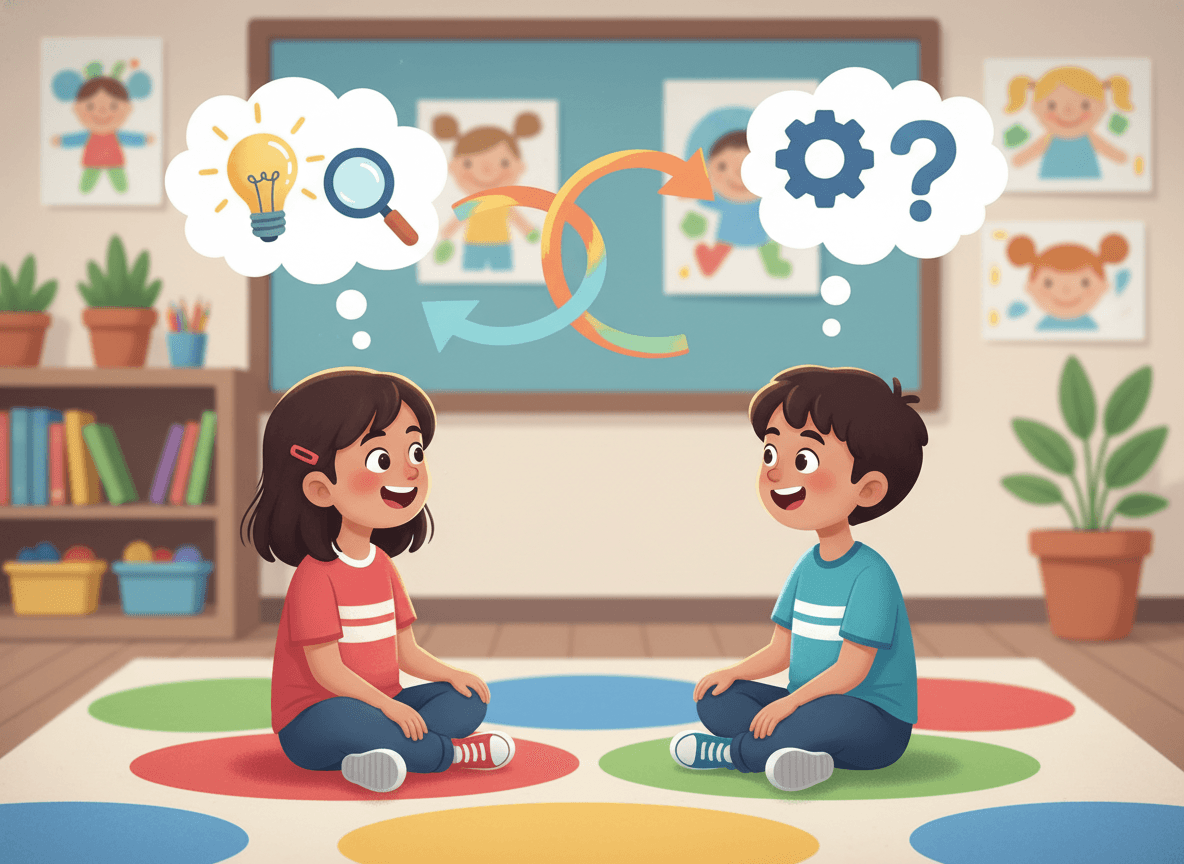
Students turn to their pre-assigned partner and discuss the prompt for 1–2 minutes. Both partners share their ideas. A sentence stem helps structure the conversation.
Sentence stem examples:
- "I think ___ because..."
- "My partner thinks ___ and I agree/disagree because..."
- "The evidence that supports my idea is..."
Step 3: Share (Whole Class)
The teacher calls on a few partnerships to share what they discussed. The phrasing "What did you and your partner talk about?" reduces pressure and values the collaborative nature of the activity.
Best Practices for Turn and Talk
Pre-assign partners: Avoids wasted time and social dynamics disrupting the activity
Provide a sentence stem: Structures oral language, especially for ELLs and shy students
Set a timer: Creates urgency and keeps discussions focused
Use a clear stop signal: A bell, clap pattern, or countdown ends conversations efficiently
Call on partners to share: Creates accountability and values the partner discussion
Vary the prompt level: Use Bloom's Taxonomy to ask recall, comprehension, and analysis questions
When to Use Turn and Talk
Turn and Talk works in almost any subject and at almost any point in a lesson:
-
Before reading or a new lesson - activate prior knowledge
-
During a read-aloud - pause and discuss a prediction or character motivation
-
After a direct instruction segment - process new information with a partner
-
During problem-solving - discuss strategy choices before solving
-
At the end of a lesson - summarize learning for a partner
Turn and Talk vs. Other Discussion Strategies
Turn and Talk: 1-2 minute partner chat - Quick processing, all grades
Socratic Seminar: Extended whole-class discussion - Text-based deep analysis, Grades 4-5
Literature Circles: Small group structured discussion - Book clubs, Grades 2-5
Debate: Structured opposing arguments - Opinion writing, Grades 3-5
Practice Activities
- Practice the Turn and Talk routine during a low-stakes activity (e.g., "Tell your partner your favorite season and why") so students learn the procedure before using it for academic content.
- Record students during a Turn and Talk with a tablet; watch the recording together to notice: who talked? Who listened? Did partners build on each other's ideas?
- Assign sentence-stem cards to each student to use during every Turn and Talk for a week - notice how the quality of language changes.
- Use Turn and Talk as a math strategy: "Before you solve, turn and tell your partner what strategy you'll use."
- Combine with exit tickets: after a Turn and Talk, each student independently writes their response on an exit ticket - comparing the oral and written responses reveals a lot about language skills.
Frequently Asked Questions
What is the difference between Turn and Talk and Think-Pair-Share?
They are essentially the same strategy with different names. Think-Pair-Share (TPS), developed by Frank Lyman in 1981, has three explicit steps: Think (students think individually), Pair (discuss with a partner), Share (report out to the class). Turn and Talk is a common informal name for the same pattern, sometimes skipping the explicit individual think time. Both ensure every student participates.
What is accountable talk?
Accountable talk is a framework for academic discussion that holds students accountable for using evidence, staying on topic, and building on each other's ideas. Turn and Talk promotes accountable talk by giving all students practice articulating their thinking. Sentence stems like 'I agree with ___ because...' or 'Another way to think about this is...' help students engage in accountable talk during partner discussions.
How do you manage Turn and Talk so it doesn't become off-topic chatter?
Effective Turn and Talk requires structure: (1) Assign partners in advance - random partner selection mid-lesson wastes time. (2) Give a specific, focused prompt - not 'talk about the story' but 'tell your partner what you think the character should do next and why.' (3) Set a timer (1-2 minutes) so students know the boundary. (4) Use a clear signal to stop (a bell, clap, or countdown). (5) Call on a few partners to share - this incentivizes on-task discussion.
Free Turn and Talk Worksheets
Curriculum-aligned printable worksheets for Kindergarten – 5th Grade. Download free.