
Animal Crafts for Kids: Easy Projects That Teach Science
Get 30 days of free worksheet downloads
Key Takeaways
- Paper plate crafts are a low-cost, versatile base for animal projects that work for dozens of species and connect directly to science concepts like animal classification and habitats.
- Making the science connection explicit during crafting - naming animal groups, asking comparison questions, and using vocabulary like mammal or amphibian - turns art time into genuine science learning.
- Handprint and footprint animal art doubles as a keepsake and a science activity, encouraging kids to study real animals closely before recreating them.
- Recycled materials like toilet paper rolls and egg cartons teach environmental awareness alongside science, and can be sorted into animal groups to practice classification.
- Adding a fact card or label after each craft transforms it from decoration into a science exhibit, bridging hands-on making with scientific communication.
Crafts and science don't always seem like natural partners. But for preschoolers and kindergartners, making something with their hands is often the best way to learn about the world.
When a 4-year-old builds a paper plate lion, they're not just cutting and gluing. They're thinking about what a lion looks like, what makes it different from other animals, and where its mane goes. That's observation. That's classification. That's science, just with more glitter.
The projects below are simple enough for young kids to complete with minimal help, but each one has a built-in science connection you can highlight during or after the craft.
Why Crafts and Science Go Together
Young children learn through doing. You can tell a preschooler that a frog has long back legs for jumping, or you can have them build a frog and figure out where the long legs go. The second approach creates a memory that lasts.
Crafts also give kids a reason to look closely at animals. When they need to recreate a butterfly's wings or a penguin's body, they study the real thing with more attention than they would during a read-aloud. They notice details: "Wait, does an owl have ears? Those tufts look like ears!"
And honestly? Some of our kiddos who struggle with sitting and listening are absolute stars during craft time. It's a different kind of engagement, and it's just as valuable.
The key is making the science connection explicit. Don't just make the craft. Talk about the animal while you make it. Ask questions. Compare. Wonder out loud.
Free Kindergarten Animal Worksheets


Paper Plate Animal Crafts
Paper plates are the backbone of preschool crafting. They're cheap, sturdy, and the circular shape works as a face or body for dozens of animals.
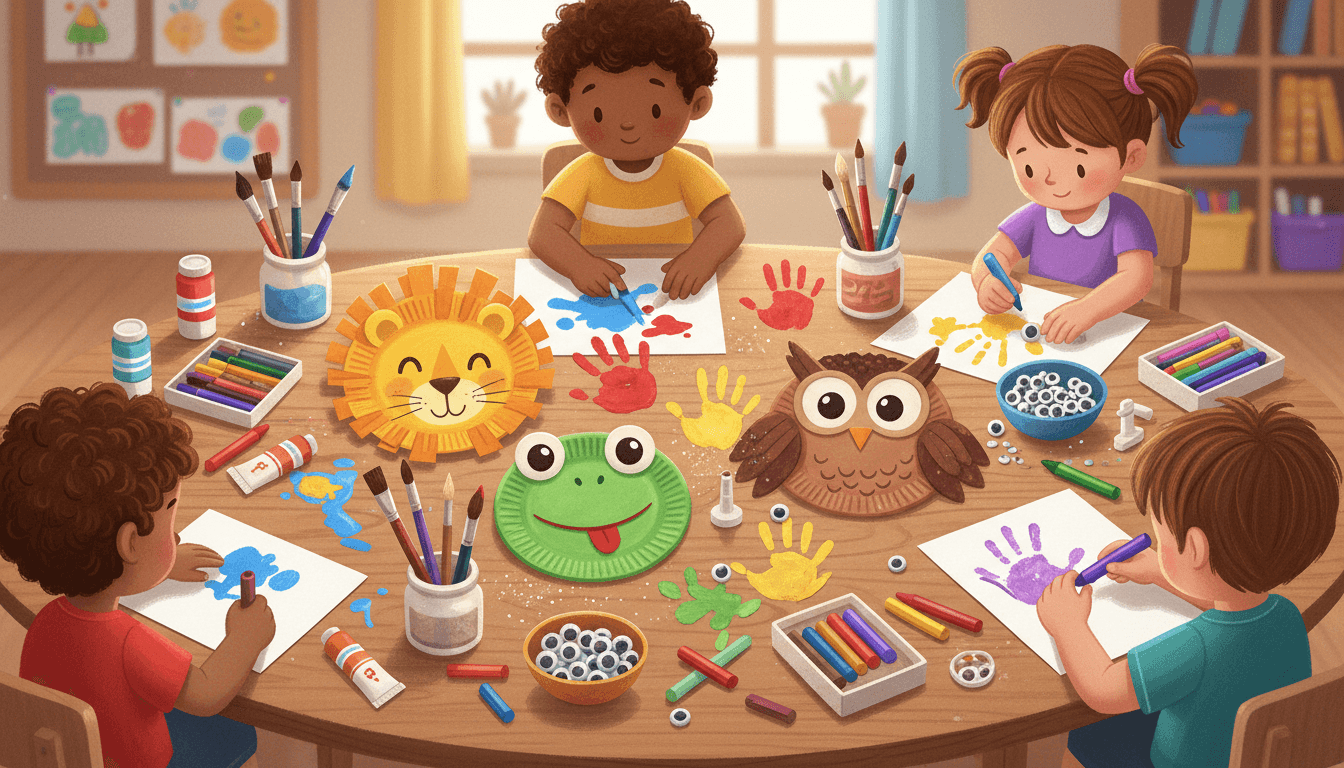
Paper Plate Lion. Paint the plate yellow or orange. Cut strips of yellow, orange, and brown construction paper for the mane and glue them around the edge. Add eyes, a nose, and a mouth. Science connection: Lions are mammals. Their mane is unique. Only male lions have manes. Ask: "Why do you think male lions have manes but female lions don't?"
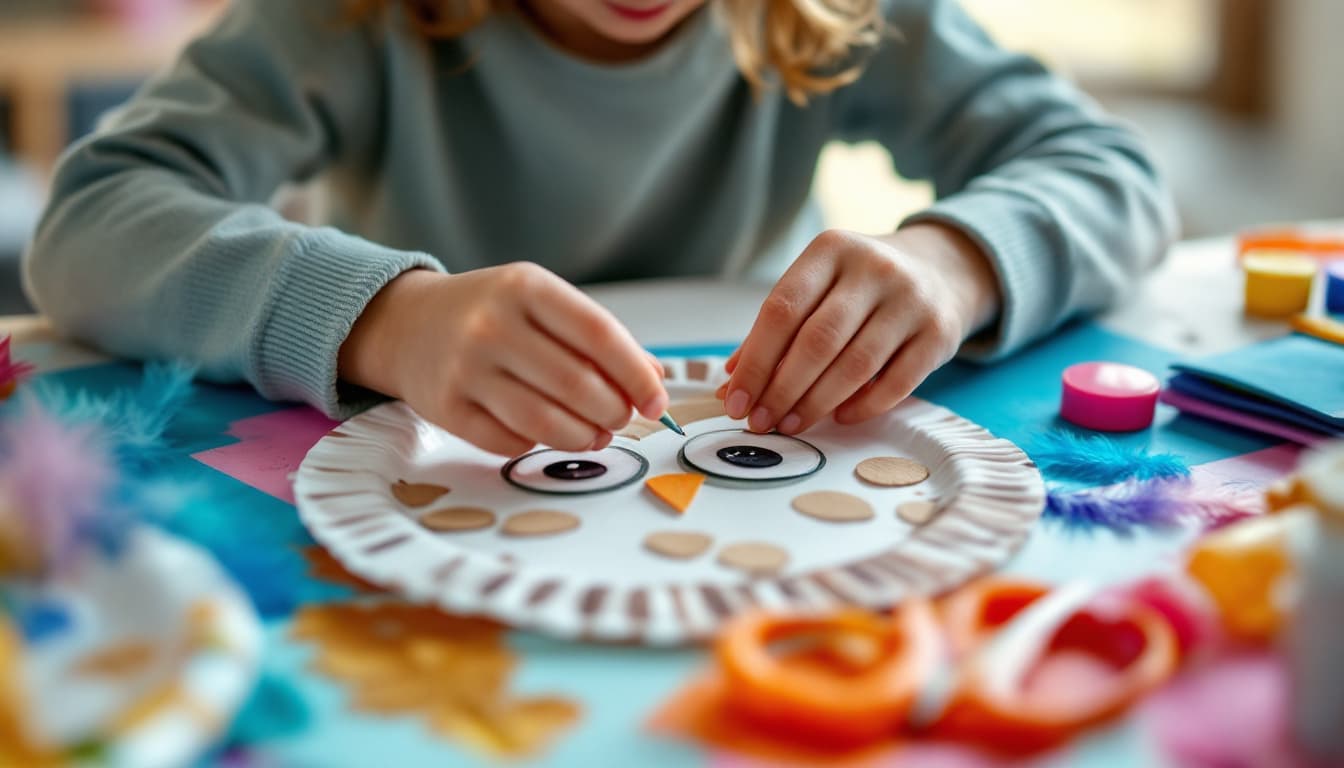
Paper Plate Owl. Use a brown plate (or paint one brown). Cut wing shapes from brown paper and glue on each side. Add two big circles for eyes (owls have enormous eyes relative to their head). Cut a small triangle beak. Science connection: Owls are nocturnal. Their big eyes help them see in the dark. Ask: "What other animals are awake at night?"
Paper Plate Frog. Fold a green plate in half. Add googly eyes on top and a red paper tongue that unfolds from inside. Science connection: Frogs catch insects with their sticky tongues. They're amphibians. Ask: "What's the difference between a frog and a toad?" (Most kids think they're the same thing.)
Paper Plate Fish. Cut a triangle out of the plate for the mouth. Glue the triangle piece to the back as a tail. Decorate with scales (small pieces of colored paper or even stickers). Science connection: Fish breathe through gills, not lungs. Where would the gills go on your fish?
Quick tip: Keep a few animal reference photos on the table while kids work. Encourage them to look at the photo while building. "Does your owl look like this one? What's missing?" This simple practice builds observation skills.
Handprint and Footprint Animals
There's something about handprint art that families keep forever. These projects double as keepsakes and science activities.
Handprint Peacock. Paint the child's hand (fingers spread) in bright colors and press it onto paper. The fingers become the tail feathers. Add a small body and head in front. Science connection: Male peacocks use their tail feathers to attract mates. The more colorful, the better. Ask: "Why do you think the males are more colorful than the females?"
Handprint Butterfly. Two handprints, side by side (fingertips pointing outward), become the wings. Add a body down the center with pipe cleaners for antennae. Science connection: Butterflies start as caterpillars. Talk about metamorphosis: egg, caterpillar, chrysalis, butterfly. This is a life cycle, one of the big science concepts for this age group.
Footprint Penguin. Paint the bottom of the child's foot black and press it on white paper. The heel becomes the penguin's head, the foot is the body. Add eyes, a beak, and orange feet. Science connection: Penguins can't fly, but they're excellent swimmers. Their wings work like flippers. Ask: "Why would a bird not need to fly?"
Handprint Octopus. Use two handprints overlapping (thumbs together) for eight "tentacles." Add a head above and eyes. Science connection: Octopuses have three hearts, blue blood, and eight arms. They're invertebrates (no bones). That's a lot of science packed into one handprint.
Recycled Materials Animal Projects
Using recycled materials teaches two things at once: science and environmental awareness.
Toilet Paper Roll Animals. The tube becomes the body. Wrap it in construction paper, add ears, faces, and tails. Works for cats, dogs, owls, foxes, and more. Make a whole zoo from one week's worth of tubes. Science connection: Sort the finished animals into groups. Which ones are mammals? Which are birds? Which are pets vs. wild animals?
Egg Carton Caterpillar. Cut a row of cups from an egg carton. Paint them green (or rainbow). Add googly eyes to one end and pipe cleaner antennae. Science connection: This pairs perfectly with a butterfly life cycle unit. Make the caterpillar first, then the butterfly. Display them side by side.
Cardboard Box Habitat. Use a shoebox or small box. Paint the inside to look like a habitat (blue for ocean, green for forest, yellow for desert). Add a recycled-materials animal inside. Science connection: Every animal needs a habitat that provides food, water, and shelter. Ask: "What does your animal need to survive? Does your habitat have those things?"
Plastic Bottle Fish. Cut a plastic bottle in half (adult helps). Stuff the bottom half with crumpled tissue paper in bright colors. Cover the opening with plastic wrap. Add paper fins and googly eyes. Science connection: Talk about ocean pollution. "This fish is made from materials that don't belong in the ocean. What happens when real fish encounter plastic?"
Animal Habitat Dioramas
Dioramas sound fancy, but they can be incredibly simple for little kids.
What you need: A shoebox (or similar box), construction paper, glue, and a small toy animal or a paper animal they made.
Steps:
- Pick an animal and its habitat.
- Paint or cover the inside of the box to look like the habitat. Blue for ocean. Green with brown for forest. Sandy yellow for desert.
- Add details: cotton ball clouds, tissue paper water, pipe cleaner trees.
- Place the animal inside.
- Label it: "This is a [animal name]. It lives in the [habitat name]."
Habitats that work well for this age:
- Ocean (dolphins, fish, sea turtles)
- Forest (bears, deer, owls)
- Desert (lizards, camels, snakes)
- Arctic (penguins, polar bears, seals)
- Pond (frogs, ducks, turtles)
The labeling step at the end is the bridge between craft and science. It asks kids to think about what they made and communicate it. Even if the label is one sentence dictated to a teacher, it turns art into learning.
Connecting Crafts to Learning (Not Just Art Time)
Here's where many craft activities fall short. They're fun, they look great on the wall, but nobody talked about the science.
A few simple habits that change everything:
Name the animal group before you start. "Today we're making a frog. Frogs are amphibians. That means they live part of their life in water and part on land."
Ask one comparison question during the craft. "How is your owl different from the frog we made yesterday? What's the same?"
Add a fact card. After finishing the craft, each student writes (or dictates) one fact about their animal on an index card. Display the card next to the craft. Now it's a science exhibit, not just art.
Connect to vocabulary. Habitat, mammal, amphibian, nocturnal, camouflage, metamorphosis. These are big words that young kids can absolutely learn when they're connected to a hands-on experience. Don't shy away from real science vocabulary. Just explain it in simple terms and use it repeatedly.
Keep an "animal wall." As you complete crafts throughout the year, add them to one wall organized by animal group. By spring, you'll have a visual taxonomy that your students built themselves.
Keep Reading
- Fun Animal Facts for Kids: Learning About the Animal Kingdom
- Body Parts Activities for Kids: Fun Ways to Learn About the Human Body
- Fun Science Activities for Preschoolers That Build Curiosity
- Canva, Book Creator, and Design Tools for Elementary Projects
- Student Video and Audio Projects in Elementary
Books to Pair With Animal Craft Projects
Read one of these before (or after) craft time to deepen the connection.
- "Brown Bear, Brown Bear, What Do You See?" by Bill Martin Jr. (Perfect for the youngest learners. Animals, colors, and patterns.)
- "The Very Hungry Caterpillar" by Eric Carle (Pairs with the egg carton caterpillar and butterfly life cycle.)
- "Actual Size" by Steve Jenkins (Shows animals at their real size on the page. Kids are amazed by the life-size eyeball of a giant squid.)
- "Over in the Ocean" by Marianne Berkes (Counting book set in a coral reef. Pairs with ocean habitat dioramas.)
- "National Geographic Little Kids First Big Book of Animals" (A reference book kids can flip through for craft inspiration.)
Reading before crafting gives kids a visual reference and builds vocabulary. Reading after crafting reinforces what they learned while their hands were busy.
Animal crafts are one of those rare activities where science, art, vocabulary, and fine motor skills all come together in a single lesson. Our littles are cutting, gluing, and painting, but they're also observing, classifying, and asking questions.
And that messy, glitter-covered table? That's what learning looks like at this age 😊

Adi Ackerman
Head Teacher
Adi is the Head Teacher at ClassWeekly, with years of experience teaching elementary students. She designs our curriculum-aligned worksheets and writes practical guides for teachers and parents.
Keep Reading
Ready to download? Try ClassWeekly free for 30 days.
Unlimited worksheets for PreK through 5th grade. Cancel anytime.