
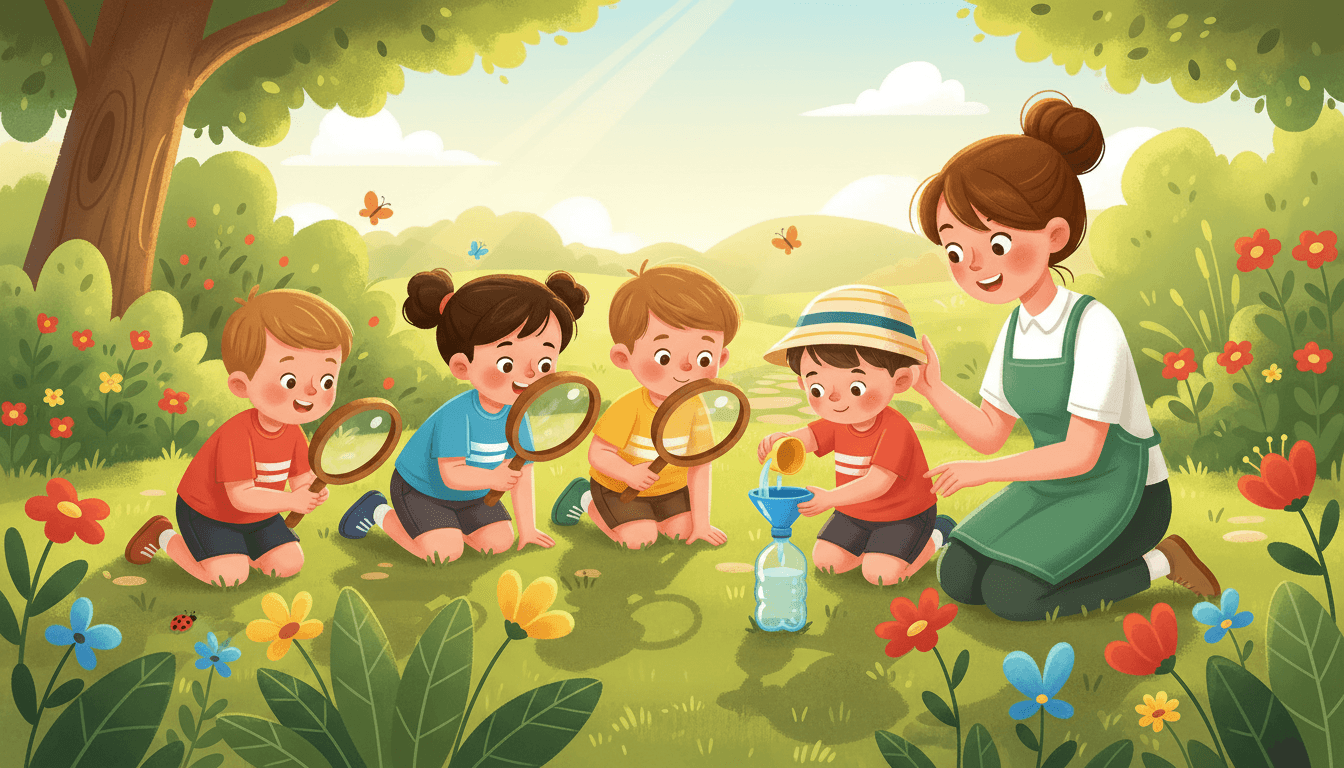
Fun Science Activities for Preschoolers That Build Curiosity
Get 30 days of free worksheet downloads
Key Takeaways
- Science in preschool is about building thinking skills like observing, comparing, and predicting, not memorizing facts.
- Water play is one of the best science materials for preschoolers because it is safe, endlessly engaging, and supports experiments like sink-or-float and color mixing.
- Wrong predictions are valuable learning moments: instead of correcting children, ask what happened and what they think now.
- The best preschool science materials are everyday items like kitchen supplies, nature objects, and recycled materials, with no special purchases required.
- Asking open-ended questions during play, such as what do you notice or what would happen if, transforms ordinary play into genuine scientific inquiry.
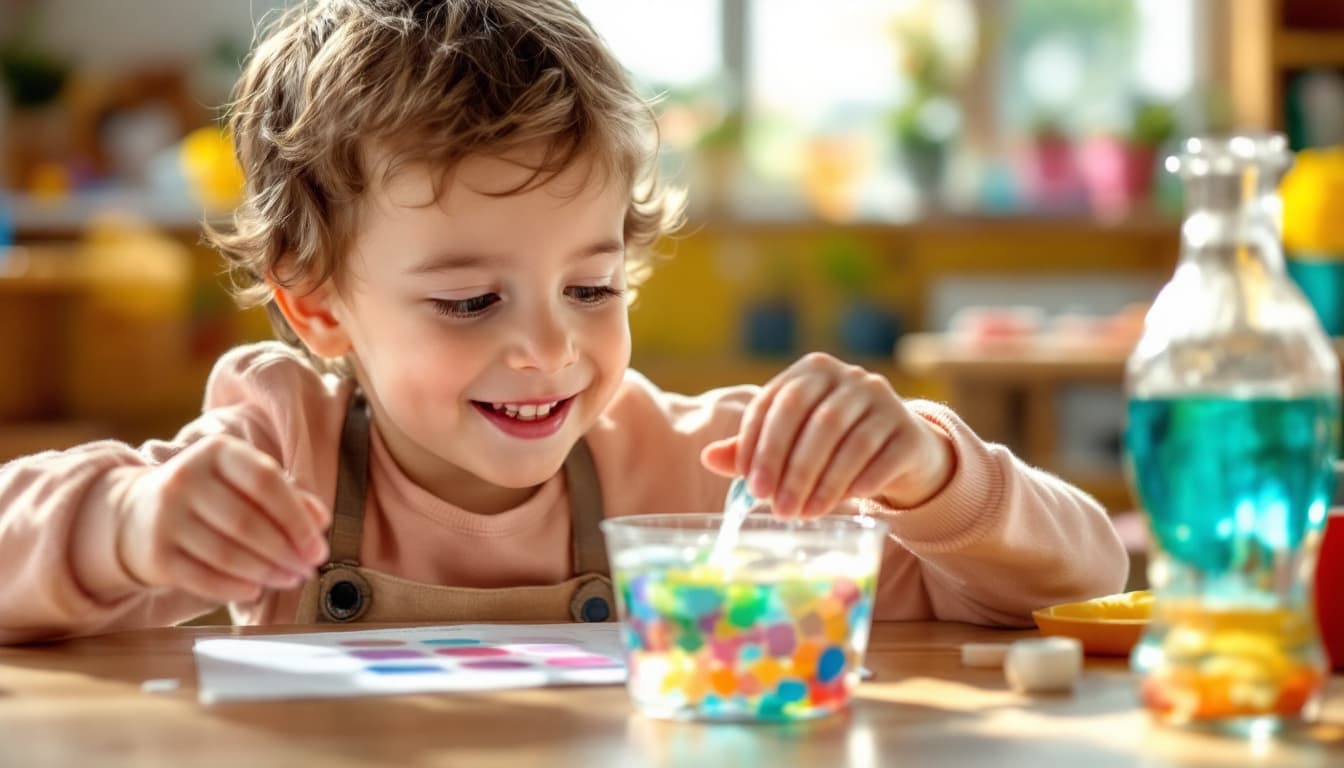
Preschoolers are already scientists. Seriously. Every time a 4-year-old asks "why?" for the fourteenth time before lunch, that's scientific curiosity at work. They're observing, questioning, and testing ideas all day long.
The problem isn't getting preschoolers interested in science. It's giving them the right experiences to channel that natural curiosity into actual learning. And honestly, the best preschool science doesn't look like "science" at all. It looks like playing with water, digging in dirt, and being amazed by magnets.
Here are hands-on science activities that work beautifully with the 3 to 5 crowd.
Why Science Matters in Preschool
Before we get into specific activities, let's talk about why science belongs in preschool at all. Some parents and even some teachers think of science as a "later" subject. Reading and math first, science when they're older.
But that misses something important. Science in preschool isn't about memorizing facts. It's about building thinking skills: observing, comparing, predicting, and testing. Those are the same skills that help kids learn to read and do math.
When a preschooler sorts rocks by size, that's classification (a science skill AND a math skill). When they predict whether an object will sink or float, that's hypothesis testing. When they describe what they see through a magnifying glass, that's building vocabulary and observation skills.
Research consistently shows that early science experiences build the foundation for later academic success. Kids who engage in hands-on science before kindergarten develop stronger problem-solving abilities and more persistent learning habits.
The key with preschoolers: follow their curiosity. If they're fascinated by bugs, do bug science. If they love water, do water experiments. The content matters less than the process of wondering, testing, and discovering.
Free Kindergarten Science Worksheets


Water Play Experiments
Water is probably the single best science material for preschoolers. It's safe, it's available, and kids never get tired of it.
Sink or float. Fill a large bin with water. Gather objects from around the room: a wooden block, a metal spoon, a cork, a rock, a leaf, a plastic toy. Before dropping each one in, ask: "Do you think this will sink or float?" Let kids make their prediction, then test it. The surprise on their faces when something they expected to sink actually floats? That's learning happening in real time.
Color mixing. Fill three clear cups with water. Add red food coloring to one, yellow to another, and blue to the third. Give your kiddos empty cups and eyedroppers (or turkey basters for smaller hands). Let them mix and discover: red + yellow = orange. Blue + yellow = green. This is chemistry at the preschool level.
Water transfer station. Set up cups, funnels, tubes, and sponges. Let children figure out how to move water from one container to another. This builds fine motor skills while teaching about flow, absorption, and capacity.
- Ice exploration. Freeze small toys inside blocks of ice. Give kids warm water, salt, and tools to free the toys. They'll discover that warm water melts ice faster, and that salt changes how ice behaves.
- Rain in a jar. Fill a jar with water, add shaving cream on top (the "cloud"), then drop food coloring on the shaving cream. When it gets saturated, the color "rains" through to the water below. It's visually stunning and preschoolers love watching it happen.
Always ask questions during water play: "What do you notice? What happened? Why do you think that happened? What would happen if we tried...?" These questions turn play into science.
Magnet Exploration Activities
Magnets are almost magical to preschoolers. Something invisible makes things stick together or push apart? That's basically a superpower.
Magnet discovery bins. Fill a bin with a mix of magnetic and non-magnetic objects: paper clips, coins, buttons, popsicle sticks, aluminum foil, small toys, fabric scraps. Give each child a magnet and let them explore. Ask them to sort objects into two groups: things the magnet sticks to and things it doesn't.
After sorting, guide the discussion: "What do all the 'yes' objects have in common?" Most preschoolers will eventually notice that metal objects are the ones that stick (though not all metals are magnetic, which is a great discovery for the more observant kids).
Magnet painting. Place a piece of paper inside a shallow box or tray. Drop a few small metal objects (like washers or paper clips) dipped in paint onto the paper. Kids use a magnet underneath the box to move the objects around, creating art. It's messy, it's beautiful, and it teaches about magnetic force passing through materials.
- Magnetic fishing game. Attach paper clips to paper fish. Tie a magnet to a string on a stick. Kids "fish" by dangling the magnet over the fish. You can add letters or numbers to the fish to combine magnet science with literacy or math practice.
- Will the magnet work through it? Test whether magnets work through different materials: paper, cardboard, fabric, plastic, wood, water. This teaches kids that magnetic force can pass through some things, which is genuinely surprising to them.
Safety note: Always supervise magnet activities closely with preschoolers. Small magnets can be a choking hazard, so use larger bar magnets or wand magnets designed for young children.
Growing Seeds and Watching Plants
Plant science teaches patience, which is probably the hardest part for preschoolers. But watching something they planted actually grow? There's nothing quite like it.
The classic bean-in-a-bag. Wet a paper towel, place a bean seed on it, fold it up, and put it in a sealed ziplock bag. Tape the bag to a sunny window. Within a week, the seed will sprout, and kids can see the roots and stem developing through the bag. It's simple, but it works every time.
Grow a garden in a cup. Fill clear plastic cups with soil and plant fast-growing seeds like grass, radishes, or sunflowers. Have kids water them daily and draw what they see in a simple science journal (even scribbles count). The routine of observation and recording is real science practice.
- What do plants need? Set up a simple experiment: plant two identical seeds. Give one sunlight and water, and put the other in a dark closet with water. Or give one water and not the other. After a week, compare. Preschoolers can understand the concept of "fair testing" at a very basic level: we changed one thing and kept everything else the same.
- Nature collections. On a walk, collect leaves, seeds, flowers, and sticks. Back inside, sort them by color, size, shape, or texture. Press leaves between wax paper. Examine seeds with magnifying glasses. Every collection becomes a sorting and observation activity.
Connect to counting. As plants grow, kids can measure their plants using non-standard units (how many blocks tall is your plant?). This bridges science and early math naturally. If your kiddos are also working on counting skills, you might enjoy some counting printable activities for pre-k alongside the garden project.
Nature Walks and Outdoor Science
The best preschool science classroom is outside your door. Nature walks are where curiosity goes wild.
Go on a listening walk. Walk outside and stop every 30 seconds. Ask: "What do you hear?" Birds, wind, cars, insects, footsteps. Make a list together when you get back. This builds observation skills using a sense kids don't usually focus on.
Collect and classify. Give each child a small bag. Their job: collect 5 interesting things from nature. Back inside, sort the collections. By color? By texture? By where they found it? There's no wrong way to sort, and the discussion about WHY they sorted a certain way is where the thinking happens.
- Bug hotels. Stack sticks, pinecones, bark, and leaves in a sheltered spot outdoors. Check back over several days to see what moves in. Even if nothing shows up, the anticipation and checking builds the habit of repeated observation.
- Cloud watching. Lie on the grass and look up. What shapes do they see? This is observation and imagination working together. On a more "sciency" note, you can introduce the idea that different clouds mean different weather.
- Shadow tracing. On a sunny morning, have kids stand in one spot while you trace their shadow with chalk. Come back after lunch and trace it again. The shadow moved! Why? This is their first introduction to how the sun moves across the sky.
The outdoor rule: let kids get messy. Mud, wet grass, sticky sap, crunchy leaves. Sensory experiences are how preschoolers process the world. If everyone stays clean, you probably weren't doing enough science.
Common Questions Parents Ask About Preschool Science
When you send science activities home or talk about science at parent conferences, these questions come up a lot.
"Isn't my child too young for science?" No. Science for preschoolers is exploration, not memorization. If your child can pour water from one cup to another and notice what happens, they're doing science.
"Do I need to buy special supplies?" Almost never. The best preschool science uses kitchen items, nature, and recycled materials. Water, ice, magnets, seeds, dirt, magnifying glasses, and food coloring cover about 90% of what you'll need.
"My child just wants to play. They're not really learning." Play IS learning at this age. When a child pours water back and forth between cups of different sizes, they're learning about volume. When they stack blocks and knock them down, they're learning about gravity and balance. The learning is embedded in the play.
"Should I correct my child when their prediction is wrong?" Never. Wrong predictions are one of the best learning moments. If your child says a rock will float and it sinks, ask: "What happened? Were you surprised? What do you think now?" That's the scientific process in action.
"How do I extend an activity when my child is really into it?" Follow their lead. If they love the sink-or-float activity, try it in the bathtub with different objects. If they love magnets, let them test every surface in the house. Curiosity is the engine. Your job is to keep adding fuel.
Keep Reading
- Body Parts Activities for Kids: Fun Ways to Learn About the Human Body
- Animal Crafts for Kids: Easy Projects That Teach Science
- Science Experiments for Kids: Hands-On Learning at Home
- Digital Science Activities for Elementary Students
Simple Science Activities You Can Do Today
No prep needed. No special materials. Just you and a curious preschooler.
Kitchen science in 5 minutes:
- Drop a raisin in a glass of sparkling water. Watch it dance up and down (the bubbles carry it).
- Mix baking soda and vinegar in a tray. The fizzing reaction never gets old. Add food coloring for extra wow.
- Put a celery stalk in colored water. Wait a few hours and watch the color travel up the stalk.
Living room science:
- Build a ramp with a board and books. Roll different objects down it. Which goes fastest? Farthest?
- Make a paper airplane and test how far it flies. Then fold a different design and compare.
- Use a flashlight to make shadows on the wall. Move the flashlight closer and farther away. What happens to the shadow?
Backyard science:
- Dig up some dirt and examine it with a magnifying glass. What's in there?
- Set out containers of different sizes in the rain and see which collects the most water.
- Find an anthill and observe (from a safe distance). Where are the ants going? Can you follow their trail?
The most important thing in all of these activities isn't the science content. It's the conversation. Ask questions. Listen to their theories (even the wild ones). Say "let's find out" instead of giving them the answer. That habit of wondering and testing is the real gift of preschool science.
Every science activity builds something: vocabulary, observation skills, patience, the ability to handle surprise. Your kiddos don't need to know the word "hypothesis" yet. They just need permission to be curious, to get messy, and to find out what happens next 😊

Adi Ackerman
Head Teacher
Adi is the Head Teacher at ClassWeekly, with years of experience teaching elementary students. She designs our curriculum-aligned worksheets and writes practical guides for teachers and parents.
Keep Reading
Ready to download? Try ClassWeekly free for 30 days.
Unlimited worksheets for PreK through 5th grade. Cancel anytime.