
100 Idioms for Kids (With Examples + Free Printable)
Get 30 days of free worksheet downloads
Key Takeaways
- Idioms are fixed phrases where the meaning cannot be understood from the individual words alone, making explicit instruction essential for both native speakers and English Language Learners.
- Drawing the literal versus figurative meaning side by side is one of the most effective teaching strategies because the visual contrast makes abstract language concrete and memorable.
- Introducing an Idiom of the Week and encouraging students to use it in conversation by Friday builds retention far better than memorizing a list in one sitting.
- When teaching idioms in writing, students should aim for one well-placed idiom per piece, used in dialogue rather than narration, and matched to the tone of the text.
- Children can often infer idiom meanings from context clues even when they don't know the phrase, which makes idiom practice a powerful tool for building general reading comprehension skills.

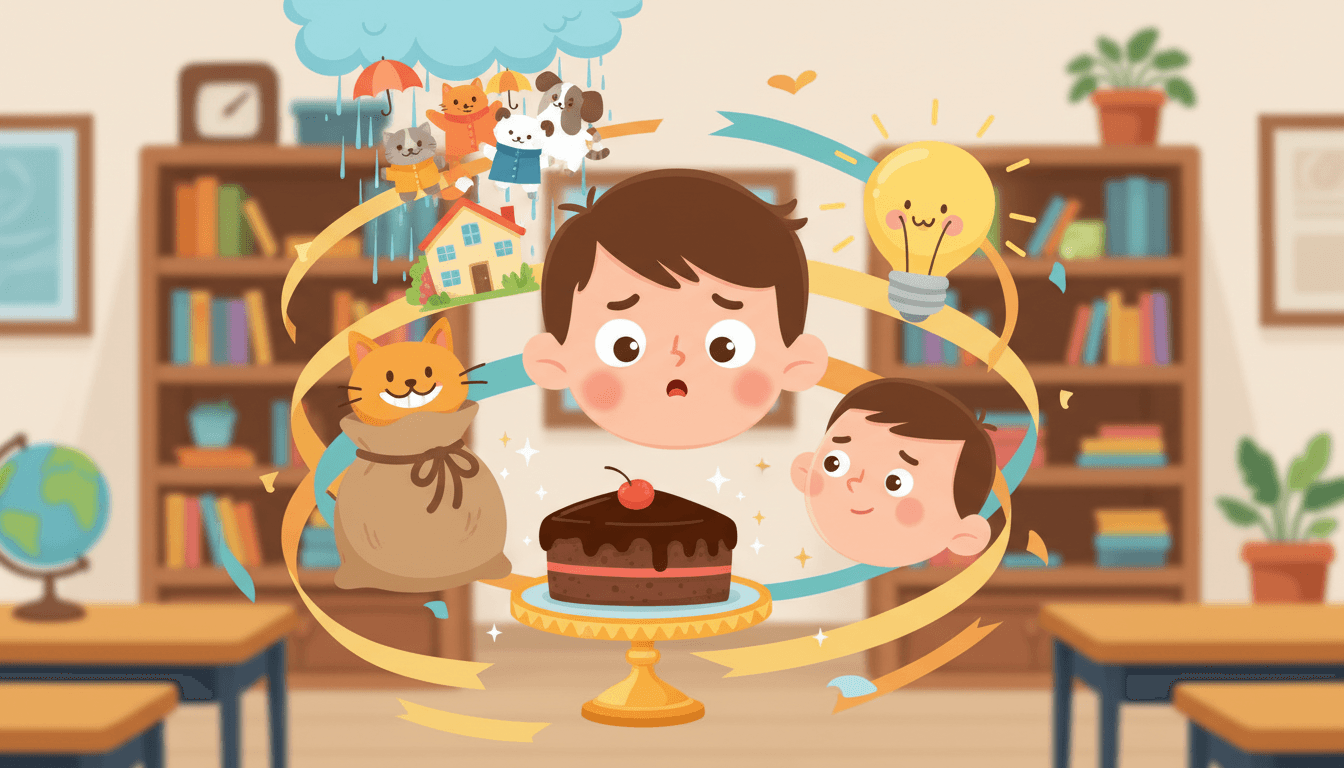
An idiom is a phrase that means something different from the actual words in it. For example, "break a leg" means "good luck," not a real injury. Idioms are a type of figurative language, and English has thousands of them that kids meet in books, conversations, and tests every day.
If you've ever told a child "it's raining cats and dogs" and watched them run to the window to check, you've discovered why idioms are both delightful and confusing for young learners.
Idioms are phrases where the words don't mean what they literally say. The meaning is figurative, not literal. And English is absolutely packed with them. We use idioms so naturally that we forget they're weird. But for kids who are still building their vocabulary, encountering a phrase where the individual words don't add up to the meaning can be genuinely baffling.
The good news? Kids love idioms once they understand how they work. There's something inherently funny about language that means something different from what it says. It's like being in on a secret code.
Free Idioms Worksheets for Grades 3-5


What Is an Idiom (Quick Refresher)
An idiom is a phrase or expression whose meaning can't be understood from the individual words alone. You have to learn the phrase as a whole unit.
"Break a leg" doesn't mean actually break your leg. It means "good luck."
"Hit the books" doesn't involve hitting anything. It means "start studying."
"Under the weather" has nothing to do with weather. It means "feeling sick."
Idioms are a type of figurative language, which also includes similes, metaphors, personification, and hyperbole. What makes idioms unique is that they're fixed phrases. You can't change the words and keep the meaning. "Break an arm" doesn't mean "good luck." "Hit the notebooks" doesn't mean "start studying." The exact wording matters.
Why do idioms exist? They make language more colorful and efficient. Saying "I'm feeling under the weather" communicates something slightly different from "I'm sick." There's a softness to the idiom, a shared understanding between speaker and listener. Idioms are part of what makes language feel human rather than robotic.
Why teach idioms explicitly? Because kids encounter them in books, in conversation, and on tests, and without explicit instruction, many students will either misunderstand them or skip over them entirely. English Language Learners especially benefit from direct idiom instruction, since these phrases can't be translated word-by-word.
Idioms vs Similes vs Metaphors: What's the Difference?
Idioms, similes, and metaphors are all types of figurative language, and kids mix them up all the time. Here's the quick version.
An idiom is a fixed phrase that means something different from its words ("hit the books" means "study"). A simile compares two things using "like" or "as" ("she runs like the wind"). A metaphor says one thing IS another, without "like" or "as" ("the classroom was a zoo").
The easiest way to tell them apart? A simile almost always has "like" or "as." A metaphor makes a direct comparison. An idiom is a set phrase you simply have to learn. Honestly, even adults pause on these sometimes, so don't worry if your little learner needs a few rounds of practice.
Want to practice? Grab our free printable idioms matching worksheet and have kids match each idiom to its meaning. It's a quick, no-prep way to turn this list into a hands-on activity.
32 Easy Idioms for Beginners
These are the idioms most kids encounter first. They're common in everyday speech, children's books, and classroom conversation.
1. A piece of cake - Something very easy. "That math quiz was a piece of cake."
2. Break a leg - Good luck (usually said before a performance). "You're going to do great in the play. Break a leg!"
3. Hit the hay - Go to bed. "I'm tired. Time to hit the hay."
4. Under the weather - Feeling sick. "Maya stayed home because she's under the weather."
5. Raining cats and dogs - Raining very heavily. "We can't go to recess. It's raining cats and dogs out there."
6. Let the cat out of the bag - Reveal a secret. "Don't let the cat out of the bag about the surprise party."
7. Cold feet - Being nervous about doing something. "He wanted to try the roller coaster but got cold feet."
8. Bite the bullet - Do something difficult or unpleasant that you've been avoiding. "I finally bit the bullet and cleaned my whole room."
9. Cost an arm and a leg - Very expensive. "Those sneakers cost an arm and a leg."
10. On the ball - Alert and doing a good job. "The goalie was really on the ball today."
11. Spill the beans - Tell a secret. "Who spilled the beans about the field trip?"
12. Once in a blue moon - Very rarely. "We get snow here once in a blue moon."
13. Butterflies in my stomach - Feeling nervous. "I had butterflies in my stomach before my presentation."
14. A storm in a teacup - A big fuss about something small. "The argument about seating was a storm in a teacup."
15. Hold your horses - Be patient; wait. "Hold your horses. We'll get there soon."
16. Couch potato - Someone who sits around a lot. "On rainy days, my little brother turns into a couch potato."
17. A bookworm - Someone who loves reading. "Priya is such a bookworm. She finishes a new book every week."
18. Easy as pie - Very easy. "Once you practice, tying your shoes is easy as pie."
19. All ears - Listening carefully. "Tell me about your field trip. I'm all ears."
20. Butter someone up - Be extra nice to get something. "He buttered up his mom before asking for a second cookie."
21. A copycat - Someone who copies others. "Pick your own answer instead of being a copycat."
22. Down to earth - Friendly and easy to talk to. "Our new teacher is so down to earth."
23. Hit the road - Leave or start a trip. "It's getting late. Let's hit the road."
24. In hot water - In trouble. "He was in hot water for forgetting his homework again."
25. Lend a hand - Help someone. "Can you lend a hand carrying these books to class?"
26. Snug as a bug - Very cozy. "Wrapped in her blanket, she was snug as a bug."
27. A fish out of water - Someone who feels out of place. "On his first day at the new school, he felt like a fish out of water."
28. A green thumb - Good at growing plants. "Grandma has a green thumb. Her garden always blooms."
29. Head in the clouds - Daydreaming. "Pay attention. Your head is in the clouds again."
30. A sweet tooth - A love of sugary treats. "I have a sweet tooth, so I always save room for dessert."
31. The early bird gets the worm - People who start early do better. "She woke up early to study. The early bird gets the worm!"
32. Two peas in a pod - Two people who are very alike or close. "Those twins are two peas in a pod."
Teaching tip: For each idiom, have students draw the literal meaning and the figurative meaning side by side. The contrast is hilarious and memorable. A drawing of someone literally holding horses next to someone waiting patiently makes the concept click instantly.
32 Intermediate Idioms for Growing Readers
These show up frequently in chapter books, classroom discussions, and everyday conversation. They're right in the sweet spot for 2nd through 4th graders.
33. Beat around the bush - Avoid saying what you mean directly. "Stop beating around the bush and tell me what happened."
34. Hit the nail on the head - Say or do exactly the right thing. "When you said the problem was communication, you hit the nail on the head."
35. The ball is in your court - It's your turn to make a decision or take action. "I've done my part. The ball is in your court now."
36. Kill two birds with one stone - Accomplish two things with one action. "By reading for homework and for fun, she killed two birds with one stone."
37. Burn the midnight oil - Stay up very late working or studying. "She burned the midnight oil to finish her science project."
38. Jump on the bandwagon - Join something that's already popular. "Everyone jumped on the bandwagon when the new game came out."
39. Pull someone's leg - Joke with someone, tease them. "I'm just pulling your leg. Of course there's no homework today."
40. Sit on the fence - Be unable to decide; stay neutral. "Stop sitting on the fence and pick a team."
41. Go the extra mile - Do more than what's expected. "Our teacher always goes the extra mile to make lessons fun."
42. The tip of the iceberg - Only a small visible part of a much bigger situation. "The messy desk was just the tip of the iceberg. His whole room was a disaster."
43. Break the ice - Start a conversation or ease tension in a social situation. "The teacher played a game to break the ice on the first day."
44. Cry over spilled milk - Waste time being upset about something that can't be changed. "I know you lost the game, but there's no use crying over spilled milk."
45. Bite off more than you can chew - Take on more than you can handle. "I think I bit off more than I could chew by signing up for three after-school activities."
46. Hit the books - Start studying. "I have a test tomorrow. Time to hit the books."
47. Every cloud has a silver lining - Something good can come from a bad situation. "Missing the bus meant I got to walk with my best friend. Every cloud has a silver lining."
48. Cut corners - Do something cheaply or carelessly. "Don't cut corners on your project. Take your time and do it right."
49. A dime a dozen - Very common and easy to find. "Plain yellow pencils are a dime a dozen."
50. Right under your nose - Right in front of you. "The keys were right under your nose the whole time."
51. Out of the blue - Happening suddenly, with no warning. "Out of the blue, my old friend called to say hello."
52. On cloud nine - Extremely happy. "She was on cloud nine after winning the spelling bee."
53. Face the music - Accept the consequences of what you did. "He had to face the music after breaking the window."
54. Keep your chin up - Stay positive during a hard time. "I know you're disappointed, but keep your chin up."
55. Let sleeping dogs lie - Leave a calm situation alone instead of stirring up trouble. "They finally stopped arguing, so let sleeping dogs lie."
56. The apple of my eye - Someone you love very much. "Her baby brother is the apple of her eye."
57. A wolf in sheep's clothing - Someone who hides bad intentions behind a kind act. "The character seemed friendly, but he was a wolf in sheep's clothing."
58. Get out of hand - Become out of control. "The game of tag got out of hand at recess."
59. Get the ball rolling - Start something. "Let's get the ball rolling on our science fair project."
60. Hold the fort - Take care of things while someone is away. "Can you hold the fort while I grab the supplies?"
61. Make a long story short - Tell something quickly, skipping the details. "To make a long story short, our team won."
62. Save for a rainy day - Keep something for when you really need it. "She saved part of her allowance for a rainy day."
63. A close call - A narrow escape from trouble. "The ball almost hit the window. That was a close call!"
64. By the skin of your teeth - Just barely succeed. "He caught the bus by the skin of his teeth."
Teaching tip: Create an "Idiom of the Week" board. Each Monday, introduce a new idiom with its meaning. Challenge students to use it in conversation or writing by Friday. Keep a running list so the collection grows all year.
36 Advanced Idioms for Confident Students
These idioms appear in upper elementary reading, test passages, and more sophisticated conversation. They're great for 4th and 5th graders building vocabulary depth.
65. Burning bridges - Damaging a relationship so badly it can't be repaired. "Don't say something mean just because you're angry. You don't want to burn bridges."
66. Barking up the wrong tree - Looking in the wrong place or blaming the wrong person. "If you think I took your pencil, you're barking up the wrong tree."
67. The whole nine yards - Everything; the full amount. "She decorated the classroom with streamers, balloons, banners, the whole nine yards."
68. A blessing in disguise - Something that seems bad at first but turns out to be good. "Getting a bad grade on the practice test was a blessing in disguise. It made me study harder for the real one."
69. Throw in the towel - Give up. "After trying for an hour, he threw in the towel on the puzzle."
70. Back to the drawing board - Start over because the first plan didn't work. "Our volcano didn't erupt at the science fair. Back to the drawing board."
71. Cut to the chase - Get to the point without wasting time. "Let me cut to the chase: we need more people for the project."
72. In the same boat - In the same situation (usually a difficult one). "We're all in the same boat with this homework assignment."
73. Through thick and thin - Through good times and bad times. "Best friends stick together through thick and thin."
74. A taste of your own medicine - Experiencing the same negative thing you've done to others. "When his joke backfired, he got a taste of his own medicine."
75. Add insult to injury - Make a bad situation even worse. "To add insult to injury, it started raining right after I dropped my lunch."
76. On thin ice - In a risky situation; close to getting in trouble. "After being late three times, she was on thin ice with her teacher."
77. The last straw - The final thing that causes someone to lose patience. "Forgetting his lunch was the last straw after an already terrible morning."
78. Put all your eggs in one basket - Risk everything on a single plan. "Don't put all your eggs in one basket. Apply to more than one school."
79. Read between the lines - Understand a hidden meaning. "She said it was fine, but if you read between the lines, she was upset."
80. See eye to eye - Agree with someone. "My brother and I don't always see eye to eye on what to watch."
81. Turn over a new leaf - Make a fresh start; change behavior for the better. "After winter break, she decided to turn over a new leaf and stay organized."
82. Actions speak louder than words - What you do matters more than what you say. "He promised to help but never showed up. Actions speak louder than words."
83. Don't judge a book by its cover - Don't judge something or someone based on appearance alone. "The new kid seemed quiet, but don't judge a book by its cover. He's actually really funny."
84. When pigs fly - Something that will never happen. "I'll clean my room without being asked when pigs fly."
85. Bite the dust - To fail, fall, or stop working. "Our old computer finally bit the dust."
86. A penny for your thoughts - A way to ask what someone is thinking. "You've been quiet all morning. A penny for your thoughts?"
87. Caught red-handed - Caught in the act of doing something wrong. "He was caught red-handed sneaking a cookie before dinner."
88. The grass is always greener on the other side - Other people's things can seem better than they really are. "He wanted his friend's bike, but the grass is always greener on the other side."
89. A leopard can't change its spots - People don't usually change who they really are. "He promised to stop teasing, but a leopard can't change its spots."
90. Don't count your chickens before they hatch - Don't assume something will work out before it does. "You haven't won yet, so don't count your chickens before they hatch."
91. Steal someone's thunder - Take attention away from someone else's moment. "She shared his news first and stole his thunder."
92. Curiosity killed the cat - Being too nosy can lead to trouble. "Stop reading my diary. Curiosity killed the cat."
93. Let bygones be bygones - Forgive and forget an old problem. "They shook hands and let bygones be bygones."
94. Make hay while the sun shines - Use a good chance while you have it. "The weather is perfect for the car wash, so make hay while the sun shines."
95. Hit a home run - Succeed in a big way. "Her book report hit a home run."
96. Throw caution to the wind - Take a bold risk. "He threw caution to the wind and tried the high dive."
97. The world is your oyster - You have the freedom to do anything you want. "Once you can read on your own, the world is your oyster."
98. Burn the candle at both ends - Wear yourself out by doing too much. "Studying late and waking up early, she was burning the candle at both ends."
99. Put your best foot forward - Try your hardest and make a good impression. "On the first day of school, put your best foot forward."
100. A storm is brewing - Trouble is coming. "When they started arguing over the rules, I knew a storm was brewing."
Idioms by Grade
Not every idiom fits every age. Here's a simple way to think about which ones to introduce, and when. Remember, every child is different, so use this as a starting point, not a rulebook.
Idioms for 1st grade. Start with short, picture-friendly idioms kids can act out: "a piece of cake," "all ears," "raining cats and dogs," "a bookworm," "hit the road." First graders learn best when they can draw the literal version and giggle at the difference. Pair these with our 1st grade reading worksheets for extra practice.
Idioms for 2nd grade. By now our little readers can handle idioms with a bit more meaning behind them: "under the weather," "spill the beans," "butter someone up," "out of the blue," "two peas in a pod." Second graders love spotting these in their chapter books. Build it into reading time with our 2nd grade reading worksheets.
Idioms for 3rd grade. Third graders are ready for figurative meaning they have to infer: "bite the bullet," "face the music," "the grass is always greener," "don't count your chickens before they hatch." This is the perfect age to start using idioms in writing, too. Our 3rd grade grammar worksheets help kids put figurative language to work.
How to Practice Idioms at Home and School
Knowing idioms exists and actually being able to use them are two different things. Here's how to move from recognition to fluency:
Idiom journals. Students keep a dedicated section in their notebooks for idioms they encounter in books, conversation, or media. For each one, they write: the idiom, what it means, a sentence using it, and a quick sketch of the literal meaning. The sketches make review sessions hilarious.
Idiom charades. One student acts out the literal meaning of an idiom. Others guess which idiom it is. "Raining cats and dogs" involves a lot of dramatic arm waving. "Cold feet" involves hopping around shivering. This is a fantastic Friday activity.
Idiom matching games. Write idioms on one set of cards and meanings on another. Students play Memory or Go Fish by matching idioms to their definitions. Works great as a center activity.
Book scavenger hunts. While reading independently, students flag any idioms they find with sticky notes. Share discoveries during reading time. Chapter books are full of idioms, and once kids start looking for them, they find them everywhere.
Context clue practice. Give students a sentence with an unfamiliar idiom. Can they figure out the meaning from the surrounding words? "After practicing piano for three hours, she was ready to call it a day and relax." Even without knowing the idiom, the context makes the meaning clear. This builds a critical reading skill.
Daily conversation. Probably the most effective practice of all. Use idioms naturally when talking to your students or children. When they look confused, explain. When they use one correctly, celebrate. Language is learned through immersion, and idioms are no exception.
Figurative language practice pages that include idiom identification, matching, and context-clue exercises help solidify understanding in a structured way.
Keep Reading
- Teaching Idioms to Kids: Activities That Make Figurative Language Fun
- Synonyms for Kids: What They Are and How to Teach Them
- Teaching Metaphors to Kids: Making Figurative Language Click
Using Idioms in Writing
This is where idioms really come alive. Moving from understanding idioms in reading to using them in writing is a significant step.
Start with dialogue. Idioms sound most natural in conversation. Teach students to use idioms when characters in their stories are speaking. "Come on," said Maria. "This test is going to be a piece of cake." That feels natural. Using an idiom in narration is trickier and can sound forced if overdone.
One per piece, maximum. A story stuffed with idioms reads like a list, not a narrative. One well-placed idiom in a personal narrative or short story is plenty. Quality over quantity.
Match the idiom to the tone. "Throw in the towel" fits a story about a challenging soccer game. It doesn't fit a science report. Help students develop a sense of when idioms are appropriate and when formal language is better.
Revise for idioms. After writing a first draft, students can look for places where an idiom might replace a plain statement. "I was really nervous" could become "I had butterflies in my stomach." This revision practice teaches them that strong writing is built in editing, not in the first draft.
Write idiom origin stories. This is a creative writing goldmine. "Write a short story explaining HOW the phrase 'let the cat out of the bag' was invented." Students get to be wildly imaginative while demonstrating that they understand what the idiom means. The results are always entertaining.
Idiom expansion paragraphs. Give students an idiom and ask them to write a paragraph where the idiom is the central idea. For "every cloud has a silver lining," they write about a character who experiences something bad that leads to something good. This connects figurative language to narrative structure.
Teaching idioms is one of those wonderful areas where language arts feels playful instead of rigid. There are no grammar rules to memorize, no spelling patterns to drill. It's just language being creative, surprising, and a little bit silly. And honestly, watching your kiddos go from confused ("why would you cry over milk?") to confident ("I'm going to hit the books tonight!") is one of the most satisfying things in teaching 📚

Adi Ackerman
Head Teacher
Adi is the Head Teacher at ClassWeekly, with years of experience teaching elementary students. She designs our curriculum-aligned worksheets and writes practical guides for teachers and parents.
Keep Reading
Ready to download? Try ClassWeekly free for 30 days.
Unlimited worksheets for PreK through 5th grade. Cancel anytime.