
Kindergarten Writing Prompts: 50 Fun Ideas
Get 30 days of free worksheet downloads
Key Takeaways
- Drawing counts as writing for kindergartners, so always give space for both on the page
- Keep writing sessions short, around five to ten minutes, to match kindergarten attention spans
- Family and friends prompts are the easiest starting point for reluctant or anxious writers
- Reading a book aloud before a writing prompt gives children ideas and vocabulary to use
- Celebrate the attempt and effort rather than neatness or spelling accuracy
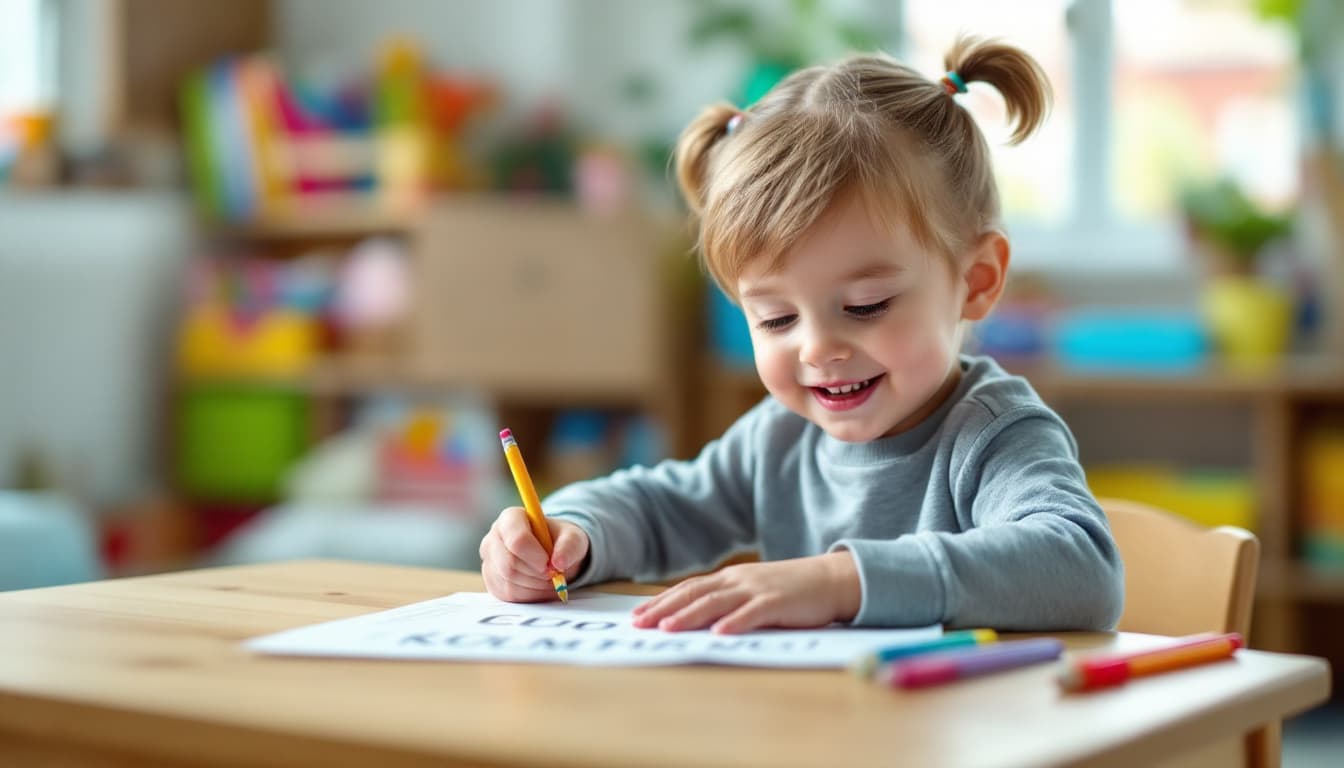
You know that moment when you set a blank piece of paper in front of a kindergartner and ask them to "write something"... and they just stare at you? Total blank face. Maybe a little panic in their eyes.
Yeah. We've all been there. The good news is, our little ones almost always have something to say. They just need a nudge. That's exactly what writing prompts are for. Give them a starting point, a tiny spark of an idea, and watch what happens.
Table of Contents
- Why Writing Prompts Work for Kindergartners
- How to Use These Prompts (Without It Feeling Like a Chore)
- Animal Writing Prompts
- Family and Friends Writing Prompts
- Seasons and Weather Writing Prompts
- Imagination and Fantasy Writing Prompts
- School and Classroom Writing Prompts
- Food and Favorites Writing Prompts
- Feelings and Emotions Writing Prompts
- Nature and Outdoors Writing Prompts
- Tips for Early Writers Who Aren't Ready to Write Yet
- FAQ
Free Creative Writing Worksheets for Kindergarten


1. Why Writing Prompts Work for Kindergartners
At five and six years old, our littles are just figuring out that letters make words and words make sentences. That's enormous. Writing is not just a fine motor task. It's a thinking task, a language task, and honestly, a brave task.
A good prompt removes the "what do I write about?" obstacle so your child or student can focus on the actual writing. It gives them permission to have an opinion, tell a story, or make something up entirely.
2. How to Use These Prompts (Without It Feeling Like a Chore)
Keep it low-stakes. Drawing is writing for kindergartners. If your kiddo draws a picture and tells you one sentence about it, that counts. Don't push for paragraphs.
A few practical tips:
- Read the prompt aloud and ask your child to repeat it back in their own words before they start writing
- Keep writing sessions short, around 5-10 minutes for most kiddos
- Celebrate the attempt, not the neatness
- Let them dictate to you if they're frustrated by the physical act of writing
- Use kindergarten creative writing worksheets to give them a structured space with room for a drawing AND a sentence or two
Honestly? Some days the prompt is just a jumping-off point and the child goes somewhere completely different. That's fine. Follow their lead.
3. Animal Writing Prompts 🐾
Animals are basically guaranteed to get a reaction out of kindergartners. They have strong feelings about animals. Use that.
- If you could be any animal for one day, which one would you choose? What would you do?
- What does your favorite animal eat for breakfast?
- Imagine a dog who goes to school. What happens on his first day?
- Draw your pet (or a pet you wish you had) and write one thing it does every day.
- If a cat and a fish became best friends, how would they play together?
- What would you name a baby elephant? Why did you choose that name?
Activities:
- Have students draw the animal first, then label one body part, then write a sentence
- Create a class "animal alphabet" where each child writes about an animal starting with their first initial
- Act out the animal's day before writing about it
- Compare two animals using simple sentence starters ("A dog can ___ but a fish can ___")
- Read an animal picture book first, then use the prompt as a response activity
Grab the kindergarten creative writing worksheets for a ready-made animal writing page with a drawing box at the top.
4. Family and Friends Writing Prompts
Family prompts feel safe. Your littles know this material deeply, which makes it easier to write about. Start here if you have a child who is especially reluctant.
- Who is your favorite person in your family? What do you love about them?
- What is something fun you and your family do together?
- Write about your best friend. What do you like to do with them?
- If your family went on a trip to anywhere in the world, where would you go?
- What does your mom, dad, or guardian do that makes you feel loved?
- Write about a funny moment with someone in your family.
Activities:
- Have kids bring in a family photo and write a caption for it
- Do a "my family is special because..." sentence stem as a class
- Write a "friendship recipe" (ingredients for being a good friend)
- Create a "my best friend" booklet with one page per favorite thing about them
- Use this as a springboard to discuss different kinds of families
These prompts also travel home beautifully. Send one home as a family writing night activity where a grown-up and child write together.
5. Seasons and Weather Writing Prompts
Seasons give you a built-in anchor to the real world. Your kiddos can look outside and connect their writing to something they see and feel.
- What is your favorite season? Write two things you love about it.
- If you could make it snow inside your house, what would you do?
- Write about a rainy day. What do you do when it rains?
- If you were a snowflake, where would you fall?
- What does summer smell like to you?
- Write about the first day you wore a coat this year. Where did you go?
Activities:
- Keep a "weather journal" where kiddos write one weather word and draw the sky each morning
- Sequence the seasons by writing one thing that happens in each
- Create a seasons wheel and write one sentence in each quarter
- Go outside and write (or draw) what you notice about the weather right now
- Pair with science by writing about "what plants need" during a spring unit
6. Imagination and Fantasy Writing Prompts
This is where kindergartners truly shine. Their imaginations are completely unfiltered. Give them permission to go wild.
- If you had a magic wand, what three things would you wish for?
- What would happen if you could fly to school every morning?
- You found a tiny door in your classroom wall. Where does it go?
- Write about a land where everything is made of candy.
- If you could invent any new toy, what would it do?
- A dragon moves into your neighborhood. Is it friendly or not? What happens?
Activities:
- "What if" discussions before writing to loosen up ideas
- Read a fantasy picture book and ask: what would YOU do in that world?
- Create a class story where each child adds one sentence
- Use sentence starters ("If I had magic powers, I would...")
- Draw the setting first, then write about it
Not sure this will work for your most literal-minded kiddos? Honestly, some children find open-ended fantasy prompts frustrating. Try giving them a picture first and asking them to write about what they see. That middle ground often helps.
7. School and Classroom Writing Prompts
Writing about school gives kids a chance to process their experience. It also makes for sweet documentation you can save.
- What is your favorite thing to do at school?
- Write about your classroom. What is in it?
- If you were the teacher for one day, what would you teach?
- What is the best thing about lunch at school?
- Write about something new you learned this week.
- What do you do at recess?
Activities:
- Start a "learning journal" where kiddos write or draw one thing they learned each day
- Have students write a "welcome letter" to a new student joining the class
- Write about their favorite spot in the classroom and why
- Create a "my school day" timeline with pictures and labels
- End-of-year prompt: write about your favorite kindergarten memory
These prompts also work beautifully for kindergarten creative writing worksheets as weekly writing warm-ups.
8. Food and Favorites Writing Prompts
Food is universal. Every child has feelings about food, strong ones. This section is almost never a struggle.
- What is your favorite food? Why do you love it?
- If you could have dessert for breakfast, what would you eat?
- Write a recipe for your favorite sandwich. What goes in it?
- If you could eat dinner at any restaurant in the world, where would you go?
- What food do you refuse to eat? Write about why you don't like it.
- You're a chef. What is the name of your restaurant?
Activities:
- Create a class "cookbook" with each student contributing one recipe
- Write a restaurant menu together as a shared writing activity
- Compare foods using "I like ___ because ___" sentence frames
- Act out being a chef before writing
- Write a letter to a food you love (yes, really, kiddos adore this)
9. Feelings and Emotions Writing Prompts ❤️
Writing about feelings builds emotional vocabulary AND literacy at the same time. Win-win.
- Write about a time you felt really happy. What happened?
- What makes you feel nervous? What helps you feel better?
- Write about a time you felt proud of yourself.
- What do you do when you feel sad?
- Write about a time you surprised someone. How did they feel?
- If feelings had colors, what color would happy be? What about scared?
Activities:
- Pair with a feelings chart so kids can point before they write
- Use picture books about emotions (like "The Invisible String" or "The Color Monster") as warm-ups
- Draw an emotion face first, then write about a time you felt that way
- Create a "feelings wheel" mini-book
- Write a letter to a friend who is having a hard day
10. Nature and Outdoors Writing Prompts
Getting kids to look closely at nature and then write about it builds both observation skills and descriptive language.
- Write about your favorite outdoor place. What do you do there?
- If you found a caterpillar, where would you take it?
- Describe a rainbow. Use as many colors as you can.
- Write about a tree near your home or school. What does it look like?
- If you could plant any kind of garden, what would you grow?
- Write about the first animal you saw outside today.
- What would you find if you dug a hole in your backyard?
- Describe a sunset or sunrise you remember. What did it look like?
Activities:
- Take a nature walk and collect observations, then write back in the classroom
- Use sensory prompts: what do you see, hear, smell, and feel outside?
- Press leaves or flowers and write a label or story about each one
- Create a "nature journal" with one weekly entry
- Write an acrostic poem using the word TREE or RAIN
11. Tips for Early Writers Who Aren't Ready to Write Yet
Some of your kiddos are going to want to write but get stuck at the "my hand won't do what my brain says" stage. That's totally normal.
- Accept drawing as writing. A detailed drawing with a verbal explanation is real literacy work.
- Scribe for them. Write their words exactly as they say them. Then they can trace over your writing or copy one word.
- Use sentence frames. "My favorite animal is ___ because ___." The frame does half the work.
- Celebrate one word. If they write one real word independently, that is a win worth celebrating out loud.
- Try letter stamps or magnetic letters for kids who find the physical pencil too frustrating.
FAQ
How often should kindergartners practice writing prompts? A few times a week is plenty. Daily writing is great if it's short (5-10 minutes), but pushing too hard can make kiddos dread writing. Variety matters more than volume at this age.
My child can't write letters yet. Can they still use writing prompts? Absolutely. Drawing IS writing for early kindergartners. Ask them to draw a picture for the prompt and tell you about it. You can write their words underneath. Over time, they'll start adding letters on their own.
What if a child always picks the same topic? Let them, at first. Expertise builds confidence. If you want to stretch them, try a gentle challenge: "You always write about dogs. Can you write about a dog who goes on an adventure?" Keep the familiar hook while introducing something new.
Are these prompts good for at-home use too? Yes, they travel well. Pick one prompt for a Friday night writing activity. Keep it low-pressure: pajamas, colored pencils, no timer. Make it feel like play.
Keep Reading
- Writing Prompts for First Graders: 30 Ideas to Get Kids Writing
- How to Teach Handwriting to Kindergartners
- Stages of Writing Development: What to Expect From Pre-K to 5th Grade
- Commenting and Suggesting in Google Docs to Coach Writing
Conclusion
Writing in kindergarten is about building the belief that you have something worth saying, and that you can say it on paper. Our kiddos are full of stories, opinions, and wild ideas. These 50 prompts are just the doors you open.
Start with whatever theme your littles are excited about right now. Animals, food, magic, you can't go wrong with any of them. Keep it short, keep it joyful, and let the messy spelling happen.
For ready-to-use pages, check out the kindergarten creative writing worksheets at ClassWeekly. They're formatted perfectly for small hands with a drawing box and writing lines built right in.
You've got this. And so do your kiddos.

Adi Ackerman
Head Teacher
Adi is the Head Teacher at ClassWeekly, with years of experience teaching elementary students. She designs our curriculum-aligned worksheets and writes practical guides for teachers and parents.
Keep Reading
Ready to download? Try ClassWeekly free for 30 days.
Unlimited worksheets for PreK through 5th grade. Cancel anytime.