
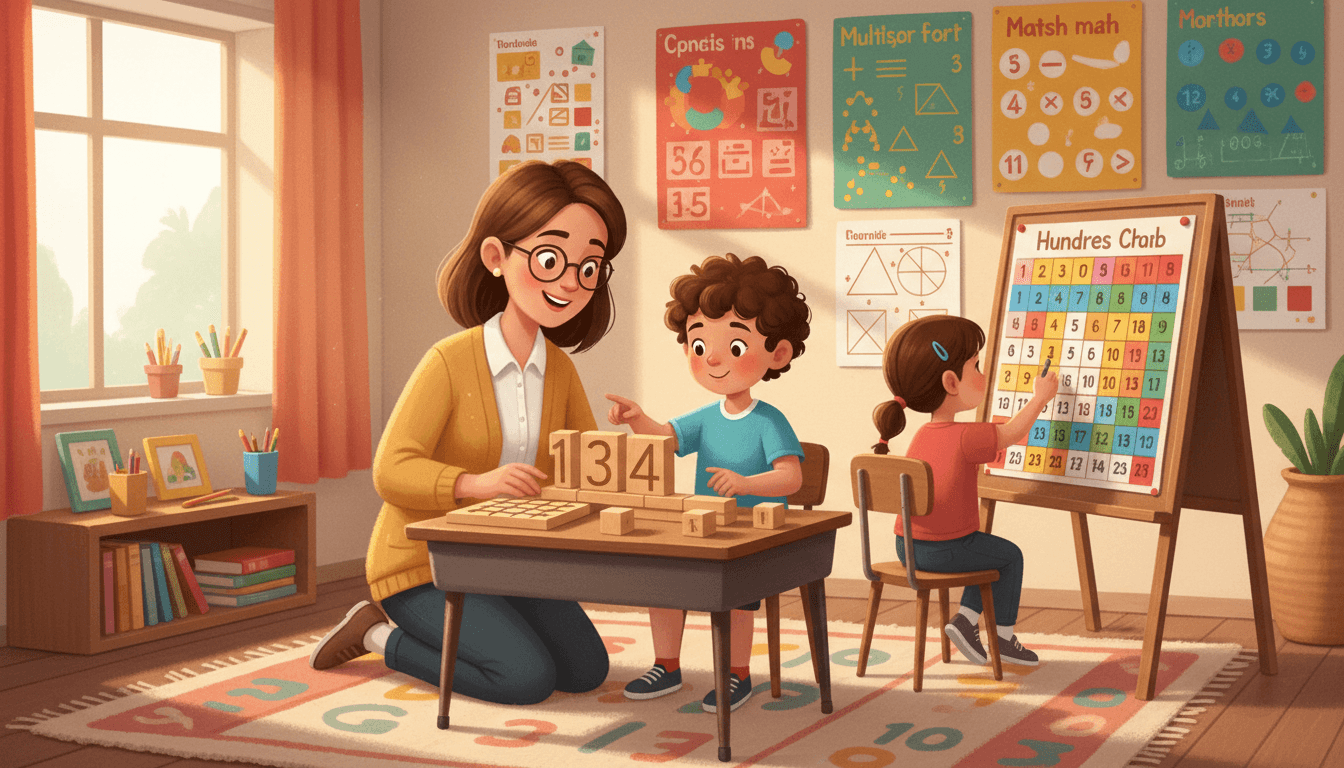
Second Grade Math: Key Skills and How to Practice at Home
Get 30 days of free worksheet downloads
Key Takeaways
- Second grade math centers on addition and subtraction within 100, and students must understand place value strategies like breaking apart by tens and ones, not just memorize the standard algorithm.
- Place value up to 1,000 is the foundation for all future math - time spent with base-ten blocks and expanded form pays off in every grade that follows.
- Regrouping (carrying and borrowing) is the top struggle in second grade; if a child can follow the procedure but cannot explain it, go back to manipulatives before moving forward.
- Money and time are best practiced in real life - counting real coins, reading analog clocks, and using timers gives more value than any worksheet alone.
- Word problems in second grade often require two steps, so the harder skill is choosing the right operation, not doing the arithmetic itself.
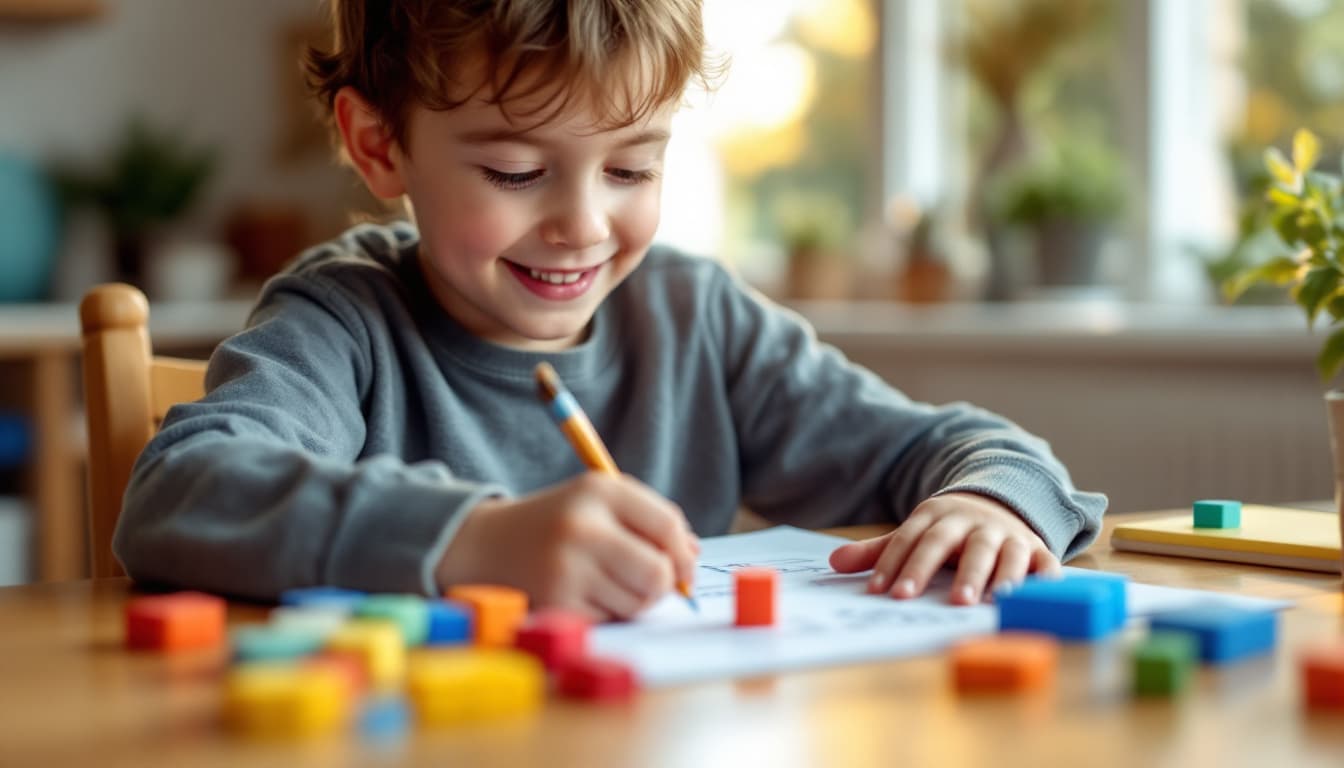
Second grade math is where things start clicking. Or where they start getting confusing. Sometimes both in the same week.
Your child spent first grade learning to add and subtract within 20 and getting a first taste of place value. Now those numbers get bigger. The problems get longer. And for the first time, your kiddo is expected to add and subtract numbers that require regrouping (what we used to call "carrying" and "borrowing").
It's a lot. But second graders are more capable than we sometimes give them credit for. They just need the right support and enough practice to build confidence.
Here's what the year looks like, and how you can help.
What Second Grade Math Looks Like
Second grade math pushes into bigger numbers and more complex problem-solving. The core topics this year include:
- Addition and subtraction within 100 (and solving within 1,000)
- Place value understanding up to 1,000
- Measurement using standard units (inches, centimeters, feet)
- Working with time and money
- Reading and creating graphs
- Introduction to even and odd numbers
- Foundations of multiplication through arrays and equal groups
The jump from first grade is real. In first grade, the biggest numbers your child worked with were in the teens and twenties. Now they're working with hundreds. That's a massive leap in abstract thinking.
But here's what's encouraging: if your child built solid number sense in first grade (understanding tens and ones, knowing basic addition facts), they have the foundation they need. Second grade builds on that foundation, it doesn't replace it.
Free 2nd Grade Addition Worksheets


Addition and Subtraction Within 100
This is where second graders spend the bulk of their math time. They need to fluently add and subtract within 100, and they need to understand why their strategies work.
What fluency looks like at this level:
- Solve 47 + 35 using place value (40 + 30 = 70, 7 + 5 = 12, 70 + 12 = 82)
- Solve 82 - 36 by decomposing (82 - 30 = 52, 52 - 6 = 46)
- Use the standard algorithm (stacking numbers vertically) with understanding, not just procedure
- Solve one-step and two-step word problems
The strategies your child will learn:
- Break apart by place value: Split numbers into tens and ones, add or subtract each part, then combine. This is the big one.
- Compensation: Round one number to make the problem easier. For 48 + 27, think: 50 + 27 = 77, then subtract the 2 you added: 75.
- Number line jumps: Start at one number and jump forward (addition) or backward (subtraction) in chunks.
- Regrouping: When the ones column adds up to more than 9, you "regroup" 10 ones into 1 ten. This is the classic "carrying" that many parents remember.
Activities that build these skills:
- Play "target number" games: roll two dice, try to reach exactly 50 by adding the results over multiple rounds.
- Practice with addition practice pages after working through strategies with manipulatives.
- Use a hundreds chart. Cover a number and ask your child what's hidden. This builds mental math.
- Give your child a "number of the day" and ask them to show it in five different ways (45 = 40 + 5 = 30 + 15 = 50 - 5, etc.).
The biggest mistake at this stage? Jumping straight to the standard algorithm without building conceptual understanding first. A child who can stack numbers and carry without understanding place value will struggle badly in third grade.
Place Value: Hundreds, Tens, and Ones
In first grade, your child learned tens and ones. Now they're adding hundreds to the mix, and that's where place value really becomes powerful.
What your child needs to understand:
- 100 is a bundle of 10 tens (or 100 ones)
- The digit's position determines its value: in 347, the 3 means 300, the 4 means 40, the 7 means 7
- Numbers can be written in expanded form: 528 = 500 + 20 + 8
- Comparing three-digit numbers using greater than, less than, and equal to by looking at hundreds first, then tens, then ones
- Skip-counting by 5s, 10s, and 100s
Activities that make it concrete:
- Build numbers with base-ten blocks (flats = hundreds, rods = tens, cubes = ones)
- Play "place value war" with three-digit numbers: each player draws three cards and arranges them to make the biggest possible number
- Use money: 1 dollar = 10 dimes = 100 pennies (this is place value in action)
- Practice reading numbers aloud. Can your child read 709? Many second graders will say "seventy-nine" because they skip the zero.
Place value isn't just a topic to cover and move on from. It's the operating system for all future math. Every time your child adds multi-digit numbers, does long division, or works with decimals, they're using place value. Time spent here is never wasted.
Introduction to Measurement
Second grade is when measurement gets real. No more measuring with paper clips (well, mostly). Your child will start using actual rulers, yardsticks, and measuring tapes.
The key measurement skills:
- Measure the length of an object using inches, feet, centimeters, and meters
- Estimate lengths before measuring
- Compare measurements ("This book is 4 inches longer than that one")
- Solve addition and subtraction problems involving lengths
- Understand that you have to start measuring from the "0" on the ruler, not the edge
That last point sounds silly, but it trips up more second graders than you'd think. Many kids line up the object with the edge of the ruler rather than the zero mark, which throws off every measurement.
Activities to try:
- Measure items around the house. How tall is the door in feet? How wide is the table in inches?
- Estimate first, then measure. "How many inches long do you think this remote is? Let's check."
- Compare two paths: "Which is longer, walking around the couch or walking across the room?" Measure both.
- Cook with your child. Measuring cups and teaspoons are math tools in disguise.
Measurement also connects beautifully to addition and subtraction. "If this shelf is 36 inches and this one is 24 inches, how much longer is the first one?" That's a real subtraction problem with a real context.
Working With Data and Graphs
Second graders learn to collect data, organize it, and make sense of it through graphs. This is early statistics, and kids actually love it because they get to ask questions about things they care about.
What they'll work with:
- Picture graphs (each picture represents one item)
- Bar graphs (bars showing quantities)
- Line plots (marking data on a number line)
- Solving comparison problems using data ("How many more students chose pizza than tacos?")
Activities that work well:
- Survey family members or classmates about a topic (favorite animal, number of siblings, preferred color) and create a bar graph
- Read graphs in newspapers, magazines, or websites together. "What does this graph tell us?"
- Track the weather for a week and create a picture graph of sunny, cloudy, and rainy days
- Use data from real life: "We scored these points in our last five games. Let's graph it."
The math isn't in making the graph. It's in reading it. "How many more people chose dogs than cats?" requires subtraction. "How many people voted in total?" requires addition. The graph is just the vehicle for real problem-solving.
Money and Time
These are the two topics that parents feel most comfortable teaching at home, and that's great because they need tons of practice outside of school.
Money skills in second grade:
- Identify coins and their values (penny = 1¢, nickel = 5¢, dime = 10¢, quarter = 25¢)
- Count mixed collections of coins
- Solve word problems involving dollars and cents
- Use the $ and ¢ symbols correctly
Time skills in second grade:
- Tell and write time to the nearest five minutes
- Use a.m. and p.m. correctly
- Solve problems involving time intervals ("If lunch starts at 12:15 and lasts 30 minutes, when does it end?")
Activities for home:
- Give your child a jar of real coins and have them count the total. Start with just one type, then mix them.
- Play "store" with price tags and have your child pay with coins. Can they make 37 cents three different ways?
- Practice reading analog clocks. Digital clocks are everywhere, but analog clocks build number sense. "What time will it be in 20 minutes?"
- Set timers for activities and ask your child to predict when the timer will go off.
Honestly, money and time are topics where everyday life is the best teacher. Every grocery trip, every "how long until we get there?" question is a math opportunity.
Common Challenges in Second Grade Math
Here's where I see second graders struggle most, and what you can do about it.
Regrouping (carrying and borrowing). This is the number one pain point. Adding 47 + 38 requires your child to combine 7 + 8 = 15, put down the 5, and carry the 1. That "carrying" concept is confusing because it's really about place value: 15 ones = 1 ten and 5 ones. If your child is struggling, go back to base-ten blocks and physically regroup.
Place value gaps from first grade. If your child didn't fully grasp tens and ones, hundreds will be overwhelming. You'll know this is the issue if they can follow the procedure but can't explain what they're doing. Go back and rebuild with manipulatives.
Word problems. Second grade word problems can involve two steps, and figuring out which operation to use is harder than doing the actual math. Practice translating words to equations: "12 more than" means add, "how many fewer" means subtract.
Telling time on analog clocks. The two-hand system is genuinely confusing. The hour hand moves slowly all the time. The minute hand counts by fives. And at 12:55, the hour hand is practically on the 1, which makes kids think it's 1:55. Practice regularly, and be patient.
Mental math stamina. Problems are getting longer, and keeping track of multiple steps in your head is exhausting for a seven-year-old brain. It's okay to let them write things down. That's not a weakness. That's a strategy.
Keep Reading
- How to Teach Word Problems in Second Grade
- Teaching Place Value to Second Graders
- First Grade Math: Skills, Activities, and What to Expect
- AI Prompts for Families and Home Practice
Practice Activities for Home and Classroom
Second graders need practice, but it has to be the right kind. Too much repetition without understanding builds frustration, not skills.
Daily mental math (5 minutes):
- "What's 30 + 40?"
- "What's 100 - 60?"
- "Count by 5s starting at 35."
- These quick questions keep skills sharp without any setup.
Games that build fluency:
- Dice games: roll three dice, use addition and subtraction to make the biggest number possible
- Card games: use two cards to make a two-digit number, then add two players' numbers together
- Online math games (in moderation, and only ones aligned to what they're learning)
Hands-on practice:
- Building with base-ten blocks
- Measuring real objects with rulers
- Sorting coins and counting totals
- Place value practice pages after conceptual understanding is solid
In the classroom:
- Partner math challenges where students explain their thinking to each other
- Math journals where students draw pictures and write about their strategies
- "Number of the day" routines that review place value, operations, and patterns
- Station rotations mixing manipulatives, games, and targeted practice
The best thing about second grade math is that your child is old enough to start talking about their thinking. Ask them "how did you figure that out?" regularly. Their explanations will tell you exactly where they're strong and where they need more support.
Second grade is a building year. The skills your child masters now, especially place value and fluency within 100, become the tools they'll use for multiplication, division, and fractions starting in third grade. Every minute spent building understanding here pays off for years to come 😊

Adi Ackerman
Head Teacher
Adi is the Head Teacher at ClassWeekly, with years of experience teaching elementary students. She designs our curriculum-aligned worksheets and writes practical guides for teachers and parents.
Keep Reading
Ready to download? Try ClassWeekly free for 30 days.
Unlimited worksheets for PreK through 5th grade. Cancel anytime.