
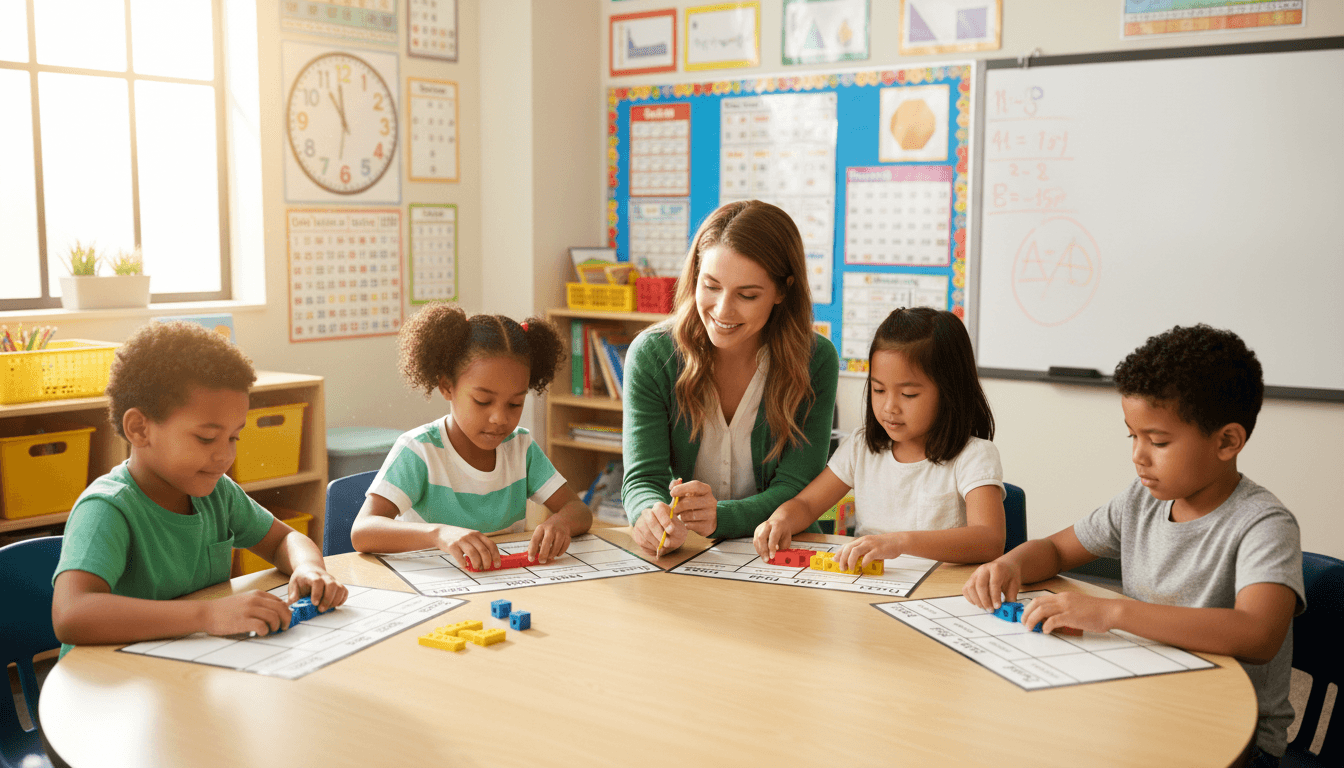
Place Value for 2nd Grade: Ones, Tens, and Hundreds
Get 30 days of free worksheet downloads
Key Takeaways
- Second graders expand from tens and ones to hundreds, tens, and ones under Common Core 2.NBT.A.1, and need to read, write, and compare numbers up to 1,000 by year's end.
- Base-ten blocks are the most effective manipulative for teaching place value because the physical trade of ten rods for one hundreds flat makes the concept concrete and memorable.
- Numbers with zeros, such as 305, are a common stumbling block - students must understand that 0 is a placeholder and that an empty column still has a place.
- Students must distinguish between the digit in a place and the value of that digit - in 742, the digit in the tens place is 4 but its value is 40.
- Expanded form (325 = 300 + 20 + 5) bridges physical blocks and abstract numbers and should be practiced in both directions: standard to expanded and expanded to standard.
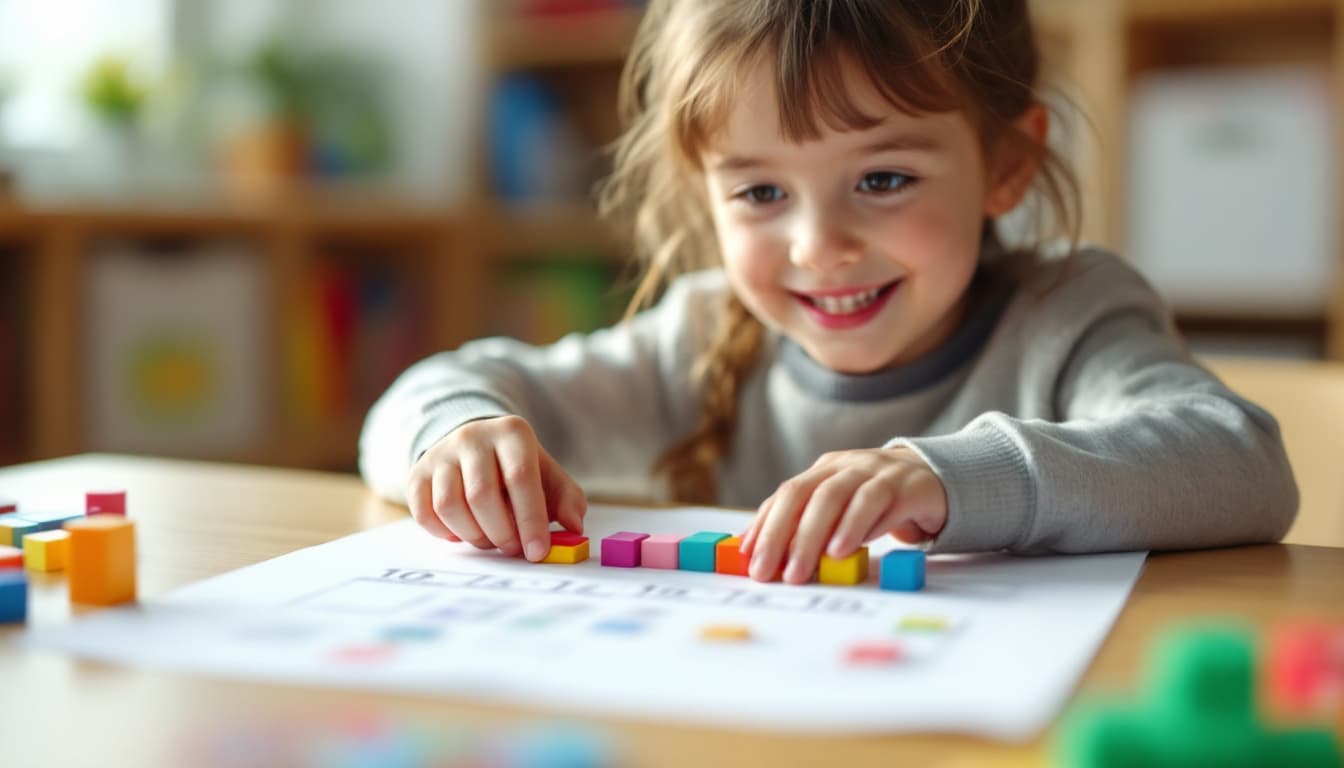
Place value is the backbone of math. Without it, multi-digit addition doesn't work. Subtraction with regrouping doesn't work. Rounding, comparing numbers, even basic estimation, all depend on understanding that the position of a digit determines its value.
In second grade, this concept expands from tens and ones (which they learned in 1st grade) to hundreds, tens, and ones. That extra column changes everything. Here's how to teach it well.
What Second Graders Need to Master
Per Common Core 2.NBT.A.1, second graders should understand that:
- 100 can be thought of as a bundle of 10 tens
- The three digits of a three-digit number represent hundreds, tens, and ones
- The numbers 100-900 refer to 1-9 hundreds (with 0 tens and 0 ones)
By the end of the year, they should read, write, and compare numbers up to 1,000.
Free Place Value Worksheets for 2nd Grade


Start With What They Know
First graders learned that 34 means 3 tens and 4 ones. Start there. Review it. Make sure it's solid.
Then ask the big question: "What happens when we get TEN tens?"
To be fair, even experienced teachers find this tricky sometimes.
Stack up ten base-ten rods. "Ten tens make... one hundred!" Trade them for a hundreds flat. That physical trade, ten small sticks becoming one big square, is the moment place value clicks.
The Best Tools for Teaching Place Value
Base-Ten Blocks
Nothing beats these. Every classroom should have them.
- Ones (units): small cubes
- Tens (rods): sticks of 10 cubes connected
- Hundreds (flats): square of 100 cubes connected
Let kids build numbers. "Build 247." They grab 2 flats, 4 rods, and 7 cubes. They can see that 247 is made of 2 hundreds, 4 tens, and 7 ones.
Then break numbers apart. "Trade a hundred for tens." Now 247 becomes 1 hundred, 14 tens, and 7 ones. Same number, different representation. This is the foundation for regrouping.
Place Value Mats
A simple mat with three columns: Hundreds | Tens | Ones. Kids place blocks in the correct column. The mat keeps things organized and reinforces the structure.
You can make these from paper. Laminate one per student. Use them daily.
Number Lines to 1,000
Hang a number line on the wall that goes to at least 1,000. Mark every hundred. Use it constantly:
- "Where would 350 go? Between which hundreds?"
- "Is 720 closer to 700 or 800?"
- "What's 10 more than 490?"
Teaching the Concept Step by Step
Week 1: Review Tens and Ones (Numbers to 99)
Don't skip this. Even if kids "learned it" in first grade, many have forgotten or never truly understood.
Build numbers with blocks. Write them in expanded form. "45 = 40 + 5 = 4 tens + 5 ones."
Week 2: Introduce Hundreds
Bring in the hundreds flat. Count by hundreds: 100, 200, 300... up to 900.
Build three-digit numbers with blocks. Start with "friendly" numbers: 200, 350, 471.
Key moment: "The digit in the hundreds place tells you how many HUNDREDS. The digit in the tens place tells you how many TENS. The digit in the ones place tells you how many ONES."
Write it on an anchor chart. Refer to it constantly.
Week 3: Expanded Form
325 = 300 + 20 + 5
This is the bridge between physical blocks and abstract numbers. It shows what each digit is worth.
Practice going both directions: from standard form to expanded form AND from expanded form to standard form.
Week 4: Comparing Numbers
"Which is greater, 482 or 478?"
Teach the left-to-right comparison: start with hundreds. If they're the same, look at tens. If those are the same, look at ones.
Use the comparison symbols with real numbers. Our kiddos love the "alligator mouth" analogy: the alligator always wants to eat the bigger number.
The Tricky Spots
Numbers with zeros. 305 trips kids up. "There's nothing in the tens place." They need to understand that 0 is a placeholder. 305 = 3 hundreds, 0 tens, 5 ones. Build it with blocks. No rods in the tens column. The column is empty, and that's okay.
"Teen" numbers. 15 feels like it should be 1 ten and 5 ones, but kids sometimes write it as "51" because they hear "fifteen" and write the 1 first. This is a carryover from first grade that some kids still struggle with.
Confusing the value with the digit. In 742, the digit in the hundreds place is 7, but the VALUE is 700. Kids need to distinguish between the two. "What digit is in the tens place?" (4) "What is the value of that digit?" (40).
Games That Reinforce Place Value
Roll and Build. Roll three dice. Arrange the digits to make a three-digit number. Build it with blocks. The student who makes the biggest (or smallest) number wins.
Place Value War. Each player draws 3 number cards and arranges them to make the biggest three-digit number they can. Compare numbers. Bigger number wins the round.
Mystery Number. "I have 4 hundreds, 0 tens, and 8 ones. What's my number?" Start easy and gradually make clues trickier.
For Parents
Place value practice at home can be simple:
- "What's the biggest number you can make with these three digits: 7, 3, 9?"
- "How many hundreds are in 562?"
- Count collections of pennies by grouping into tens and hundreds
- Read house numbers, street addresses, and prices together
Keep Reading
- Second Grade Math: Key Skills and How to Practice at Home
- How to Teach Fractions to Second Graders
- How to Teach Word Problems in Second Grade
The Foundation of Everything
When a child truly understands place value, multi-digit addition and subtraction make sense. Regrouping ("carrying" and "borrowing") makes sense. It's not a trick or a procedure. It's just rearranging hundreds, tens, and ones.
Take the time to build this understanding now. It pays off for years.
Explore our 2nd grade place value worksheets for structured practice with hundreds, tens, and ones, expanded form, comparing numbers, and more.

Adi Ackerman
Head Teacher
Adi is the Head Teacher at ClassWeekly, with years of experience teaching elementary students. She designs our curriculum-aligned worksheets and writes practical guides for teachers and parents.
Keep Reading
Ready to download? Try ClassWeekly free for 30 days.
Unlimited worksheets for PreK through 5th grade. Cancel anytime.