
Sight Words for Kindergarten: A Complete Teaching Guide
Get 30 days of free worksheet downloads
Key Takeaways
- Sight words make up 50-75% of all text early readers encounter, so mastering them dramatically reduces reading friction and builds confidence fast.
- A realistic kindergarten goal is 25-30 sight words by mid-year and 50-75 by end of year, but every child's pace is normal and valid.
- Introduce only 3-5 new sight words at a time and never add more until the current set is fully mastered.
- Kids need to both read and write sight words, since reading and writing activate different parts of the brain and together create true mastery.
- Games like Sight Word Bingo and activities like Rainbow Writing give children repeated practice without it feeling like a drill.

Hey fellow kindergarten teachers and parents! Before we dive in, let's look at where our little ones are at this point. By now, they've learned their letters, they're starting to sound out simple words, and they're ready for one of the biggest leaps in early reading: sight words.
Sight words are the glue that holds sentences together. Words like "the," "is," "and," "was." Kids can't sound them out easily because they don't follow regular phonics rules. They just need to know them on sight.
Here's the good news: teaching sight words doesn't have to be boring flashcard drills. It can actually be fun.
Why Sight Words Matter So Much
Here's a number that surprised me when I first learned it: sight words make up about 50-75% of all text that early readers encounter. Think about that. If a kindergartner knows their sight words, they can already read most of the words on any page.
That changes everything. Instead of stumbling over every other word, your kiddos can focus their brain power on the harder words. Reading starts to feel possible. Confidence builds. And once confidence builds, motivation follows.
Free Kindergarten Sight Word Worksheets


How Many Sight Words Should Kindergartners Learn?
The Dolch Pre-Primer and Primer lists are your foundation. Together, they include about 93 words. But honestly? Don't get hung up on the number.
A realistic goal for most kindergartners:
- By mid-year: 25-30 sight words
- By end of year: 50-75 sight words
- High-performing readers: 75-100+
Every child moves at their own pace. Some kids will memorize 10 words in a week. Others need a month for the same 10. Both are normal.
8 Ways to Teach Sight Words in Kindergarten
1. Start With a Small List
Begin with 3-5 words at a time. Don't overwhelm your little learners. Master a small group before adding more.
Best starter words: the, a, I, is, it, in, my, we
2. Use the Read-Spell-Write Method
This one is simple and it works:
- Read the word out loud
- Spell each letter
- Write the word (finger in sand, marker on paper, anything)
Repetition is key. Do this 3-5 times per word, per day.
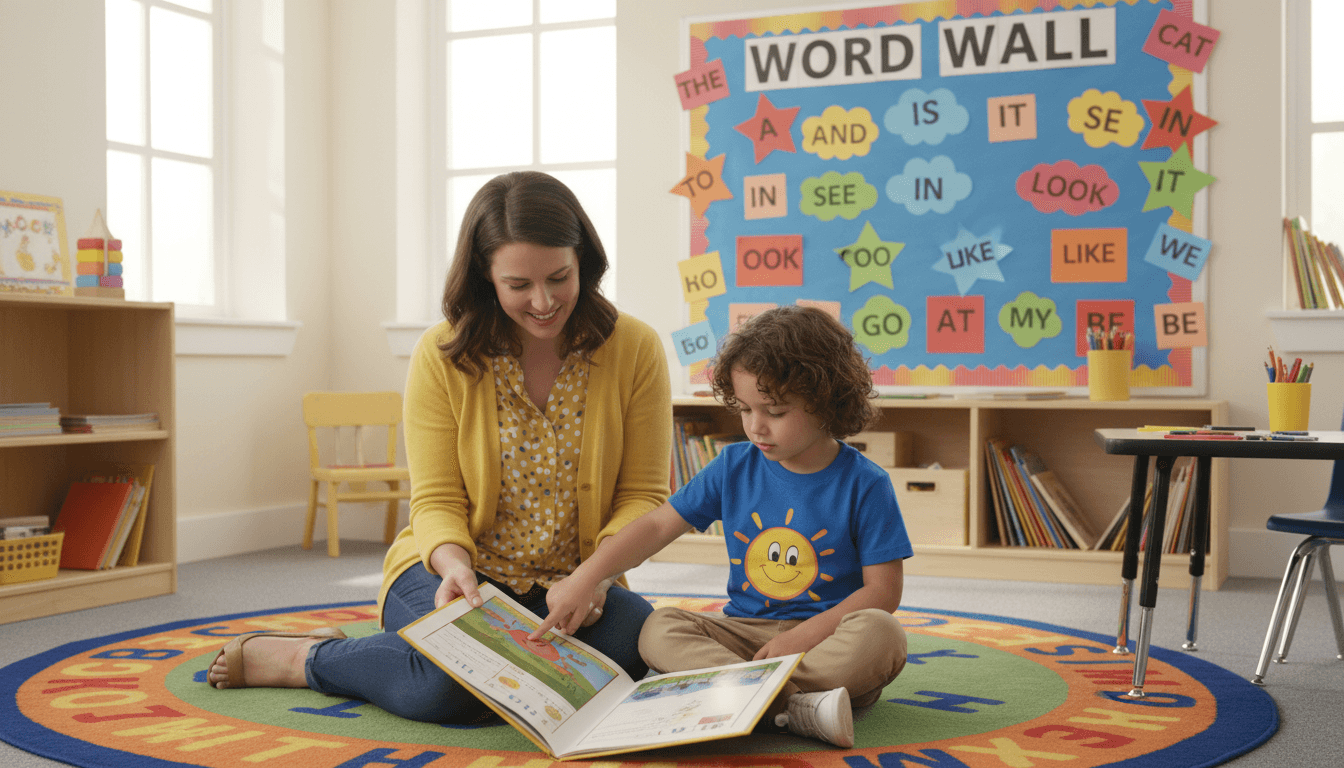
3. Create a Sight Word Wall
Dedicate a bulletin board or wall space to sight words. Add new words each week. When kids read independently, they can glance at the wall for help.
Quick tip: color-code by when the word was introduced. It helps kids see their own progress. "Look how many words we've learned since September!"
4. Play Sight Word Bingo
Make bingo cards with sight words instead of numbers. Call out words. Kids cover them with tokens. First one to fill a row wins.
Why this works: it's a game, not a lesson. Kids practice reading sight words over and over without it feeling like work.
5. Try Rainbow Writing
Kids write each sight word in a different color. First in red, then trace over it in blue, then green, then orange. The repetition builds muscle memory while keeping things colorful and fun.
6. Sight Word Sentences
Once kids know 10-15 words, start building simple sentences:
- "I see the cat."
- "We can go."
- "It is my dog."
This is where the magic happens. Kids go from reading isolated words to reading actual sentences. Watch their faces light up. 😊
7. Use Decodable Readers
Pair sight word instruction with decodable books that use those exact words. When kids can read a real book using the words they've learned, it reinforces everything.
8. Practice With Worksheets
Worksheets give kids independent practice. The best sight word worksheets mix several activities: tracing, writing, finding the word in a sentence, and using it in context.
Common Mistakes to Avoid
Introducing too many words at once. Five new words per week is plenty. Quality over quantity.
Only using flashcards. Flashcards are one tool, not the only tool. Kids need to see sight words in context (sentences, books, signs around the classroom).
Skipping the writing piece. Reading a word and writing a word use different parts of the brain. Kids need both. When they can write "the" without looking, they truly know it.
Moving on too fast. If a student hasn't mastered the current set, don't add more words. Revisit, review, and reinforce. There's no rush.
How to Know If It's Working
By mid-kindergarten, look for these signs:
- Kids can read their sight words in isolation AND in sentences
- They recognize sight words in books (not just on flashcards)
- They can write at least 15-20 sight words from memory
- Reading feels less frustrating and more enjoyable
If you're not seeing progress, go back to fewer words and more repetition. Sometimes the answer is simply "slow down."
Keep Reading
- First Grade Sight Words: Complete List and Practice Tips
- How to Teach Phonics to Kids: A Complete Guide for Parents
- How to Teach the Alphabet to Kids: A Parent's Complete Guide
Your Next Step
Pick 5 sight words and commit to them this week. Put them on the wall, play a game with them, write them every day. By Friday, your kiddos will own those words.
And when you're ready for structured practice, our kindergarten sight word worksheets give kids exactly the repetition they need, without the boredom.
Every child can become a reader. It starts with these small, powerful words.

Adi Ackerman
Head Teacher
Adi is the Head Teacher at ClassWeekly, with years of experience teaching elementary students. She designs our curriculum-aligned worksheets and writes practical guides for teachers and parents.
Keep Reading
Ready to download? Try ClassWeekly free for 30 days.
Unlimited worksheets for PreK through 5th grade. Cancel anytime.