
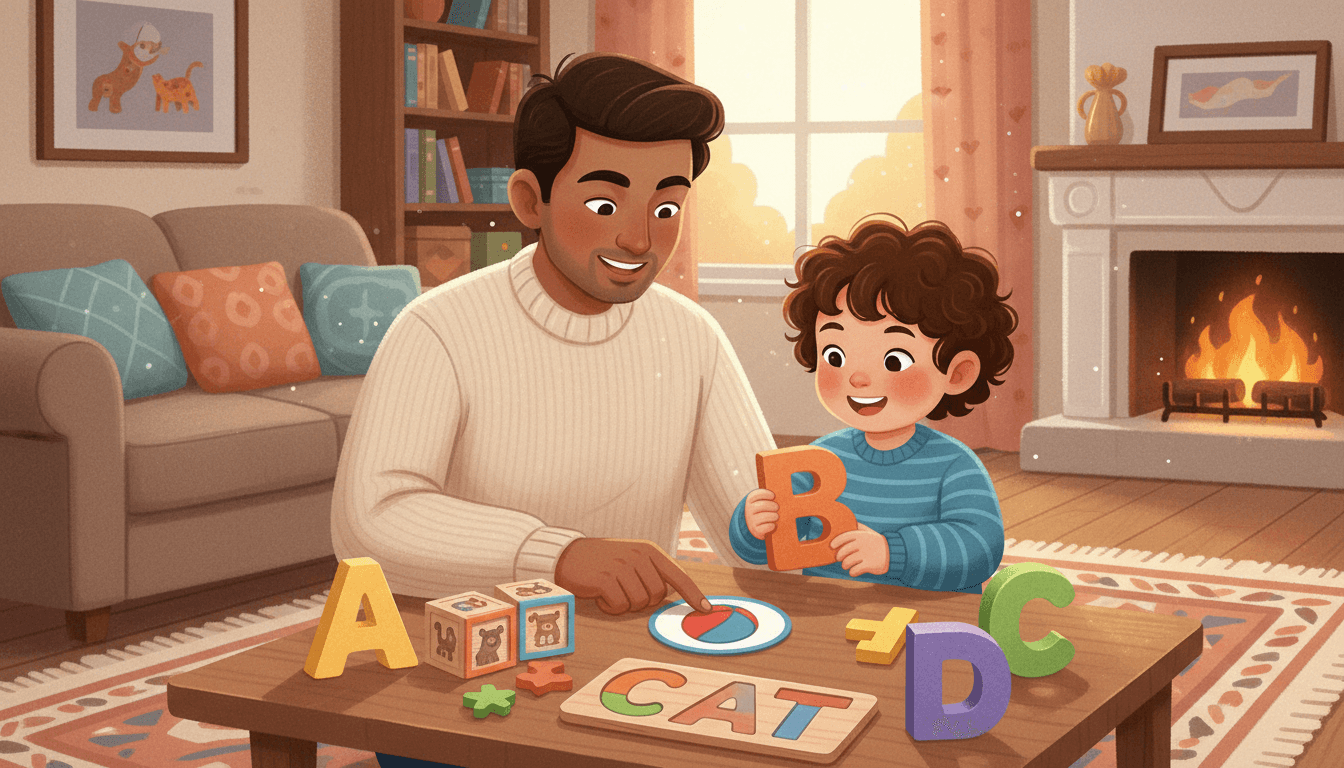
How to Teach the Alphabet to Kids: A Parent's Complete Guide
Get 30 days of free worksheet downloads
Key Takeaways
- Teaching letters in frequency order (S, A, T, P, I, N first) helps kids start blending real words sooner, which builds motivation faster than following the traditional A-Z sequence.
- Teach letter names and sounds at the same time - say the name, say the sound, and give a key word example every time so the pairing becomes automatic.
- Uppercase letters are easier to write because they use straight lines, but lowercase should be introduced alongside them quickly since books and print are 95% lowercase.
- Multisensory activities - tracing in sand, forming letters with playdough, body movement - are more effective than flashcards alone for preschool-age learners.
- 10 to 15 minutes of daily practice beats longer infrequent sessions, and anything that involves letters (reading together, fridge magnets) counts as practice time.
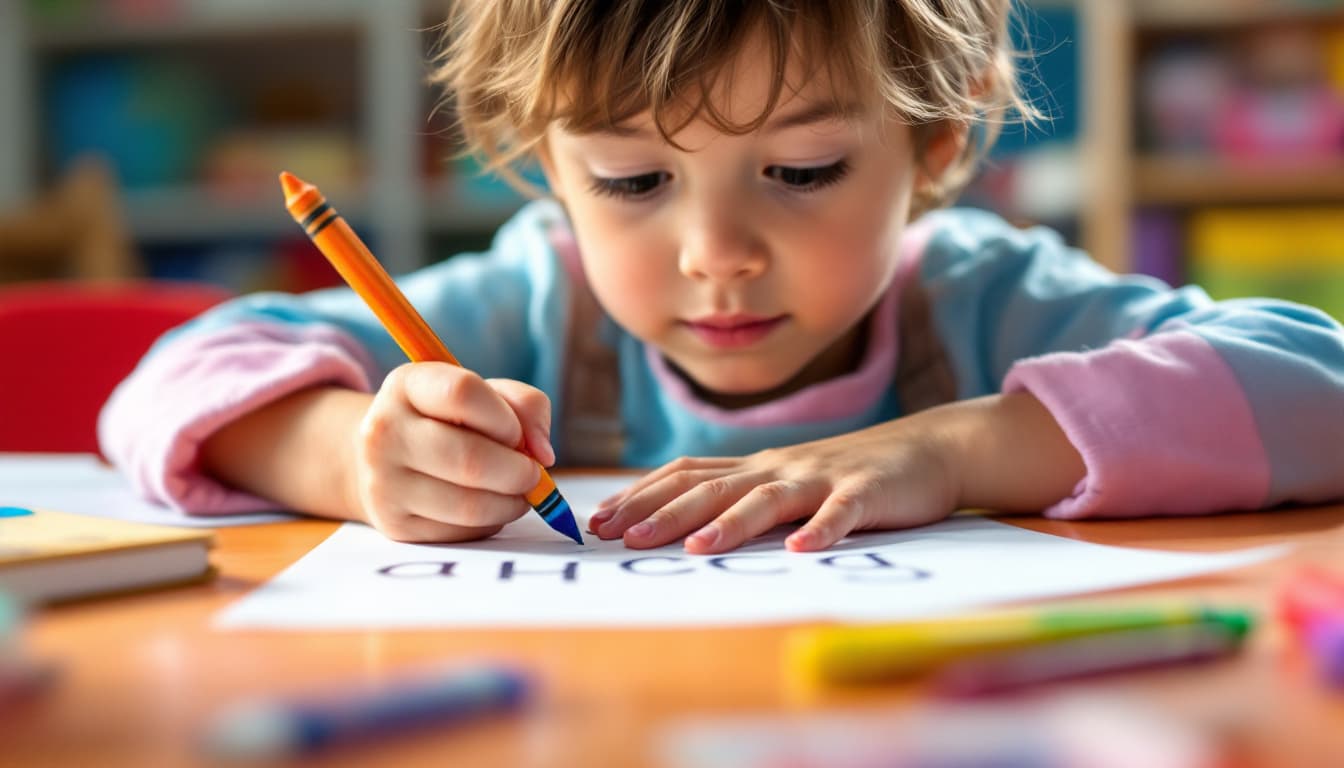
Teaching the alphabet is one of those milestones that feels huge. Because it is. Letters are the building blocks of reading, writing, and honestly, most of what your child will do in school for the next 13 years.
But here's what nobody tells you: there's no single right way to teach letters. Some kids absorb them from reading books together. Others need hands-on activities and lots of repetition. And the order you teach them? It probably shouldn't be A-B-C.
Let's walk through what actually works.
The Best Order to Teach Letters (Not A to Z)
This surprises most parents. The alphabet song teaches letters in order, but that's not the best order for learning to read.
Many early literacy programs recommend starting with letters that appear most frequently in simple words. Think about it: if your child learns S, A, T, P, I, N first, they can already start sounding out real words like "sat," "pin," and "tap." That's way more motivating than starting with A, B, C, D and waiting weeks before those letters combine into anything meaningful.
Here's a general sequence that many reading specialists use:
- First group: S, A, T, P, I, N (high-frequency, easy to blend)
- Second group: C, K, E, H, R (common consonants plus short E)
- Third group: M, D, G, O (round letters that look distinct)
- Fourth group: L, F, B, Q, U (less frequent but still important)
- Last group: J, Z, W, V, Y, X (the letters kids encounter least in early reading)
You don't have to follow this exact order. The point is this: teach letters that let your child start reading simple words as soon as possible. That early success builds confidence.
Free Kindergarten Letter Worksheets


Teaching Letter Names and Sounds Together
There used to be a debate about this. Should you teach the letter name first ("this is the letter B") or the sound first ("this says /b/")? The research is pretty clear now: teach both at the same time.
When you hold up a letter, say: "This is the letter B. It says /b/." Then give an example: "B says /b/ like in ball."
Some tips that help:
- Use a key word for each letter. A is for apple, B is for ball, C is for cat. Keep the same key word every time so it becomes automatic.
- Emphasize the sound more than the name. Letter names matter, but sounds are what kids need for reading. If your child can tell you the sound but not the name, that's actually fine for now.
- Watch out for vowels. Each vowel has at least two sounds (short and long). Start with the short sounds: /a/ as in apple, /e/ as in egg, /i/ as in igloo, /o/ as in octopus, /u/ as in umbrella. Long vowels can wait.
One thing that trips up a lot of kids: the letter name and sound don't always match. W says /w/ but the letter name starts with "duh." H says /h/ but the name starts with "ay." Be patient with the confusion. It's genuinely confusing.
Uppercase vs Lowercase (Which First)
Most preschool programs start with uppercase letters. There's a practical reason: uppercase letters are easier to write. They're made of straight lines and simple curves. No reversals to worry about (looking at you, lowercase b and d).
But here's the thing. Lowercase letters make up about 95% of what your child will actually read. Books, signs, screens, all mostly lowercase.
So what's the move? Start with uppercase for recognition and writing, but introduce lowercase alongside them pretty quickly. Many teachers teach them in pairs: "This is big A and little a. They both say /a/."
A few letters to watch:
- b and d (the classic reversal pair)
- p and q (same issue)
- g and q (look similar in some fonts)
Don't panic about reversals in preschool or even kindergarten. They're developmentally normal until about age 7. Just gently correct and move on.
Multisensory Activities for Letter Learning
Sitting at a table with flashcards is probably not enough for most preschoolers. Their brains learn better when multiple senses are involved. Touch, sight, sound, and movement all help lock in letter knowledge.
Here are activities that actually work with young kids:
Tactile activities:
- Trace letters in sand, salt, or shaving cream on a tray
- Form letters with playdough
- Trace sandpaper letters with a finger (the Montessori approach)
- Use a finger to "write" letters on each other's backs and guess
Visual activities:
- Letter hunts around the house ("find three things that start with M")
- Sort magnetic letters by color, shape, or curved vs. straight
- Highlight a target letter in a magazine or junk mail
Movement activities:
- Make letter shapes with your body on the floor
- Walk the shape of a letter in the backyard
- Jump to the correct letter when you call out a sound
Sound activities:
- "I spy something that starts with /s/"
- Clap and chant: "B says /b/, /b/, /b/, ball!"
- Sing letter sound songs (there are dozens on YouTube)
The key is variety. If an activity isn't clicking, try a different one. Some kids are visual learners, some are kinesthetic, and some just need to hear it 50 times. That's all normal.
When Kids Struggle With Letters
Some kids pick up letters in weeks. Others take months. And some seem to learn a letter one day and forget it the next. That can be frustrating, but it doesn't necessarily mean something is wrong.
Common reasons kids struggle:
- They're just not ready yet. Letter learning requires visual discrimination skills that develop at different rates. A 3-year-old who can't distinguish B from D is probably just not there yet developmentally.
- Too many letters at once. If you're introducing a new letter every day, slow down. One or two per week is plenty for most preschoolers.
- Similar-looking letters cause confusion. b/d, p/q, m/n, u/n. Focus on one at a time and make sure it's solid before introducing its look-alike.
- The approach doesn't match the child. If flashcards aren't working, try playdough. If songs aren't clicking, try a letter hunt. Different kids need different entry points.
When to be concerned: If your child is 5 or older and can't recognize or name most letters despite consistent practice, talk to their teacher or pediatrician. Difficulty with letter learning can sometimes signal a learning difference like dyslexia, and early intervention makes a real difference.
How Much Practice Is Enough
This is the question every parent asks, and honestly, the answer is less than you think.
For preschoolers (ages 3-4): 10 to 15 minutes of focused letter practice per day is plenty. But "practice" doesn't have to mean sitting at a table. Reading a book together and pointing out letters counts. So does playing with magnetic letters on the fridge while you make dinner.
For pre-K and kindergartners (ages 4-6): 15 to 20 minutes is a good target. At this age, you can mix in some writing practice alongside recognition.
The rules that matter most:
- Keep it short and fun. The moment it feels like a chore, learning stops.
- Consistency beats intensity. Ten minutes every day beats 45 minutes on Saturday.
- Follow their interest. If your child is obsessed with dinosaurs, use dinosaur names to practice letters. If they love cooking, read recipe words together.
- Celebrate small wins. "You remembered that P says /p/! You didn't know that last week!" Specific praise goes a long way.
And please, don't compare your child to the kid down the street who could read at 3. Alphabet learning has a wide range of normal, and most kids catch up by the end of kindergarten regardless of when they started.
Keep Reading
- When Do Kids Learn the Alphabet? A Developmental Guide
- How to Teach Phonics to Kids: A Complete Guide for Parents
- Alphabet Activities for Kids: Fun Ways to Learn Letters
Practice Pages for Letter Mastery
Once your child knows a handful of letters and their sounds, targeted practice pages help reinforce what they've learned. Look for activities that go beyond simple tracing:
- Letter matching (connect uppercase to lowercase)
- Beginning sound identification (circle the picture that starts with the target letter)
- Letter formation practice (tracing with directional arrows)
- Letter sorting (which letters have curves? which are all straight lines?)
The best practice pages mix recognition, sounds, and writing in one activity. That way your child is building all three skills together instead of in isolation.
Start with letters your child already knows to build confidence, then gradually mix in newer letters. If they're getting frustrated, the page is probably too hard. Back up and try an easier one.
Teaching the alphabet takes time and patience. Some weeks it'll feel like nothing is sticking, and then suddenly your child will start pointing out letters on cereal boxes and road signs. That moment is worth all the repetition. Trust the process, keep it playful, and your kiddos will get there.

Adi Ackerman
Head Teacher
Adi is the Head Teacher at ClassWeekly, with years of experience teaching elementary students. She designs our curriculum-aligned worksheets and writes practical guides for teachers and parents.
Keep Reading
Ready to download? Try ClassWeekly free for 30 days.
Unlimited worksheets for PreK through 5th grade. Cancel anytime.