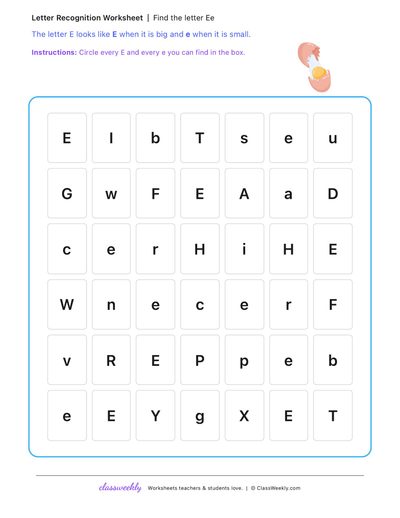
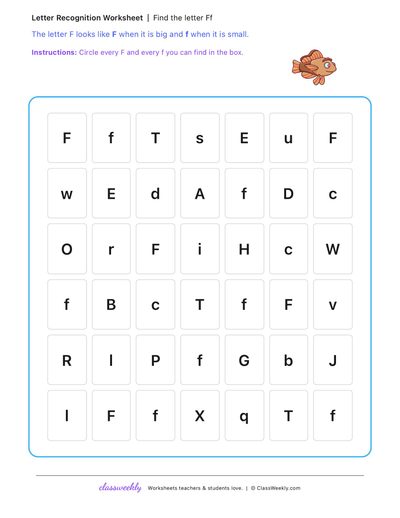
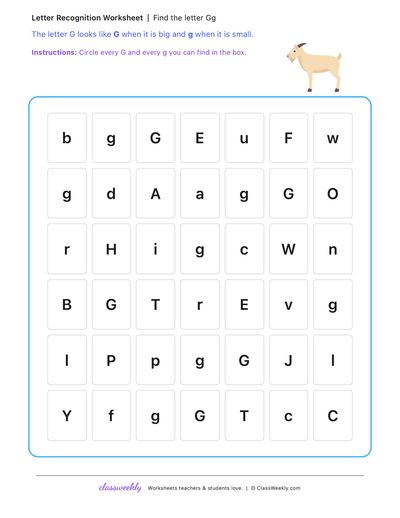
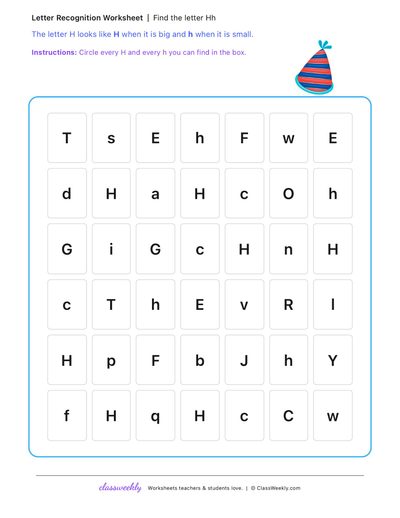
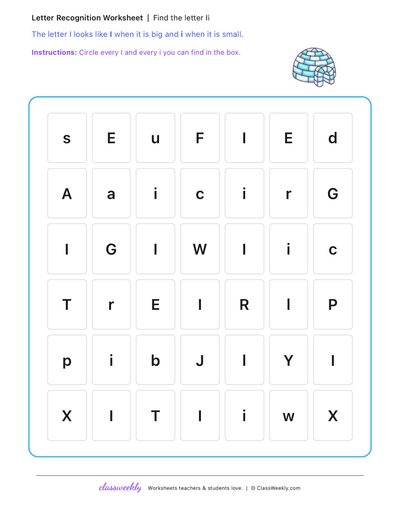
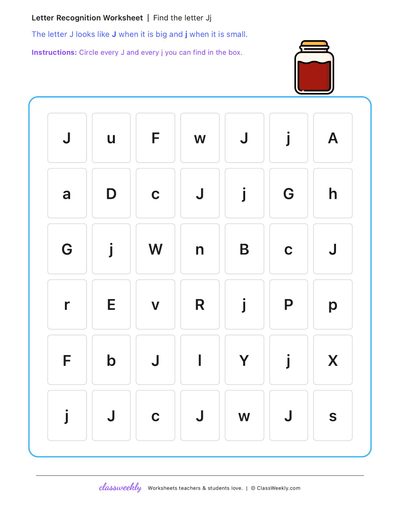
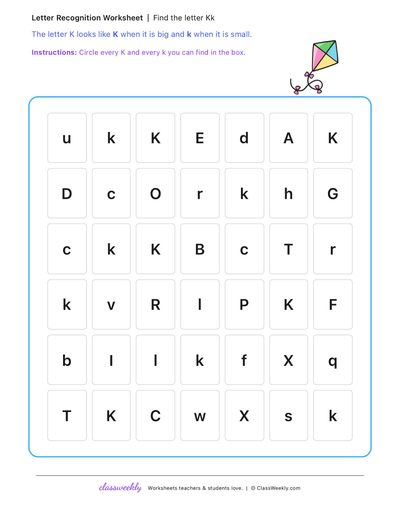
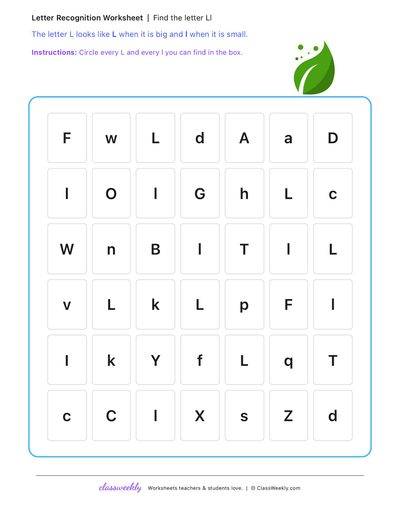
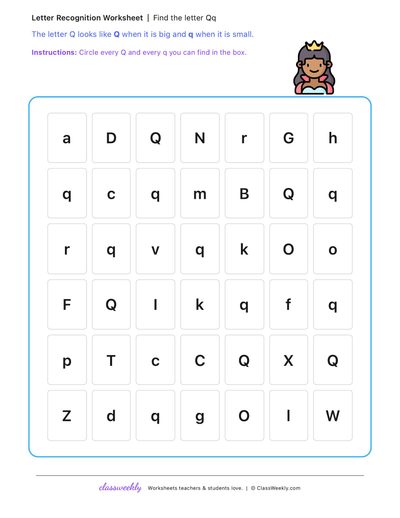
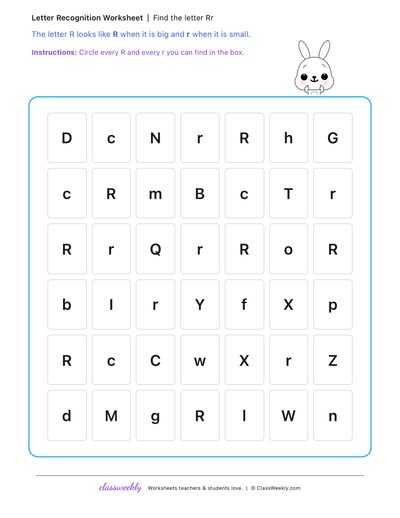
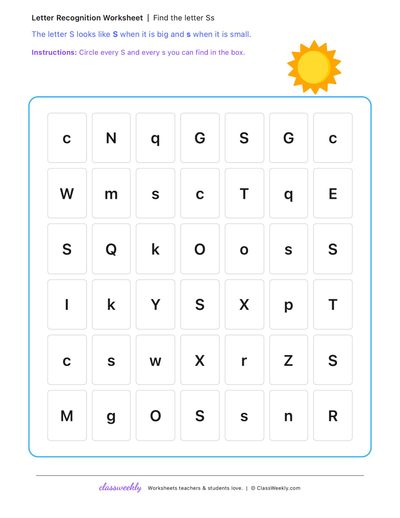
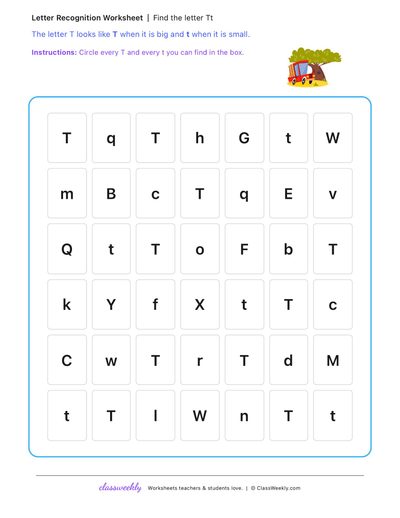
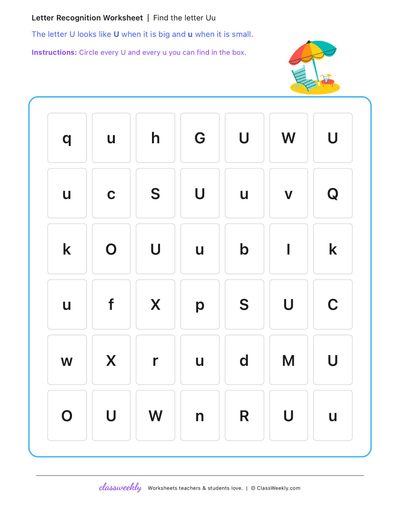
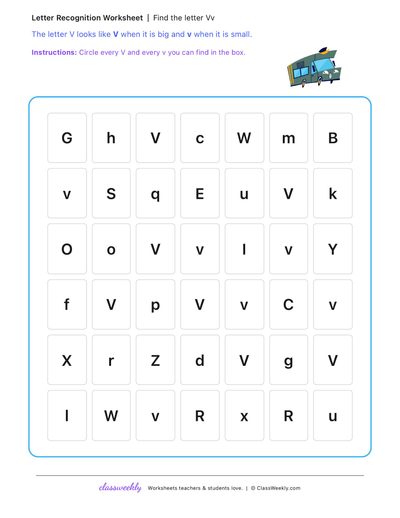
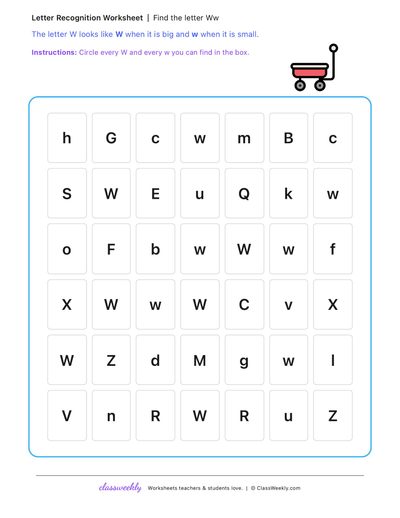
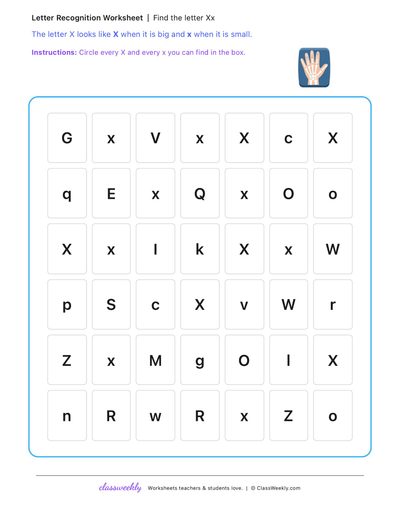
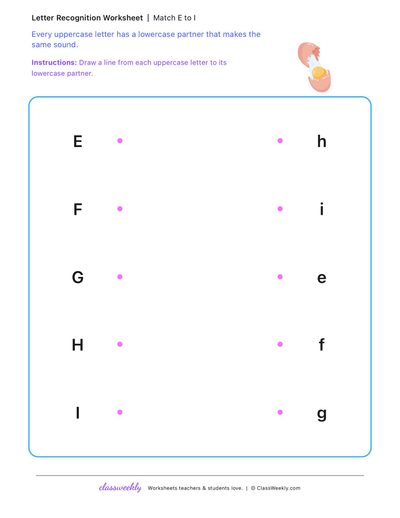
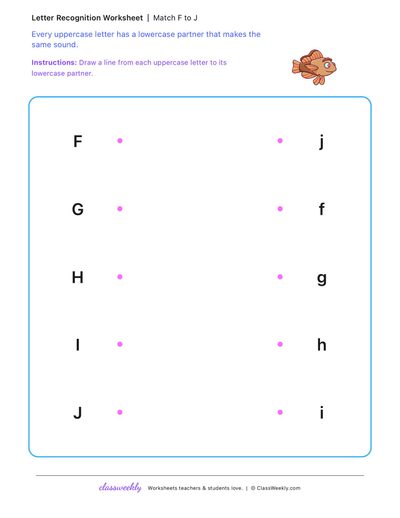
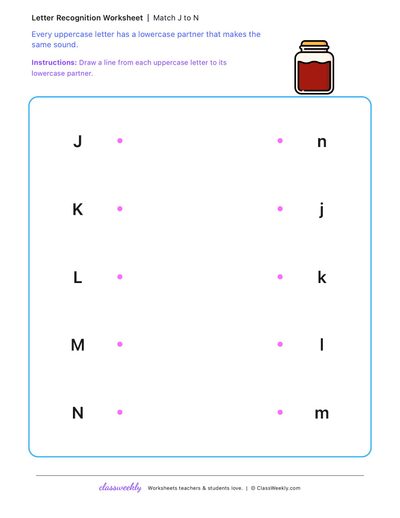
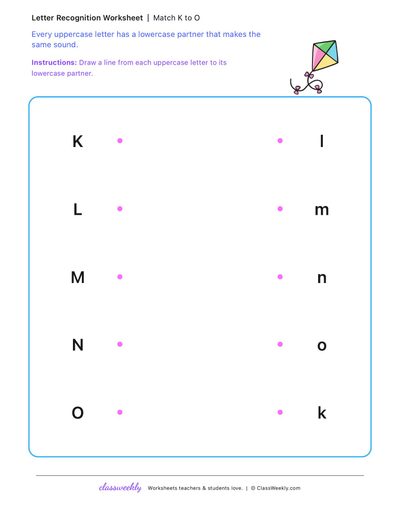
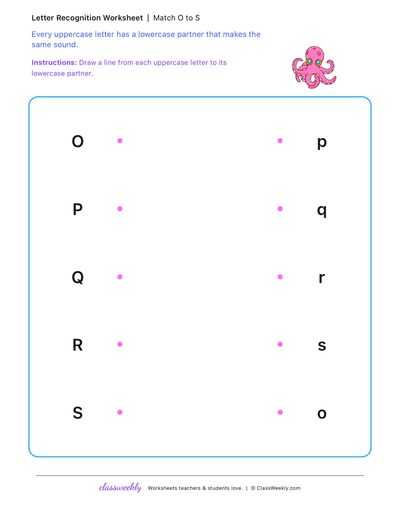
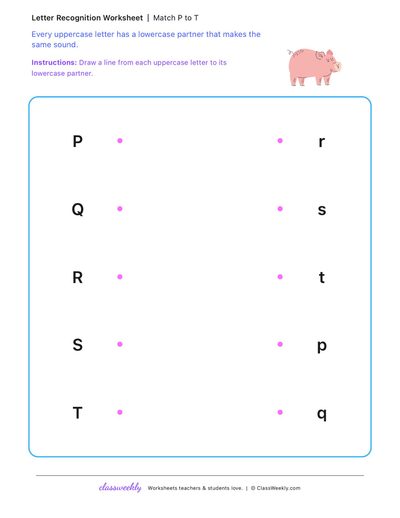
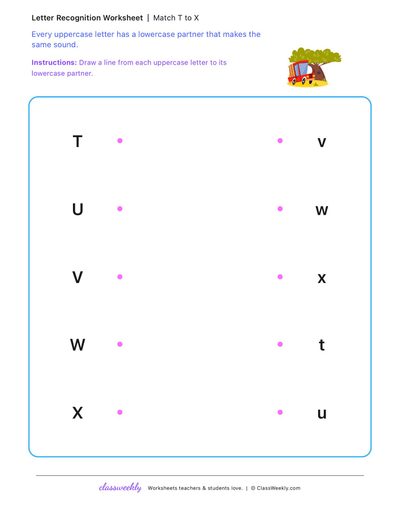
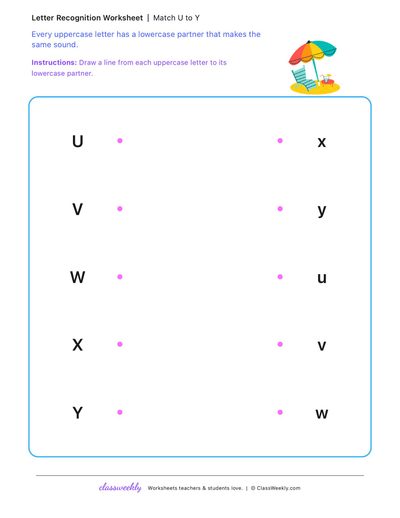
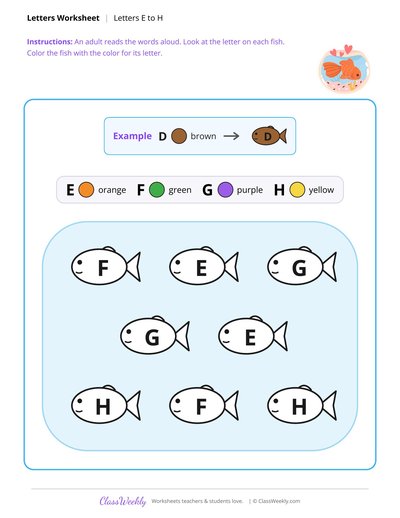
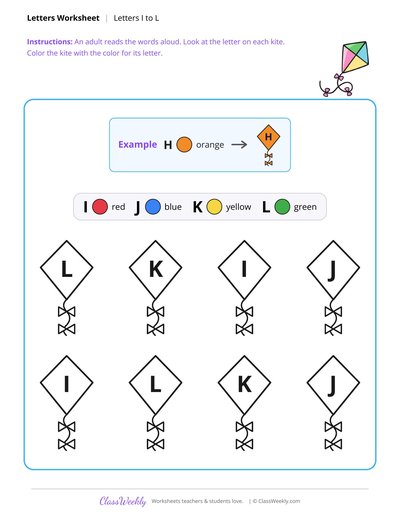
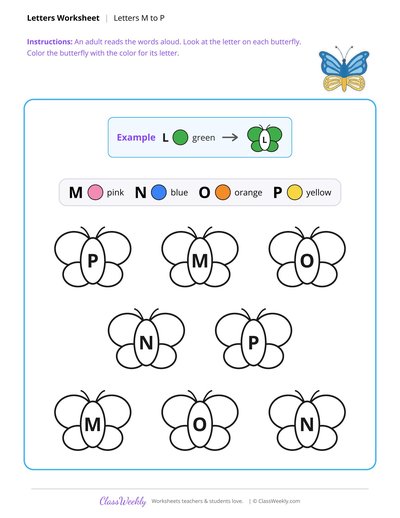
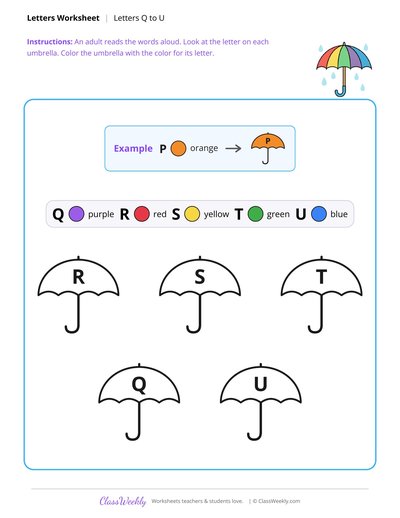
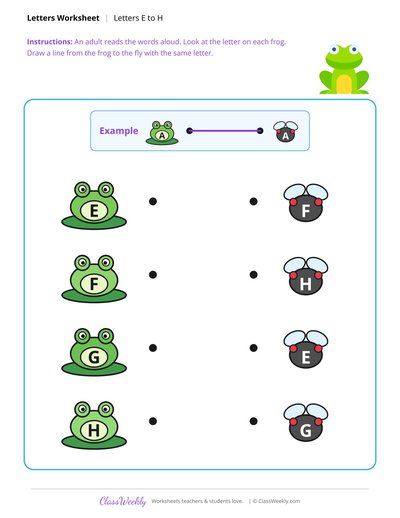
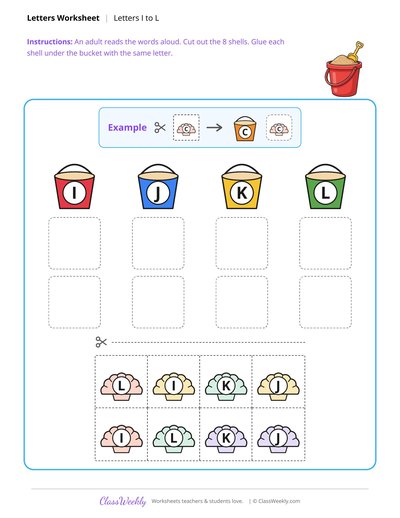
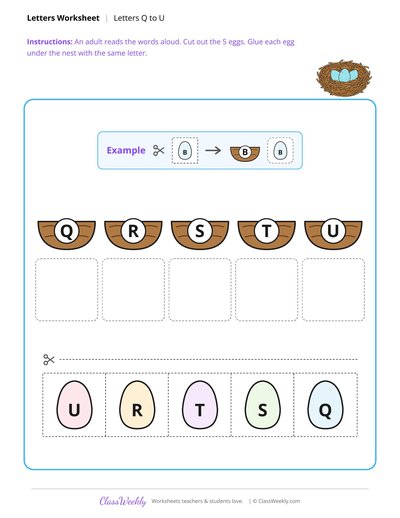
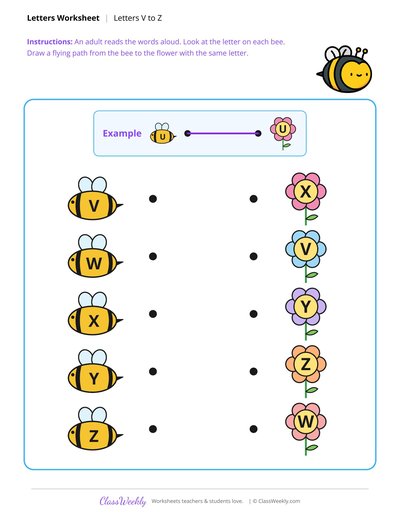
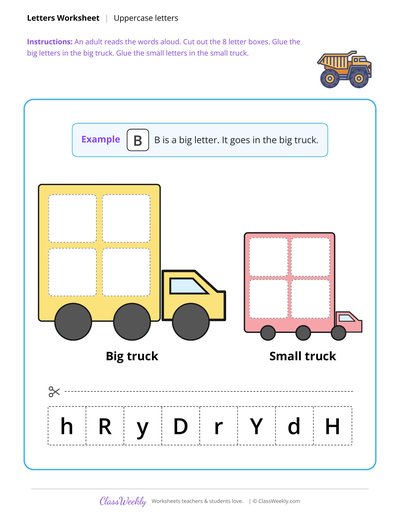
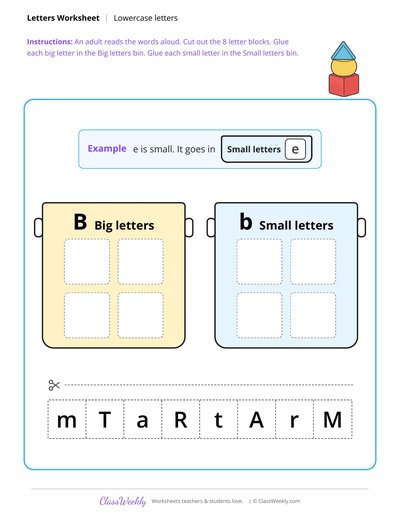
Free printable letter recognition reading worksheets for preschool students (Ages 3-5). Covers Find the letter, Match uppercase and lowercase, Letter check-in, and more.
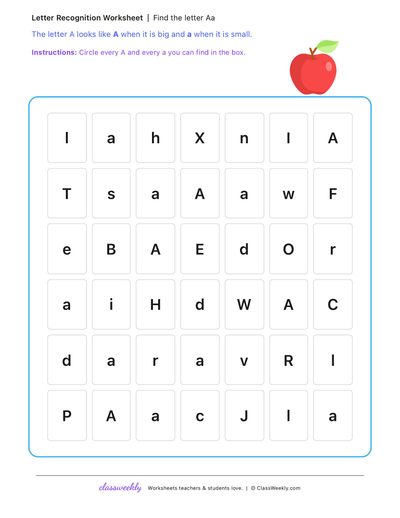
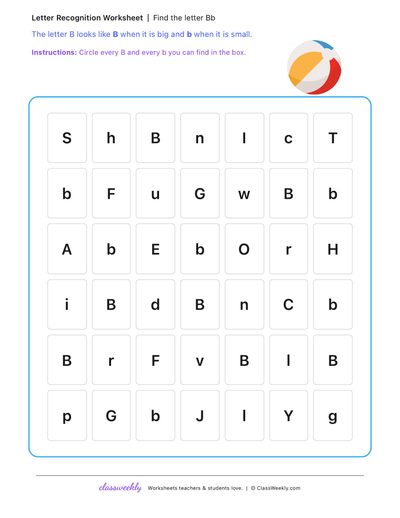
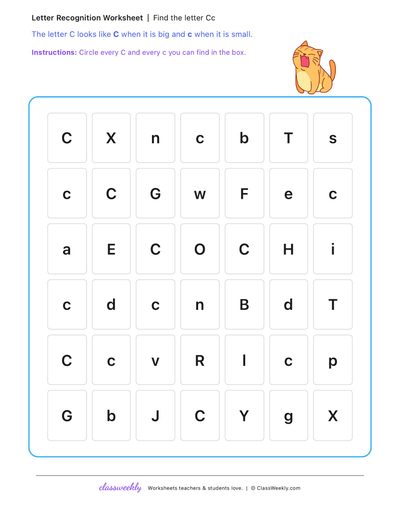
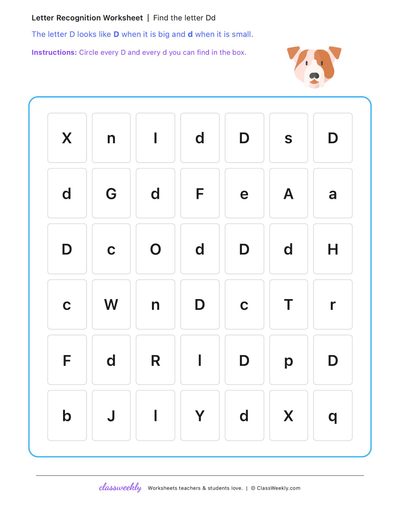
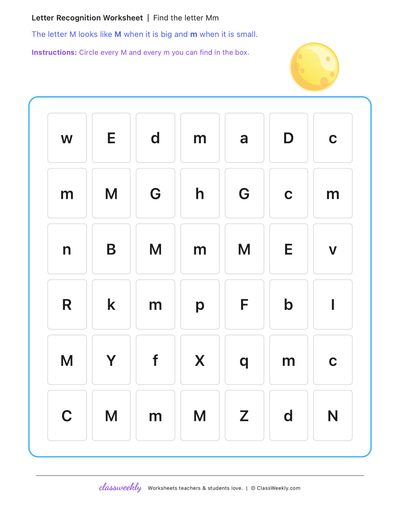
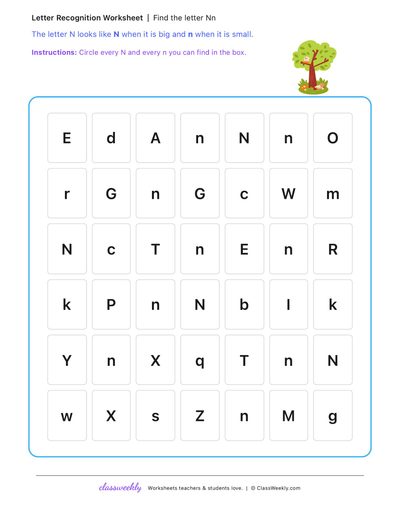
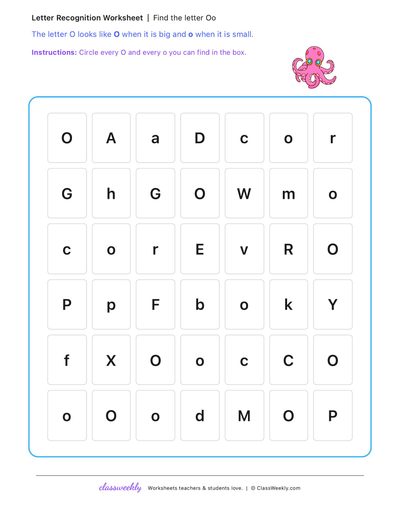
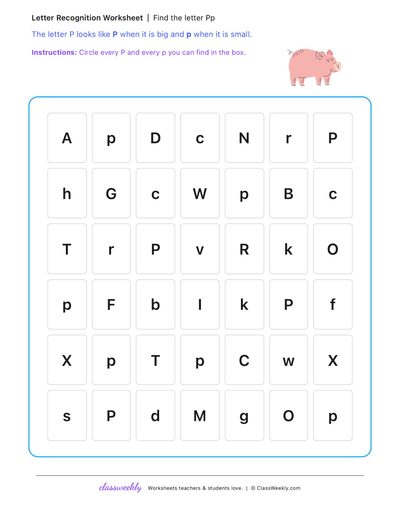
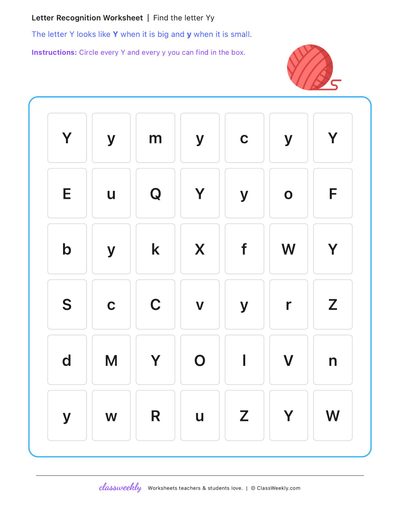
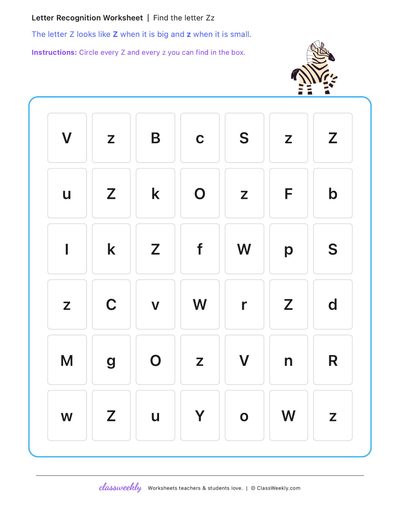
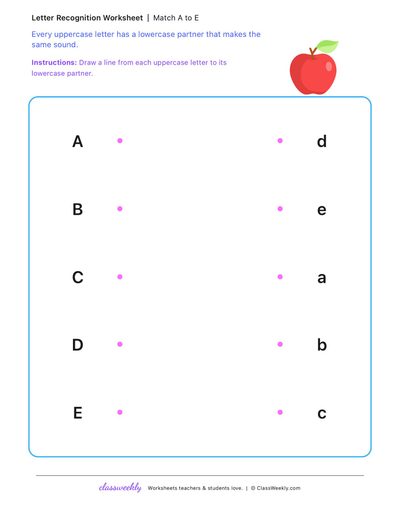
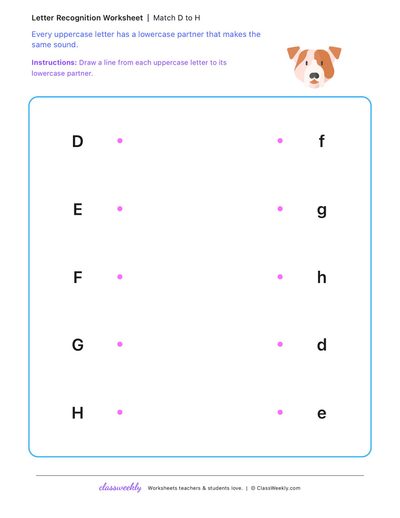
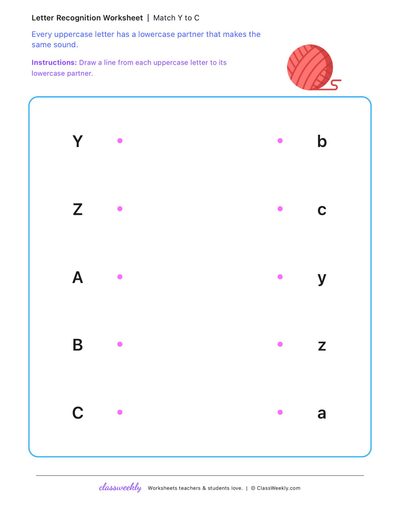
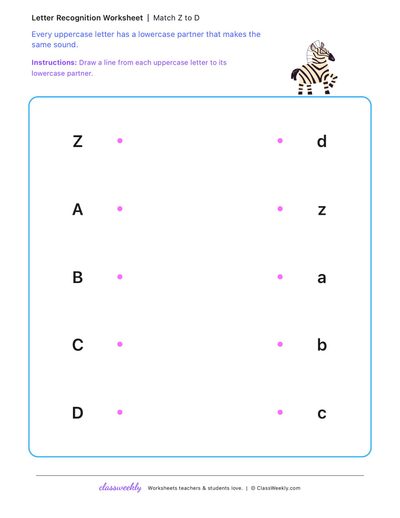
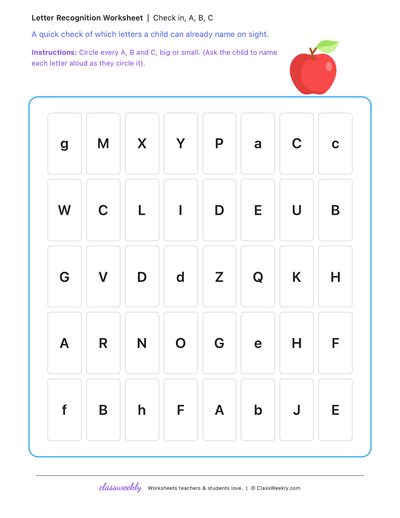
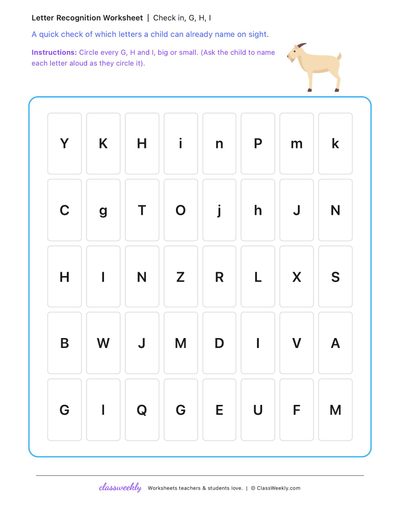
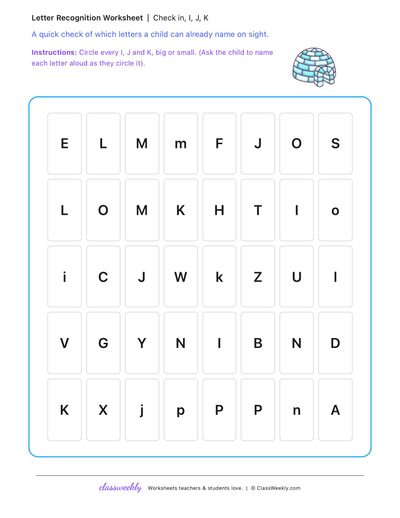
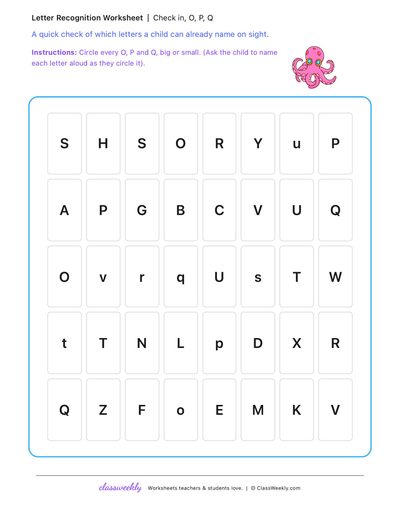
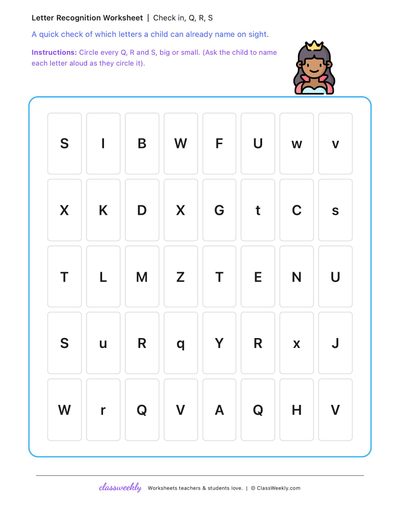
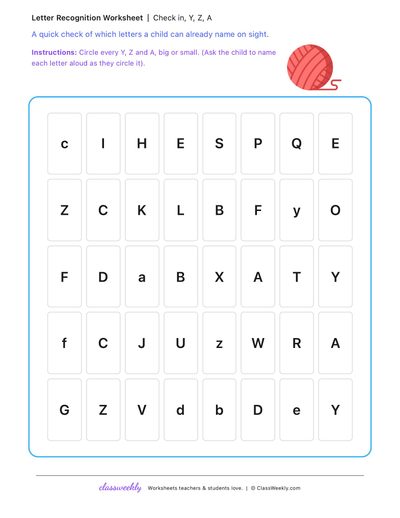
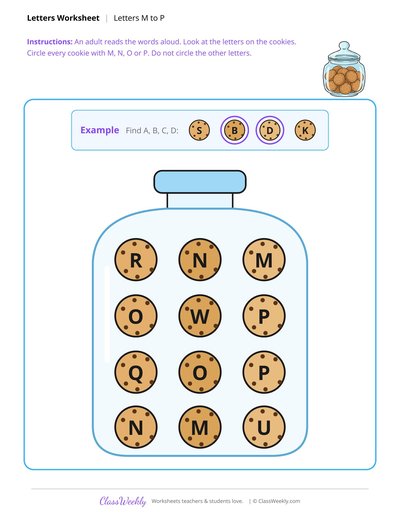
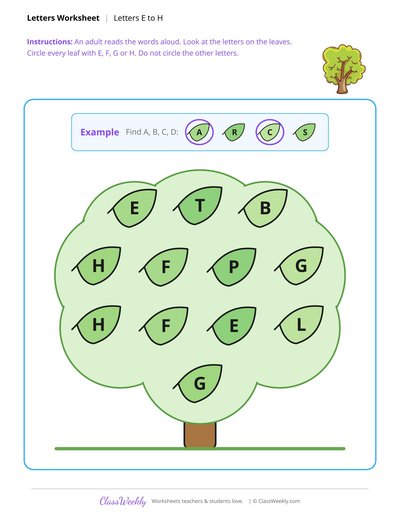
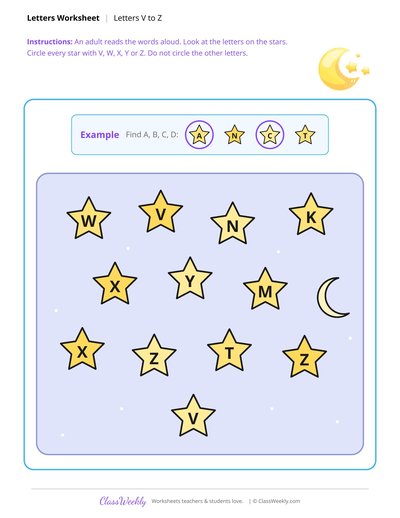
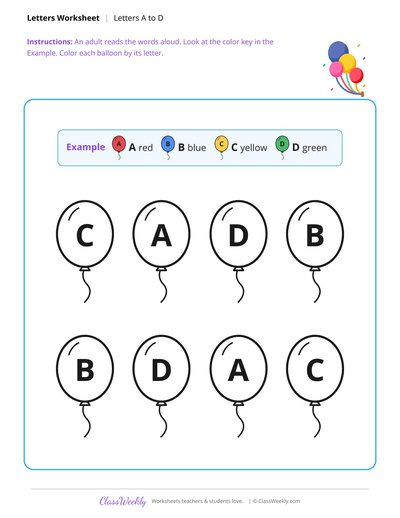
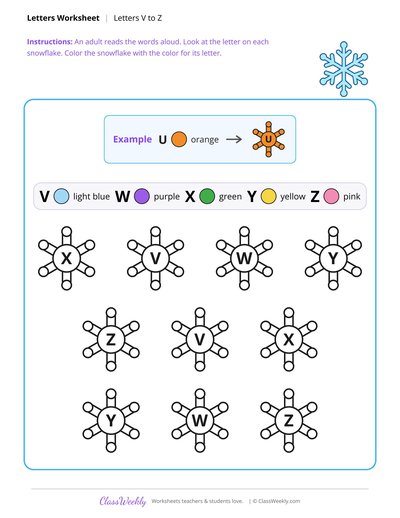
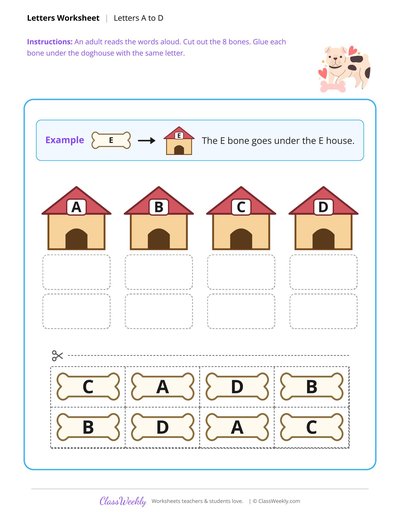
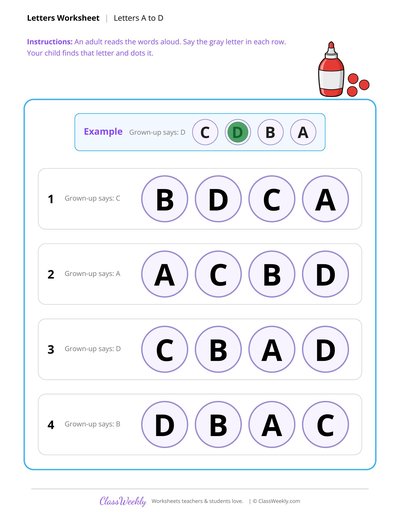
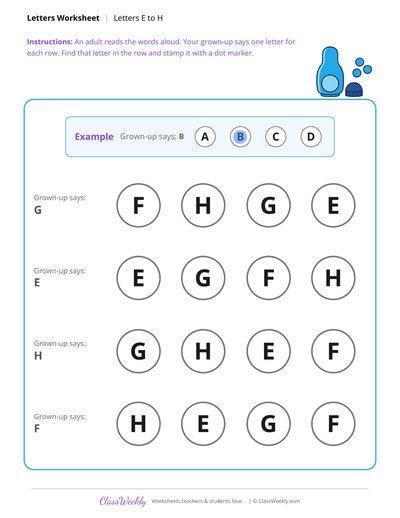
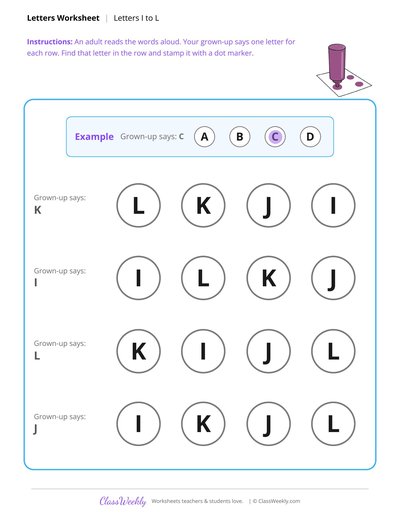
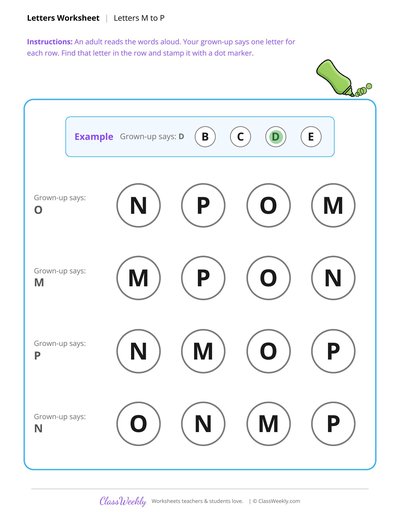
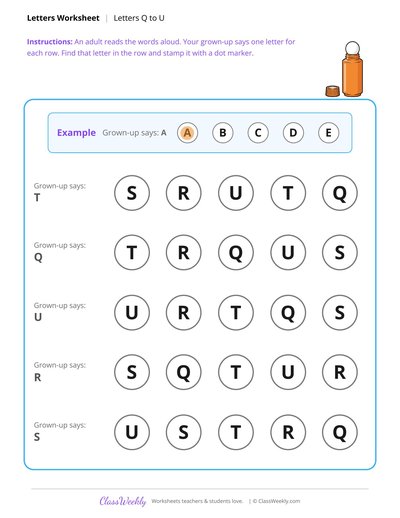
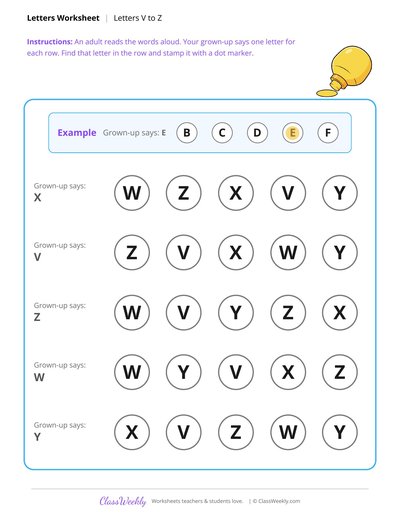
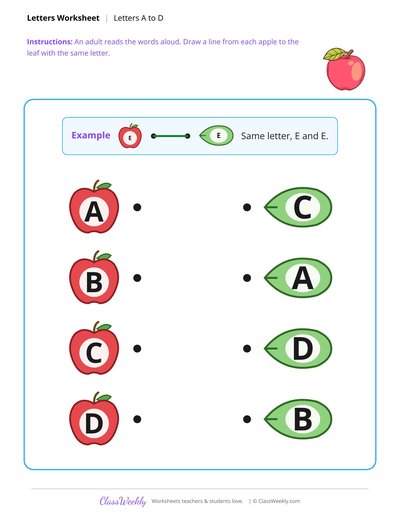
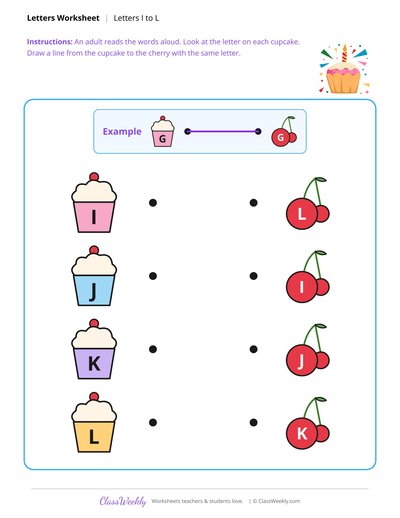
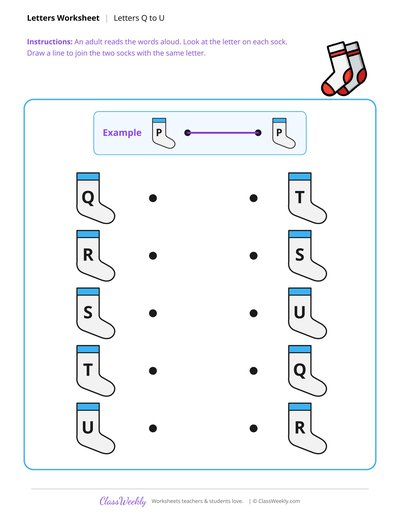
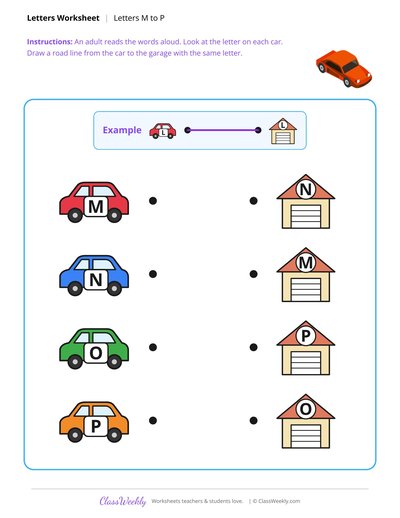
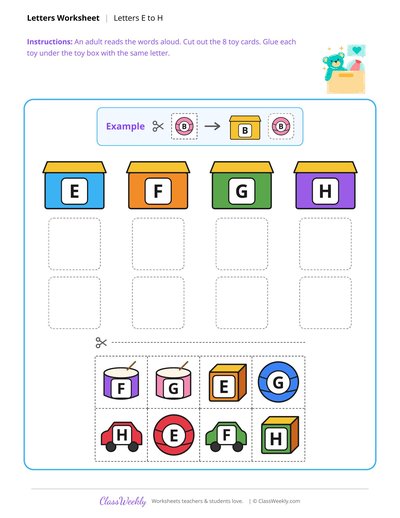
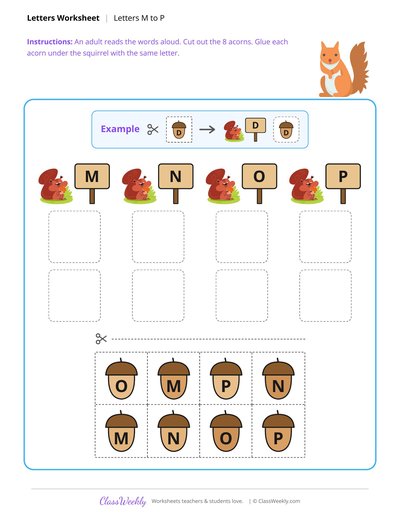
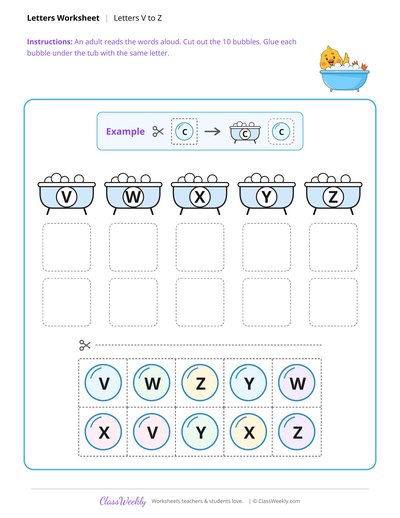
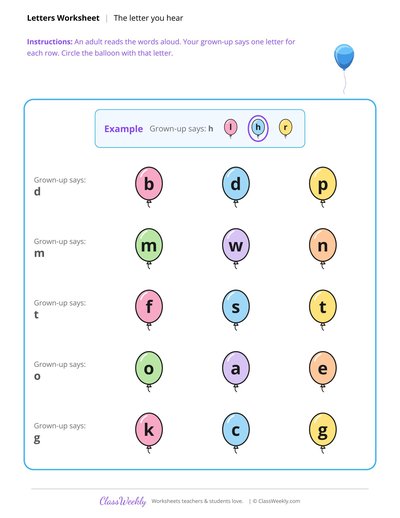
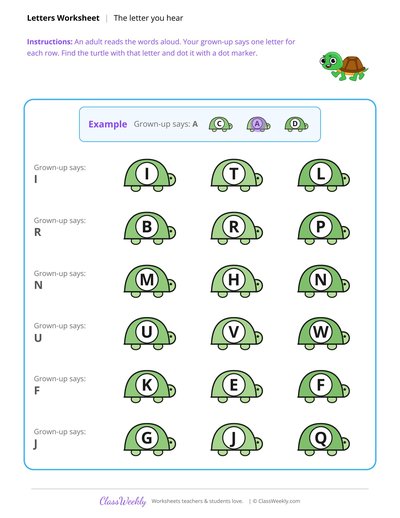
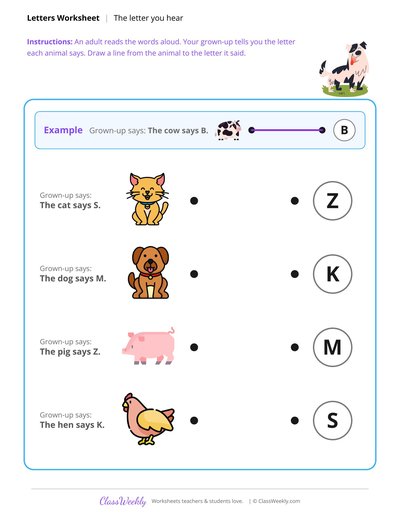
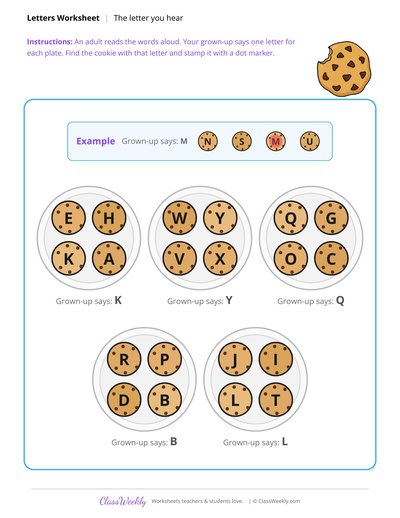
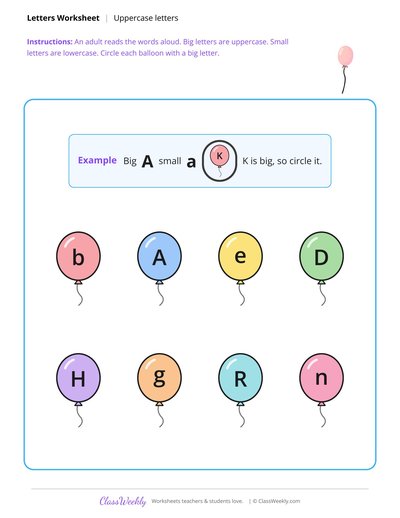
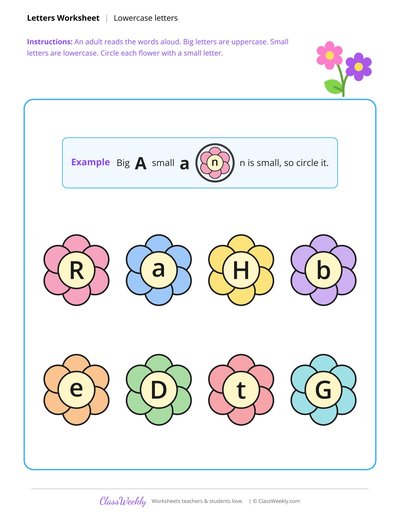
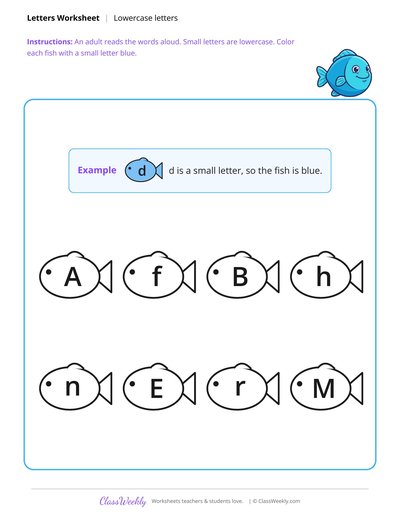
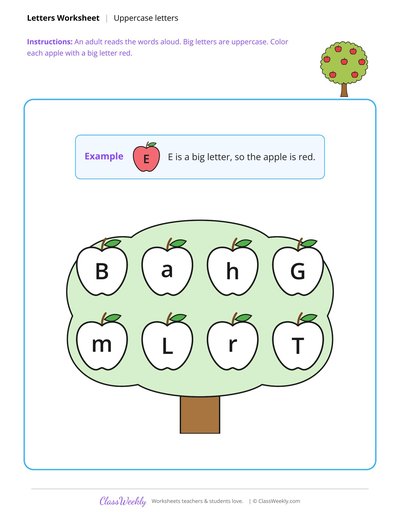
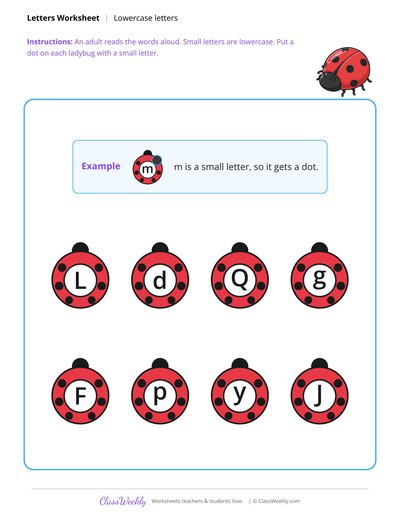
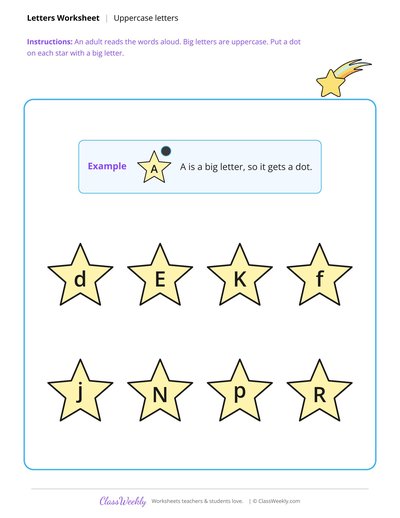
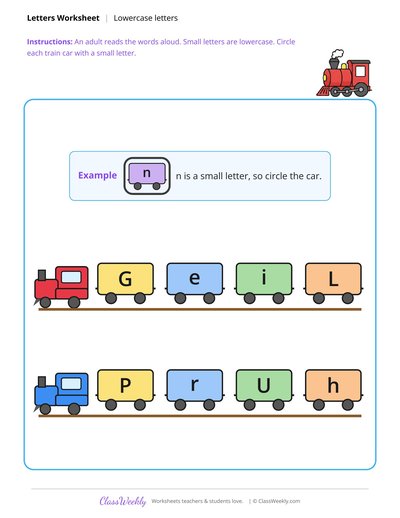
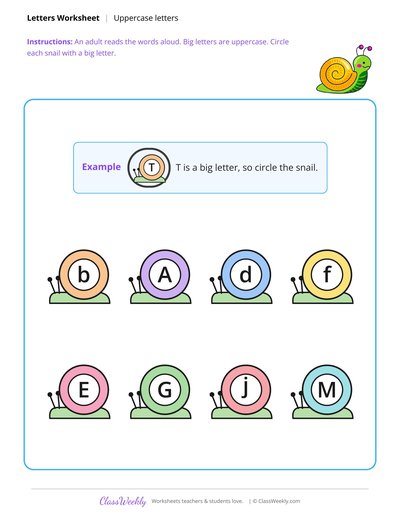
Letter recognition means seeing a letter and knowing which one it is, whether it is a big uppercase letter or a small lowercase one, and whether it stands alone or sits among other letters. For children ages 3 to 5, this skill sits between knowing the alphabet song and linking letters to their sounds. These 86 pages give that practice several ways. Children circle one letter hidden among others, match uppercase letters to lowercase partners, review the alphabet four or five letters at a time, find the letter an adult says among look alike letters, and sort big letters from small ones. Short check-ins show which letters a child knows on sight. An adult reads the Instructions aloud, and 80 pages have answer keys; the color by letter pages carry their own color key.
It varies widely. Many 4-year-olds recognize the letters in their own name and a handful of others, and many children know most uppercase letters by the end of preschool. Knowing all 26 uppercase and lowercase letters is usually a kindergarten goal, so a 4-year-old who still mixes up several letters is common.
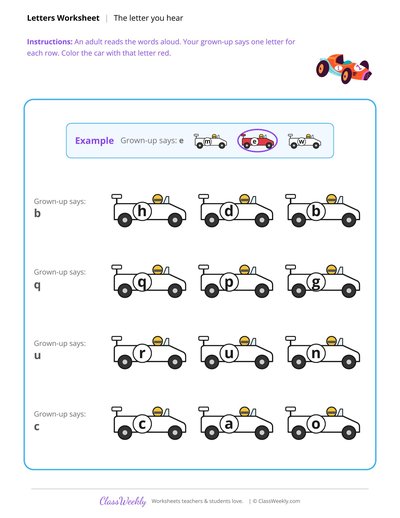
Mixing up b and d, and sometimes p and q, is very common in preschool. These letters are the same shape flipped or turned, and young children are used to objects that stay the same whichever way they face. The find the letter you hear pages place these letters side by side so a child can practice looking closely.
Letter recognition is knowing a letter's name and shape, for example seeing B and saying its name. Letter sounds is knowing the sound the letter stands for, like the /b/ at the start of ball. Children need both, and many learn letter names first, though the two can be practiced side by side.
86 printable worksheets, all free to preview. Downloads are included with a ClassWeekly free trial, and every page prints on standard 8.5 x 11 paper.
These are written for preschool children, roughly ages 3-5. Start with the first few pages, use the free preview to judge the fit, and come back to harder ones as your child gets steadier.
No. Most pages ask children to circle, match, color, or cut and paste, and a grown-up can read the instructions aloud. Pages that do ask for letters, like letter tracing, start with tracing over dashed guides.
Yes. Nothing here assumes a classroom of 25, so they work the same one-to-one at the kitchen table as they do in a Preschool classroom, a learning center, or a tutoring session.
More reading worksheets
Explore all of our preschool reading worksheets, covering alphabet, letter recognition, letter sounds, word building, and more.
ClassWeekly offers free worksheets and printable learning resources for kids, from preschool up. Preschool worksheets build early math, reading, writing, science, and social studies skills for ages 3-5 and are designed by educators. We also have free online learning games for thousands of skills, and kids' answers turn into a progress report for the grown-up. Start a free 30-day trial to download the worksheets.