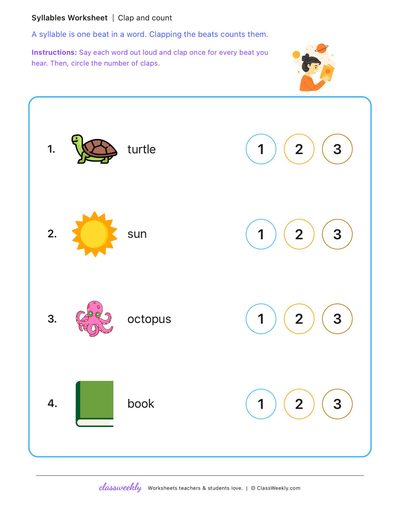
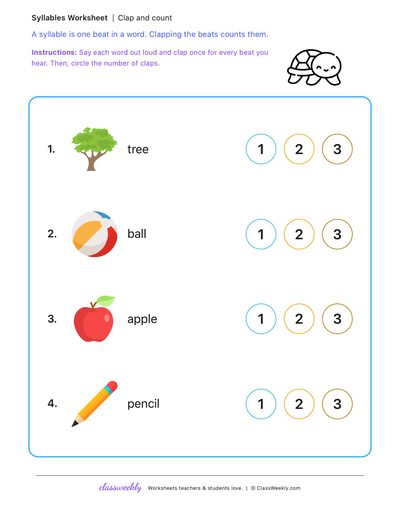
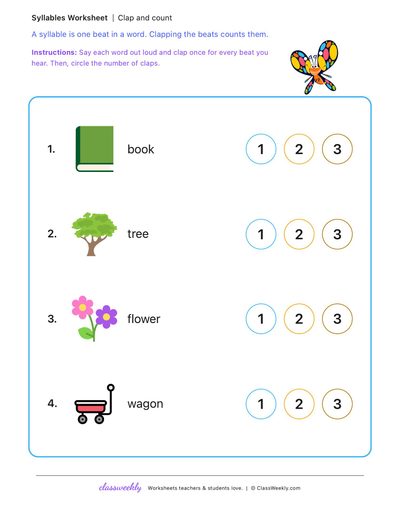
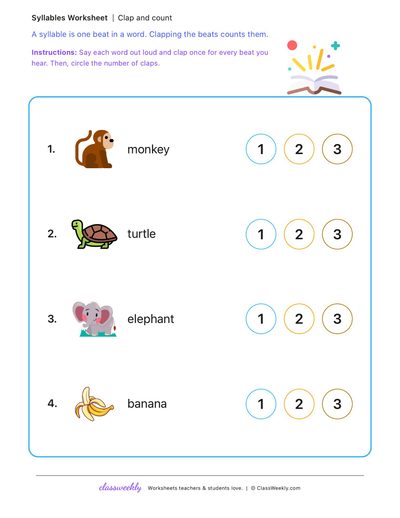
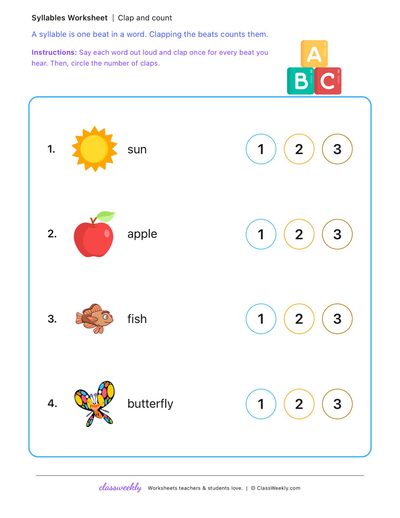
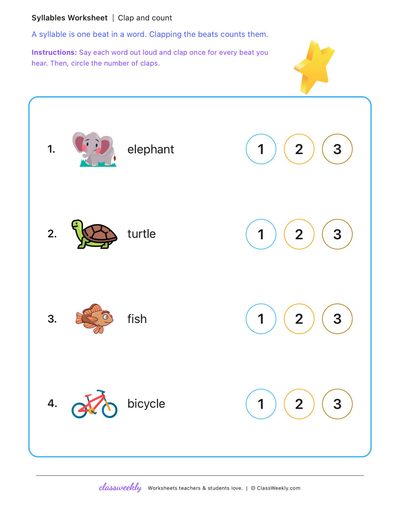
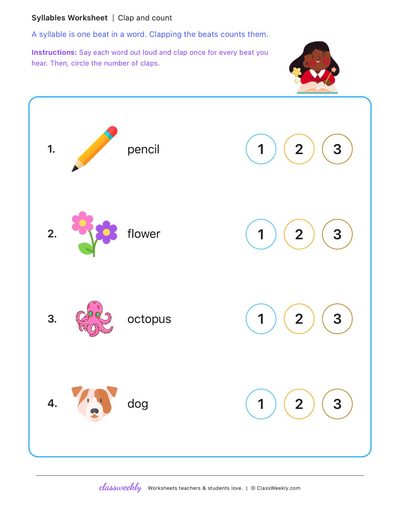
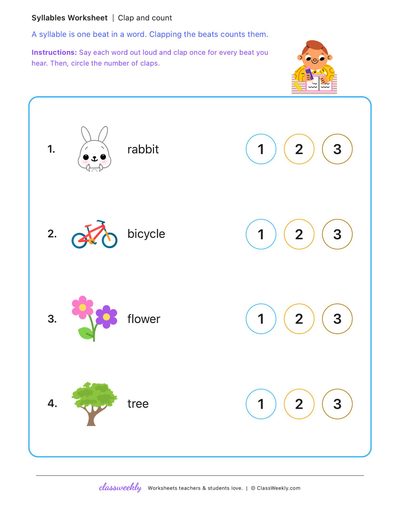
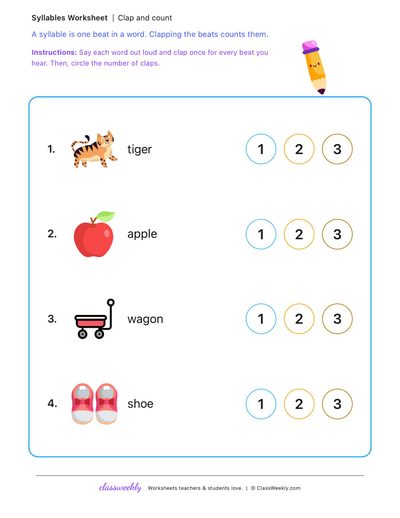
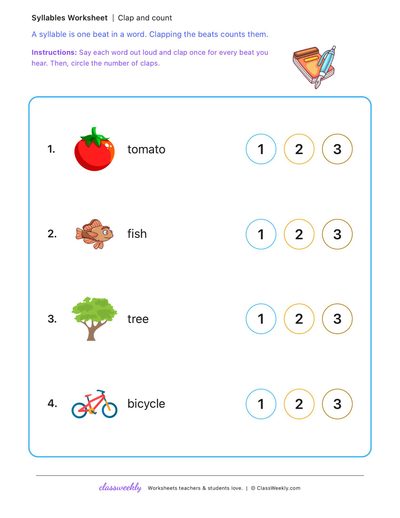
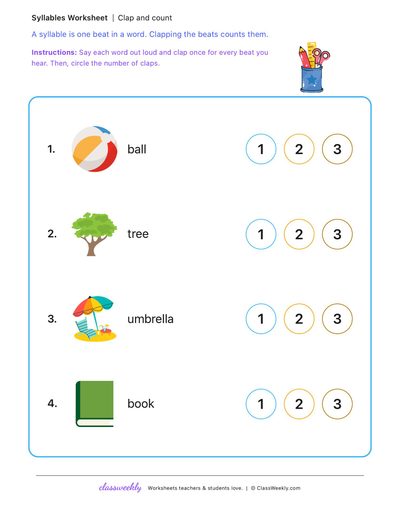
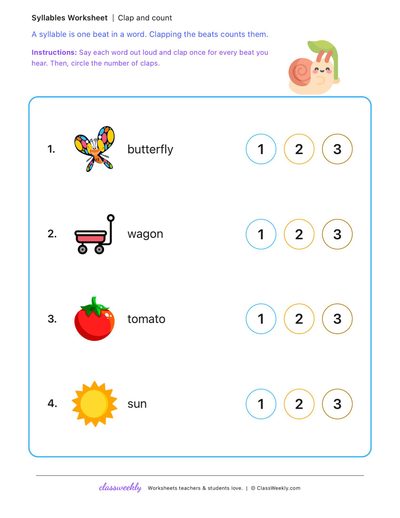
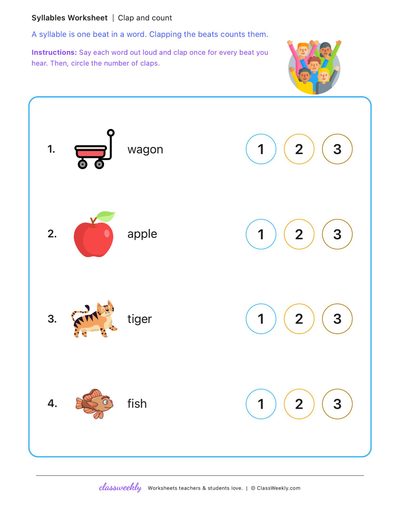
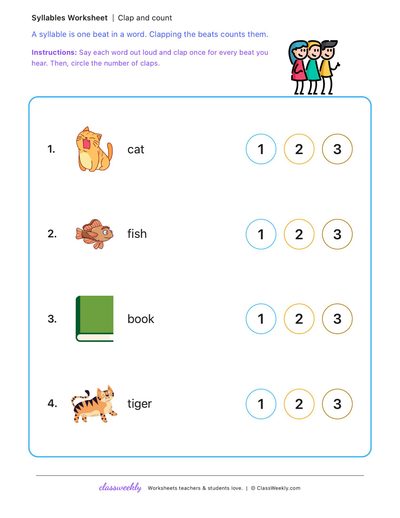
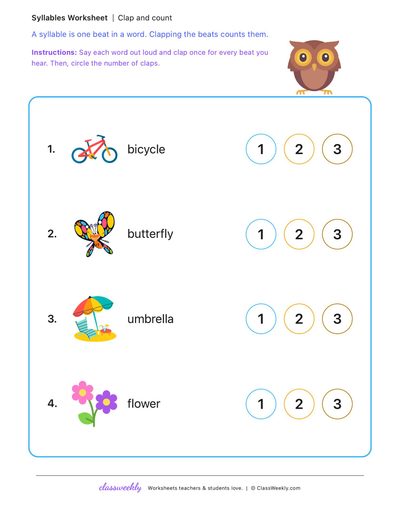
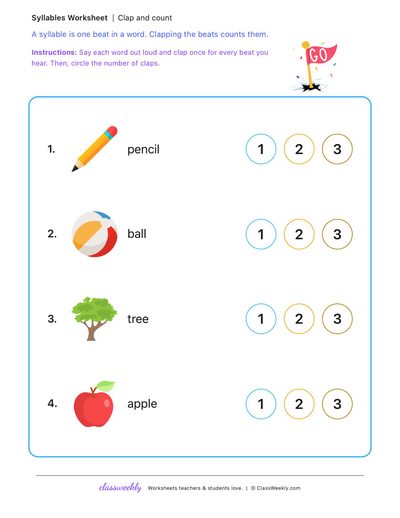
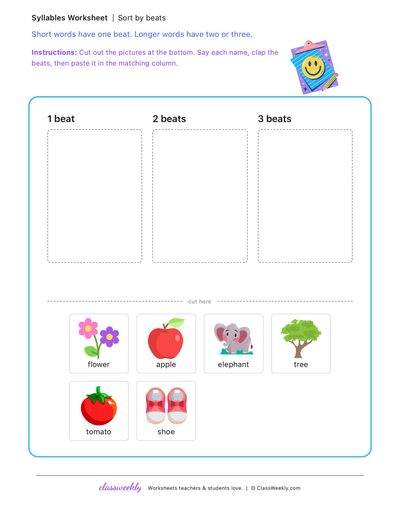
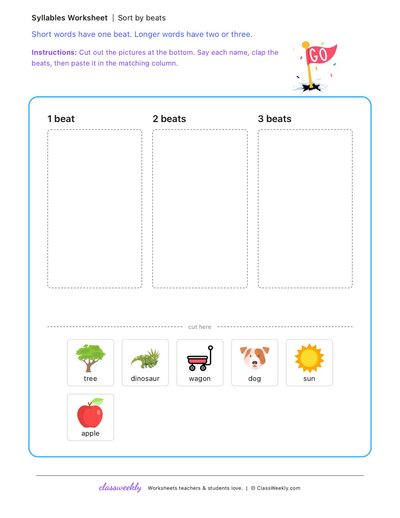
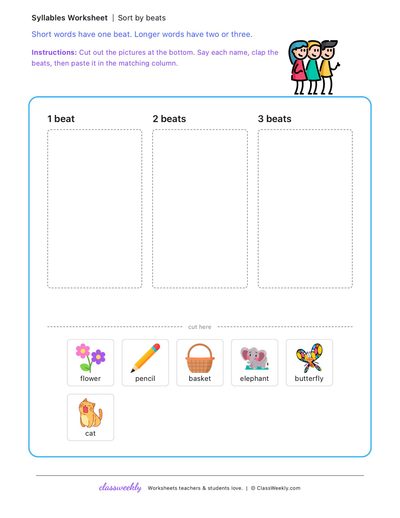
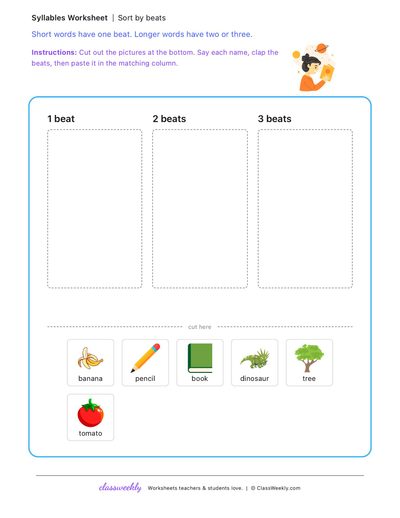
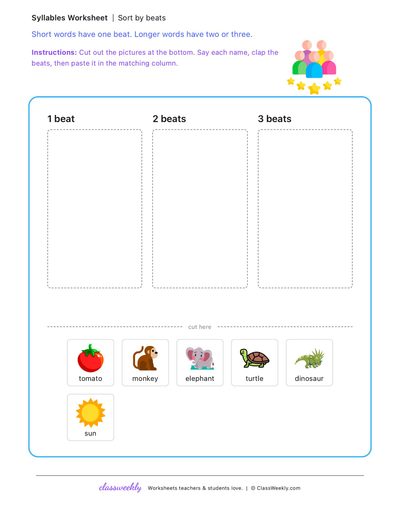
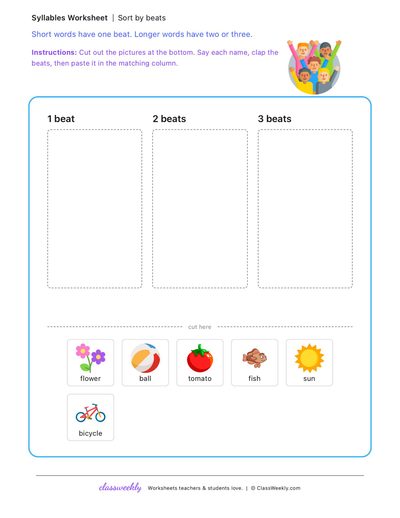
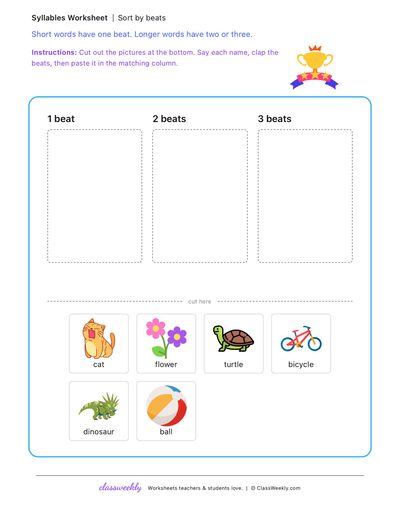
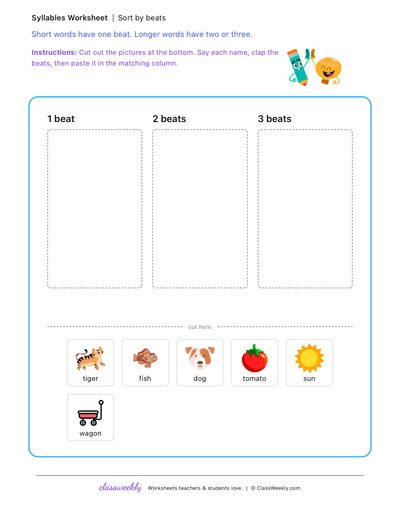
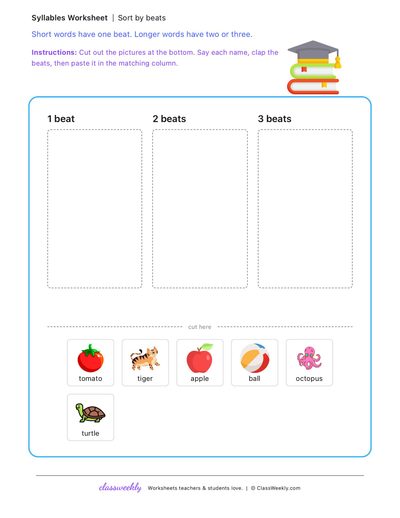
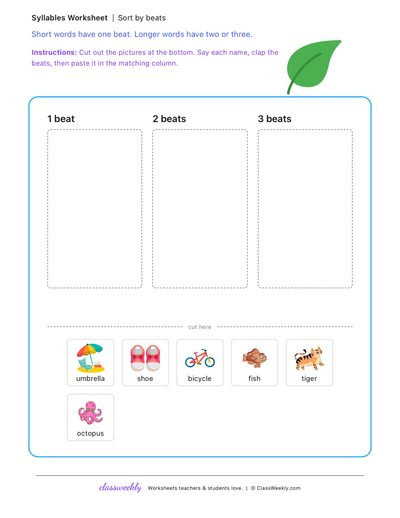
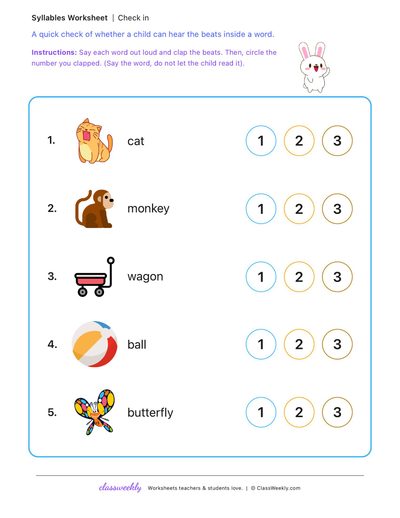
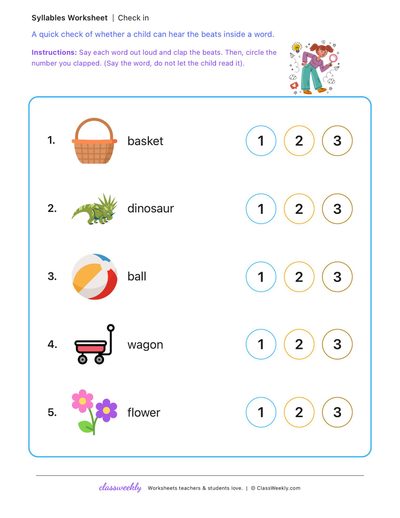
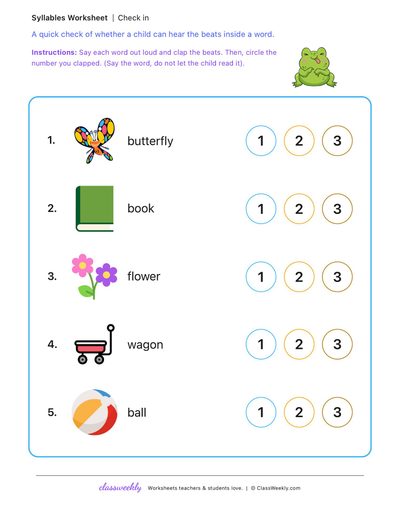
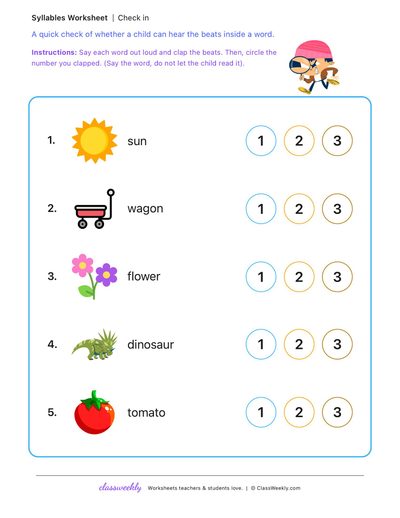
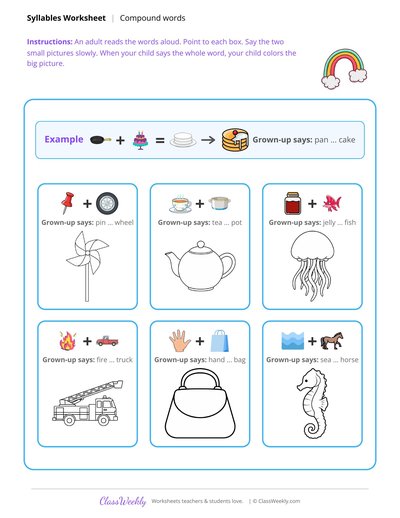
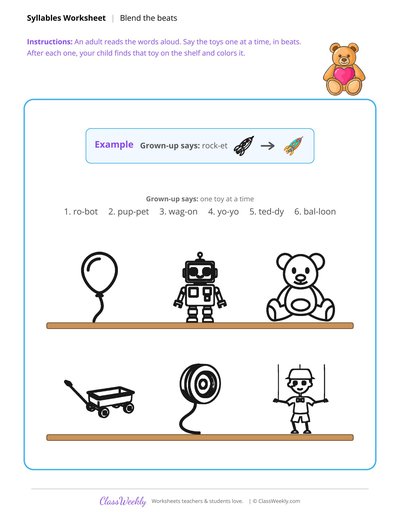
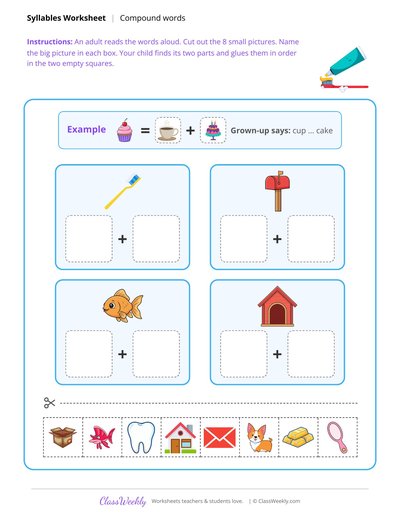
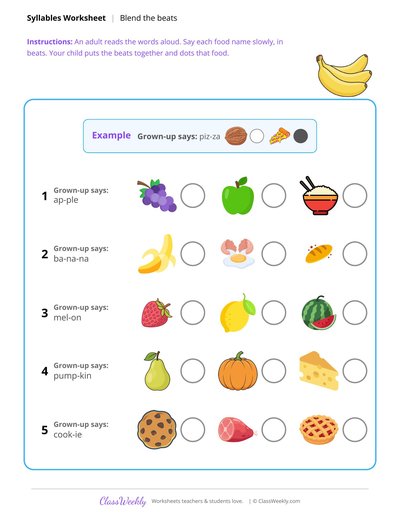
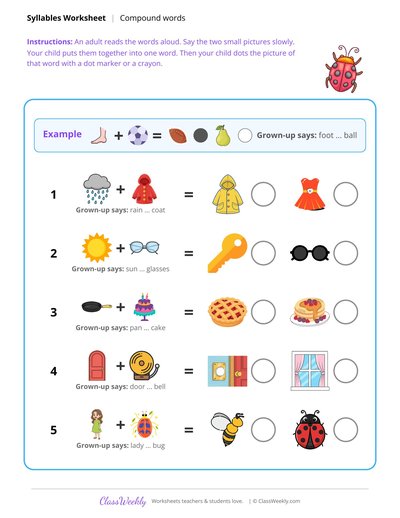
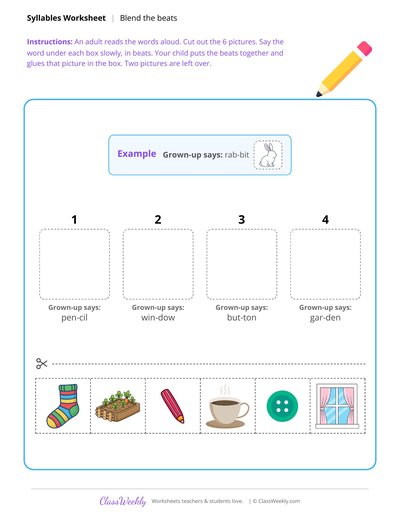
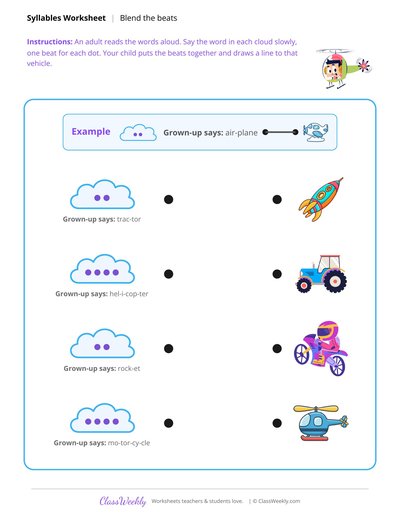
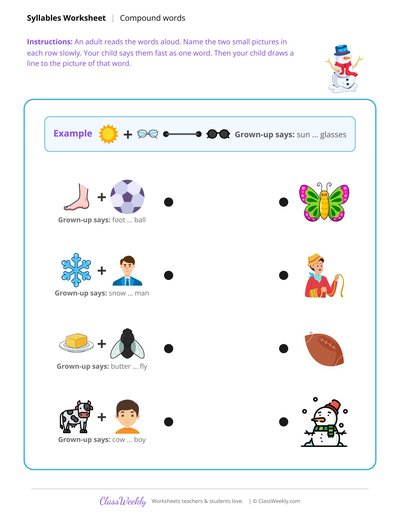
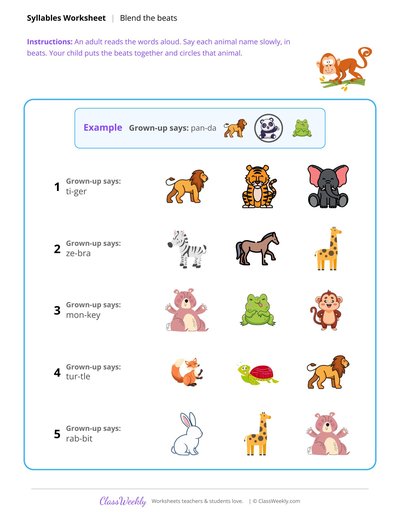
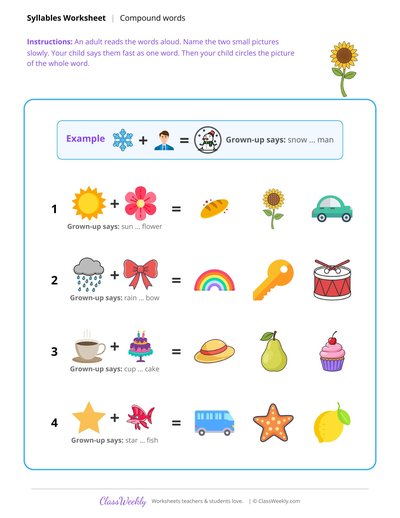
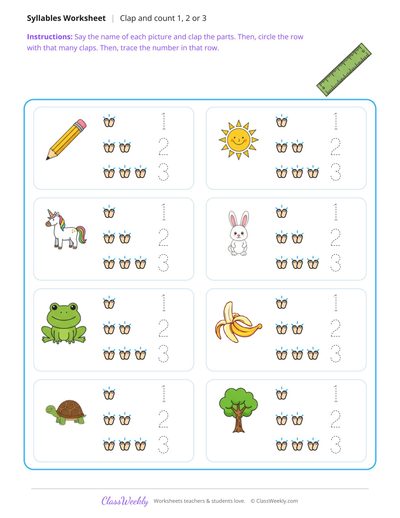
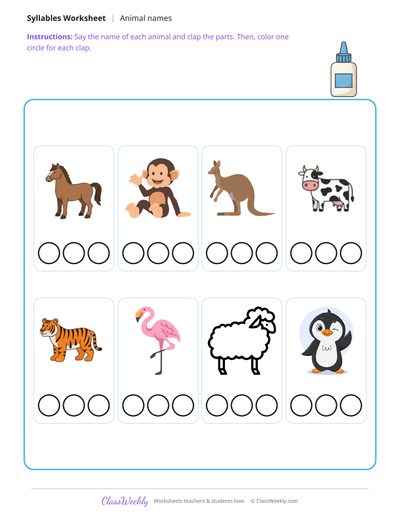
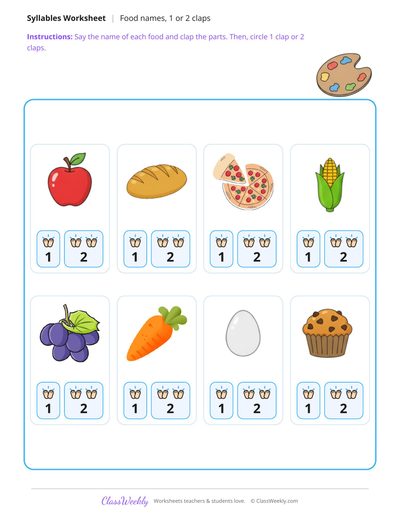
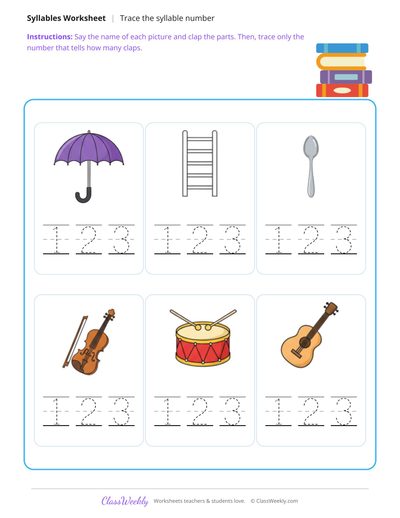
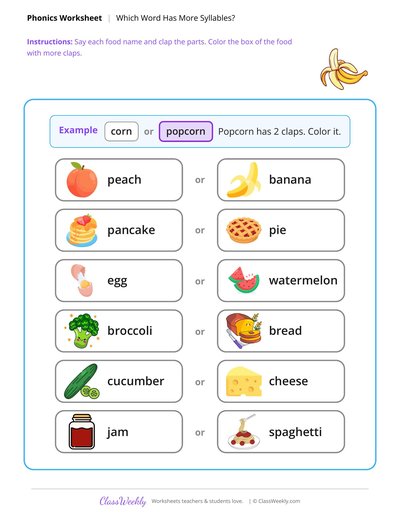
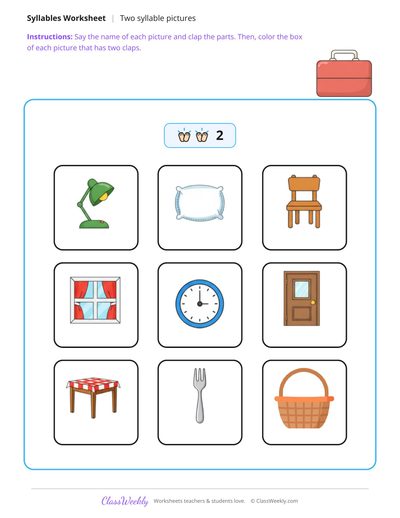
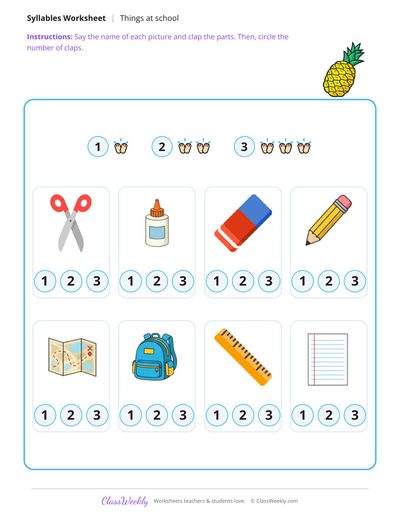
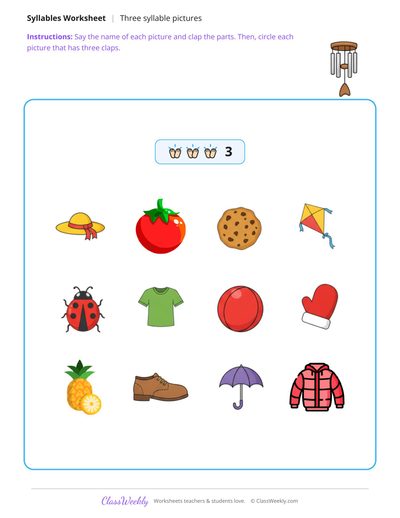
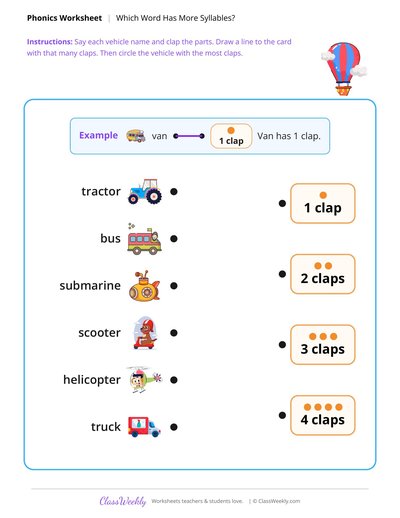
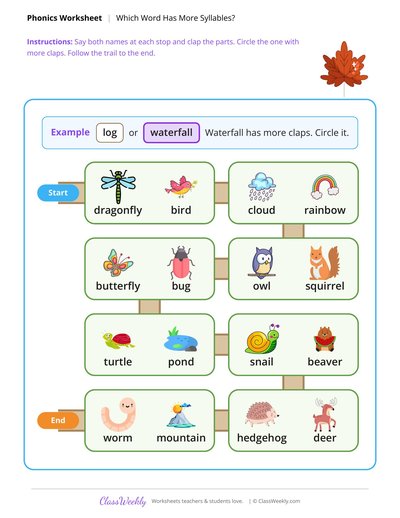
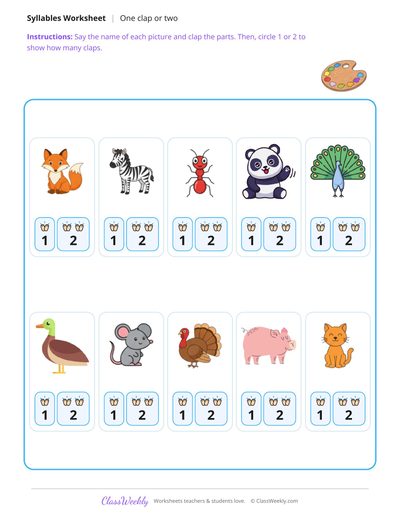
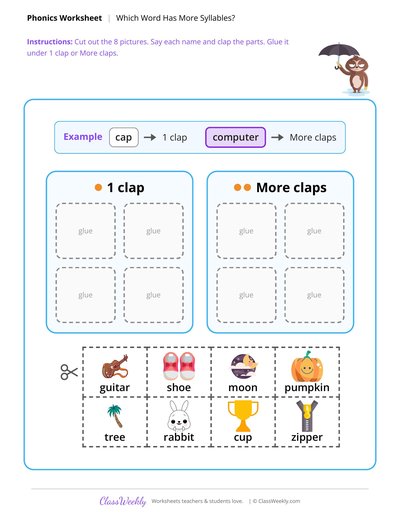
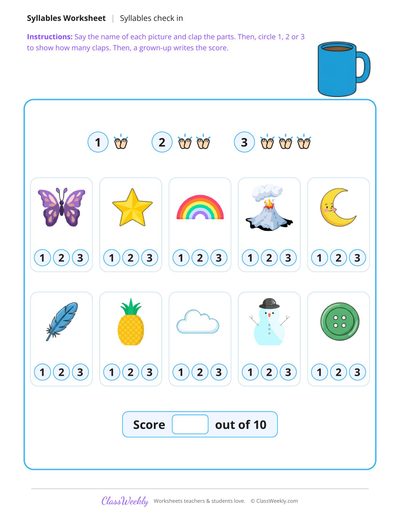
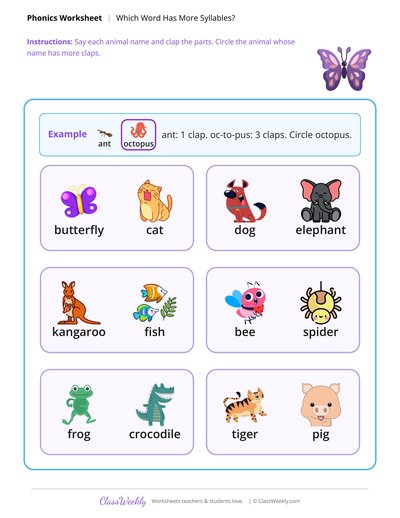
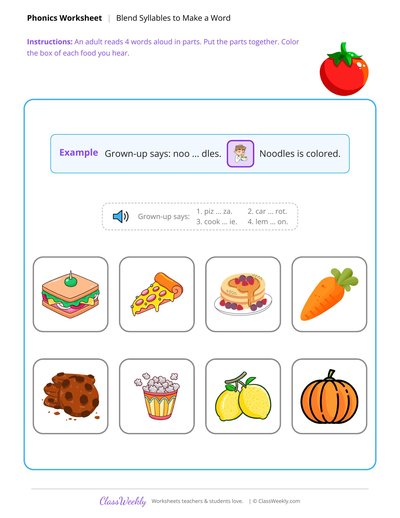
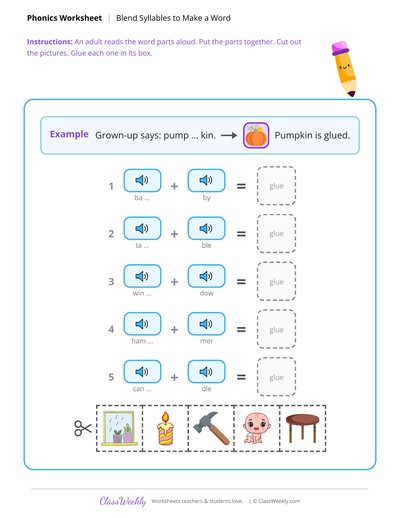
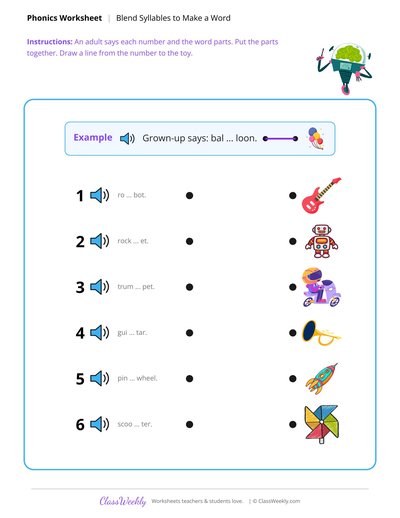
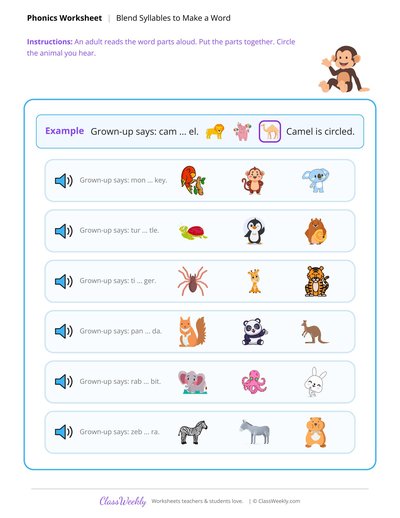
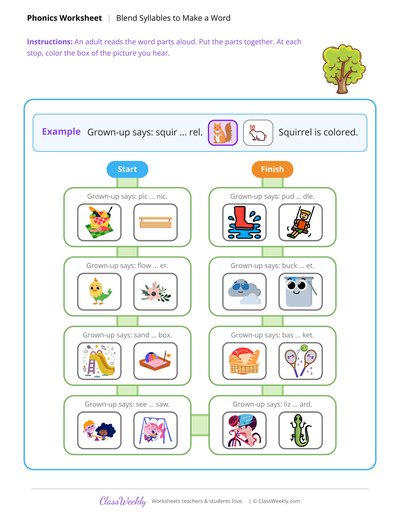
A syllable is one beat in a spoken word. Cat has one, apple has two and banana has three. Clapping out those beats is a natural, active way for preschoolers to start hearing that words can be broken into parts, and many children can clap the syllables in familiar words, including their own name, by around age 4. The 40 pages in this section keep the focus on listening. Children say each word, clap the beats and circle the number, cut out pictures and sort them into 1, 2 and 3 beat columns, and take short check-ins. Blend syllables pages go the other way: an adult says the parts, such as sun and flower or a word in beats, and the child joins them and finds the picture. An adult reads the words aloud, and 39 pages have answer keys; the one coloring page does not need one.
Clap together as you say a word slowly, one clap per beat, starting with your child's name and other familiar words. Another trick is to rest a hand under the chin while speaking, since the chin usually drops once for each syllable. Begin with one and two beat words, then add longer ones.
Blending syllables means hearing the parts of a word said separately and joining them into the whole word. Hearing sun and flower and saying sunflower is one example. It is the reverse of clapping, and doing both helps children hear how words are built.
No. A syllable is a beat that may contain several sounds, while a letter sound is a single sound. The word sun has one syllable but three sounds, /s/ /u/ /n/. Children usually hear syllables before individual sounds because beats are bigger and easier to catch.
59 printable worksheets, all free to preview. Downloads are included with a ClassWeekly free trial, and every page prints on standard 8.5 x 11 paper.
These are written for preschool children, roughly ages 3-5. Start with the first few pages, use the free preview to judge the fit, and come back to harder ones as your child gets steadier.
No. Most pages ask children to circle, match, color, or cut and paste, and a grown-up can read the instructions aloud. Pages that do ask for letters, like letter tracing, start with tracing over dashed guides.
Yes. Nothing here assumes a classroom of 25, so they work the same one-to-one at the kitchen table as they do in a Preschool classroom, a learning center, or a tutoring session.
More reading worksheets
Explore all of our preschool reading worksheets, covering alphabet, letter recognition, letter sounds, word building, and more.
ClassWeekly offers free worksheets and printable learning resources for kids, from preschool up. Preschool worksheets build early math, reading, writing, science, and social studies skills for ages 3-5 and are designed by educators. We also have free online learning games for thousands of skills, and kids' answers turn into a progress report for the grown-up. Start a free 30-day trial to download the worksheets.