Preschool Sequencing Worksheets
Ages 3-5 · 13 worksheets · 13 answer keys · Print-ready PDFs
Free printable sequencing reading worksheets for preschool students (Ages 3-5). Covers Sequencing pictures.
Written by Adi Ackerman, Head Teacher
Filters
Grade: Preschool
Subject: Reading
Topic: Sequencing
Subtopic
Sequencing▼
Frequently Asked Questions
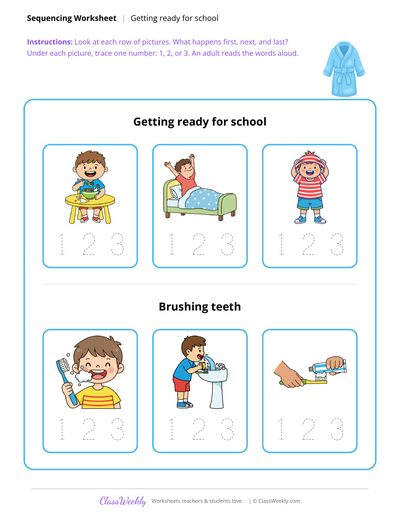
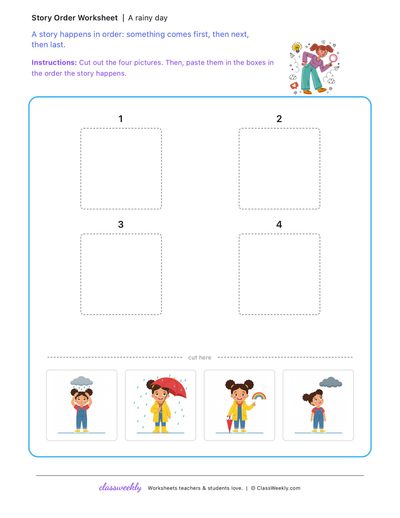
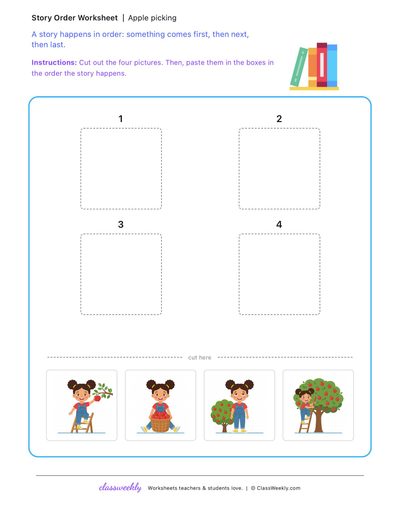
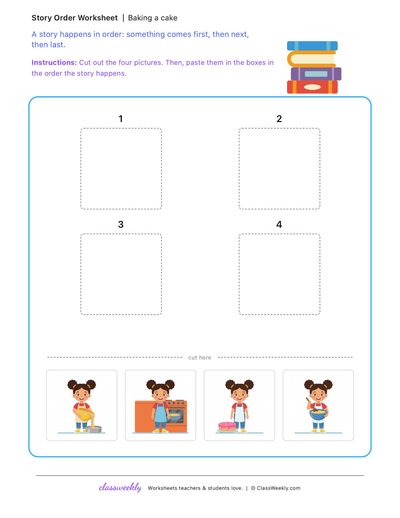
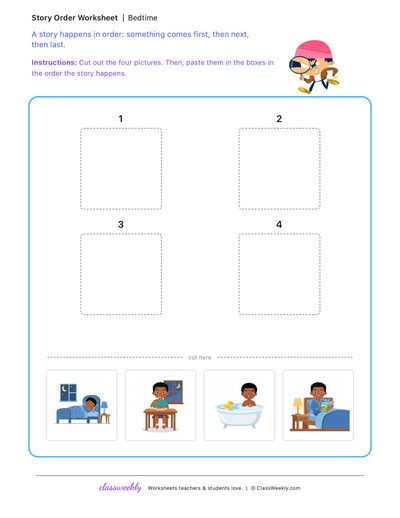
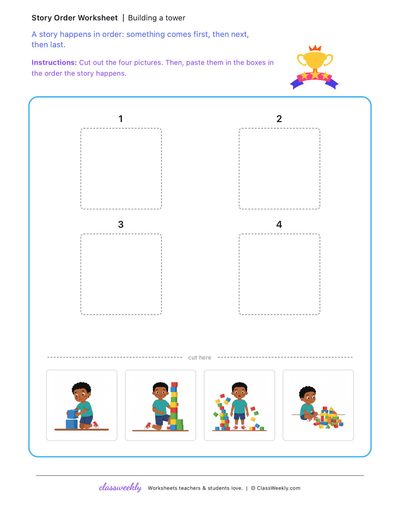
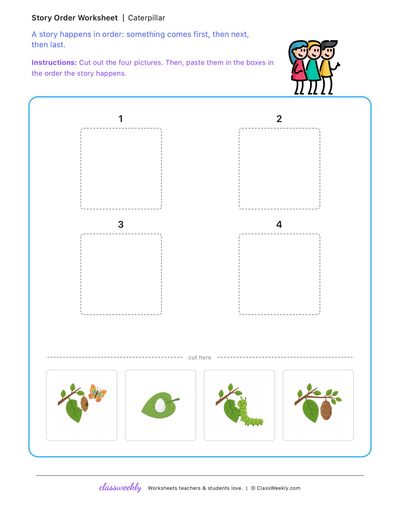
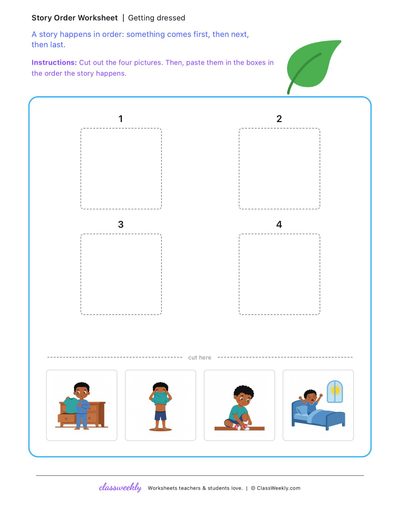
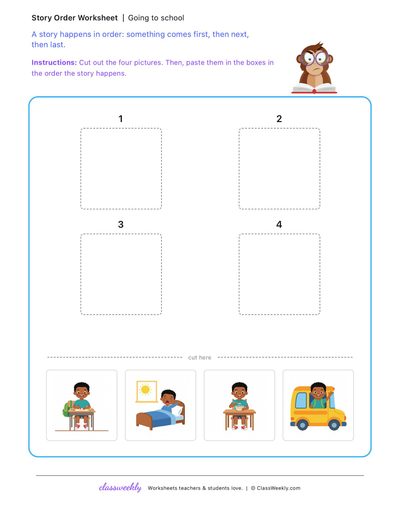
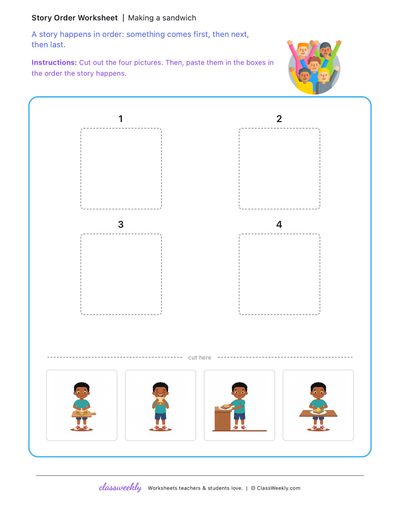
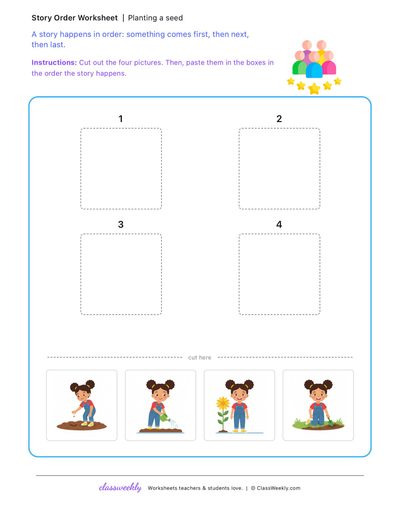
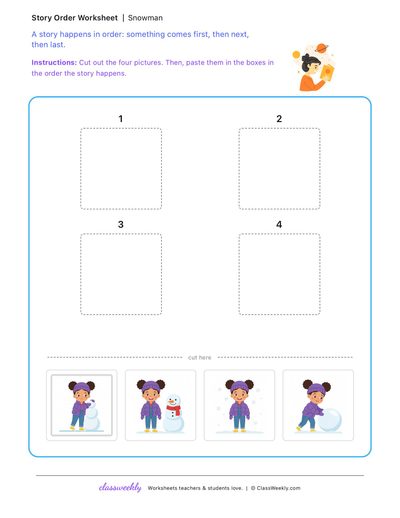
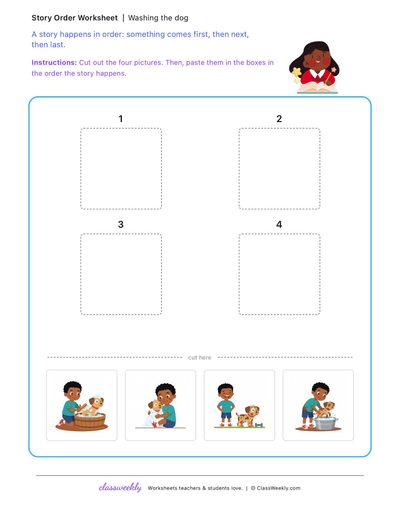
Sequencing is putting events in the order they happen: what comes first, next, then and last. It helps young children understand and retell stories, follow directions with several steps and talk about their own day in order. Many children around ages 4 and 5 can order three or four familiar steps, especially when the steps come from everyday life. Each of the 13 pages tells a short story in four pictures drawn from daily routines, such as planting a seed, making a sandwich, getting dressed and baking a cake. Children cut out the four pictures and paste them into boxes in the order the story happens. Asking a child to tell the story aloud using first, next, then and last before gluing turns each page into speaking practice as well. Answer keys show the intended order.
Sequencing helps children understand that stories and everyday tasks have a beginning, a middle and an end. That understanding supports listening comprehension, retelling a story in their own words and following multi-step directions. It also gives them order words like first, next and last, which they will use later in their own speaking and writing.
Talk through daily routines in order, such as brushing teeth or getting ready for bed, and ask your child what happens first and what comes next. After reading a picture book, ask them to retell it using first, next, then and last. Cooking together and talking through each step as you go is another simple sequencing activity.
Many 3-year-olds can manage two or three steps of a very familiar routine, and many 4- and 5-year-olds can order four steps, especially with pictures to look at. Starting with three pictures and moving up to four once that feels easy is a sensible approach. Stories from the child's own life are easier to order than unfamiliar ones.
13 printable worksheets, all free to preview. Downloads are included with a ClassWeekly free trial, and every page prints on standard 8.5 x 11 paper.
These are written for preschool children, roughly ages 3-5. Start with the first few pages, use the free preview to judge the fit, and come back to harder ones as your child gets steadier.
No. Most pages ask children to circle, match, color, or cut and paste, and a grown-up can read the instructions aloud. Pages that do ask for letters, like letter tracing, start with tracing over dashed guides.
Yes. Nothing here assumes a classroom of 25, so they work the same one-to-one at the kitchen table as they do in a Preschool classroom, a learning center, or a tutoring session.
More reading worksheets
Explore all of our preschool reading worksheets, covering alphabet, letter recognition, letter sounds, word building, and more.
What is ClassWeekly?
ClassWeekly offers free worksheets and printable learning resources for kids, from preschool up. Preschool worksheets build early math, reading, writing, science, and social studies skills for ages 3-5 and are designed by educators. We also have free online learning games for thousands of skills, and kids' answers turn into a progress report for the grown-up. Start a free 30-day trial to download the worksheets.