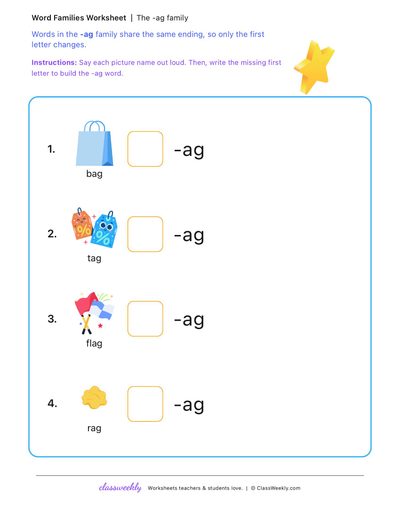
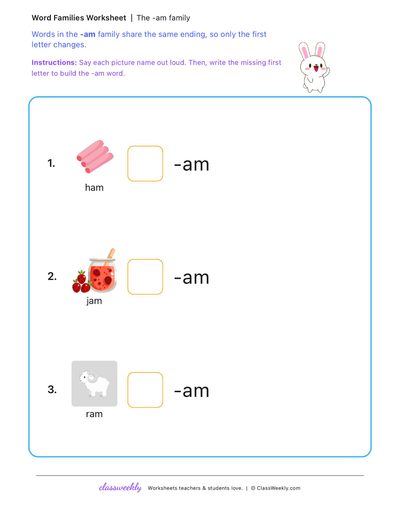
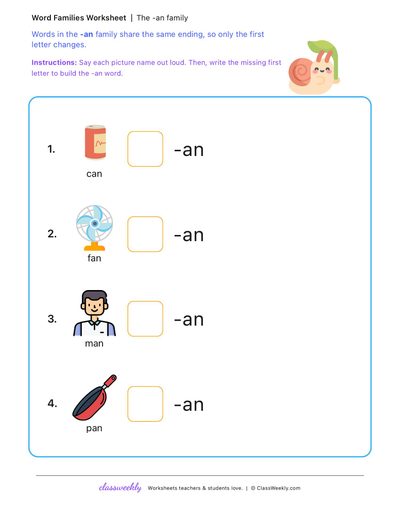
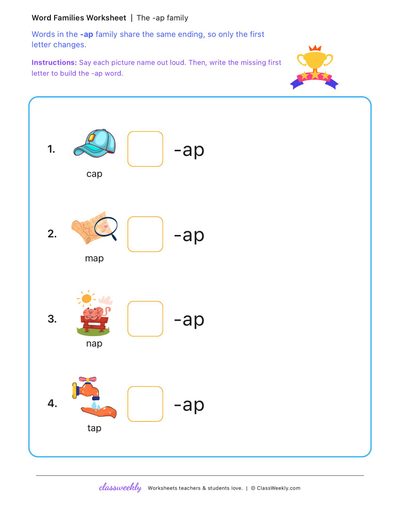
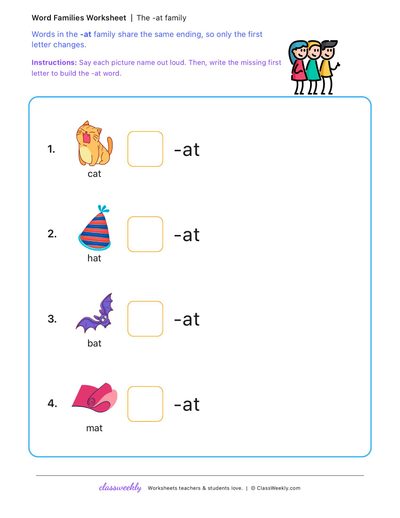
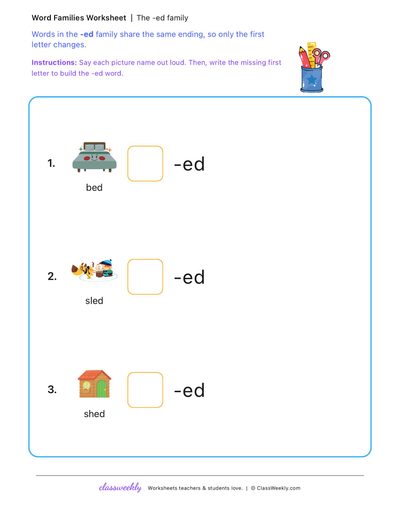
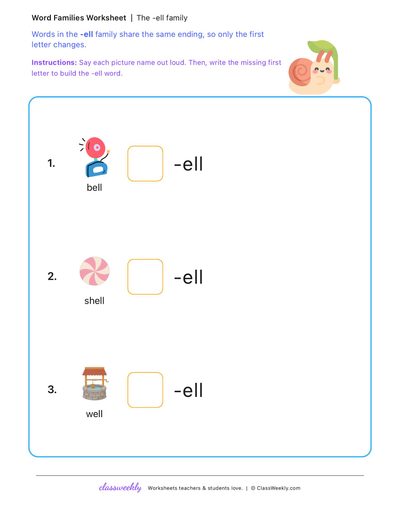
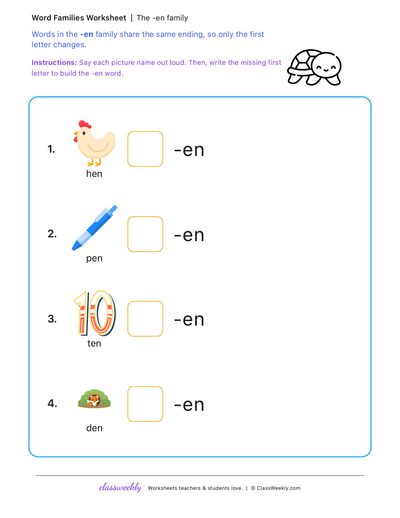
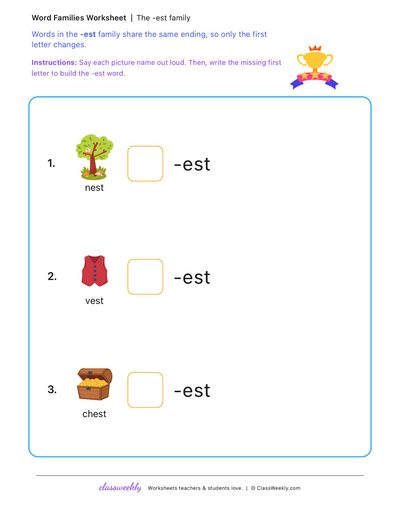
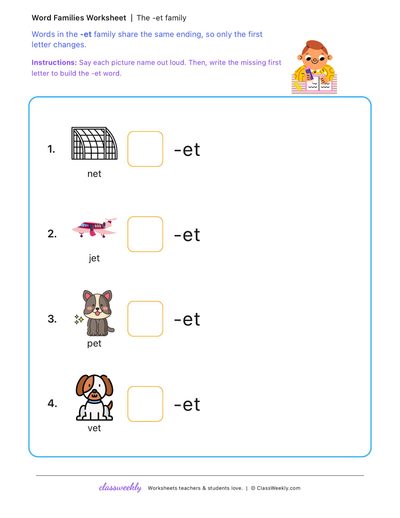
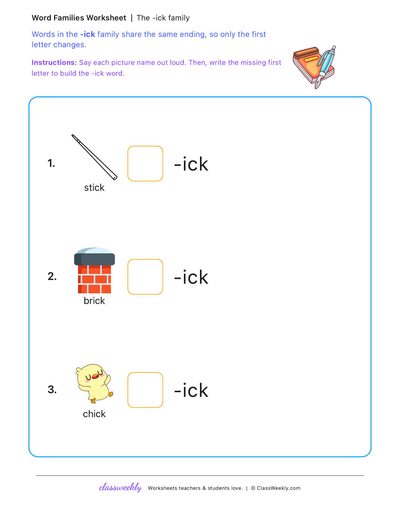
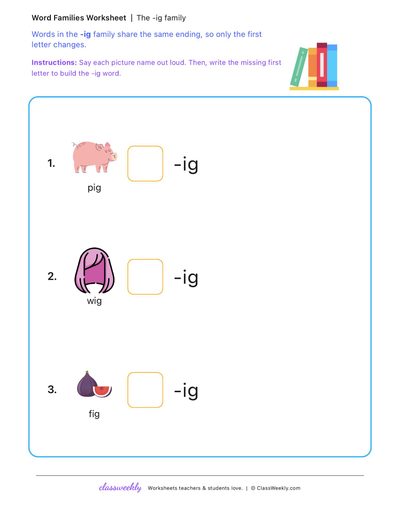
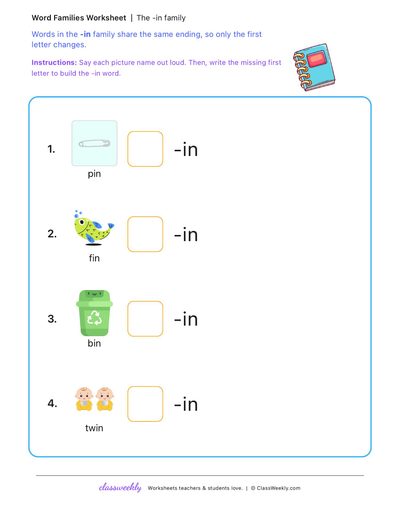
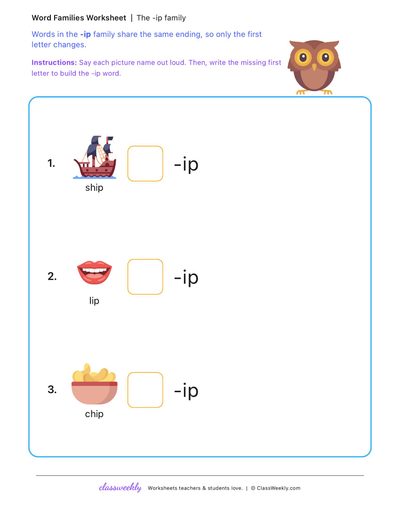
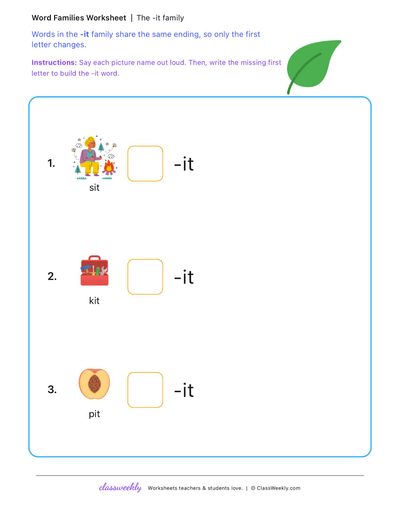
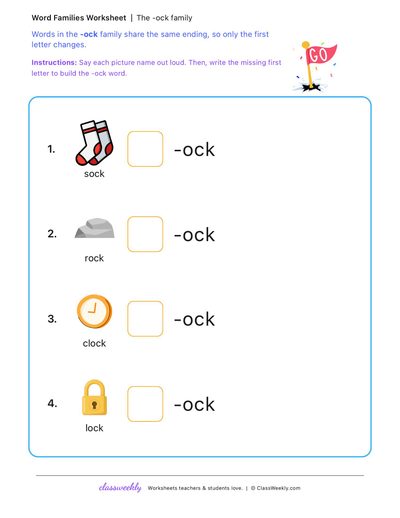
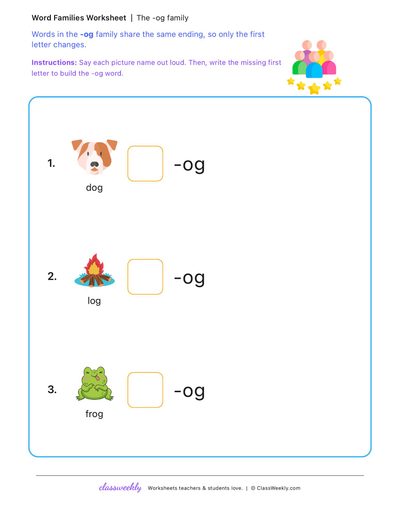
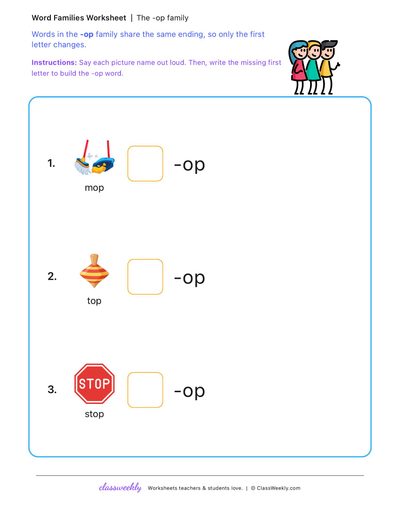
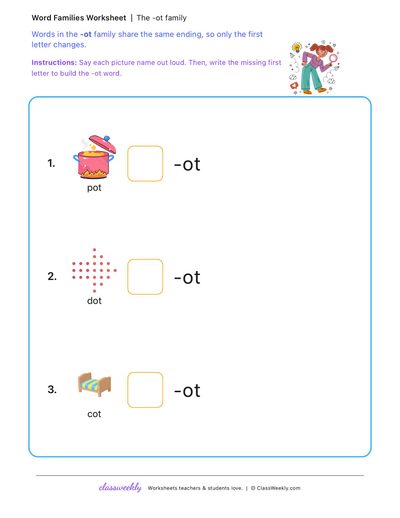
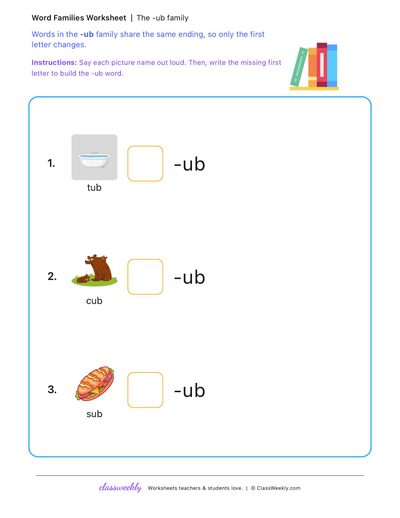
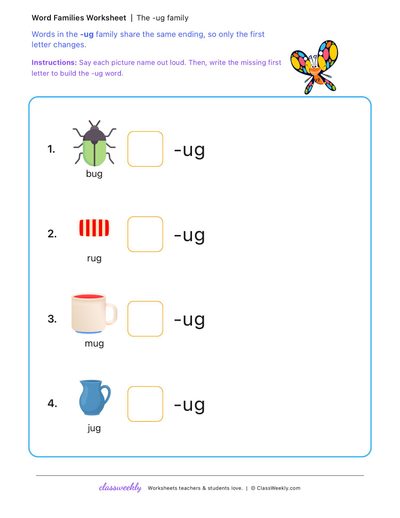
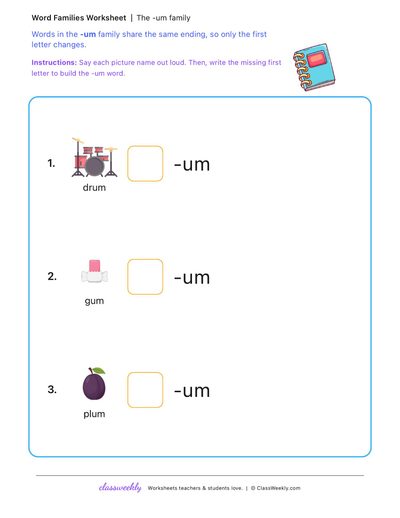
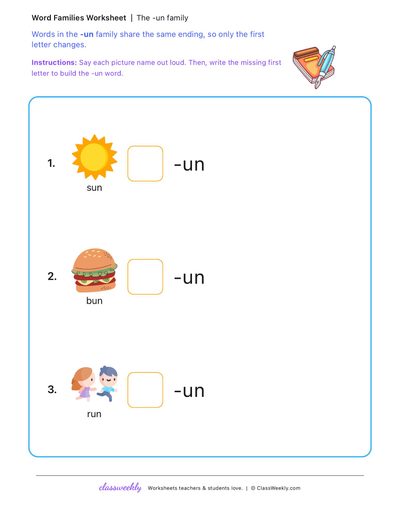
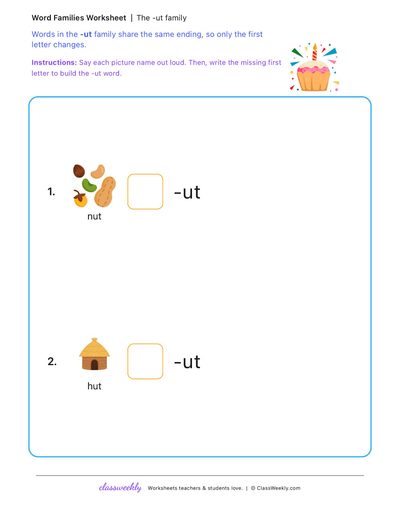
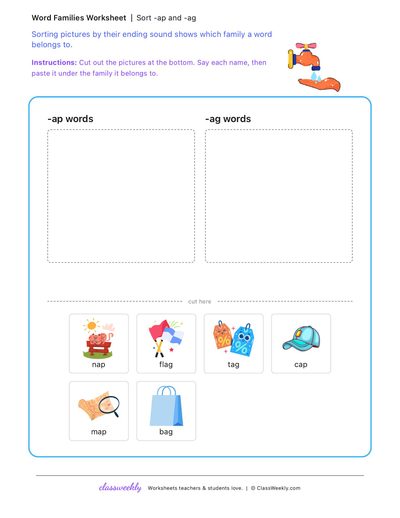
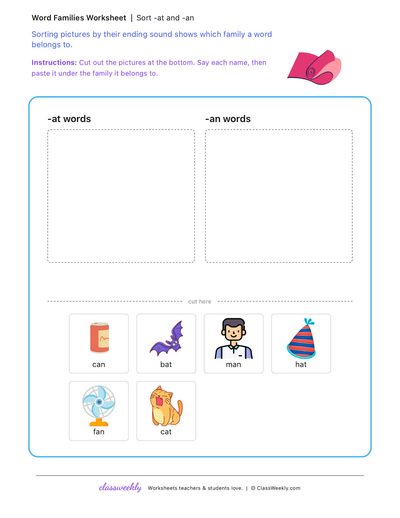
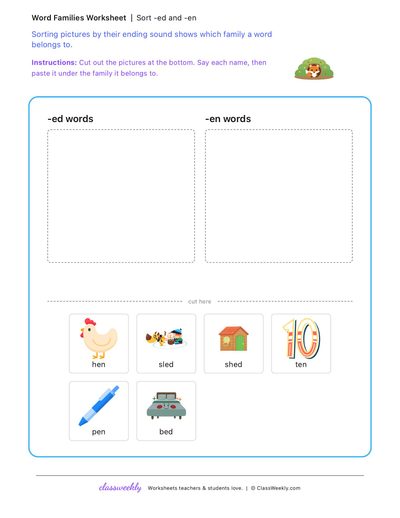
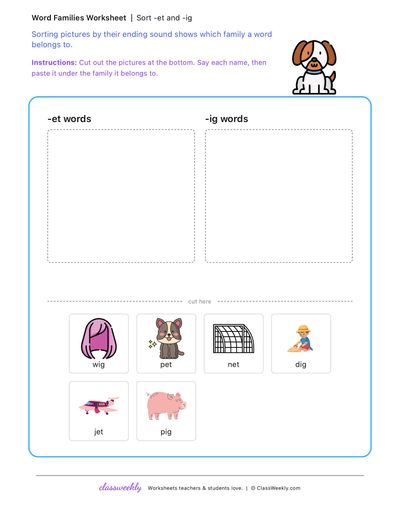
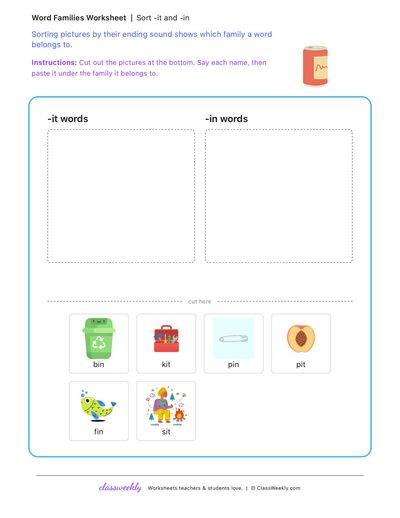
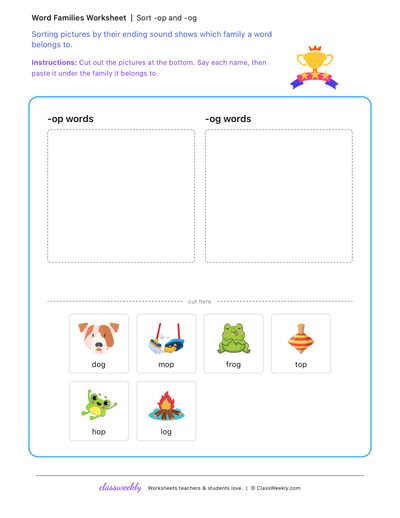
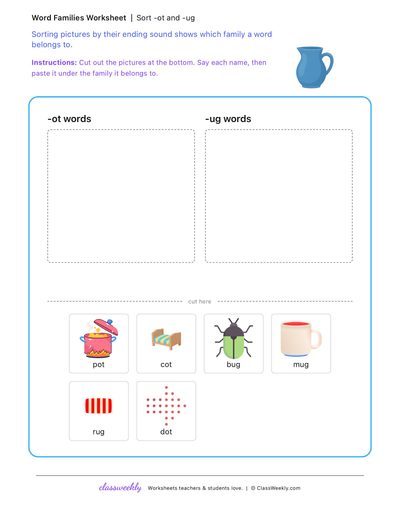
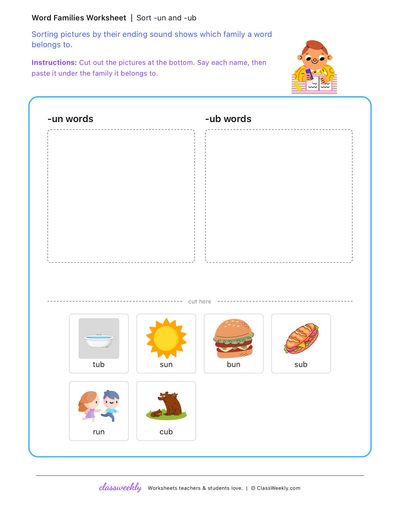
A word family is a group of words that share the same ending letters and sound, such as cat, hat and mat in the -at family or hen and pen in the -en family. Once a child can read one word in a family, changing the first letter lets them read and spell many more, which makes word families a natural bridge from rhyming to early reading for children around ages 4 and 5. The 32 pages here include families such as -at, -an, -ap, -ag, -ed, -en, -et, -ig and -ug. On the build pages, children say each picture name and write the missing first letter to make the family word. On the sort pages, they cut out pictures, say each name and paste it under the family it belongs to. Answer keys come with every page.
Many teachers start with short a families such as -at, -an, -ap and -ag, because the short a sound is easy to hear and lots of simple words use it. Families with other short vowels, like -en, -ig and -ug, usually come next. Starting with one family and adding a new one only when the first feels easy works well for most children.
Word families teach children to see a chunk of letters, like -at, as one unit they already know. Once that chunk is familiar, reading a new word only means adding the first sound, so cat becomes hat, mat and sat. This builds confidence and speed, and it also shows children that spelling follows patterns they can rely on.
A child is usually ready when they can hear rhymes and know the sounds of several consonants. If they can tell you that cat and hat rhyme and that hat starts with /h/, they have the two pieces word families put together. If either is still shaky, more rhyming and beginning sound practice is a good first step.
32 printable worksheets, all free to preview. Downloads are included with a ClassWeekly free trial, and every page prints on standard 8.5 x 11 paper.
These are written for preschool children, roughly ages 3-5. Start with the first few pages, use the free preview to judge the fit, and come back to harder ones as your child gets steadier.
No. Most pages ask children to circle, match, color, or cut and paste, and a grown-up can read the instructions aloud. Pages that do ask for letters, like letter tracing, start with tracing over dashed guides.
Yes. Nothing here assumes a classroom of 25, so they work the same one-to-one at the kitchen table as they do in a Preschool classroom, a learning center, or a tutoring session.
More reading worksheets
Explore all of our preschool reading worksheets, covering alphabet, letter recognition, letter sounds, word building, and more.
ClassWeekly offers free worksheets and printable learning resources for kids, from preschool up. Preschool worksheets build early math, reading, writing, science, and social studies skills for ages 3-5 and are designed by educators. We also have free online learning games for thousands of skills, and kids' answers turn into a progress report for the grown-up. Start a free 30-day trial to download the worksheets.