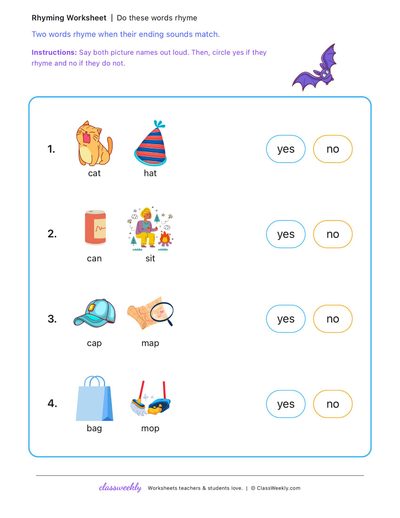
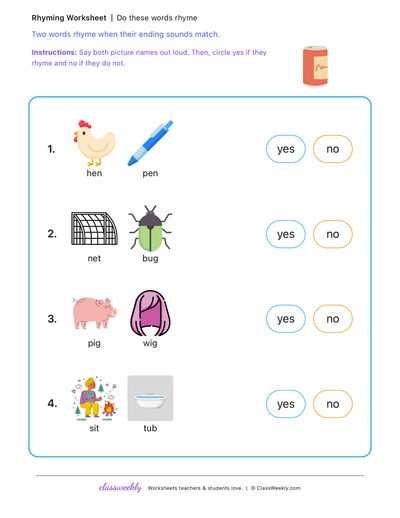
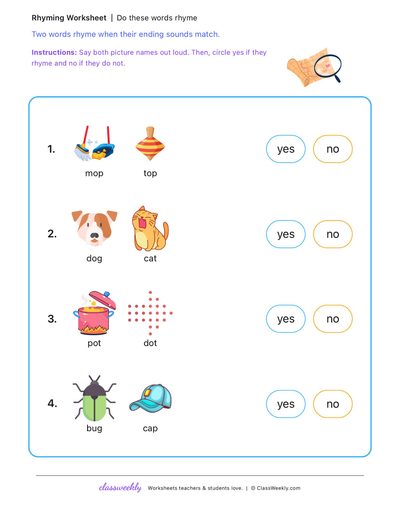
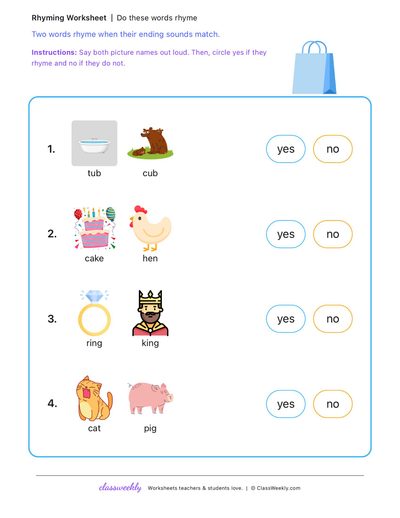
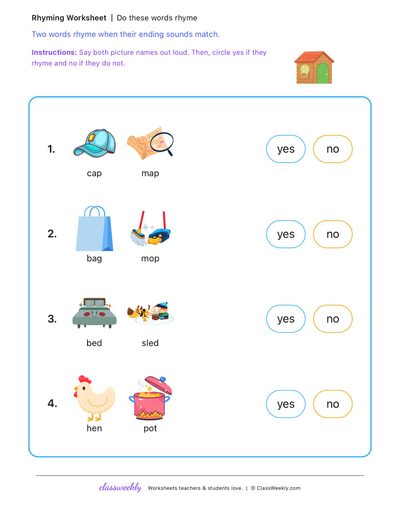
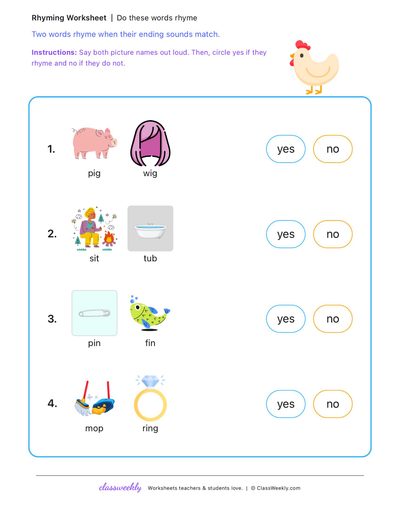
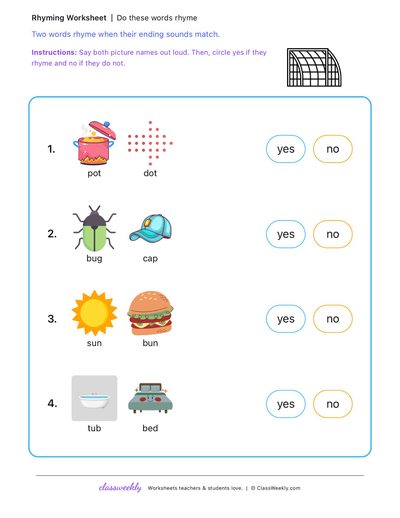
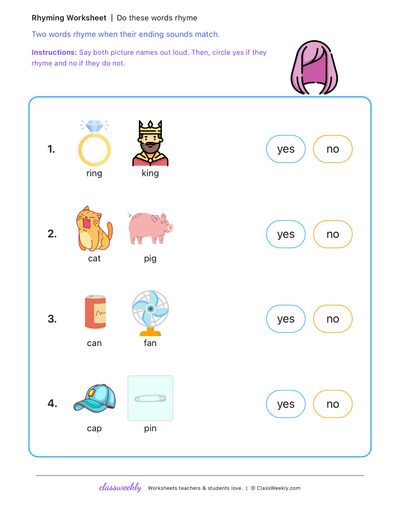
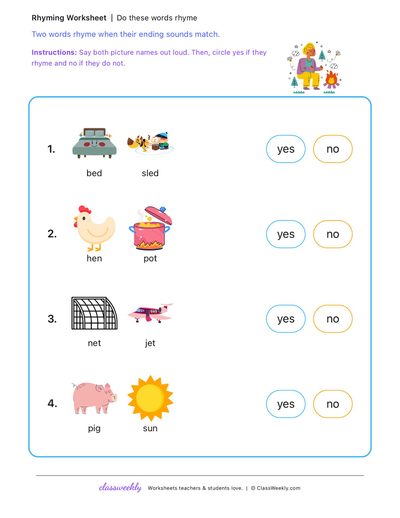
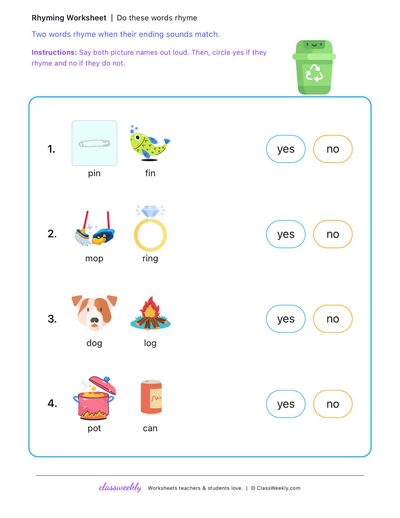
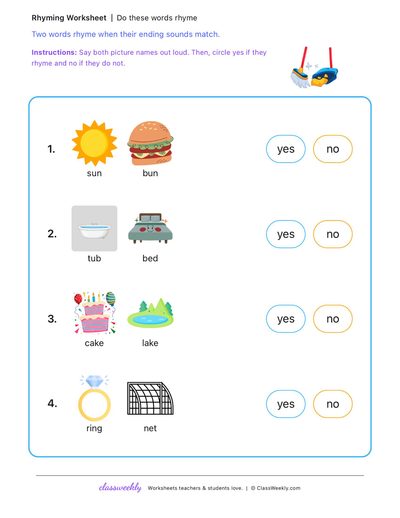
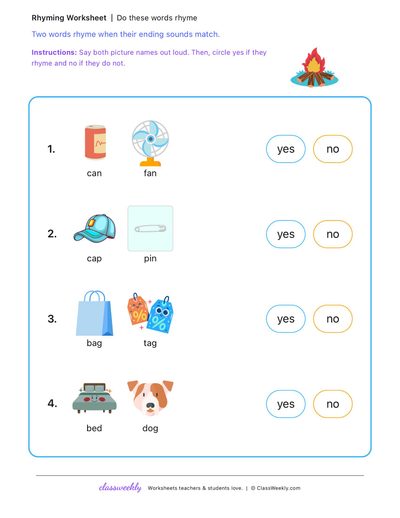
Free printable rhyming reading worksheets for preschool students (Ages 3-5). Covers Match rhyming pictures, Do these words rhyme, Find the word that does not rhyme, and more.
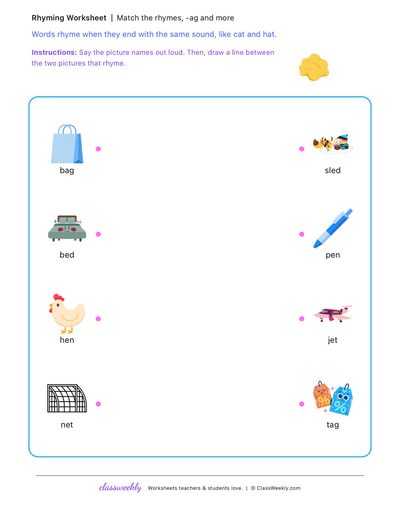
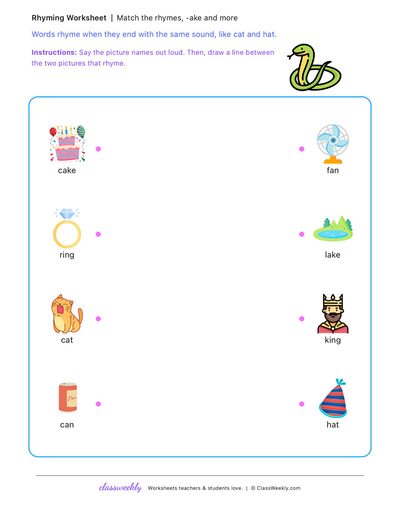
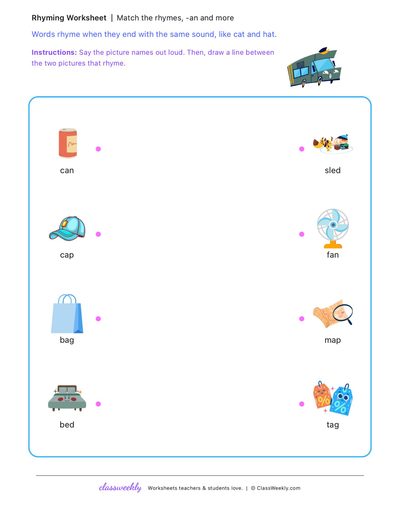
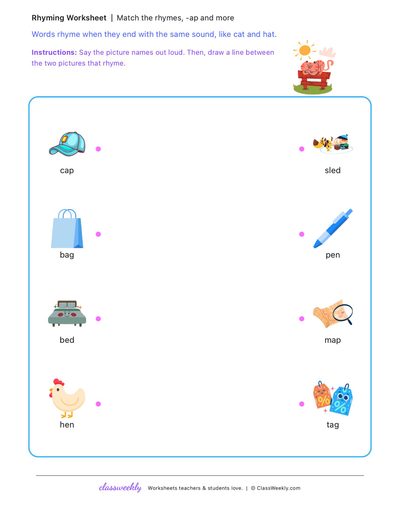
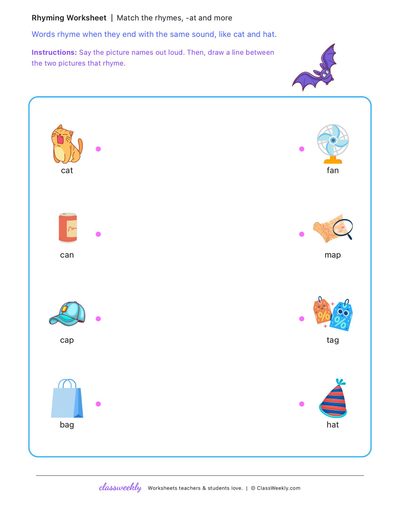
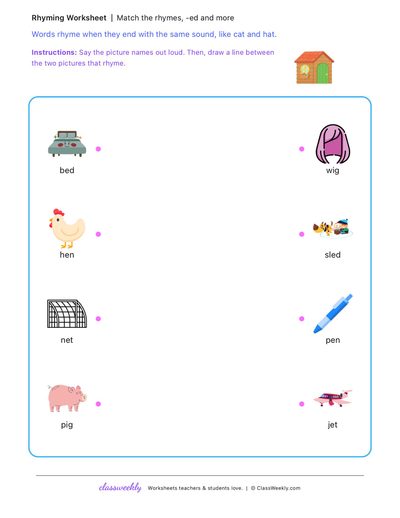
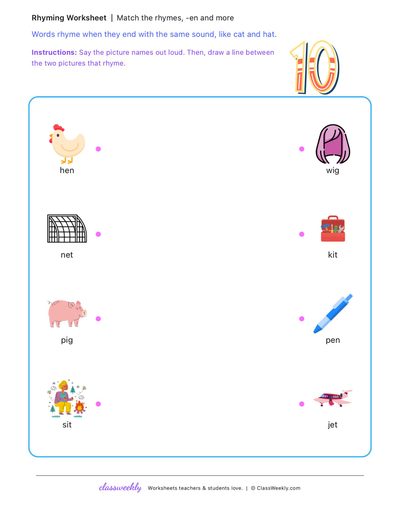
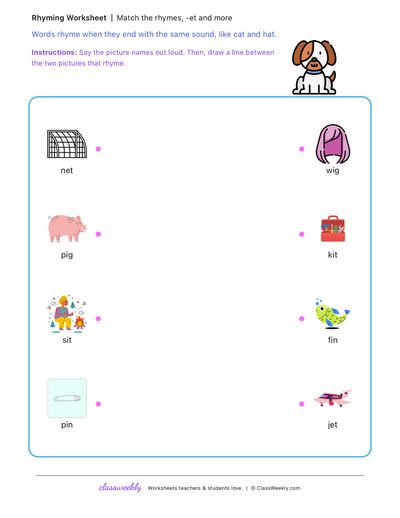
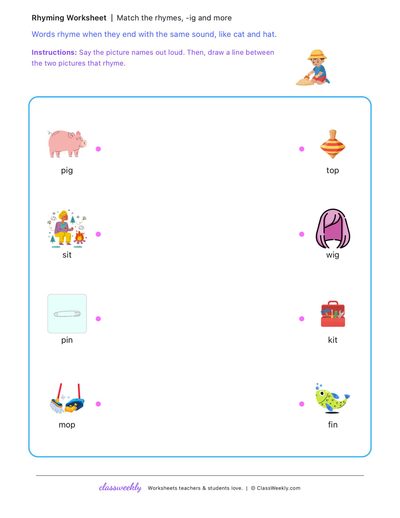
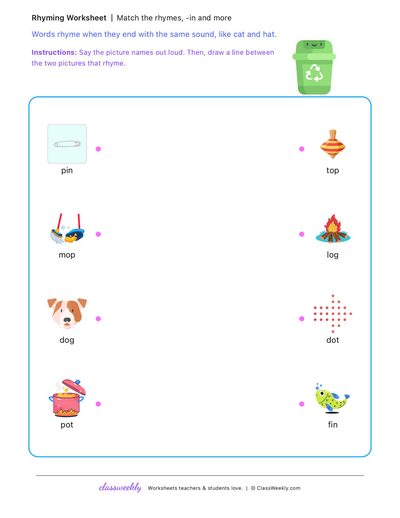
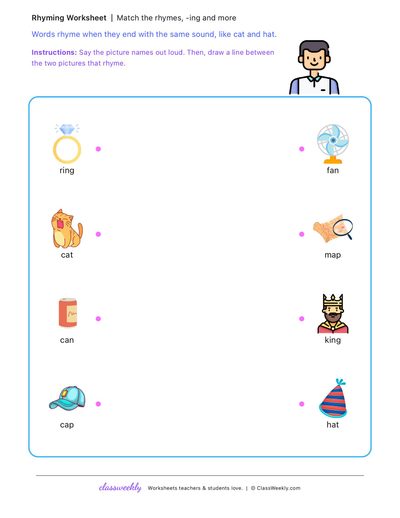
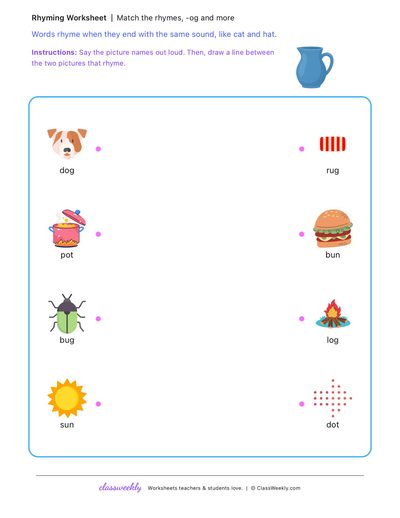
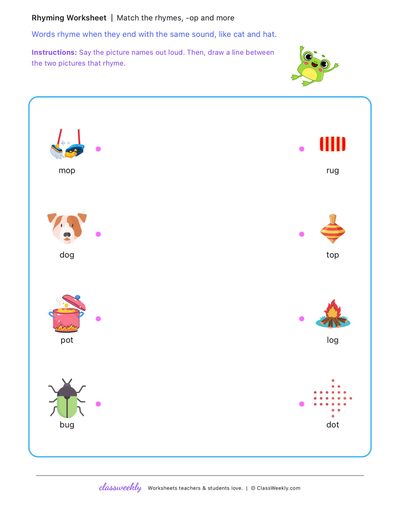
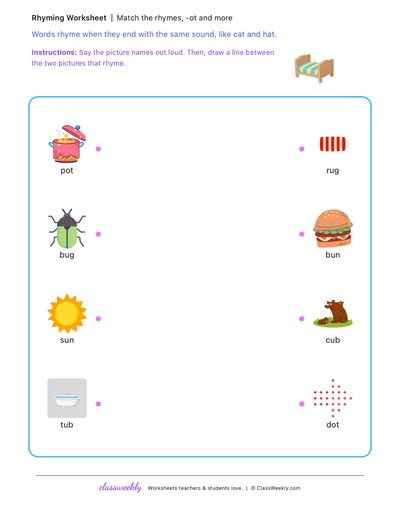
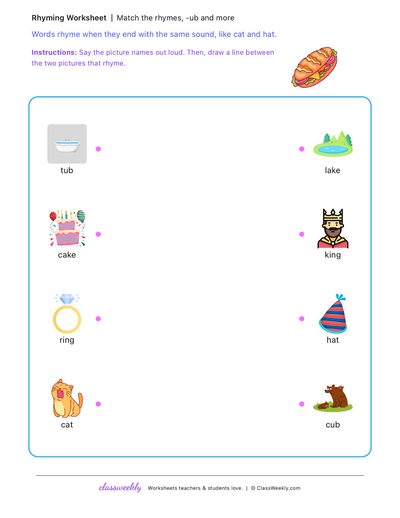
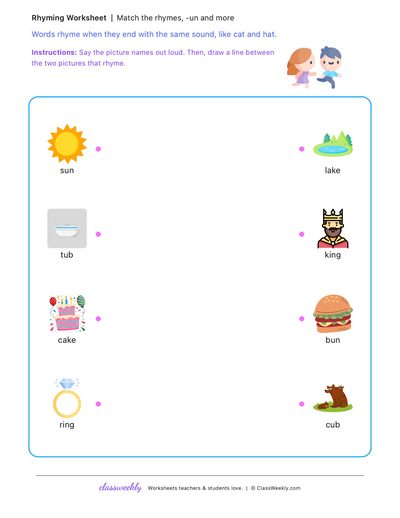
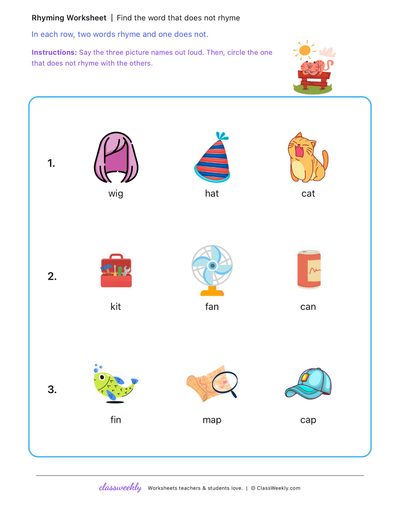
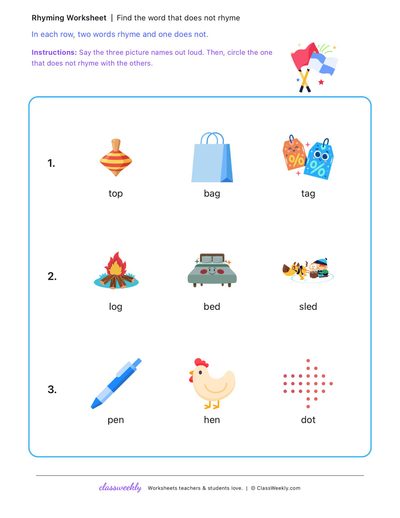
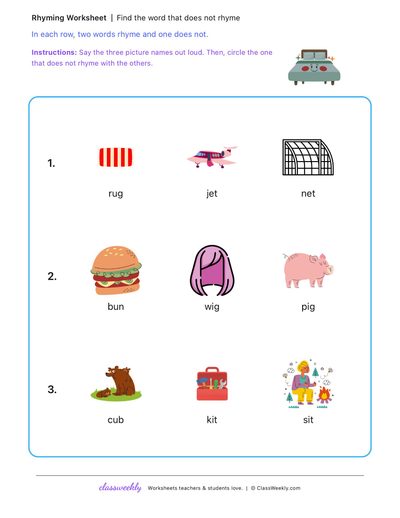
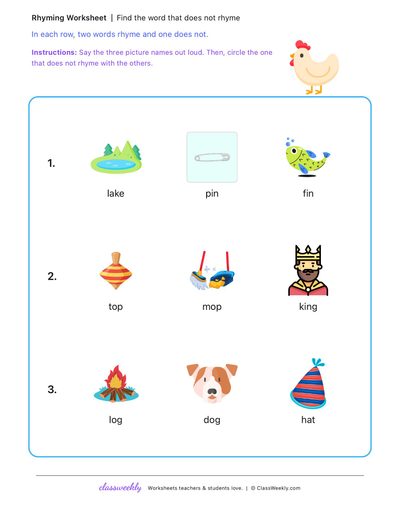
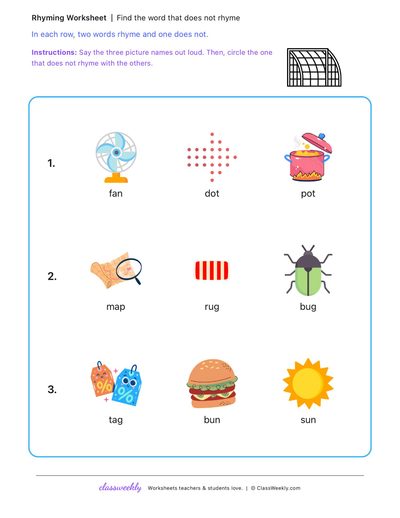
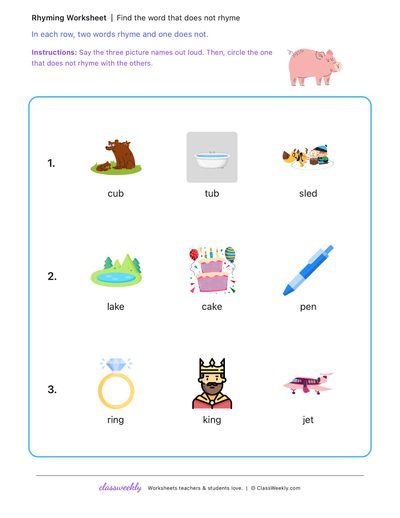
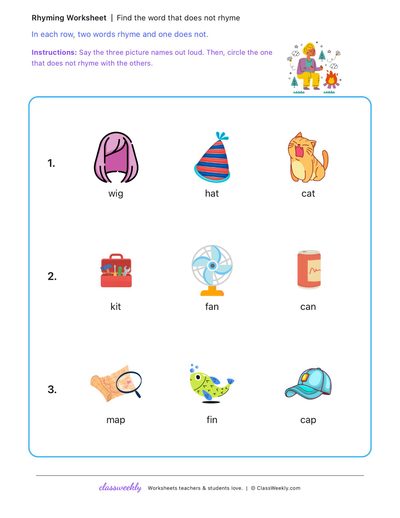
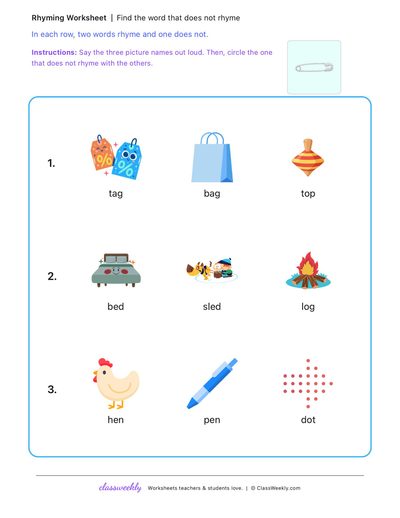
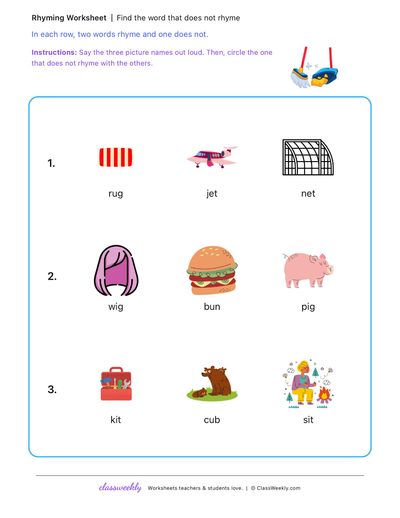
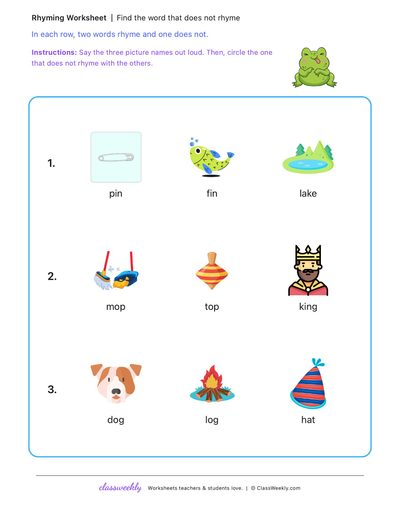
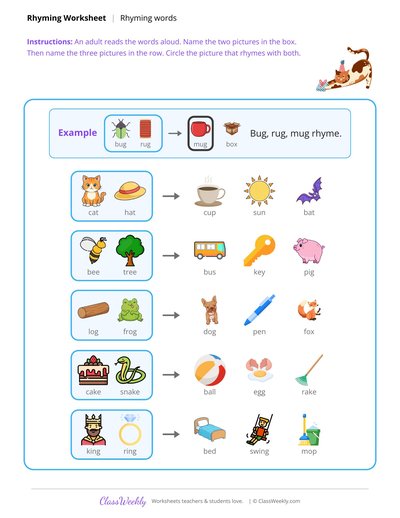
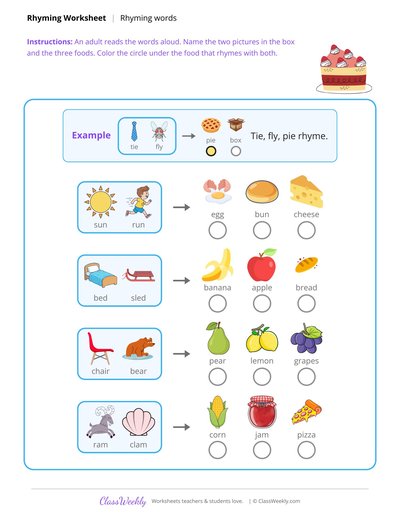
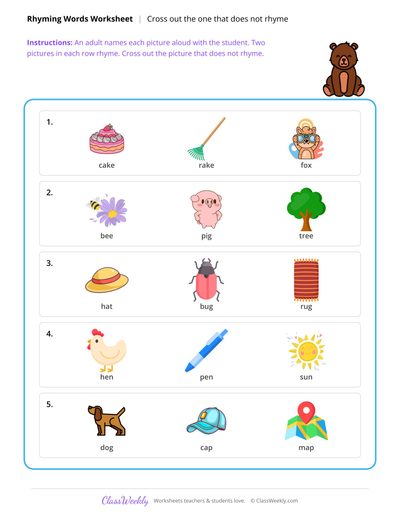
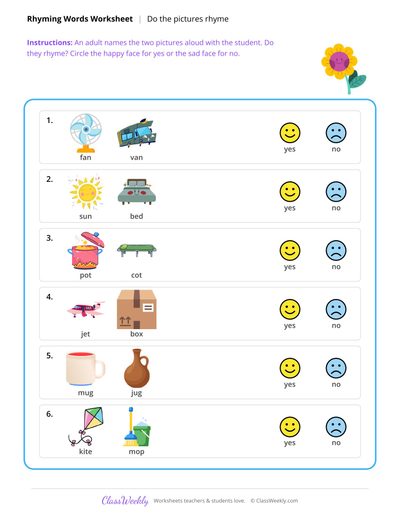
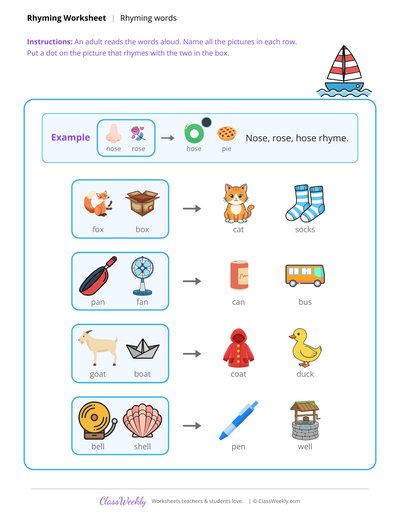
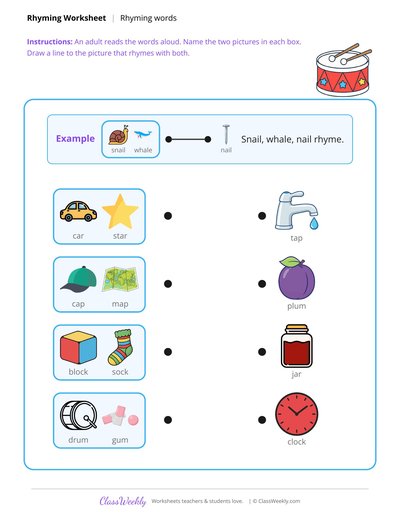
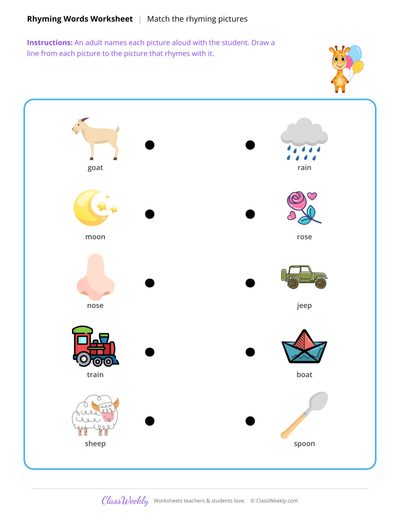
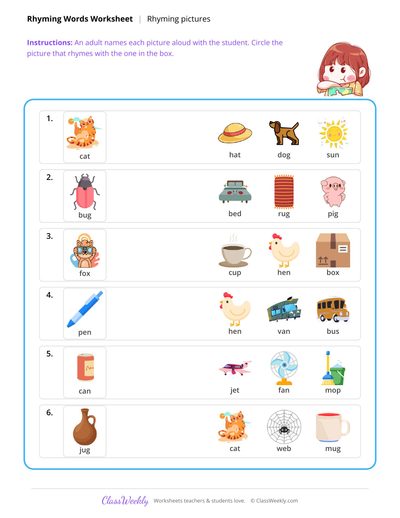
Two words rhyme when they end with the same sound, like cat and hat or bug and rug. Hearing rhymes is one of the earliest ways young children notice that words are made of smaller sound parts, and many 3 and 4 year olds pick it up through songs and picture books before any letters are involved. Every one of these 47 pages works by listening, not reading. Children name pictures aloud and draw a line between two that rhyme, circle yes or no to show whether two picture names rhyme, and circle the one picture that does not rhyme. On the rhyming pictures pages, they look at two rhyming pictures, like fox and box, and find a third picture that rhymes with both. An adult reads the Instructions aloud and can name each picture first, and all 47 pages have answer keys.
Many children start to notice and enjoy rhymes around ages 3 to 4, especially in songs and favorite books. Telling whether two words rhyme often comes around age 4, and making up a rhyme on their own tends to follow a little later. Children vary, so steady exposure matters more than the exact age.
Rhyming teaches children to listen to the ending part of a word separately from its beginning. That ability to hear the parts of words supports later phonics. A child who hears that cat, hat and bat share an ending is ready to see that they share letters too.
Rhyming is a listening skill: hearing that two words end with the same sound, with no letters needed. Word families add print, grouping words that share the same ending letters, such as cat, hat and sat. Most children work on rhyming first, then move to word families once they know some letter sounds.
47 printable worksheets, all free to preview. Downloads are included with a ClassWeekly free trial, and every page prints on standard 8.5 x 11 paper.
These are written for preschool children, roughly ages 3-5. Start with the first few pages, use the free preview to judge the fit, and come back to harder ones as your child gets steadier.
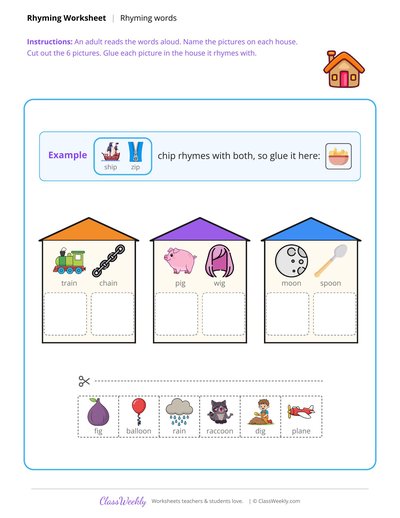
No. Most pages ask children to circle, match, color, or cut and paste, and a grown-up can read the instructions aloud. Pages that do ask for letters, like letter tracing, start with tracing over dashed guides.
Yes. Nothing here assumes a classroom of 25, so they work the same one-to-one at the kitchen table as they do in a Preschool classroom, a learning center, or a tutoring session.
More reading worksheets
Explore all of our preschool reading worksheets, covering alphabet, letter recognition, letter sounds, word building, and more.
ClassWeekly offers free worksheets and printable learning resources for kids, from preschool up. Preschool worksheets build early math, reading, writing, science, and social studies skills for ages 3-5 and are designed by educators. We also have free online learning games for thousands of skills, and kids' answers turn into a progress report for the grown-up. Start a free 30-day trial to download the worksheets.