
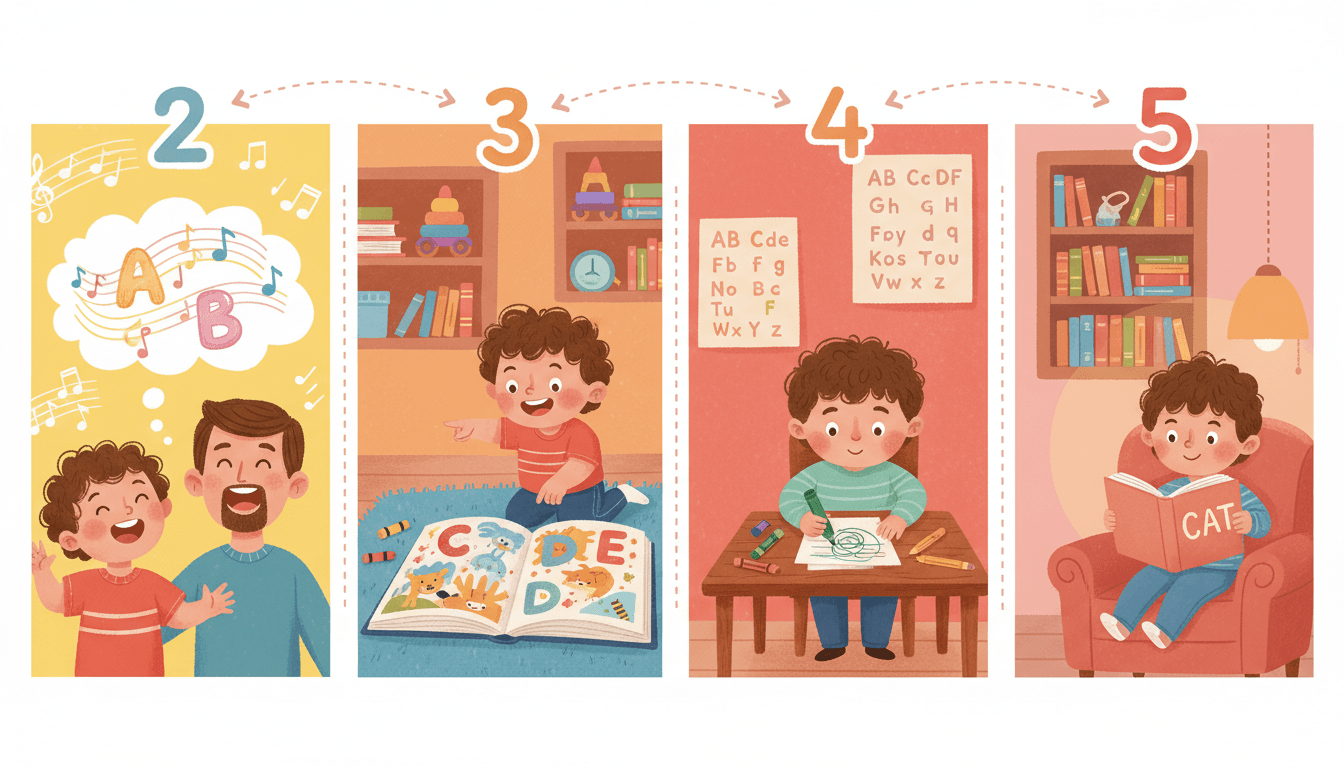
When Do Kids Learn the Alphabet? A Developmental Guide
Get 30 days of free worksheet downloads
Key Takeaways
- Alphabet learning is not a single skill but a progression: letter recognition, naming, sound knowledge, and writing all develop on different timelines.
- Most children can name 10 to 20 uppercase letters by age 3-4, and begin connecting letters to sounds between ages 4 and 5.
- Being read to regularly is the single strongest predictor of reading success, more so than early letter mastery.
- Mixing up letters like b and d at age 5 is completely normal and typically resolves with gentle correction and time.
- If a child at age 4 cannot recognize any letters despite regular book exposure, it may be worth discussing with a teacher or pediatrician.

"When should my child know their letters?"
If you've asked this question, you're not alone. It's probably the most common question parents of toddlers and preschoolers ask. And the answer is less straightforward than you'd hope, because alphabet learning isn't a single event. It's a process that unfolds over several years.
Let's break down what actually happens at each stage, so you know what to expect and when to gently step in.
Alphabet Learning Is Not One Moment (It Is a Process)
Here's something important to understand: "knowing the alphabet" isn't one skill. It's actually several skills stacked on top of each other.
- Letter recognition: seeing a letter and knowing what it is
- Letter naming: saying the name of a letter when you see it
- Letter-sound knowledge: knowing what sound each letter makes
- Letter writing: being able to form letters on paper
- Alphabetic order: knowing the sequence (the least important skill for reading, honestly)
A child might recognize the letter M at age 2 because it's the first letter of their name, but not be able to write it until age 5. That's completely normal. These skills develop on different timelines.
So when someone says their toddler "knows the alphabet," ask what they mean. Can they sing the song? Recognize all 26 letters? Name the sounds? Those are very different things.
Free Kindergarten Letter Worksheets


Age 2-3: Singing the Song and Recognizing Some Letters
Most toddlers start singing the alphabet song somewhere around age 2. It's catchy, it's repetitive, and they hear it everywhere. But singing the song and understanding letters are two very different things. At this age, the song is basically a melody with funny sounds. That's fine.
What you might notice between 2 and 3:
- Your child recognizes one or two letters, usually the first letter of their name
- They can point to "their letter" on signs or books
- They might start noticing that those squiggly marks on pages are "something" (the beginning of print awareness)
- They enjoy looking at alphabet books and pointing to pictures
What to do at this age:
Read together. A lot. Point to words as you read them. Let your child see you reading. Sing the alphabet song, but don't drill letters. At 2 and 3, the goal is exposure and enjoyment, not mastery.
Don't worry if your 2-year-old shows zero interest in letters. Some kids are way more interested in trucks, bugs, or climbing things. They'll get to letters when they're ready.
Age 3-4: Naming Most Letters
This is when letter learning typically picks up speed. Between ages 3 and 4, many children can:
- Recognize and name 10 to 20 uppercase letters
- Identify the first letter of their own name with confidence
- Start recognizing letters in their environment (the M on McDonald's, the S on a stop sign)
- Show interest in "writing" (which at this stage looks like scribbles that they tell you are letters)
Some kids at this age can name all 26 uppercase letters. Others know maybe 5 or 6. Both are within the range of normal.
What helps at this age:
- Magnetic letters on the fridge
- Alphabet puzzles with chunky pieces
- Pointing out letters during daily life ("Look, that sign starts with P!")
- Letter-themed apps and games (in short sessions)
- Reading alphabet books that connect letters to familiar objects
What doesn't help: Formal instruction, drilling with flashcards for long periods, or making your child feel bad about letters they don't know yet. At 3, learning should feel like play. The moment it feels like work, kids disengage.
Age 4-5: Connecting Letters to Sounds
This is the big leap. Between ages 4 and 5, most children move from knowing letter names to understanding letter sounds. This shift is what makes reading possible.
By kindergarten entry (around age 5), many children can:
- Name all or nearly all uppercase and lowercase letters
- Tell you the sound that most letters make
- Recognize their own name in print
- Start writing some letters (often their name)
- Understand that letters combine to make words
This is also when kids start noticing patterns. "Mom and milk both start with M!" "Cat and cup start with the same sound!" These observations mean the alphabetic principle is clicking. Your child is beginning to understand that letters represent sounds, and sounds combine to make words.
What to focus on at this age:
- Letter sounds, not just letter names (sounds are what kids need for reading)
- Beginning sound awareness ("What sound does 'fish' start with?")
- Simple letter writing with proper formation (start at the top, not the bottom)
- Environmental print ("Can you find the word 'EXIT' in this building?")
What If My Child Is Behind
First, take a breath. "Behind" is a tricky word for preschoolers.
Research shows that alphabet knowledge at kindergarten entry varies enormously. Some kids arrive knowing every letter and sound. Others know a handful. By the end of kindergarten, most of that gap closes with good instruction.
That said, here are some signs that extra support might help:
- At age 4: Your child can't recognize any letters, including the first letter of their name, despite regular exposure to books and print
- At age 5 (kindergarten entry): Your child recognizes fewer than 10 letters or struggles to learn new letters even with consistent practice
- At any age: Your child seems to forget letters they previously knew, over and over
If any of these apply, it doesn't necessarily mean something is wrong. But it's worth a conversation with your child's teacher or pediatrician. Early screening for learning differences like dyslexia can make a huge difference, and the earlier you catch it, the better the outcomes.
Things to rule out first:
- Vision problems (can they see the letters clearly?)
- Hearing issues (can they distinguish similar sounds?)
- Simply not enough exposure (some kids haven't had much access to books or print)
Every Child Has Their Own Timeline
Here's what I want you to take away from all of this: the timeline is a guide, not a deadline.
Some children read at 4. Others don't click with letters until 6. Both can become strong, confident readers. The research consistently shows that early reading ability doesn't predict long-term academic success as strongly as people assume. What matters more is the quality of literacy experiences and whether a child develops a love of books and learning.
What actually predicts reading success:
- Being read to regularly (the single strongest predictor)
- Having conversations (vocabulary builds reading comprehension)
- Phonological awareness (hearing sounds in words, rhyming, syllable counting)
- Print awareness (understanding that those marks on pages carry meaning)
- A positive association with reading (books feel fun, not like punishment)
So if your 3-year-old would rather build block towers than look at flashcards, let them build. Read to them at bedtime. Point out letters on their cereal box. Play rhyming games in the car. The alphabet will come.
And if your 5-year-old still mixes up b and d? That's so common it's practically a rite of passage. Keep gently correcting, give it time, and save the worry for something else.
Keep Reading
- How to Teach the Alphabet to Kids: A Parent's Complete Guide
- Alphabet Activities for Kids: Fun Ways to Learn Letters
- How to Teach Letter Recognition to Kindergartners: Activities That Build Confidence
Practice Pages for Letter Recognition
When your child is ready for some structured practice, the right kind of activities can reinforce what they're learning at home and school. Look for practice pages that:
- Focus on one letter at a time (less overwhelming than the whole alphabet)
- Include multiple skills per page (recognition, sound matching, and tracing)
- Use pictures and familiar objects (connecting letters to real things they know)
- Have clear, large letter models for tracing
Start with the letters your child already knows. Success builds confidence, and confidence builds motivation. Then introduce one new letter at a time, mixing in review of previously learned letters so they stick.
The best approach combines these practice pages with the messy, playful, real-world letter activities from daily life. The practice page reinforces what the fridge magnets, bedtime stories, and sidewalk chalk sessions started.
Your kiddos will learn the alphabet. Maybe not on the exact timeline the parenting books suggest, and probably not in a perfectly linear way. But with patience, play, and plenty of reading together, they'll get there.

Adi Ackerman
Head Teacher
Adi is the Head Teacher at ClassWeekly, with years of experience teaching elementary students. She designs our curriculum-aligned worksheets and writes practical guides for teachers and parents.
Keep Reading
Ready to download? Try ClassWeekly free for 30 days.
Unlimited worksheets for PreK through 5th grade. Cancel anytime.