What Are Goods and Services?
Taught in US schools
Key Takeaways
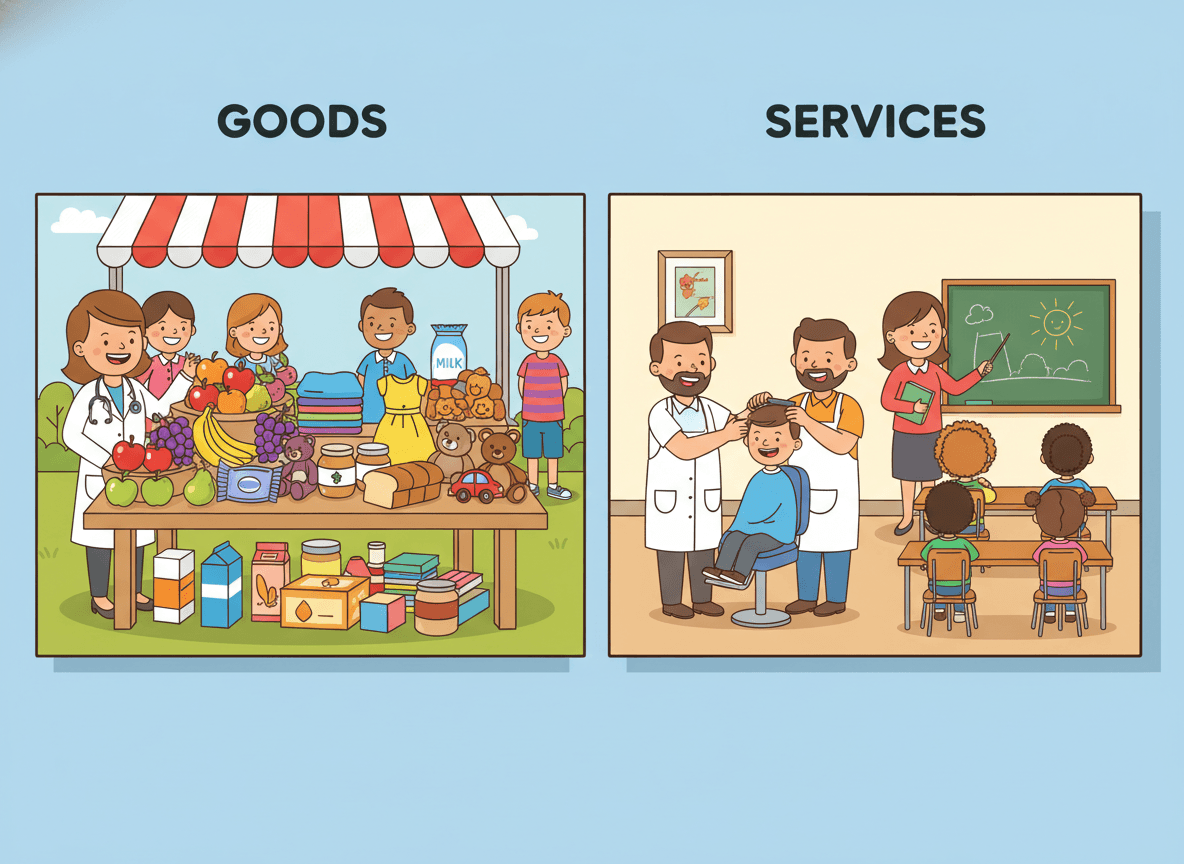
- Goods are physical things that can be bought and sold, like food, clothing, and toys. Services are actions people do for others, like teaching, delivering mail, or cutting hair.
- Producers make or provide goods and services; consumers buy or use them. Most people are both producers and consumers.
- People make economic choices based on their needs (things they must have) and wants (things they would like to have).
What Are Goods and Services?
Economics is the study of how people use resources to meet their needs and wants. Two of the most basic economic concepts are goods and services.
Goods
Goods are physical, tangible products - things you can touch, hold, and own. Goods are made by producers and bought by consumers.
Food goods: Bread, apples, milk, pizza
Clothing goods: Shoes, jackets, hats
Household goods: Furniture, dishes, lamps
Technology goods: Computers, phones, tablets
Toy goods: Books, games, dolls Goods can be durable (last a long time, like a bicycle) or nondurable (used up quickly, like food).
Services
Services are actions or work that people do for others. You cannot hold a service in your hand - you experience it.
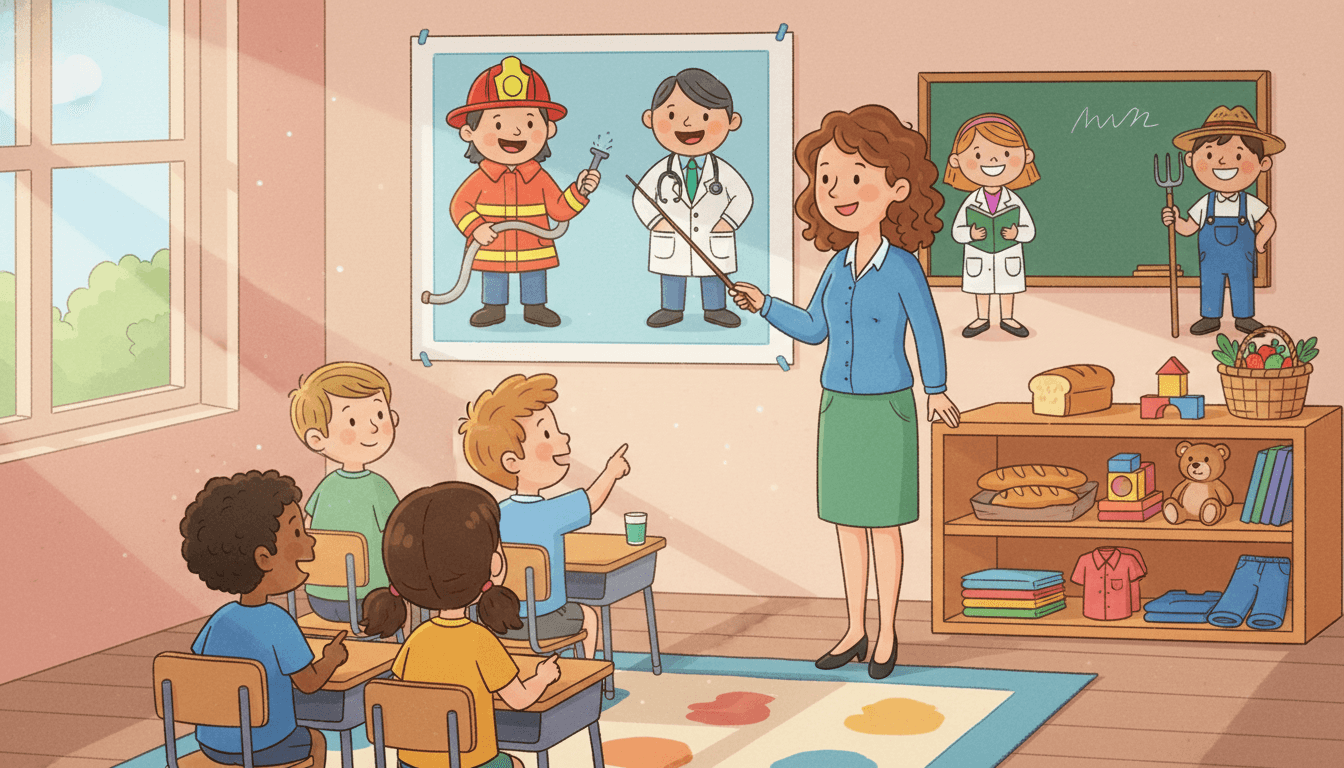
Teaching: Teacher
Medical care: Doctor, nurse
Haircut: Barber, hairstylist
Mail delivery: Mail carrier
Police and fire protection: Police officers, firefighters
Restaurant meal preparation: Chef
Bus or taxi ride: Driver
Producers and Consumers
-
Producers are people or companies that make goods or provide services.
-
Consumers are people who buy or use goods and services.
Most people are both! A teacher produces the service of education and consumes goods like food and clothing.
Needs vs. Wants
People make economic decisions based on needs and wants:
Food: Candy and treats
Water: Juice or soda
Clothing (basic): Fashion sneakers
Shelter: Big house with pool
Basic medical care: Video games Understanding the difference helps people make smart decisions about how to spend money.
Supply and Demand (Introduction)
-
Supply is how much of a good or service is available.
-
Demand is how much people want it.
When something is scarce (hard to find) and many people want it, the price goes up. When there is plenty of something and few people want it, the price goes down.
Example: If a popular toy sells out everywhere, stores can charge more because demand is high and supply is low.
How Goods and Services Connect Communities
Communities depend on both goods and services working together. Farmers grow food (goods), truck drivers transport it (service), stores sell it (goods + service), and customers buy it (consumers). This interdependence - communities depending on each other - is what makes economies work.
Practice Activities
-
Goods vs. services sort: Students sort picture cards into "goods" or "services" columns on a T-chart.
-
Community economy map: Students draw a map of their community and label examples of goods and services they can find there.
-
Needs vs. wants sort: Students sort cards showing items into needs and wants categories.
-
Class store: Set up a simple classroom store where students role-play as producers and consumers.
-
Career connection: For each community helper, students identify whether they provide a good, a service, or both.
Frequently Asked Questions
What is the difference between goods and services?
Goods are physical, tangible products you can touch and own - like a book, a sandwich, or a pair of shoes. Services are actions or work that someone does for you - like a haircut, a doctor's checkup, or a bus ride. You experience a service but cannot take it home.
What is the difference between a need and a want?
A need is something a person must have to survive - food, water, clothing, and shelter. A want is something a person would like to have but doesn't need to survive - like a video game, candy, or a new toy. Making good choices about needs vs. wants is an important part of economics.
What is supply and demand?
Supply is how much of a good or service is available. Demand is how much people want it. When supply is low and demand is high, prices usually go up. When supply is high and demand is low, prices usually go down. For example, if there is only one toy left in a store and many kids want it, the store can charge more.
Free Goods and Services Worksheets
Curriculum-aligned printable worksheets for Kindergarten – 2nd Grade. Download free.