What Is Government?
Taught in US schools
Key Takeaways
- Government exists to make and enforce laws, provide services (schools, roads, fire protection), and protect citizens' rights and safety.
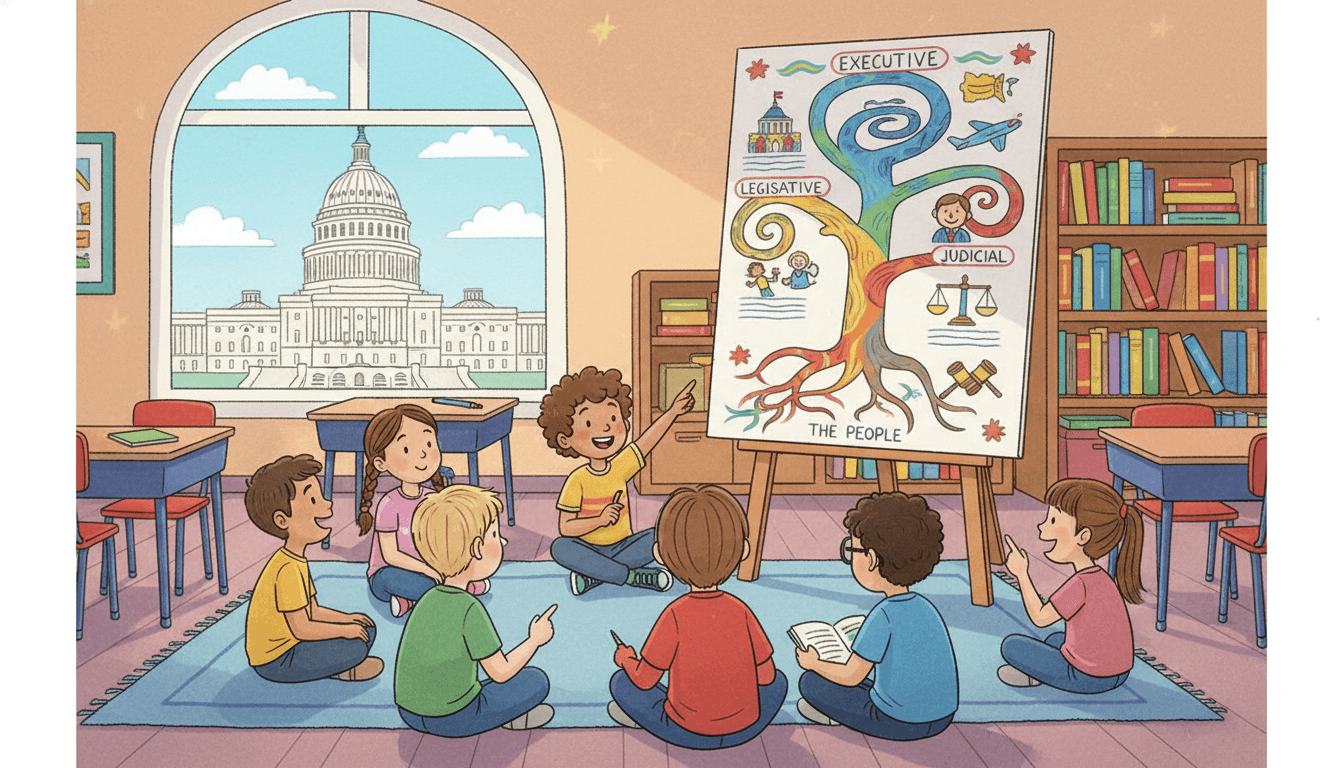
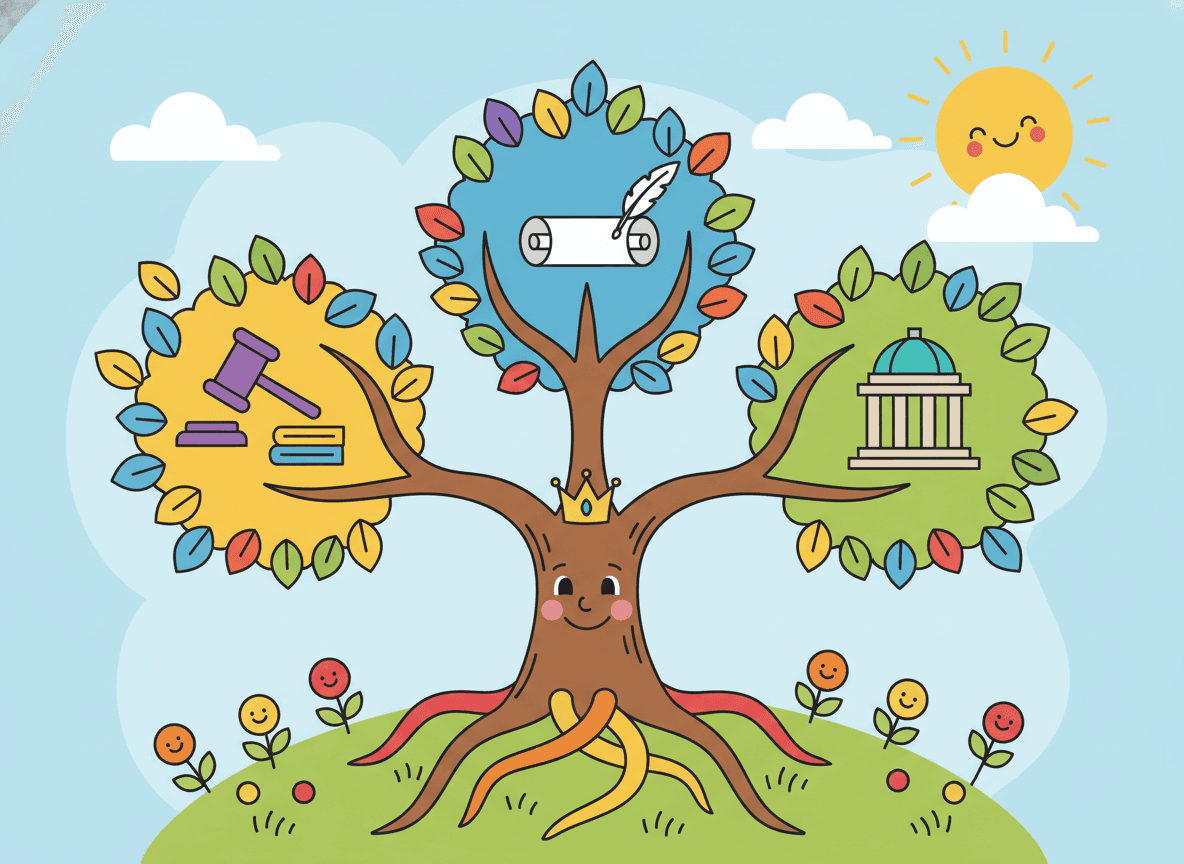
- The U.S. government has three branches: the legislative branch (Congress makes laws), the executive branch (the President enforces laws), and the judicial branch (the Supreme Court interprets laws).
- Checks and balances prevent any one branch from having too much power - each branch can limit the power of the others.
What Is Government?
Government is the system through which a group of people - a city, a state, or a nation - makes and enforces rules, provides important services, and protects the rights and safety of its citizens.
Why Do We Have Government?
Without government, there would be no agreed-upon rules, no one to enforce them, and no organized way to provide services everyone needs. Government:
-
Creates laws to keep order and protect people
-
Provides public services: schools, roads, parks, fire departments, police
-
Protects rights: free speech, fair trials, equal treatment under the law
-
Defends the country from outside threats
The Three Branches of US Government
The United States government was designed with three separate branches so that no single person or group could have too much power. This is called the separation of powers.
1. Legislative Branch - Congress
Makes the laws.
Congress is made up of two parts (called a bicameral legislature):
-
Senate - 100 senators, 2 from each state, 6-year terms
-
House of Representatives - 435 representatives, apportioned by state population, 2-year terms
Both houses must pass a bill before it goes to the President.
2. Executive Branch - The President
Carries out (enforces) the laws.
The President is elected every four years and leads the executive branch. The President:
- Signs bills into law or vetoes (rejects) them
- Commands the military
- Appoints judges and Cabinet members
- Represents the US in foreign affairs
The Vice President and the Cabinet (heads of departments like Defense, Education, and Treasury) support the President.
3. Judicial Branch - The Supreme Court
Interprets the laws.
The Supreme Court has 9 justices who are appointed for life. They decide whether laws and government actions follow the Constitution. Lower federal courts handle cases before they reach the Supreme Court.
Checks and Balances
Each branch has ways to check (limit) the power of the others:
Congress (Legislative): Can override a presidential veto; can impeach the President
President (Executive): Can veto laws passed by Congress; appoints judges
Supreme Court (Judicial): Can strike down laws as unconstitutional
Levels of Government
Federal: Entire country - National defense, currency, immigration
State: One state - State highways, state universities, most criminal law
Local: City or county - Local schools, parks, water, trash collection
Democracy and Citizenship
The United States is a representative democracy (also called a republic): citizens elect representatives to make decisions on their behalf. Citizens can participate in government by:
-
Voting in elections
-
Contacting elected representatives
-
Serving on juries
-
Running for office
Practice Activities
-
Three branches diagram: Students create a graphic organizer with each branch, its role, and a real-world example.
-
Checks and balances simulation: Role-play a scenario where one branch tries to overstep and the others check it.
-
Local government research: Students identify one local government service in their community and research who is responsible for it.
-
Letter to a representative: Students draft a letter to a local elected official about an issue that matters to them.
-
Government levels sort: Students sort government services (military, school funding, city park) by whether they are local, state, or federal.
Frequently Asked Questions
Why do we have government?
Government exists to keep order, protect people's rights, provide services that individuals cannot provide alone (like roads, schools, and fire departments), and resolve disagreements through law. Without government, there would be no agreed-upon rules and society would struggle to function fairly.
What are the three branches of the US government?
The three branches are the legislative branch (Congress - the Senate and House of Representatives - which makes the laws), the executive branch (the President and Cabinet, which carries out the laws), and the judicial branch (the Supreme Court and other federal courts, which interpret whether laws follow the Constitution).
What is the difference between local, state, and federal government?
Federal (national) government handles issues that affect the whole country - national defense, immigration, and interstate highways. State governments manage issues within their borders - state roads, state universities, and most criminal law. Local governments (cities and counties) handle day-to-day services - local schools, parks, water, and trash collection.
Free Government Worksheets
Curriculum-aligned printable worksheets for 3rd – 5th Grade. Download free.