What Is the Constitution?
Taught in US schools
Key Takeaways
- The U.S. Constitution is the supreme law of the land, written in 1787 and ratified in 1788, and it has guided the country for over 235 years.
- The Preamble states the six purposes of the Constitution, beginning with the famous words 'We the People.'
- The Bill of Rights is the first ten amendments and protects fundamental freedoms including speech, religion, the press, and the right to a fair trial.
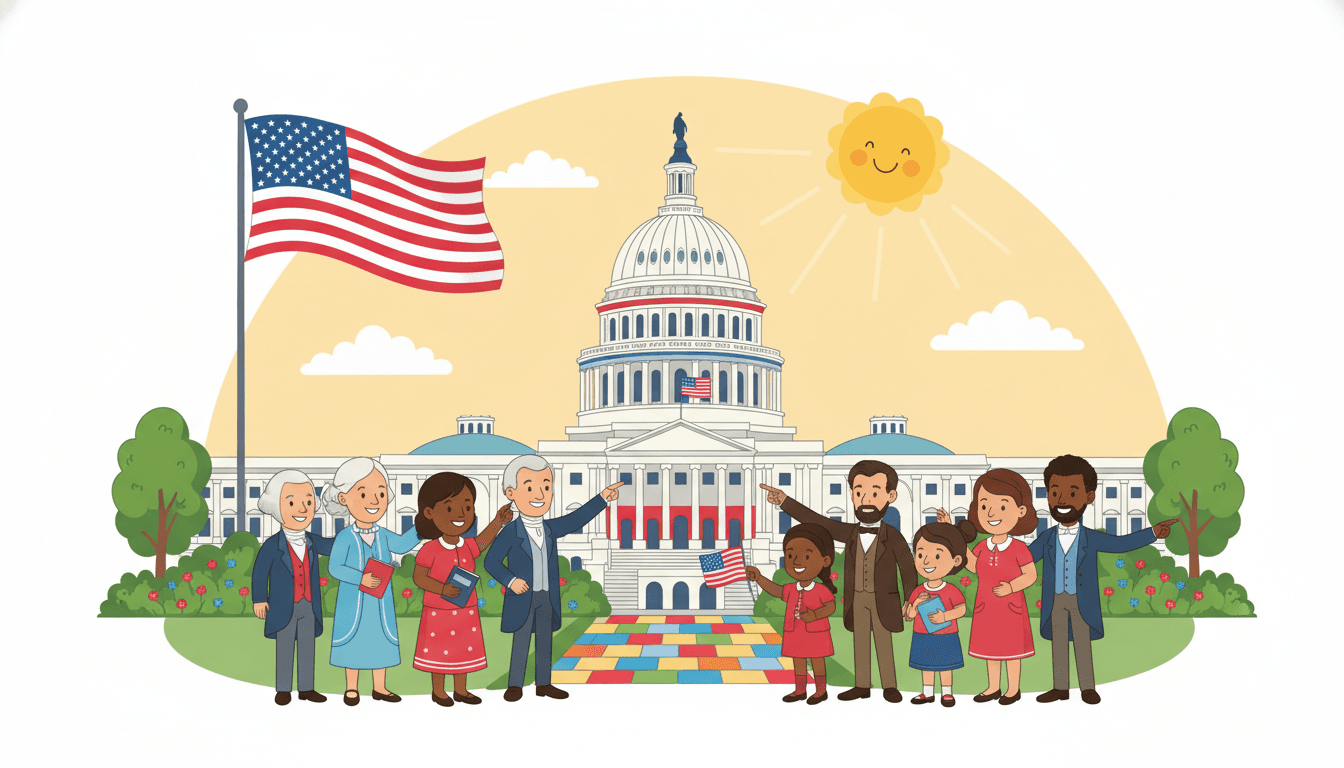
What Is the Constitution?
The United States Constitution is the supreme law of the United States of America. It was written by delegates to the Constitutional Convention in Philadelphia in 1787, ratified (officially approved) by the states in 1788, and has been in effect since 1789. At just over 4,500 words in its original form, it is the oldest and shortest written national constitution still in use.
The Constitution does two main things:
- Sets up the structure of the federal government (three branches and their powers)
- Protects the rights of citizens from government overreach
The Preamble
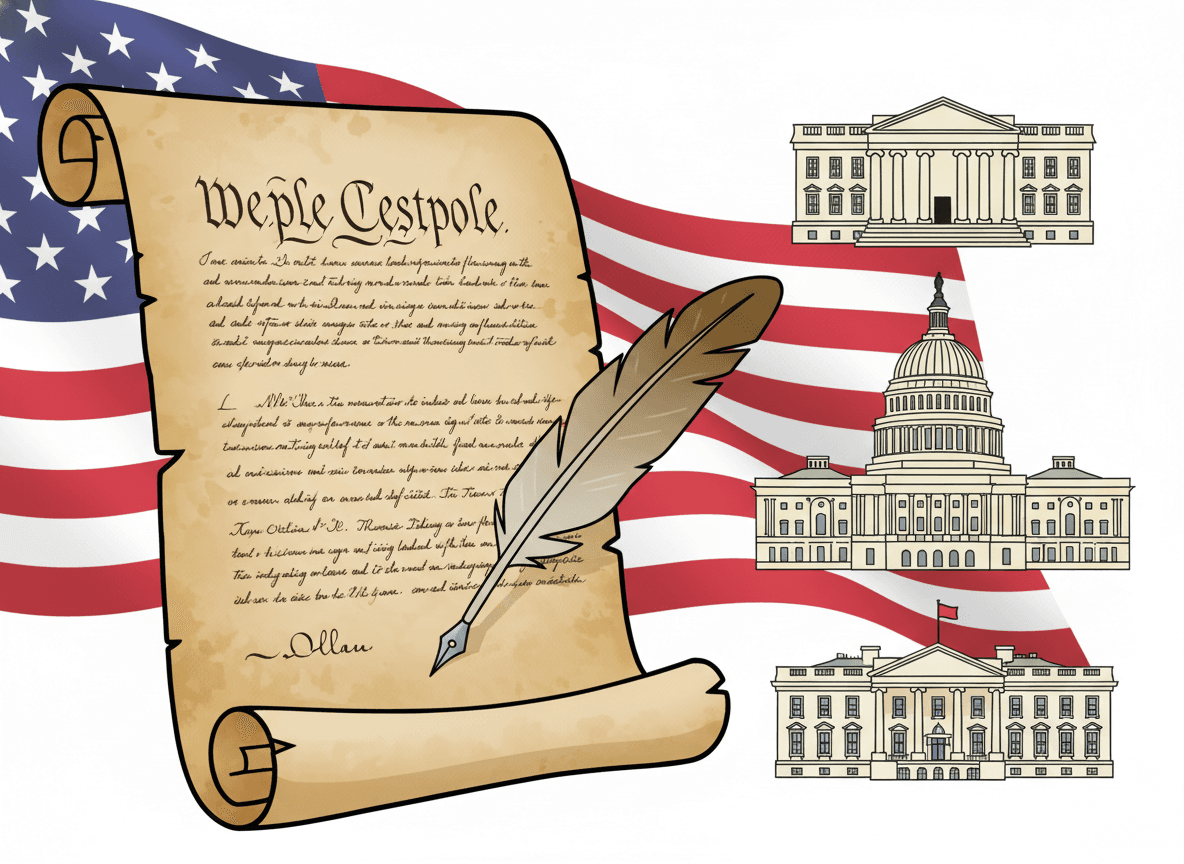
The Preamble is the famous opening of the Constitution. It explains why the Constitution was written:
"We the People of the United States, in Order to form a more perfect Union, establish Justice, insure domestic Tranquility, provide for the common defence, promote the general Welfare, and secure the Blessings of Liberty to ourselves and our Posterity, do ordain and establish this Constitution for the United States of America."
The first three words - "We the People" - are critically important: they establish that the government's power comes from the citizens, not from kings or rulers.
The Seven Articles
The original Constitution has seven articles (sections):
I: The legislative branch (Congress)
II: The executive branch (the President)
III: The judicial branch (the Supreme Court)
IV: Relations between states
V: How to amend the Constitution
VI: The Constitution as supreme law
VII: Ratification process
The Bill of Rights
When the Constitution was ratified, many people feared it gave the federal government too much power. To address these concerns, James Madison drafted the first ten amendments, known as the Bill of Rights, which were ratified in 1791.
1st: Freedom of speech, religion, press, assembly, petition
2nd: Right to bear arms
3rd: Soldiers cannot be quartered in private homes
4th: Protection from unreasonable searches and seizures
5th: Right to remain silent; no double jeopardy
6th: Right to a speedy, fair, public trial with a lawyer
7th: Right to a jury trial in civil cases
8th: No cruel or unusual punishment
9th: Other rights not listed are still protected
10th: Powers not given to federal government belong to states and people
Amending the Constitution
The Constitution can be changed - but only through a deliberate, difficult process to ensure amendments represent true national consensus:
- An amendment is proposed by two-thirds of both houses of Congress (or by a constitutional convention called by two-thirds of states)
- It must be ratified by three-fourths of state legislatures (38 out of 50 states)
There are currently 27 amendments. The most recent (27th Amendment, limiting Congressional pay raises) was ratified in 1992, though it was originally proposed in 1789.
Why the Constitution Still Matters
The Constitution has guided the United States for over 235 years. Courts use it to decide whether laws are legal. The rights in the Bill of Rights protect every American citizen every day. It is the foundation of American democracy.
Practice Activities
-
Preamble memorization: Teach students the Preamble; many schools have students memorize it.
-
Bill of Rights matching: Match each amendment number to the freedom it protects.
-
Constitutional Convention drama: Students role-play the delegates debating whether to include the Bill of Rights.
-
Amendment research: Each student researches one of the 27 amendments and explains when it was added and why.
-
We the People writing: Students write their own class constitution with rights and rules they think are most important.
Frequently Asked Questions
What is the Preamble to the Constitution?
The Preamble is the opening statement of the Constitution. It begins 'We the People of the United States' and lists six goals: to form a more perfect union, establish justice, ensure domestic tranquility, provide for the common defense, promote the general welfare, and secure the blessings of liberty. It makes clear that the government's power comes from the people.
What is the Bill of Rights?
The Bill of Rights is the first ten amendments to the Constitution, added in 1791. They protect individual freedoms such as freedom of speech, religion, and the press (1st Amendment), the right to bear arms (2nd), protection from unreasonable searches (4th), the right to a fair trial (6th), and protection from cruel and unusual punishment (8th).
Why can the Constitution be amended?
The framers knew that society would change over time, so they created a process for amending (changing) the Constitution. An amendment must be proposed by two-thirds of Congress and ratified by three-fourths of the states. This high bar ensures amendments represent broad national agreement. There are currently 27 amendments.
Free Constitution Worksheets
Curriculum-aligned printable worksheets for 4th – 5th Grade. Download free.