What Was the Civil Rights Movement?
Taught in US schools
Key Takeaways
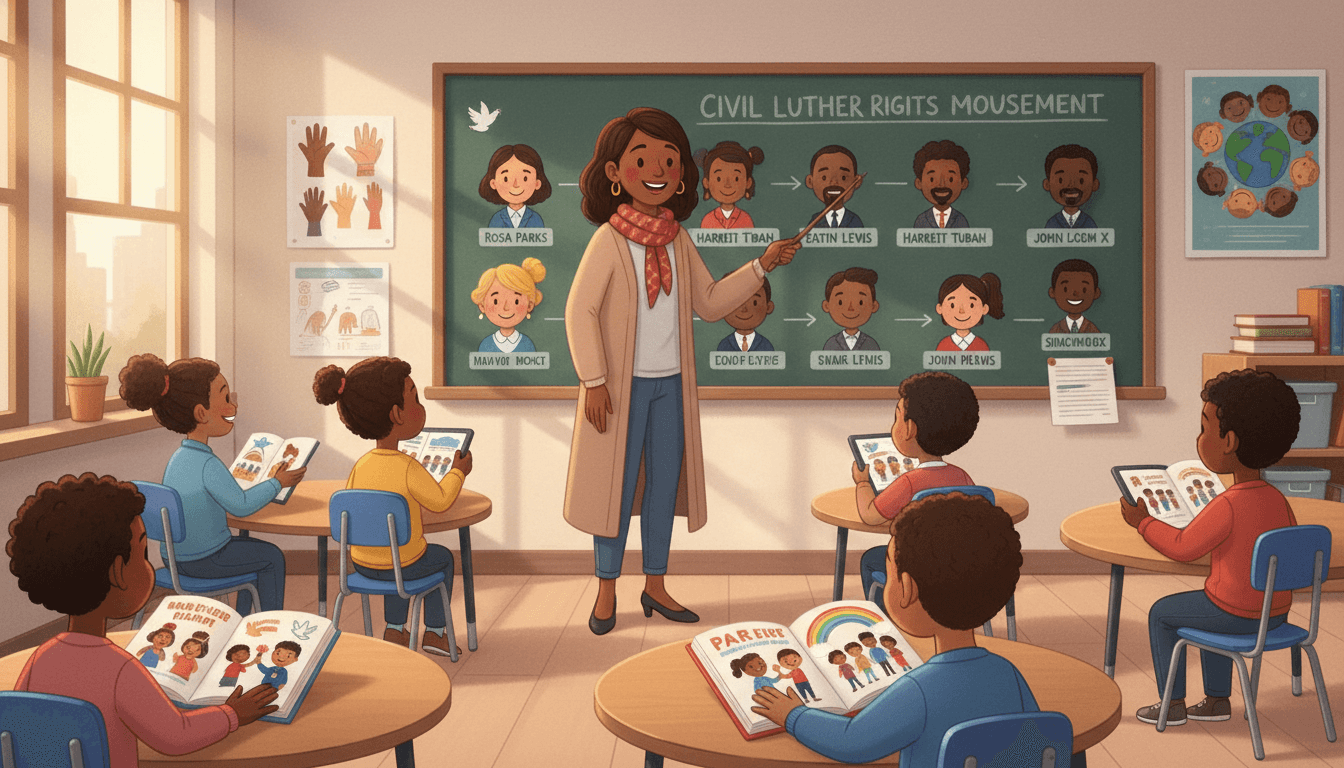
- The Civil Rights Movement of the 1950s and 1960s fought to end racial segregation and gain equal rights for Black Americans.
- Key strategies included nonviolent protests - marches, sit-ins, and boycotts - led by figures like Martin Luther King Jr. and Rosa Parks.
- Major legislative victories included the Civil Rights Act of 1964 (outlawing discrimination) and the Voting Rights Act of 1965 (protecting voting rights).
What Was the Civil Rights Movement?
The Civil Rights Movement was a decades-long struggle - most intense in the 1950s and 1960s - in which Black Americans and their allies fought to end racial segregation and discrimination and to secure equal rights and opportunities under the law. It was one of the most transformative social movements in American history.
Background: Jim Crow Laws and Segregation
After the Civil War and the end of Reconstruction, Southern states passed Jim Crow laws - a system of legislation that enforced racial segregation. Black Americans were forced to use separate schools, hospitals, restaurants, and public spaces - usually inferior ones. They faced intimidation, violence, and barriers to voting.
The Supreme Court had upheld segregation in Plessy v. Ferguson (1896), ruling that "separate but equal" was legal. The Civil Rights Movement fought to overturn this.
Key Events
Brown v. Board of Education: 1954 - Supreme Court strikes down school segregation
Montgomery Bus Boycott: 1955–56 - 381-day boycott ends bus segregation
Little Rock Nine: 1957 - 9 Black students integrate an Arkansas high school
Sit-ins at lunch counters: 1960 - Students protest segregated restaurants
Freedom Rides: 1961 - Activists test desegregation of interstate buses
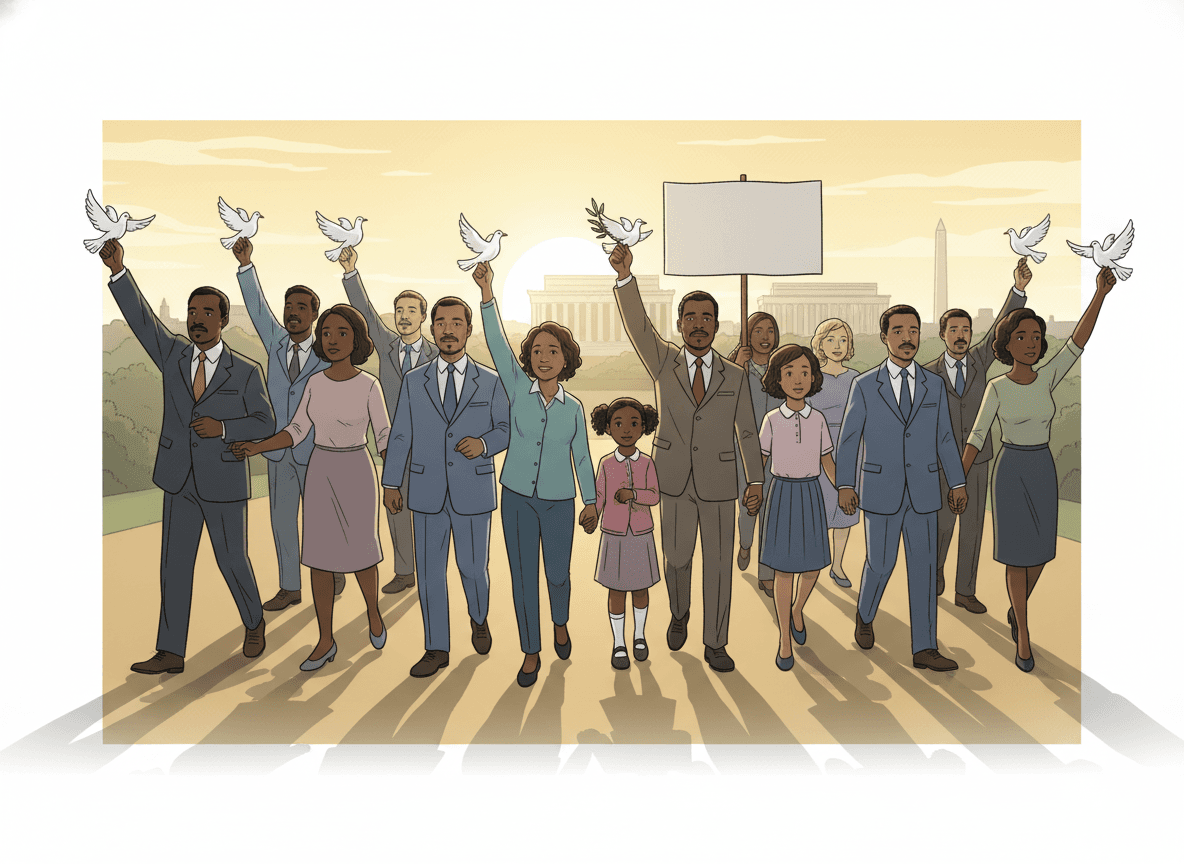
March on Washington: 1963 - 250,000 march; King's "I Have a Dream" speech
Civil Rights Act: 1964 - Outlaws segregation and discrimination nationwide
Selma to Montgomery March: 1965 - March for voting rights; Bloody Sunday
Voting Rights Act: 1965 - Protects Black Americans' right to vote
Key Figures
Martin Luther King Jr.
The most prominent leader of the movement, King organized nonviolent protests, delivered powerful speeches, and won the Nobel Peace Prize in 1964.
Rosa Parks
Parks' refusal to give up her bus seat in Montgomery, Alabama, in 1955 sparked the Montgomery Bus Boycott. She is called the "Mother of the Civil Rights Movement."
John Lewis
A young activist who helped found the Student Nonviolent Coordinating Committee (SNCC). He was beaten on Bloody Sunday (March 7, 1965) while leading marchers across the Edmund Pettus Bridge in Selma, Alabama - the televised brutality shocked the nation and pushed Congress to pass the Voting Rights Act.
Thurgood Marshall
The NAACP lawyer who argued the Brown v. Board of Education case before the Supreme Court. He later became the first Black Supreme Court Justice.
Strategies of the Movement
The Civil Rights Movement used nonviolent direct action:
-
Boycotts - refusing to use segregated services (Montgomery Bus Boycott)
-
Sit-ins - quietly sitting at segregated lunch counters until served or arrested
-
Freedom Rides - integrated groups riding interstate buses to test compliance with desegregation
-
Marches - large peaceful demonstrations (March on Washington, Selma marches)
Legislative Victories
-
Civil Rights Act of 1964 - Outlawed segregation in public places and employment discrimination
-
Voting Rights Act of 1965 - Banned discriminatory voting practices like literacy tests
-
24th Amendment (1964) - Abolished the poll tax that had been used to prevent Black Americans from voting
Practice Activities
-
Key events timeline: Students create a visual timeline from Brown v. Board (1954) to the Voting Rights Act (1965).
-
Montgomery Bus Boycott role play: Discuss what the boycott required of participants; how would it feel to walk miles to work for 381 days?
-
Primary source quotes: Analyze quotes from King, Parks, and John Lewis and discuss the courage required.
-
Nonviolent protest design: Students design a peaceful protest for a cause they believe in, including signs and chants.
-
Legislation chart: Research what life was like before and after the Civil Rights Act of 1964 for Black Americans.
Frequently Asked Questions
What was segregation?
Segregation was the legal separation of people by race, especially in the South after the Civil War. Under Jim Crow laws, Black Americans were forced to use separate schools, restaurants, bathrooms, and public spaces - all of which were usually inferior to those reserved for white Americans. The Supreme Court's 1954 Brown v. Board of Education decision declared school segregation unconstitutional.
Who was Rosa Parks?
Rosa Parks was an African American seamstress and civil rights activist from Montgomery, Alabama. On December 1, 1955, she refused to give up her seat on a city bus to a white passenger, breaking segregation law. Her arrest sparked the Montgomery Bus Boycott, a key event in the Civil Rights Movement. She is often called the 'Mother of the Civil Rights Movement.'
What did the Civil Rights Act of 1964 do?
The Civil Rights Act of 1964 was a landmark law signed by President Lyndon B. Johnson that outlawed discrimination based on race, color, religion, sex, or national origin. It banned segregation in public places, ended unequal application of voter registration requirements, and prohibited employment discrimination.
Free Civil Rights Movement Worksheets
Curriculum-aligned printable worksheets for 3rd – 5th Grade. Download free.