Who Was Harriet Tubman?
Taught in US schools

Key Takeaways
- Harriet Tubman was born into slavery around 1822 and escaped to freedom in 1849.
- She made about 13 missions back into the South as a conductor on the Underground Railroad, helping approximately 70 enslaved people escape to freedom.
- During the Civil War, Tubman served as a spy, scout, and nurse for the Union Army.
Who Was Harriet Tubman?
Harriet Tubman (born Araminta Ross, c. 1822 – March 10, 1913) was one of the most courageous freedom fighters in American history. Born into slavery on a plantation in Maryland, she escaped to freedom in 1849 - and then risked her life over and over again to help others do the same.
Early Life in Slavery
Harriet Tubman was born enslaved on a plantation in Dorchester County, Maryland. As a child, she worked in the fields and as a house servant and was subject to brutal treatment. In 1835, she suffered a severe head injury when an overseer threw a heavy metal weight that hit her in the head. This injury caused her to experience sudden, unpredictable episodes of unconsciousness throughout her life - a condition that never slowed her down.
The Escape to Freedom
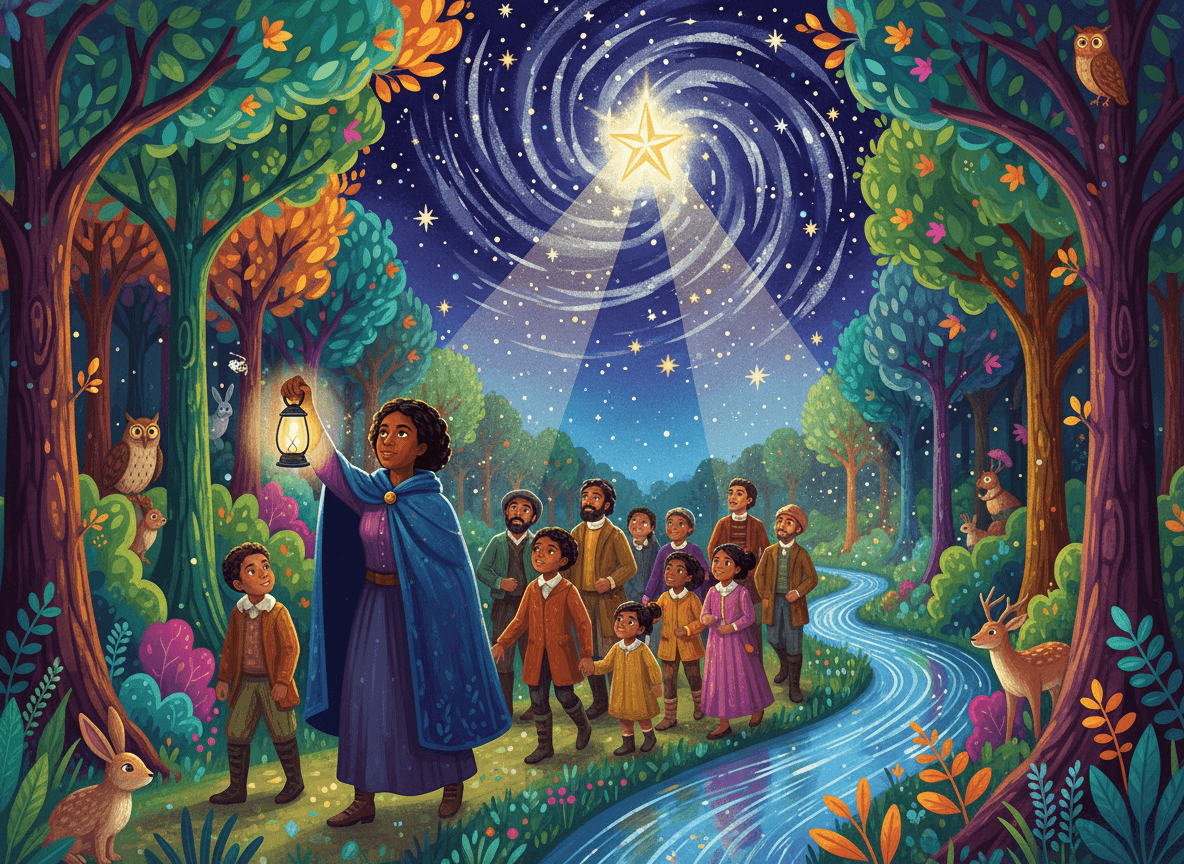
In September 1849, Tubman escaped north, traveling about 90 miles on foot, mostly at night, guided by the North Star and a network of helpers along the Underground Railroad. She arrived in Philadelphia, Pennsylvania - a free state.
"When I found I had crossed that line, I looked at my hands to see if I was the same person. There was such a glory over everything."
The Underground Railroad
Rather than staying in safety, Tubman immediately began returning south to rescue her family and others. Over the next decade, she made about 13 missions, guiding approximately 70 enslaved people to freedom.
She operated with remarkable discipline:
- Traveled on Saturday nights (slaveholders couldn't advertise a runaway until Monday, when newspapers were printed)
- Used disguises and constantly changed routes
- Carried a gun - she told escapees: "You'll be free or die"
- Never lost a single passenger
Tubman became known as "Moses" - named after the biblical leader who freed the Israelites from Egypt.
Civil War Service
When the Civil War broke out, Tubman offered her services to the Union Army. She served as a:
-
Nurse - caring for sick and injured soldiers
-
Spy - gathering intelligence from behind Confederate lines
-
Scout - leading armed raids into Confederate territory
In June 1863, she led the Combahee River Raid in South Carolina, guiding 150 Union soldiers and liberating more than 700 enslaved people in a single night - the largest single emancipation in the war.
Later Life and Legacy
After the war, Tubman settled in Auburn, New York. She:
- Worked with Susan B. Anthony in the women's suffrage movement
- Established a home for elderly African Americans
- Was honored with a military funeral when she died in 1913 at approximately age 91
Today, Harriet Tubman is recognized as an American hero. She is set to appear on the $20 bill and has been honored with museums, monuments, and a national historical park in Maryland.
Practice Activities
-
Map the route: Students trace escape routes from Maryland to Pennsylvania and Canada on a map of the Eastern US.
-
Primary source quotes: Analyze quotes from Tubman and discuss what they reveal about her character and beliefs.
-
Underground Railroad research: Students research the network of conductors, stations, and codes used on the Underground Railroad.
-
Biography book report: Students write a short biography using the five W's - who, what, when, where, and why Tubman is important.
-
Courageous people collage: Compare Tubman to other historical figures who fought for justice, listing shared traits.
Frequently Asked Questions
What was the Underground Railroad?
The Underground Railroad was not a real railroad - it was a secret network of people, safe houses, and routes that helped enslaved people escape from the South to free states in the North and to Canada. Conductors like Harriet Tubman guided escapees, and 'stations' were the homes and hiding places along the way.
Why was Harriet Tubman called Moses?
Tubman was called 'Moses' because, like the biblical Moses who led the Israelites out of Egypt, she led enslaved people out of bondage in the South to freedom in the North. She was deeply religious and believed God was guiding her on her missions.
What did Harriet Tubman do after the Civil War?
After the Civil War, Tubman continued to fight for rights. She worked with Susan B. Anthony and others in the women's suffrage movement, advocating for women's right to vote. She also established a home for elderly African Americans in Auburn, New York, where she lived until her death in 1913.
Free Harriet Tubman Worksheets
Curriculum-aligned printable worksheets for 1st – 5th Grade. Download free.