What Was the Civil War?
Taught in US schools
Key Takeaways
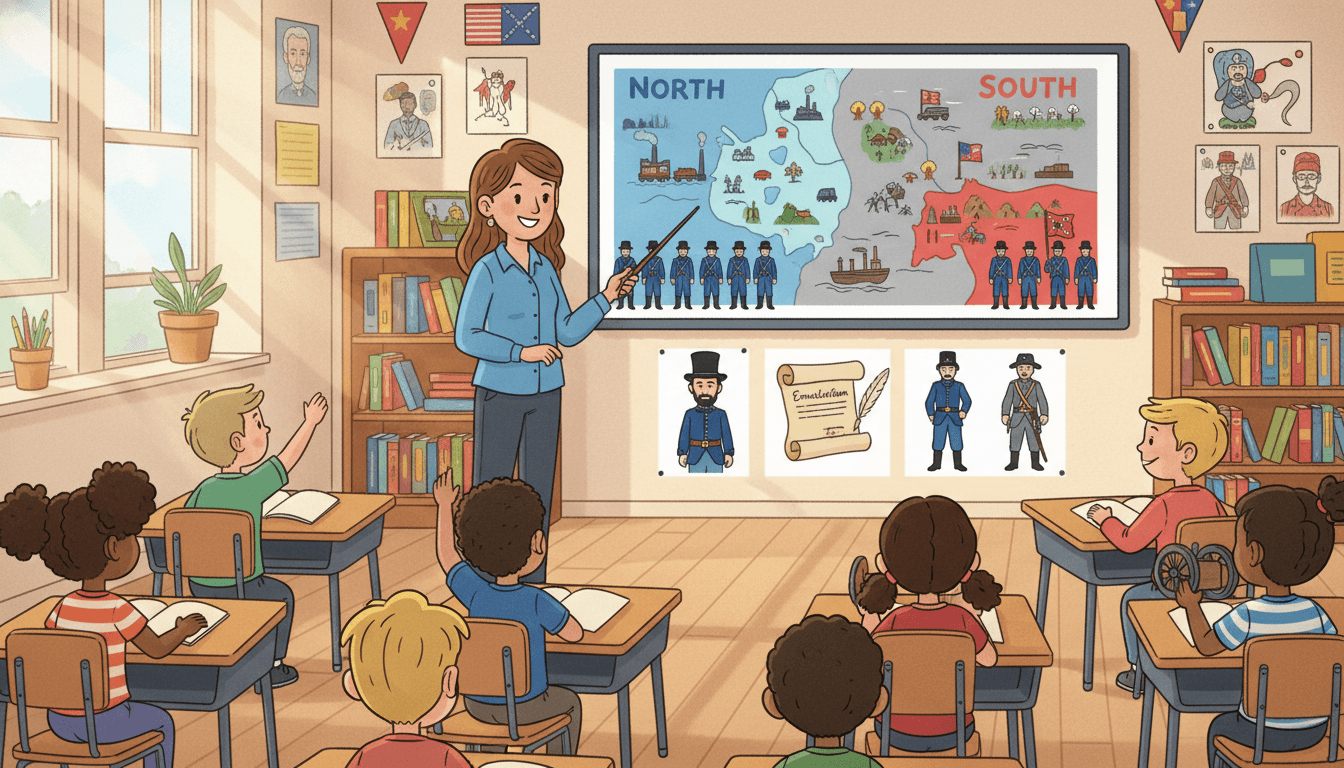
- The Civil War (1861–1865) was fought between the Union (North) and the Confederacy (Southern states that seceded over slavery and states' rights).
- President Lincoln issued the Emancipation Proclamation in 1863, declaring enslaved people in Confederate states to be free.
- The Union won the war in April 1865, and the 13th Amendment abolished slavery throughout the United States.
What Was the Civil War?
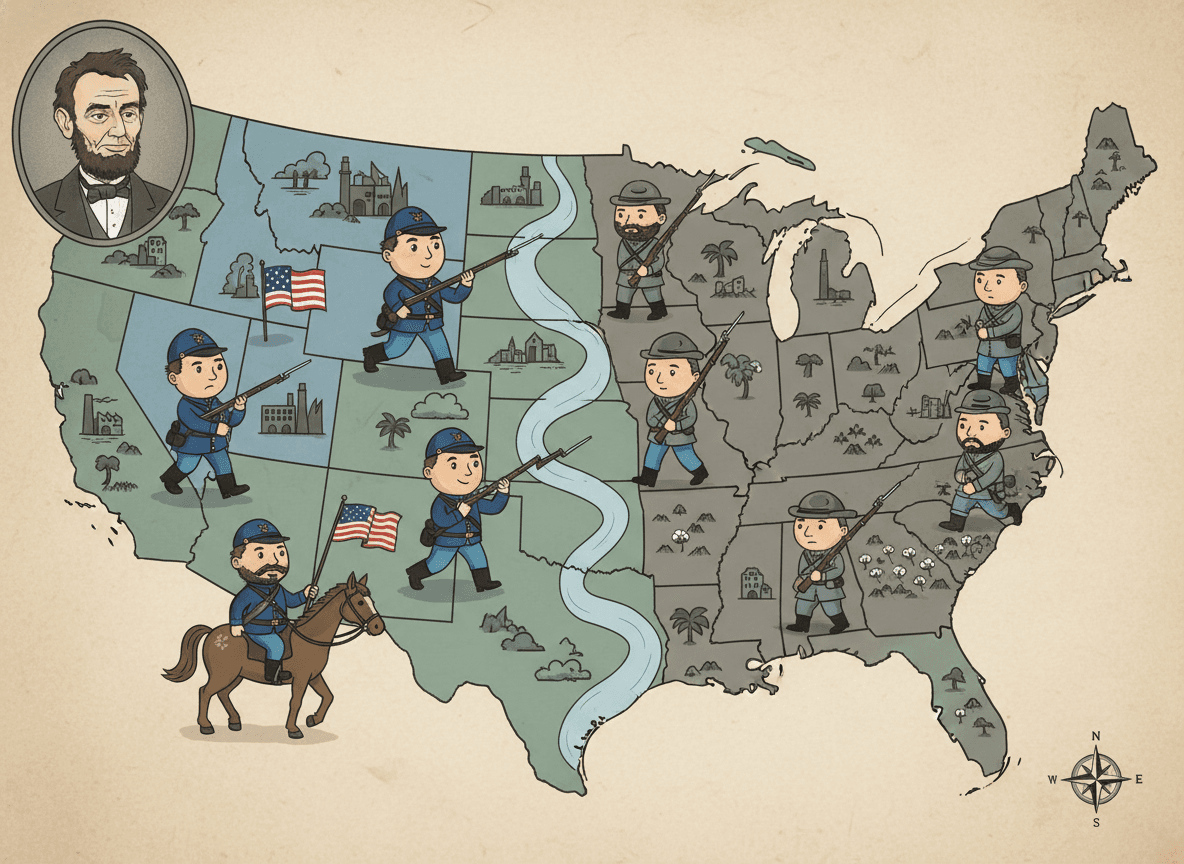
The Civil War (April 12, 1861 – April 9, 1865) was the most devastating war ever fought on American soil. It pitted the Union (Northern states loyal to the federal government) against the Confederacy (11 Southern states that seceded). With over 620,000 soldiers killed, it remains the deadliest conflict in American history.
Causes
Slavery
The deepest cause of the Civil War was slavery. Southern states relied on the labor of millions of enslaved people to grow cotton, tobacco, and other crops. As Northern states abolished slavery, Southern states feared the federal government would end it nationally. The election of Abraham Lincoln in 1860 - who opposed slavery's expansion - pushed Southern states to leave the Union.
States' Rights
Southern leaders argued that states had the right to leave (secede from) the Union if they disagreed with federal law. The federal government and Northern states rejected this argument, insisting the Union was permanent.
The Two Sides
North: Union - Washington, D.C. - Ulysses S. Grant
South: Confederacy - Richmond, Virginia - Robert E. Lee
Key Events
Fort Sumter attacked: April 1861 - First shots of the war
Battle of Bull Run: July 1861 - Union defeat; showed war would be long
Battle of Antietam: Sept. 1862 - Bloodiest single day; 22,000 casualties
Emancipation Proclamation: Jan. 1, 1863 - Freed enslaved people in Confederate states
Battle of Gettysburg: July 1863 - Turning point; Union victory
Gettysburg Address: Nov. 1863 - Lincoln redefines the war's purpose
Sherman's March: 1864 - Union forces burn path through Georgia
Lee surrenders at Appomattox: April 9, 1865 - Civil War ends
Lincoln assassinated: April 14, 1865 - Five days after the war ends
The Emancipation Proclamation
On January 1, 1863, Lincoln issued the Emancipation Proclamation, declaring enslaved people in Confederate states "forever free." It transformed the war's meaning - now the Union was fighting not just to preserve the nation, but to end slavery.
The End of the War and Reconstruction
Confederate General Robert E. Lee surrendered to Union General Ulysses S. Grant at Appomattox Court House, Virginia, on April 9, 1865. The Union was restored.
After the war, the 13th Amendment (1865) abolished slavery throughout the United States. Reconstruction (1865–1877) attempted to rebuild the South and establish rights for formerly enslaved people.
Key Figures
-
Abraham Lincoln - Union president; issued Emancipation Proclamation
-
Jefferson Davis - Confederate president
-
Ulysses S. Grant - Union general; accepted Lee's surrender; later president
-
Robert E. Lee - Confederate general
-
Frederick Douglass - Formerly enslaved abolitionist who advised Lincoln
Practice Activities
-
North vs. South T-chart: Compare the Union and Confederacy on causes, leadership, economy, and army size.
-
Emancipation Proclamation primary source: Read the opening lines and identify what it declared and who it affected.
-
Civil War map: Label key battles on a map of the United States using different colors for Union vs. Confederate states.
-
Gettysburg Address analysis: Identify Lincoln's central argument about the purpose of the war.
-
Reconstruction discussion: What challenges did formerly enslaved people face after the war ended?
Frequently Asked Questions
What caused the Civil War?
The Civil War had multiple causes, but the central issue was slavery. Southern states depended on enslaved labor for their economy and feared the federal government would abolish slavery. After Abraham Lincoln won the 1860 election, 11 Southern states seceded (left the Union) and formed the Confederate States of America. The question of states' rights - could a state ignore federal law - was also central.
What was the Battle of Gettysburg?
The Battle of Gettysburg (July 1–3, 1863) in Pennsylvania was the bloodiest battle of the Civil War, with over 50,000 casualties. It was a decisive Union victory that stopped the Confederacy's invasion of the North. Four months later, Lincoln delivered the Gettysburg Address at the dedication of the battlefield cemetery.
What was Reconstruction?
Reconstruction (1865–1877) was the period after the Civil War when the federal government worked to rebuild the Southern states and integrate formerly enslaved people into society as citizens. The 13th Amendment abolished slavery, the 14th granted citizenship to formerly enslaved people, and the 15th gave Black men the right to vote. However, Reconstruction ended without fully achieving racial equality.
Free Civil War Worksheets
Curriculum-aligned printable worksheets for 4th – 5th Grade. Download free.