What Is the History of Thanksgiving?
Taught in US schools
Key Takeaways
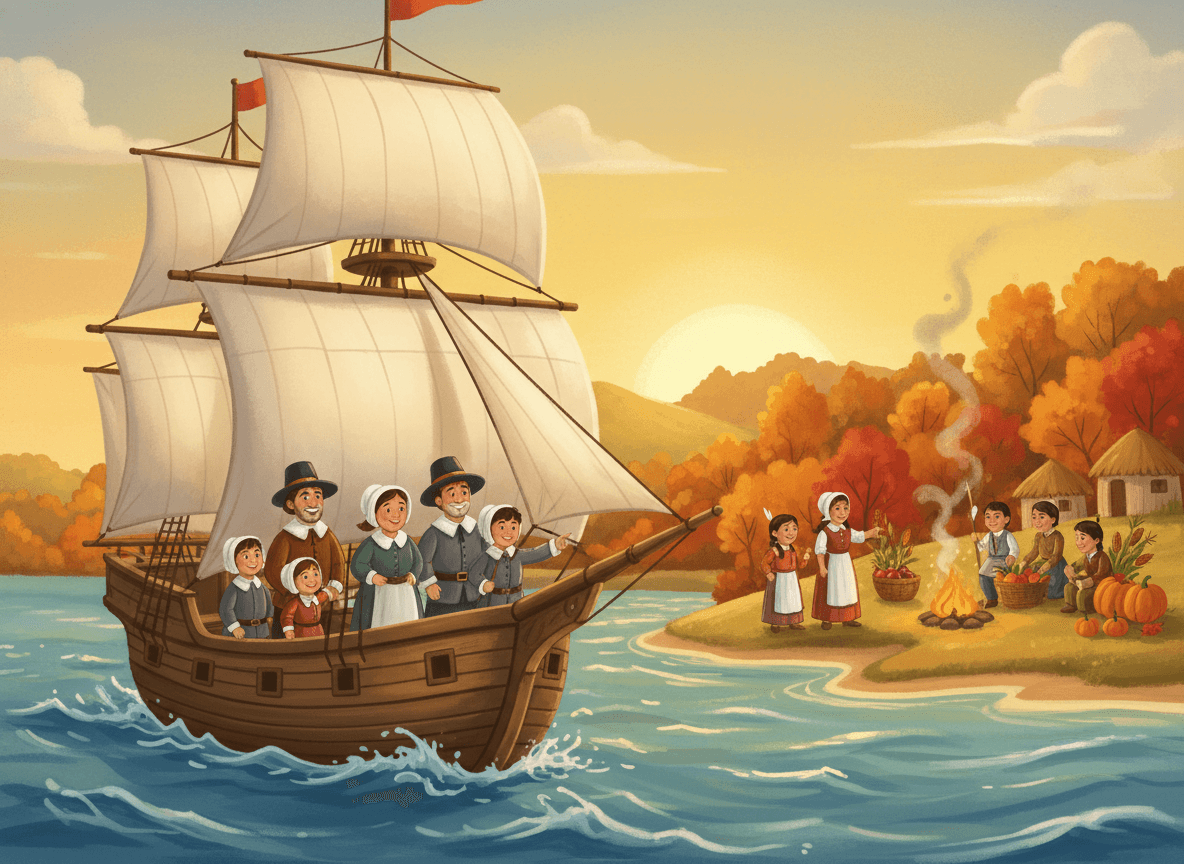
- The Pilgrims were English Separatists who sailed to North America on the Mayflower in 1620, seeking religious freedom. They landed at Plymouth, Massachusetts.
- The Wampanoag people, especially Tisquantum (Squanto), helped the Pilgrims learn to grow crops and survive in the new land.
- The harvest celebration of 1621 is remembered as the 'First Thanksgiving,' though Thanksgiving was not established as a national holiday until President Lincoln declared it in 1863.
What Is the History of Thanksgiving?
Thanksgiving is an American national holiday celebrated on the fourth Thursday of November. Its historical roots trace back to 1620 and the early settlement of Plymouth Colony by a group of English travelers known as the Pilgrims. Understanding Thanksgiving means learning the history honestly - including both the cooperation between the Pilgrims and the Wampanoag people and the difficult years that followed.
Who Were the Pilgrims?
The Pilgrims were English Separatists - Christians who had separated from the Church of England and sought religious freedom. In September 1620, about 102 passengers boarded a ship called the Mayflower. After a difficult 66-day voyage across the Atlantic Ocean, they arrived at Plymouth, Massachusetts, in November 1620.
Before landing, the Pilgrim leaders signed the Mayflower Compact - an agreement to govern themselves fairly and to make decisions together. It is considered an early example of self-governance in America.
A Harsh First Winter
The Pilgrims arrived with no shelter and little food. The first winter was devastating:
- They had no knowledge of the local land or how to survive in it.
- Nearly half of the colonists died from cold, hunger, and disease before spring.
- They lived aboard the Mayflower during much of the winter while building their settlement.
The Wampanoag People and Survival
In the spring of 1621, the Pilgrims made contact with the Wampanoag people, who had lived in the region for thousands of years. A Wampanoag leader named Massasoit negotiated a peace agreement with the Pilgrims.
Tisquantum (Squanto), a member of the Patuxent tribe who had previously been to England and spoke English, became an essential bridge between the two groups. He taught the Pilgrims:
- How to plant corn and other crops, including using fish as fertilizer
- How to navigate local streams and rivers for fishing
- How to forage for local foods
Without this help, the Plymouth Colony likely would not have survived.
The Harvest Celebration of 1621
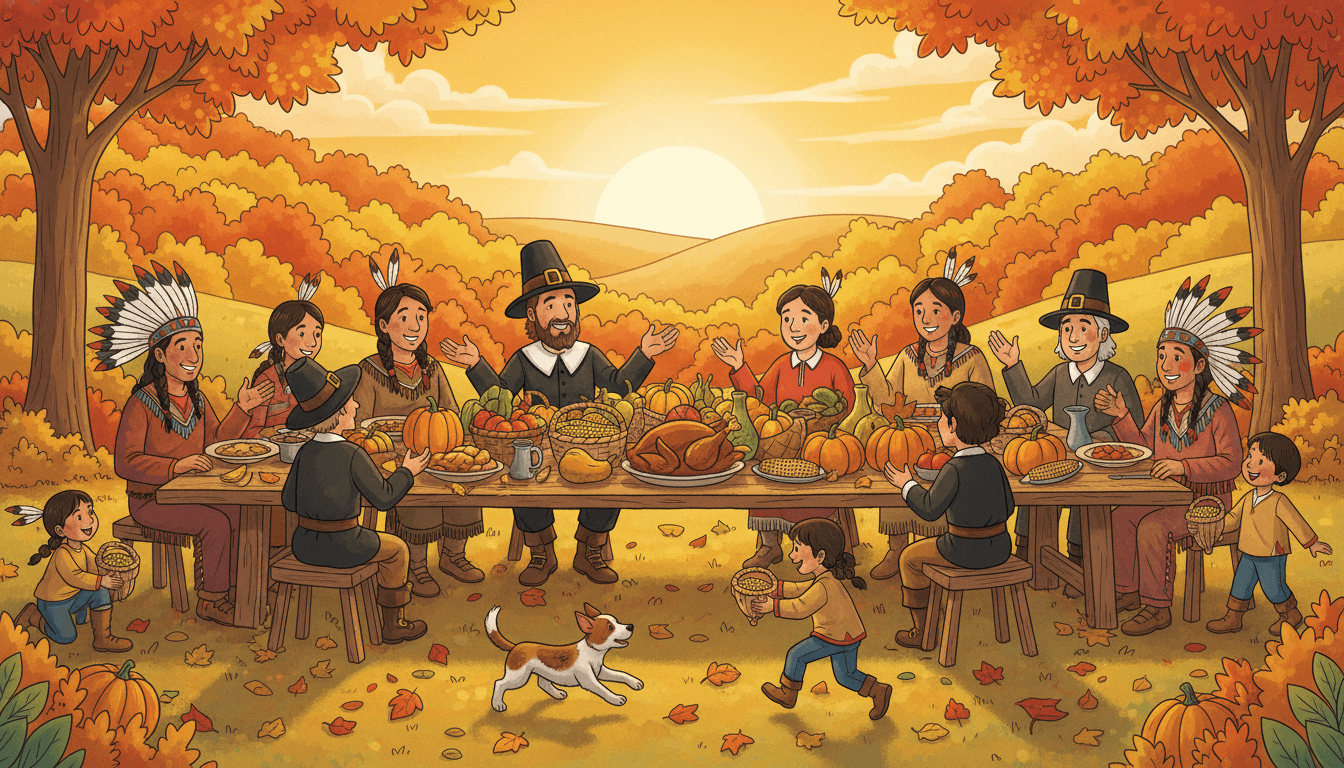
In the fall of 1621, after a successful harvest, the Pilgrims held a three-day celebration. About 53 Pilgrims and approximately 90 Wampanoag men attended, including Massasoit. Historians believe the feast included:
- Wildfowl (possibly turkey, duck, or geese)
- Seafood (lobster, clams, fish)
- Corn, squash, and beans
- Venison (deer) provided by the Wampanoag guests
This feast is remembered as the "First Thanksgiving," though the term "thanksgiving" was not used at the time.
Thanksgiving Becomes a National Holiday
For many years, individual states celebrated thanksgiving days at different times. President Abraham Lincoln officially declared Thanksgiving a national holiday in 1863, during the Civil War, setting it on the final Thursday of November. In 1941, Congress established the fourth Thursday of November as the permanent date.
Multiple Perspectives on Thanksgiving
It is important for students to know that Native Americans, including the Wampanoag, have complex feelings about Thanksgiving. Many observe the fourth Thursday of November as the National Day of Mourning, held in Plymouth since 1970. They remember the losses of land, lives, and culture that followed the arrival of European settlers.
Learning to see history from multiple perspectives - including the Wampanoag perspective - makes for deeper understanding.
Practice Activities
- Create a sequenced timeline of the Mayflower voyage, the first winter, and the 1621 harvest celebration.
- Read a picture book that presents the Wampanoag perspective (e.g., 1621: A New Look at Thanksgiving by Catherine O'Neill Grace) alongside a traditional account.
- Research what foods were likely at the 1621 feast vs. what we eat at modern Thanksgiving - how has the holiday changed?
- Map the Mayflower's route from England to Plymouth and calculate the approximate distance.
- Discuss: why is it important to learn history from multiple perspectives, including from those who may see events differently?
Frequently Asked Questions
Who were the Pilgrims and why did they come to America?
The Pilgrims were a group of English Separatists - Christians who had separated from the Church of England and wanted the freedom to practice their religion as they chose. In September 1620, about 102 passengers (Pilgrims and others they called 'Strangers') boarded the Mayflower. After a 66-day voyage, they arrived at Plymouth, Massachusetts in November 1620.
Who was Squanto (Tisquantum)?
Tisquantum, called Squanto by the Pilgrims, was a member of the Patuxent tribe who had been kidnapped and taken to England years before, where he learned English. He returned to find his entire community had died from European diseases. He lived with the Wampanoag people and served as an interpreter and guide for the Pilgrims. He taught them to plant corn by burying fish as fertilizer and showed them how to navigate local streams for fishing.
Is the traditional Thanksgiving story accurate?
The 1621 harvest celebration did happen, but the traditional story taught in schools simplifies and sometimes distorts the history. The feast likely lasted three days. The Wampanoag people outnumbered the Pilgrims 90 to 53. The two groups had a complex relationship - collaboration but also conflict. Many Native Americans observe the fourth Thursday of November as the National Day of Mourning, honoring their ancestors and the losses brought by colonization.
Free Thanksgiving and the Pilgrims Worksheets
Curriculum-aligned printable worksheets for Kindergarten – 3rd Grade. Download free.