
How to Build Reading Fluency in Second Grade
Get 30 days of free worksheet downloads
Key Takeaways
- Fluency has three components - accuracy, rate, and prosody - and prosody (reading with expression) is the best indicator that a child truly understands what they read.
- Second graders should aim for 90+ words per minute by end of year, but a child reading 75 wpm with strong expression outperforms one racing at 100 wpm with no comprehension.
- Repeated reading - re-reading the same short passage 3-4 times - is the gold standard fluency strategy because students can hear and measure their own improvement.
- Reader's Theater is a covert fluency intervention: kids repeatedly practice their lines because they want to perform well, not because they know it's fluency work.
- Ten minutes of nightly reading with a parent, every single night, builds fluency more effectively than longer but less frequent sessions.

Second grade is the year when reading should start to sound like, well, reading. Not word-by-word robot reading. Not the choppy, finger-pointing reading of kindergarten. Actual fluent reading with expression, pacing, and confidence.
But for a lot of second graders, that shift doesn't happen automatically. They need practice. The right kind of practice.
What Is Fluency, Really?
Fluency has three parts:
- Accuracy: Reading words correctly
- Rate: Reading at an appropriate speed (not too slow, not rushing)
- Prosody: Reading with expression and natural phrasing
Most people focus on speed. But speed without comprehension is just fast word-calling. Prosody (the expression piece) is actually the best indicator that a child is truly understanding what they read.
Free 2nd Grade Reading Comprehension Worksheets


Where Should Second Graders Be?
General benchmarks for oral reading fluency in 2nd grade:
- Beginning of year: 50-60 words per minute
- Mid-year: 70-80 words per minute
- End of year: 90+ words per minute
These are guidelines, not strict rules. A child reading 75 words per minute with beautiful expression is doing better than one racing through at 100 words per minute with no comprehension.
Honestly, this part takes patience.
6 Strategies That Build Fluency
1. Repeated Reading
This is the gold standard. It's simple: read the same short passage 3-4 times.
First read: stumbling, slow, figuring out words. Second read: smoother, faster. Third read: confident, expressive.
Kids can literally hear their own improvement. That's incredibly motivating.
How to do it: Pick a passage at the student's independent level (they can read 95%+ of the words). Time them. Record the number. Read again. Beat their own score.
2. Paired Reading
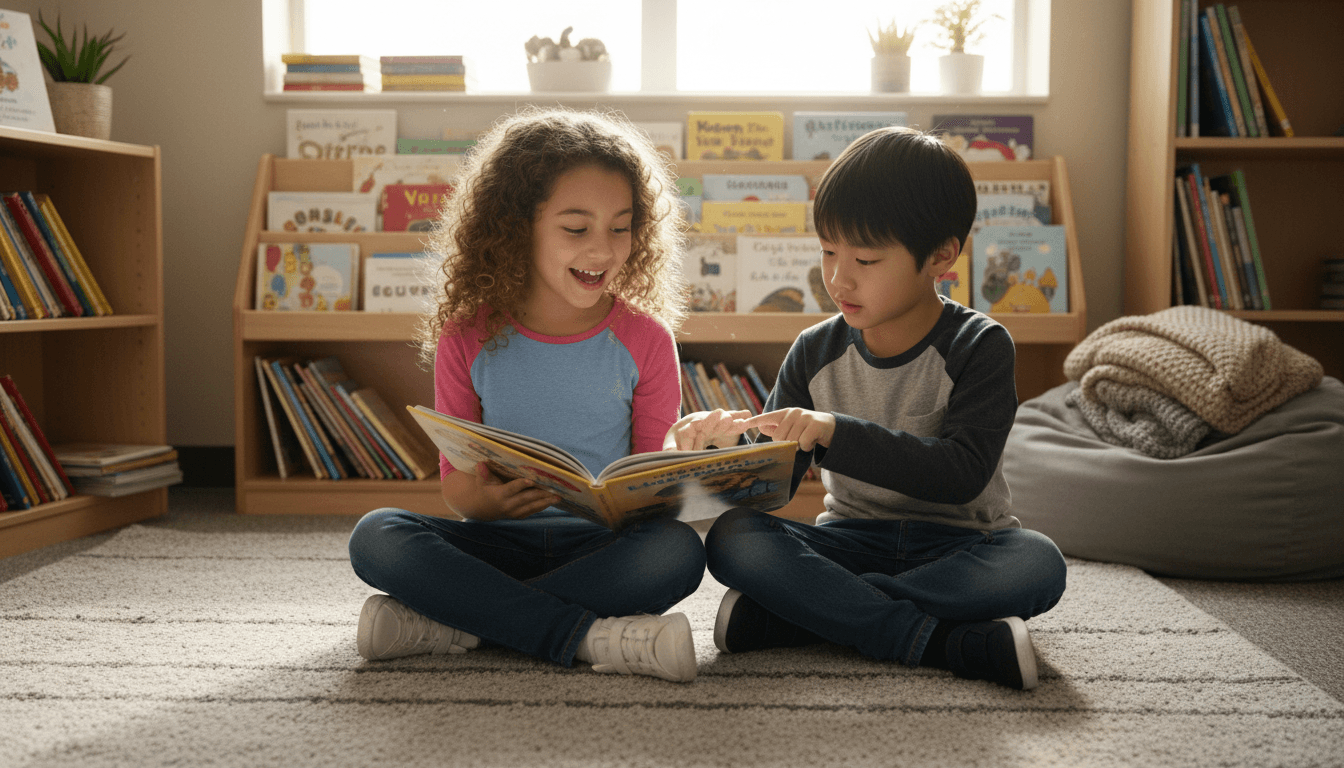
Partner students together. One reads aloud while the other follows along. Then switch.
Best pairing: a stronger reader with a slightly weaker reader (not a huge gap). The stronger reader models fluency. The weaker reader absorbs it.
Rules for the listener: follow along with your finger. If your partner gets stuck, wait 3 seconds before helping.
3. Echo Reading
You read a sentence. Students read the same sentence back, copying your speed and expression.
"'The little bear went down to the river.' Now you say it."
This works beautifully for prosody. Kids hear what fluent reading sounds like and immediately practice it.
4. Reader's Theater
Give students scripts of simple plays. They practice their "lines" (reading their parts over and over). Then they perform for the class.
Reader's Theater is secretly a fluency intervention. Kids practice repeated reading because they want to sound good for the performance. They don't even realize they're doing fluency work.
No costumes needed. No memorization. Just reading parts with expression.
5. Choral Reading
The whole class reads a passage together, out loud, at the same pace. This is especially helpful for struggling readers because they're supported by the voices around them.
Use poetry, chants, or patterned text. "Brown Bear, Brown Bear" works even in 2nd grade when the goal is fluency practice.
6. Audio-Assisted Reading
Students listen to a recording of a book being read fluently while following along with the text. Then they read it themselves.
Audiobooks, read-aloud videos, or teacher-recorded passages all work. The key is that students follow along with the physical text, not just listen passively.
The Daily Fluency Routine
Here's a routine that takes just 15 minutes and builds fluency consistently:
- 2 minutes: Choral reading warm-up (a poem or familiar passage)
- 8 minutes: Paired reading with a new or practicing passage
- 5 minutes: Independent repeated reading (beat your own score)
Do this every day. In 6-8 weeks, you'll see measurable improvement.
What About Struggling Readers?
Some second graders are still reading below 40 words per minute. For them, fluency work needs to be paired with:
- Continued phonics instruction (they may have gaps)
- Easier text (they need to be at their independent level, not frustrated)
- More repetitions (5-6 reads instead of 3-4)
- One-on-one time (even 5 minutes daily with an adult makes a huge difference)
Don't give up on fluency for struggling readers. They need it MORE, not less. But the text needs to match their level. Reading a grade-level passage at 20 words per minute isn't practice. It's frustration.
Quick tip: in a busy classroom, one-on-one time doesn't have to mean pulling a student aside for a scheduled block. Grab 3-4 minutes while the rest of the class is doing independent work: morning routine, a transition between subjects, or the first few minutes after lunch. Consistency beats length here. A struggling reader who gets 5 short check-ins a week will outpace one who gets a single 25-minute session.
If a second grader isn't making progress after 6-8 weeks of consistent, level-matched practice, that's worth flagging to your school's reading specialist. It doesn't necessarily mean something is wrong. Some kids just need more time. But a persistent gap between effort and progress is exactly the kind of pattern a reading specialist or, if needed, a formal screening can catch early, and early is what makes the biggest difference.
For Parents: The 10-Minute Nightly Routine
The single best thing parents can do for reading fluency:
- Read with your child for 10 minutes every night
- Take turns reading pages
- When it's your turn, model fluent reading
- When it's their turn, be patient
- Re-read favorite books (repetition builds fluency)
- Don't correct every mistake (let small errors go if meaning is preserved)
Consistency matters more than duration. Ten minutes every night beats 30 minutes twice a week.
The Fluency-Comprehension Connection
Here's something important: fluency and comprehension are not separate skills. They feed each other.
When reading is fluent, the brain has capacity for understanding. When reading is choppy, all the brain power goes to decoding and there's nothing left for meaning.
Picture a second grader sounding out "elephant" one letter at a time: "e... l... eh... f... ant." By the time they've stitched the word together, they've forgotten what the sentence was even about. Now picture the same student a few weeks into fluency practice, reading "elephant" instantly, the way you'd read your own name. All that freed-up attention goes straight to the story: who's doing what, why it matters, what happens next.
Building fluency isn't just about reading faster. It's about freeing up brain space for thinking.
Keep Reading
- Character Traits for Kids: Teaching Readers to Understand Characters
- How to Teach Summarizing: Strategies for 2nd Through 4th Graders
- How to Teach Letter Recognition to Kindergartners: Activities That Build Confidence
- Daily Reading Routines That Stick in Elementary
Start Tomorrow
Pick one strategy from this list. Just one. Try it for two weeks. Measure words per minute before and after.
You'll see progress. Your students will hear it. And that sound, the sound of a child reading smoothly for the first time, never gets old.
For ready-to-use practice passages, try our 2nd grade reading fluency worksheets with leveled texts and comprehension check questions.

Adi Ackerman
Head Teacher
Adi is the Head Teacher at ClassWeekly, with years of experience teaching elementary students. She designs our curriculum-aligned worksheets and writes practical guides for teachers and parents.
Keep Reading
Ready to download? Try ClassWeekly free for 30 days.
Unlimited worksheets for PreK through 5th grade. Cancel anytime.