
Phonological Awareness: What It Is and How to Build It
Get 30 days of free worksheet downloads
Key Takeaways
- Phonological awareness is a purely oral skill - it requires no letters or print, only the ability to hear and manipulate sounds in spoken language.
- Phonological awareness develops in a predictable sequence from easier skills (rhyming, syllable clapping) to harder ones (phoneme segmentation and manipulation).
- Phonemic awareness - working with individual sounds in words - is the most advanced phonological skill and the strongest predictor of early reading success.
- Weak phonological awareness is the number one predictor of reading difficulty, and early intervention in pre-K or kindergarten is far more effective than waiting.
- Movement-based activities like clapping, stomping, and using Elkonin boxes make phonological awareness practice more effective and engaging for young learners.
If you've spent any time around early reading instruction, you've probably heard the term "phonological awareness." It sounds technical, and honestly, it kind of is. But the concept behind it is something your students already do every day without realizing it.
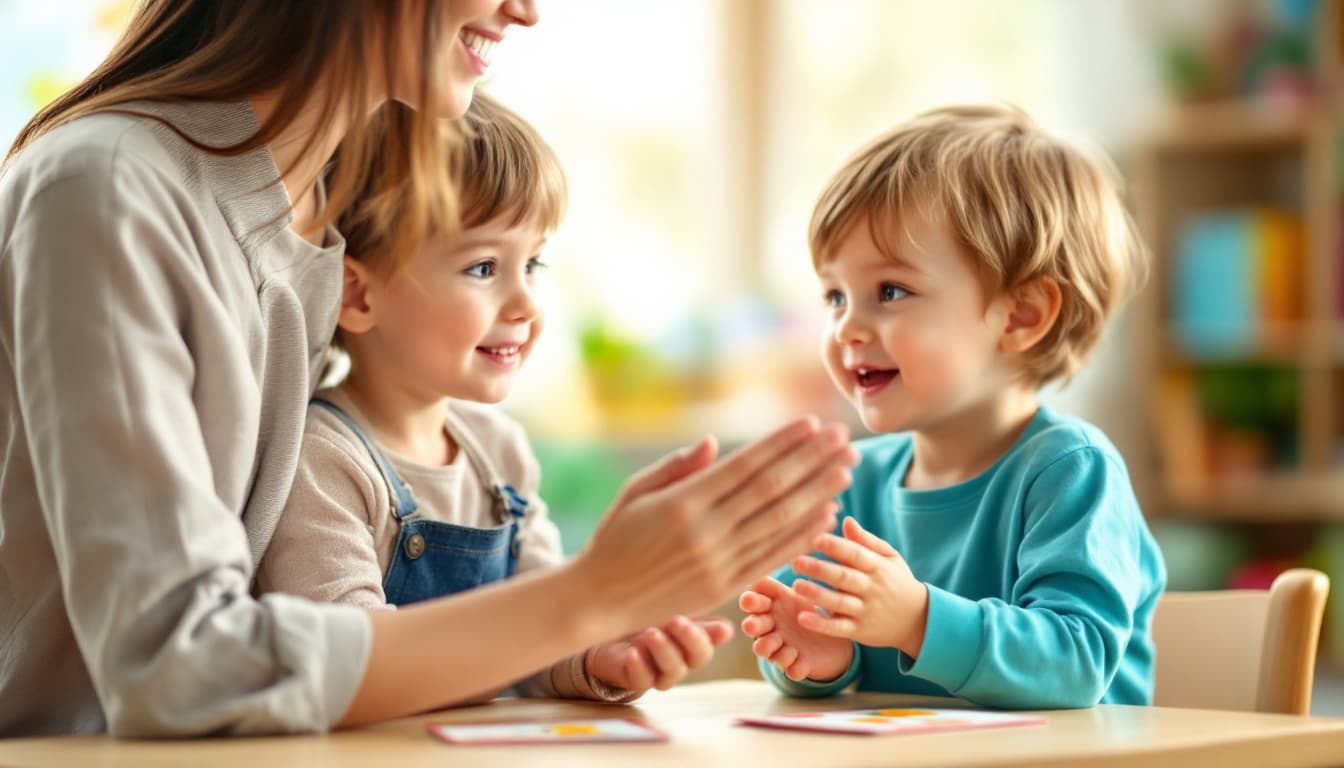
When a child hears "cat" and "hat" and notices they sound alike? That's phonological awareness. When they clap out the syllables in "watermelon"? Phonological awareness. When they can tell you that "sun" starts with /s/? Still phonological awareness.
It's the ability to hear and work with the sounds in spoken language. No letters required. And it's one of the strongest predictors of reading success we have.
What Is Phonological Awareness (And How It Differs From Phonics)
These two terms get mixed up constantly, even by teachers. So let's be clear about the difference.
Phonological awareness is about sounds. It's an ear skill, not an eye skill. A child with strong phonological awareness can hear that "dog" and "log" rhyme, can clap three syllables in "banana," and can tell you that "bat" without the /b/ says "at." None of this requires seeing a single letter.
Phonics is about the relationship between sounds and letters. It's what happens when you connect the sound /b/ to the written letter B. Phonics requires print. Phonological awareness doesn't.
Here's why this matters: phonological awareness comes first. Children need to be able to hear and manipulate sounds in words before they can connect those sounds to letters. Teaching phonics to a child who doesn't have phonological awareness is like teaching someone to read music before they can hear a melody. The foundation is missing.
Phonemic awareness is one more term you'll hear. It's a subset of phonological awareness that focuses specifically on individual sounds (phonemes) in words. Hearing that "cat" has three sounds (/k/ /a/ /t/) is phonemic awareness. It's the most advanced and most important phonological skill for reading.
Think of it as a pyramid:
- Base: Phonological awareness (broad sound skills: rhyming, syllables)
- Middle: Onset-rime awareness (breaking words into beginning sound and the rest)
- Top: Phonemic awareness (working with individual sounds)
Free Kindergarten Phonemes Worksheets


Free Kindergarten Rhyming Worksheets


The Skills That Make Up Phonological Awareness
Phonological awareness isn't one skill. It's a collection of skills that develop in a roughly predictable order, from easier to harder:
- Word awareness: Understanding that sentences are made up of separate words
- Rhyme recognition: Hearing that "cat" and "bat" rhyme
- Rhyme production: Coming up with a word that rhymes with "cake" (lake, make, shake)
- Syllable awareness: Clapping out syllables in words (ta-ble = 2, el-e-phant = 3)
- Alliteration: Recognizing that "big brown bear" all start with the same sound
- Onset-rime: Breaking "cat" into /k/ (onset) and -at (rime)
- Phoneme isolation: "What's the first sound in fish?" (/f/)
- Phoneme blending: "What word do /s/ /u/ /n/ make?" (sun)
- Phoneme segmenting: "What sounds are in 'map'?" (/m/ /a/ /p/)
- Phoneme manipulation: "Say 'cat' without the /k/" (at) or "Change the /k/ in 'cat' to /b/" (bat)
Most preschoolers work on skills 1 through 5. Kindergartners tackle 5 through 10. But there's a lot of overlap, and kids don't move through these in a perfectly neat order.
Rhyming and Alliteration Come First
Rhyming is usually the first phonological awareness skill that develops, and there's a good reason for that. Kids have been hearing rhymes since infancy. Nursery rhymes, Dr. Seuss, silly songs. Their brains have been soaking in rhyme patterns for years before anyone asks them to identify one.
Rhyme recognition activities:
- Read rhyming books and pause before the rhyming word. Let your students fill it in.
- Play "thumbs up, thumbs down." Say two words. Do they rhyme? (cat/hat = thumbs up, cat/dog = thumbs down)
- Sing nursery rhymes with wrong words and let kids catch the mistake. "Jack and Jill went up the mill..." "No, HILL!"
Rhyme production activities:
- "I'm thinking of a word that rhymes with 'cake.' It's something you make in an oven..." (It's harder to produce rhymes than to recognize them)
- Silly rhyme chains: start with a word and go around the circle, each child says a rhyming word. Nonsense words totally count at this stage.
Alliteration activities:
- Silly sentences: "Silly Sam saw seven snakes on Saturday"
- Name games: "Bouncy Ben, Dancing Dina, Marvelous Maria"
- Tongue twisters (simplified for young kids)
The goal at this stage isn't perfection. It's building an ear for sound patterns. If your students can hear rhymes and play with beginning sounds, they're building the foundation for everything that comes next.
Syllable Awareness Activities
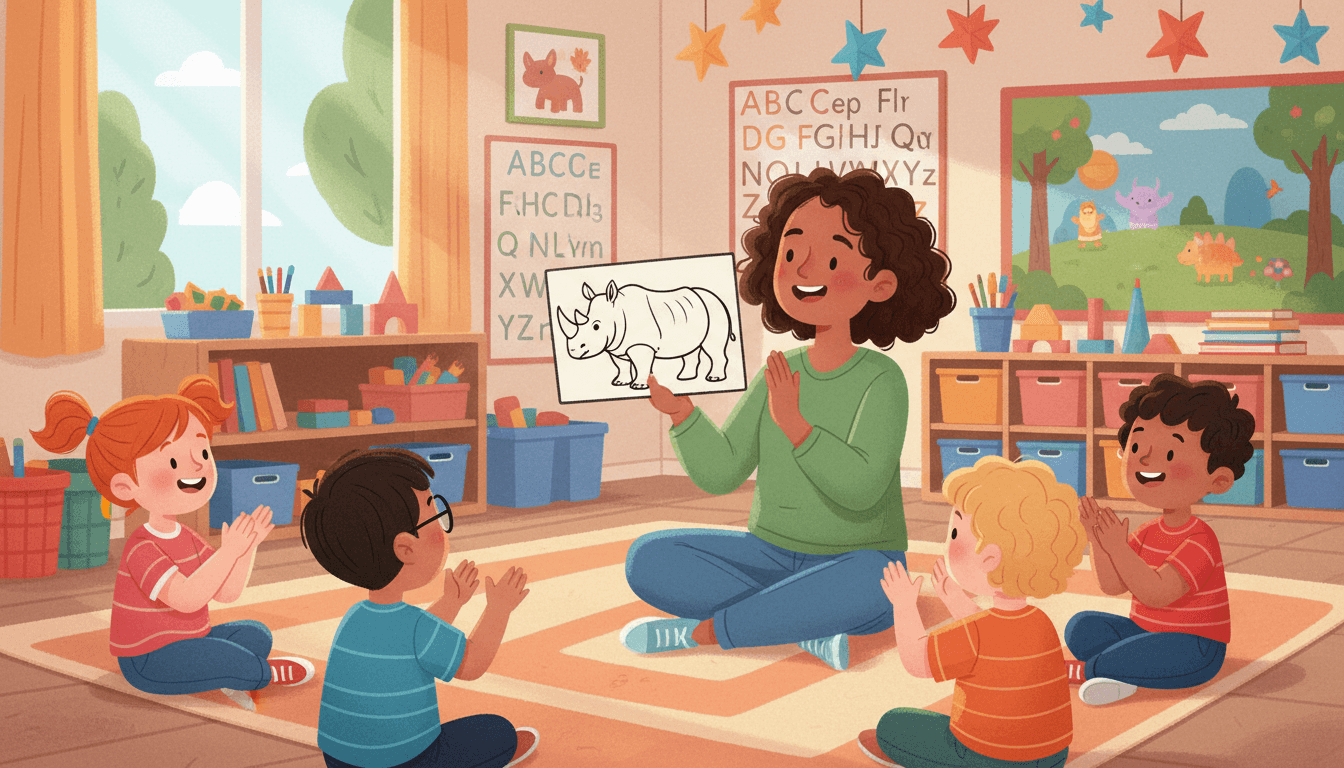
Syllable awareness is another early-developing skill, and it's one of the most fun to practice because it involves movement. Kids love clapping, stomping, and jumping, so use that.
Clapping syllables: Say a word, clap once for each syllable. Start with familiar words:
- Names (the best starting point because every child cares about their own name)
- Animals (cat = 1 clap, monkey = 2 claps, butterfly = 3 claps)
- Foods (pizza = 2, banana = 3, watermelon = 4)
Beyond clapping:
- Tap the table, stomp feet, or jump for each syllable
- Use a drum or rhythm sticks
- Place one block on the table for each syllable, then count the blocks
- Sort picture cards by number of syllables (1-syllable pile, 2-syllable pile, 3-syllable pile)
Syllable blending: "I'm going to say a word in slow motion. What word is it? Pen...cil." This is easier than segmenting and should come first.
Syllable segmenting: "How many parts do you hear in 'elephant'? Let's clap it out. El-e-phant. Three parts!"
One mistake to avoid: don't get too caught up in whether kids clap the technically correct number of syllables. Is "fire" one syllable or two? Linguists will tell you it depends on the dialect. For preschoolers and kindergartners, close enough is fine. The point is that they're listening for word parts.
Onset and Rime
Onset and rime is the bridge between syllable awareness and full phonemic awareness. It's where kids start breaking individual syllables into smaller pieces.
Onset = the consonant(s) before the vowel. In "cat," the onset is /k/. Rime = the vowel and everything after it. In "cat," the rime is -at.
Why does this matter? Because rime patterns are the basis of word families. If a child knows the -at rime, they can read cat, hat, bat, sat, mat, rat, and flat. That's seven words from one pattern. Word families are one of the most efficient ways kids build early reading skills.
Activities for onset-rime:
- Word family sorts: Give kids picture cards and have them sort by rime. All the -at words go here, all the -ig words go there.
- Blending practice: "I'm going to say a word in two parts. /k/...at. What's the word?" (cat)
- Segmenting practice: "Break 'dog' into two parts." (d...og) This is harder and comes later.
- Body break-apart: One child says the onset, another says the rime, the whole group blends them together and shouts the word.
Start with simple CVC (consonant-vowel-consonant) words: cat, dog, sun, pig, hop. Once kids are comfortable, try words with blends: stop (st...op), grin (gr...in).
Why Some Kids Struggle With Sound Awareness
Not every child picks up phonological awareness naturally, and struggling with it doesn't mean a child isn't smart. It means their brain processes sound patterns differently.
Common signs of weak phonological awareness:
- Difficulty hearing rhymes (can't tell that "cat" and "hat" sound alike at the end)
- Trouble clapping syllables in words
- Can't identify the first sound in a word by mid-kindergarten
- Mixes up similar-sounding words frequently
- Struggles to learn letter sounds even after lots of practice
Why it matters so much: Weak phonological awareness is the number one predictor of reading difficulty. Research on dyslexia consistently points to phonological processing as the core deficit. Kids who struggle to hear sounds in words will struggle to connect those sounds to letters, which means decoding (sounding out words) becomes extremely difficult.
What to do about it:
- Don't wait. If you notice a child struggling with rhyme and syllable skills in pre-K, start extra practice immediately. Early intervention is far more effective than waiting to see if they "grow out of it."
- Keep it oral. For kids who struggle, don't add letters yet. Work purely with sounds until the ear skills are stronger.
- Slow down the sounds. When segmenting, stretch the sounds out dramatically. "Ffffffiiiiissssshhhh. What's the first sound? /f/."
- Use manipulatives. Elkonin boxes (squares drawn on paper where kids push a token for each sound) are incredibly effective.
- Make it multisensory. Tap sounds on the arm, use hand motions for each phoneme, bounce a ball for each syllable.
If a child is significantly behind peers by mid-kindergarten, talk to the school about screening. Structured literacy interventions like Orton-Gillingham, Wilson Reading, or UFLI can make a big difference when started early.
Keep Reading
- How to Teach Phonemic Awareness: Activities for Pre-K and Kindergarten
- Rhyming Words for Kindergarten: Activities That Build Phonics Skills
- How to Teach the Alphabet to Kids: A Parent's Complete Guide
Practice Pages for Phonological Awareness
Practice pages for sound awareness work best when they focus on listening skills first. The strongest activities at this level:
- Rhyme matching (draw a line between pictures that rhyme: cat to hat, frog to log)
- Beginning sound sorts (which pictures start with the /m/ sound?)
- Syllable counting (clap and count, then circle the correct number)
- Sound matching (which pictures start with the same sound as the target word?)
- Phoneme counting with Elkonin boxes (push a counter into each box as you say each sound)
Pair these pages with the oral activities described above. A practice page alone won't build phonological awareness. But a practice page after 10 minutes of rhyming games, syllable clapping, and sound stretching? That reinforces everything and gives kids a chance to show what they know.
For your kiddos who are just starting out, focus on rhyming and syllable pages. For those who are ready for more, move into beginning sound identification and phoneme segmenting pages. The progression should follow the child, not the calendar.
Phonological awareness isn't glamorous. It doesn't produce a project to hang on the fridge. But it is, without exaggeration, the foundation that all reading is built on. Invest the time here, and your students will thank you when decoding starts to click.

Adi Ackerman
Head Teacher
Adi is the Head Teacher at ClassWeekly, with years of experience teaching elementary students. She designs our curriculum-aligned worksheets and writes practical guides for teachers and parents.
Keep Reading
Ready to download? Try ClassWeekly free for 30 days.
Unlimited worksheets for PreK through 5th grade. Cancel anytime.