
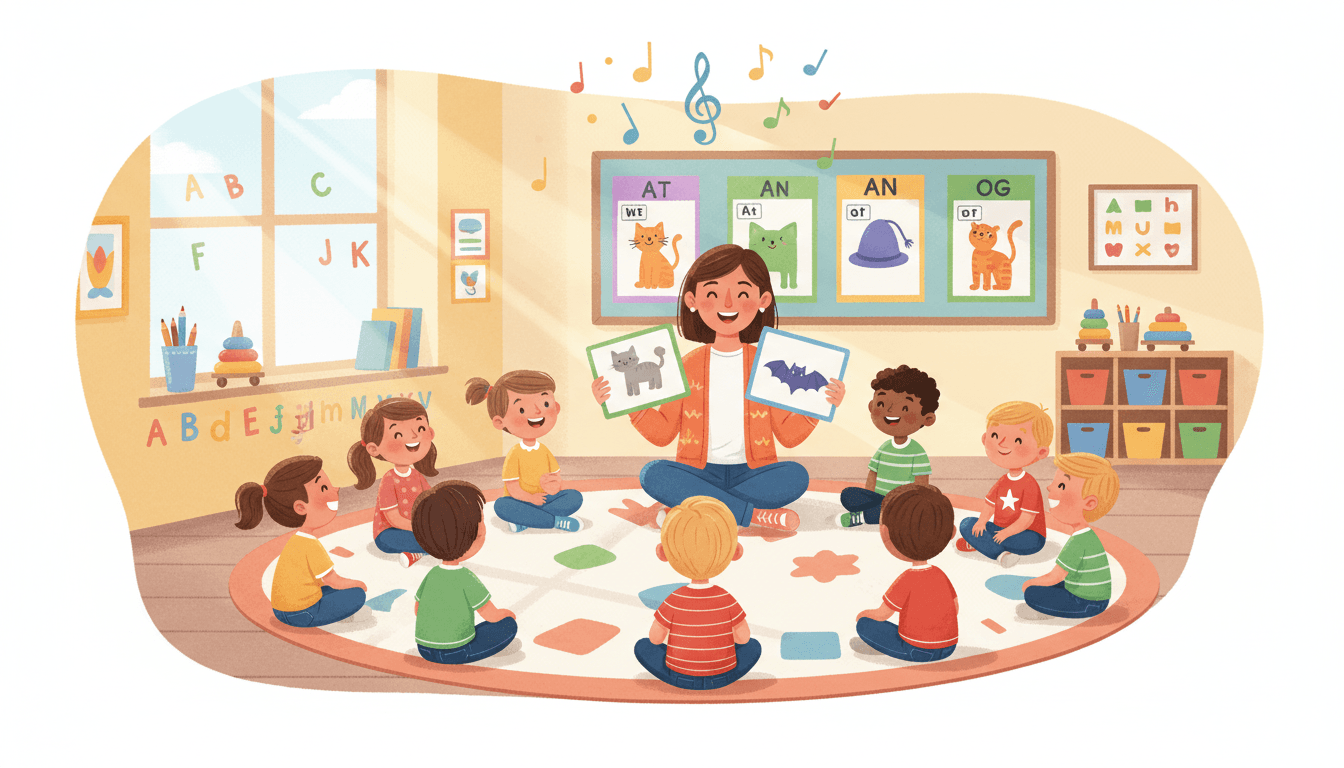
Rhyming Words for Kindergarten: Phonics Skills
Get 30 days of free worksheet downloads
Key Takeaways
- Rhyming is a strong predictor of reading success because it builds phonological awareness, the same skill children use to decode unfamiliar words.
- Word families like -at, -an, -ig, and -op let kindergartners recognize patterns and decode dozens of words without sounding each one out from scratch.
- Start with listening activities before moving to reading or writing rhymes, since children need to hear and identify rhyming patterns before they can produce them.
- Songs, chants, and silly rhyme chains are among the fastest ways to embed rhyming patterns into a kindergartner's memory through repetition and melody.
- Rhyming games like Rhyme Bingo and Rhyme Memory engage even quiet learners and double as informal assessments to see who understands the pattern.
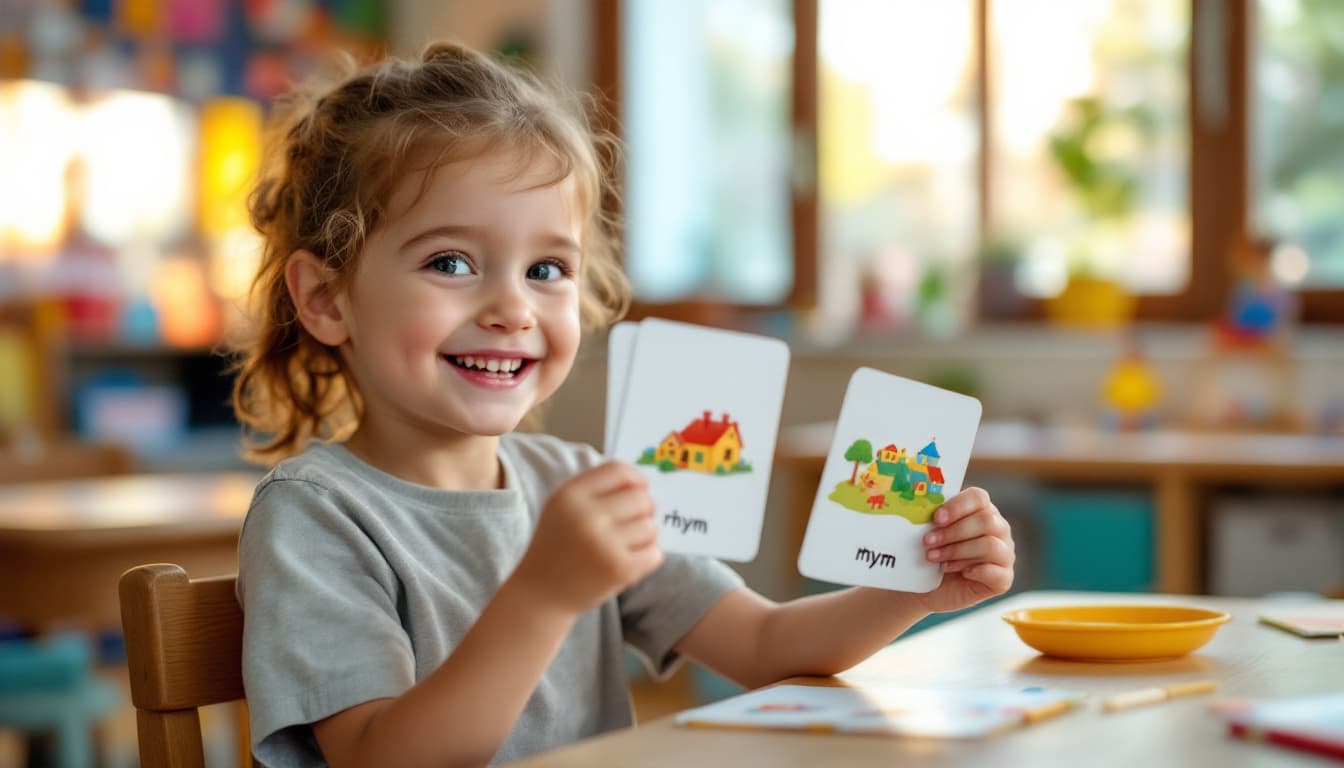
Rhyming is one of those skills that looks simple from the outside. Cat, hat, bat. How hard can it be?
But for a five-year-old who's just starting to understand how sounds work, recognizing that "cat" and "hat" share the same ending sound is actually a big cognitive leap. It means they're hearing the parts inside words, not just whole words as single blobs of sound. That's phonological awareness, and it's the foundation that everything else in reading is built on.
The good news? Kindergartners love rhyming. It's musical. It's silly. It's playful. Your job is to give them lots of chances to hear it, say it, and eventually read and write it.
Here's how to make rhyming stick.
Why Rhyming Matters for Early Readers
Rhyming isn't just a fun word game. It's one of the strongest predictors of reading success. Research has shown this again and again. Children who can detect and produce rhymes in kindergarten tend to become stronger readers in first and second grade.
Here's why. When a child recognizes that "man," "can," and "fan" all rhyme, they're noticing a pattern in sound. That same ability to detect sound patterns is exactly what they'll need when they start decoding words. If you can hear that "cat" and "cap" start the same but end differently, you're doing the same kind of sound analysis that reading requires.
Rhyming also introduces the concept of word families. Once a child knows the "-at" family (cat, hat, bat, sat, mat, rat), they don't have to sound out each word from scratch. They recognize the pattern and swap the first sound. That's not just rhyming. That's a reading strategy.
One more thing. Rhyming builds vocabulary almost by accident. When you're brainstorming words that rhyme with "bug," kids will come up with "rug," "mug," "hug," and maybe "slug" or "tug." Some of those words might be new to them. Rhyming games naturally expand the words kids know and use.
So no, rhyming isn't just kindergarten fluff. It's doing real work.
Free Phonics Practice Pages for Kindergarten


Start With Listening Before Reading
Before your students can produce rhymes, they need to hear them. This is the listening phase, and it's more important than most people realize.
Read rhyming books aloud. Pause before the rhyming word and let your students fill it in. "One fish, two fish, red fish, _____ fish." They'll shout "blue!" and they'll be right. That moment of prediction is rhyme recognition in action.
Not sure any single method works for all kids, but this combination covers most learning styles.
Play "Do these rhyme?" Say two words and ask students to give a thumbs up if they rhyme or thumbs down if they don't. Start with obvious pairs (dog/log, sun/fun) and gradually mix in tricky non-rhymes (dog/dig, sun/sat). This builds the ear before the mouth gets involved.
Sing songs with rhyme. Nursery rhymes exist for a reason. "Twinkle Twinkle," "Jack and Jill," "Humpty Dumpty." These songs put rhyming patterns into kids' ears through repetition and melody. Singing a rhyming song every morning during circle time is one of the simplest and most effective phonics routines you can build.
Silly rhyme chains. Say a word and go around the circle. Each student adds a rhyming word. Real or nonsense. "Cat, hat, bat, lat, zat, dat..." Nonsense words are fine here. The point is hearing and producing the rhyming pattern, not vocabulary.
Some children will catch on immediately. Others will need weeks of listening practice before they can reliably identify rhyming pairs. That's normal. Don't rush past this phase. The listening foundation has to be solid before you move to reading and writing rhymes.
Word Families: The Building Blocks of Rhyming
Once your students can hear rhymes, it's time to show them what rhymes look like on paper. Word families are the bridge between phonological awareness (hearing sounds) and phonics (reading sounds).
A word family is a group of words that share the same ending. The "-at" family: cat, hat, bat, sat, mat, rat, fat, flat. The "-ig" family: big, dig, pig, wig, fig, jig.
Start with just three or four word families. The most common starting families are:
- -at: cat, hat, bat, sat, mat, rat
- -an: can, man, fan, pan, ran, van
- -ig: big, dig, pig, wig, fig
- -op: hop, mop, top, pop, stop, drop
Use a word family chart. Write the ending (-at) at the top. Then have students help you list all the words they can think of. Keep the chart visible in your classroom. Add new words as students discover them.
Magnetic letters are perfect for this. Give students the ending chunk (-at) and a pile of consonant letters. They swap the first letter and read each new word. B-at. C-at. H-at. S-at. This hands-on manipulation is incredibly effective because students can see and feel the pattern.
Word family sorting. Give students a mix of picture cards from two families (say, -at and -ig words). They sort the cards into two groups. This reinforces the idea that rhyming is about the ending sound matching, not the beginning sound.
The magic of word families is that once a student learns one family well, they've learned a strategy for reading dozens of words. When they encounter a new word like "splat" in a book, they can break it into "spl" + "at" and use their word family knowledge to decode it.
Songs and Chants That Teach Rhyming
Music is probably the fastest way to get rhyming patterns into a kindergartner's brain. The rhythm and melody make the patterns memorable in a way that worksheets alone can't match.
"Down by the Bay" is a classic for a reason. The structure invites silly rhyming creativity: "Did you ever see a bear combing his hair?" Students can make up their own verses, which is both hilarious and excellent rhyming practice.
Rhyming finger plays work great for transitions. "Five Little Monkeys," "Itsy Bitsy Spider," and "I'm a Little Teapot" all embed rhyming patterns into physical movement. The combination of words, melody, and motion creates multiple memory pathways.
Create a class rhyming song. Pick a simple tune (like "Twinkle Twinkle") and write new lyrics together using a word family. "I can see a big, big cat, sitting on a red, red mat, wearing such a funny hat..." Kids will remember these songs for months.
Rhyme of the day. Each morning, introduce a new rhyming pair with a silly sentence. "Today's rhyme: clock and sock! A clock wore a sock to school today." Display it on the board. By the end of the week, you've introduced ten new rhyming pairs without any formal lesson.
The key with all of these is repetition. Kindergartners need to hear rhyming patterns many, many times before they internalize them. Don't worry about getting bored. Your students won't. They'll request the same songs over and over, and each time, the pattern sinks a little deeper.
Rhyming Games for the Classroom
Games keep the energy up and give every student a chance to practice, even the quiet ones who don't volunteer during whole-group instruction.
Rhyme Bingo. Create bingo cards with pictures. You call out a word, and students cover the picture that rhymes with it. Call "log" and they cover the picture of a frog. This works beautifully for assessment too. You can see exactly which students are identifying rhymes and which ones are just copying their neighbor.
Rhyme Scavenger Hunt. Hide picture cards around the classroom. Students work in pairs to find two cards that rhyme. When they find a match, they bring it to you and say the pair aloud. Active, social, and surprisingly effective.
Rhyme Memory. Like the classic memory game, but students match rhyming pairs instead of identical pictures. Flip two cards. Cat and hat? That's a match. Cat and dog? Flip them back. This game builds both rhyming skills and working memory.
Musical Rhyme. Play music while students walk in a circle. When the music stops, hold up a picture card. Students have five seconds to shout out a word that rhymes with it. This whole-group game gets everyone involved and keeps the energy high.
Partner Rhyme Tennis. Two students face each other. One says a word. The other says a word that rhymes. Back and forth until someone gets stuck. Then they start with a new word. Quick, competitive in a fun way, and builds fluency with rhyme production.
Books That Make Rhyming Fun
The best way to immerse kindergartners in rhyming is to surround them with rhyming books. Here are categories that work well.
Predictable rhyming books let kids participate. When the pattern is established, students can predict the next word before you read it. That prediction is rhyme recognition in real time. Look for books with strong, consistent rhyme schemes and repetitive structures.
Silly rhyming books make kids laugh, and laughter is engagement. When a book is funny, kids want to hear it again. And again. Every rereading reinforces the rhyming patterns.
Word family focused books are available from most early reader publishers. These books intentionally use words from one or two word families throughout the story. "The cat sat on a mat" type stories. They're not literary masterpieces, but they're perfect for connecting rhyming to actual reading.
Create a rhyming book basket in your classroom library. Label it with a sign that says "Rhyming Books" and fill it with ten to fifteen titles. Rotate books monthly. During free reading time, encourage students to visit the basket. Even students who aren't yet reading independently will flip through the pages and "read" from memory, reinforcing the rhyming patterns.
Read aloud every day. This sounds obvious, but it's the single most impactful thing you can do for phonological awareness. A kindergartner who hears rhyming books read aloud daily for an entire school year has absorbed hundreds of rhyming patterns. That exposure does more than any isolated skill lesson.
Keep Reading
- Teaching Rhyming Words to Kids: Games and Activities That Work
- How to Teach Letter Recognition to Kindergartners: Activities That Build Confidence
- How to Teach Letter Sounds to Kindergartners: Activities That Actually Stick
Practice Pages for Rhyming Skills
Listening, singing, and playing games build the foundation. Practice pages help students transfer that understanding to paper, which is where reading and writing actually happen.
Rhyme matching pages show a picture on one side and three or four pictures on the other side. Students draw a line from the first picture to the one that rhymes with it. Star to car. Cake to snake. This is rhyme recognition in a visual, independent format.
Word family cut-and-sort pages give students a set of picture cards to cut out and glue under the correct word family heading. Hands-on, fine motor practice built in, and great for centers.
Fill-in-the-rhyme pages show a sentence with a missing word and a picture clue. "The cat sat on the ___." (Picture of a mat.) Students write the rhyming word. This bridges rhyming into early writing.
Rhyme coloring pages ask students to color only the pictures that rhyme with a target word. Color the pictures that rhyme with "bug." They color the rug, the mug, and the jug, but leave the cat uncolored. Simple, calming, and effective for assessment.
Pair structured practice pages with the songs, games, and read-alouds described above. The practice pages reinforce what students learn through play, and the play makes the practice pages feel meaningful instead of tedious.
Rhyming is where reading begins. Not with flashcards, not with phonics rules, but with the simple joy of hearing that cat and hat sound the same at the end. Build that foundation with your kiddos this year, and you're giving them a head start that carries through every reading milestone to come 🎵

Adi Ackerman
Head Teacher
Adi is the Head Teacher at ClassWeekly, with years of experience teaching elementary students. She designs our curriculum-aligned worksheets and writes practical guides for teachers and parents.
Keep Reading
Ready to download? Try ClassWeekly free for 30 days.
Unlimited worksheets for PreK through 5th grade. Cancel anytime.