
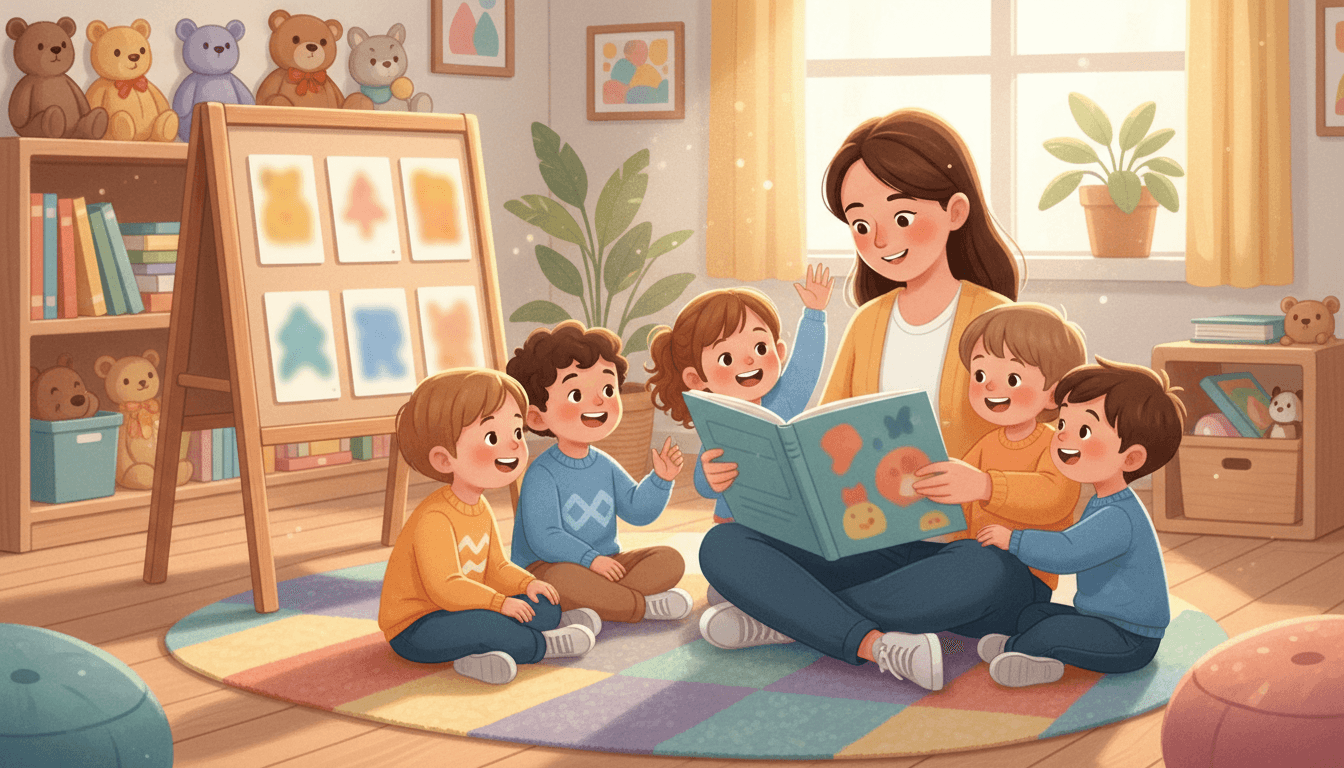
Rhyming Words Activities and Games for Kids
Get 30 days of free worksheet downloads
Key Takeaways
- Rhyming builds phonological awareness, the foundational skill children need before they can decode written words and learn to read.
- There are four developmental stages: exposure to rhymes, recognition of rhyming pairs, production of rhyming words, and application to reading word families.
- Accepting nonsense words like 'burple' or 'dat' during rhyming activities is correct practice, because the phonological skill matters more than real vocabulary.
- Word family sorts bridge oral rhyming to visual reading by helping children see that rhyming words often share the same spelling pattern.
- If a child can recognize rhymes but cannot produce them, scaffold with sentence frames and choice formats before removing support.
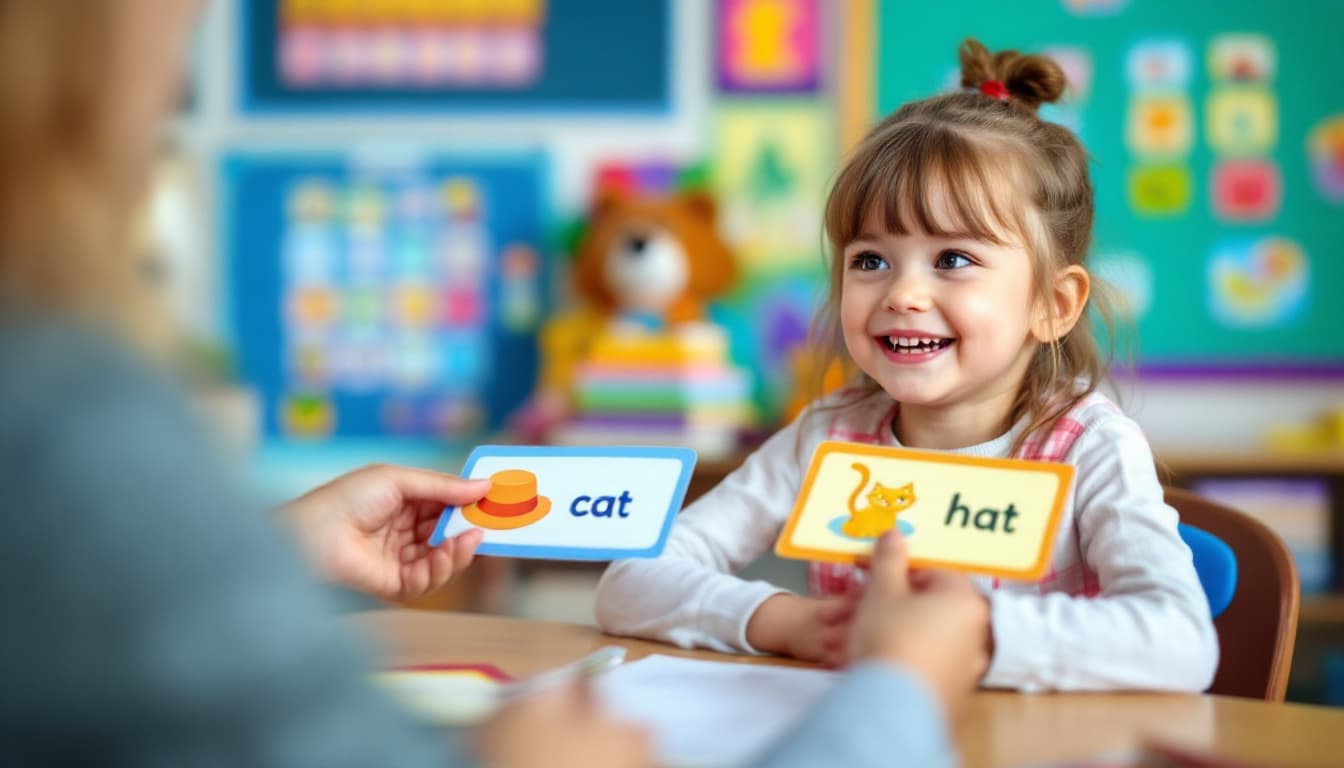
Rhyming is one of those skills that seems simple on the surface. Cat, hat, bat. Easy, right?
But for a young learner, recognizing that words can share the same ending sound is actually a big cognitive leap. It means they're paying attention to the sounds inside words, not just what words mean. And that shift in attention is the doorway to reading.
Why Rhyming Is the Gateway to Reading
Before kids can decode written words, they need phonological awareness. That's the ability to hear and manipulate the sounds in spoken language. And rhyming is the very first piece of that puzzle.
When a child hears that "dog" and "log" sound alike at the end, they're doing something remarkable. They're breaking a word apart into its onset (the beginning sound) and its rime (the ending chunk). That same skill will later help them decode word families, blend sounds together, and read fluently.
Research is pretty clear on this. Kids who can rhyme by mid-kindergarten are significantly more likely to become strong readers. Kids who struggle with rhyming often need extra phonological awareness support before phonics instruction will click.
So if you're wondering whether spending time on silly rhyming games is worth it, the answer is absolutely yes. It's probably one of the highest-leverage activities you can do with early readers.
Free Rhyming Practice Pages for Kindergarten


When Kids Should Start Recognizing Rhymes
Most children begin to notice rhyming naturally around age 3 or 4, especially if they've been exposed to nursery rhymes, songs, and read-alouds with rhyming text.
By the start of kindergarten (age 5), most kids should be able to tell you whether two words rhyme. "Do 'sun' and 'fun' rhyme? Yes!" That's recognition.
By mid to late kindergarten, many kids can produce rhymes on their own. "Tell me a word that rhymes with 'cake.' Lake!" That's production, and it's harder.
Here's the developmental progression:
- Exposure: Hearing rhymes in songs and books (ages 2-3)
- Recognition: Identifying whether two words rhyme (ages 4-5)
- Production: Coming up with rhyming words independently (ages 5-6)
- Application: Using rhyming patterns to read and spell word families (ages 5-7)
If a kindergartner is still struggling with recognition by mid-year, that's a signal to provide more targeted practice. It doesn't mean anything is wrong. Some kids just need more repetition and exposure before it clicks.
Rhyming Games That Get Kids Laughing
The best rhyming instruction doesn't feel like instruction at all. It feels like a game.
Rhyme Time Thumbs Up/Thumbs Down: Say two words. If they rhyme, thumbs up. If they don't, thumbs down. Start easy (cat/hat) and gradually include tricky pairs (cat/cap). Kids love catching the non-rhymes.
Silly Rhyme Chain: Sit in a circle. One person says a word. The next person says a rhyming word. Keep going until someone gets stuck, then start with a new word. Nonsense words count! "Mig, tig, zig, blig." The sillier, the better.
Rhyme Basketball: Set up a small basket or bucket. Say a word. If the child can come up with a rhyme, they get to toss a ball (or crumpled paper) at the basket. Simple, active, and surprisingly motivating.
I Spy Rhymes: "I spy something that rhymes with 'hair.'" Kids look around the room. Chair! This combines rhyming with vocabulary and observation.
Musical Rhymes: Play music. When it stops, hold up a picture card. Kids have to shout out a rhyming word before the music starts again. The time pressure adds excitement without stress.
One thing to keep in mind: accept nonsense words. When a child says "dat" rhymes with "cat," they're correct. The phonological skill is what matters here, not whether the word is real. Insisting on real words only can actually slow down rhyming development.
Word Family Sorts and Activities
Word families are groups of words that share the same rime pattern. The -at family (cat, hat, bat, sat). The -ig family (big, dig, pig, wig). The -op family (hop, mop, top, pop).
Word family sorts take rhyming from an oral skill to a visual one. Kids start seeing that rhyming words often look similar too.
Picture sorts: Give kids a pile of picture cards. They sort them into word family groups. All the -at pictures go together. All the -an pictures go together. No reading required, just listening to the ending sounds.
Word family houses: Draw a simple house shape for each word family. Write the rime pattern on the roof (-at, -ig, -op). Kids write or place onset letters in the "rooms" below to build words. B-at. C-at. H-at.
Flip books: Staple small cards together. The right side stays the same (-an). The left side flips to show different beginning letters (c, f, m, p, r, v). Kids flip through and read each word. This is where rhyming starts connecting to actual reading.
Body spelling: For the kinesthetic learners. Kids touch their head while saying the onset, touch their toes while saying the rime. "B" (head) "-at" (toes) "bat!" Then swap the onset. "C" (head) "-at" (toes) "cat!" The physical movement helps the pattern stick.
Start with word families that use short vowel sounds and simple onsets. The -at, -an, -ig, -ot, and -up families are great starting points.
Rhyming Books Every Classroom Needs
Reading rhyming books aloud is the single easiest way to build rhyming awareness. The rhythm and repetition do most of the work.
When you read rhyming books, try these strategies:
- Pause before the rhyme. Read up to the rhyming word and stop. Let kids fill in the blank. "I do not like green eggs and ___." They'll shout it out.
- Point out the rhyme explicitly. "Ham and Sam. Those words rhyme! They both end with -am."
- Read the same book multiple times. Repetition isn't boring for young kids. It's how they learn. By the third reading, they'll be "reading" along with you.
Look for books with strong, predictable rhyme patterns. Books where the rhyme is embedded in complex sentences or broken across pages are harder for young learners to pick up on. You want books where the rhyme pops.
After reading, extend the learning. Pick a rhyming pair from the book and brainstorm more words in that family. "The book had 'mouse' and 'house.' What other words rhyme with mouse? Louse? Blouse?"
From Hearing Rhymes to Producing Rhymes
There's a real gap between recognizing rhymes and producing them. Many kids can tell you that "dog" and "frog" rhyme weeks before they can come up with a rhyme for "dog" on their own.
Here's how to bridge that gap:
Start with high-support production. Give a word and two choices. "What rhymes with 'pan'? Can or cup?" The child only has to recognize, but the format feels like production.
Use sentence frames. "I have a cat who wore a ___." The rhyme scheme practically gives them the answer. Gradually remove the scaffolding.
Play "change the beginning." This is a powerful strategy. "The word is 'mop.' Take off the /m/ and put on /t/. What's the new word?" Top! Now change it to /h/. Hop! They're producing rhymes by manipulating sounds.
Allow and celebrate nonsense words. "What rhymes with 'purple'? Burple!" That child is rhyming. The fact that "burple" isn't a real word is irrelevant. They heard the -urple pattern and created a match. That's the skill.
If a child is truly stuck, go back to recognition activities. There's no shame in spending more time there. Pushing production before recognition is solid is like asking someone to write sentences before they know the alphabet.
Keep Reading
- Rhyming Words for Kindergarten: Activities That Build Phonics Skills
- How to Teach Letter Sounds to Kindergartners: Activities That Actually Stick
- How to Teach Phonics to Kids: A Complete Guide for Parents
- Classroom Games That Teach, Not Just Entertain
Practice Pages for Rhyming Practice
Once your students can recognize and produce rhymes orally, practice pages help reinforce the skill and connect it to print.
Good rhyming practice pages for kindergartners include matching pictures that rhyme, circling the word that doesn't belong in a rhyming set, and drawing lines between rhyming pairs. For kids who are starting to read, pages that ask them to identify rhyming words in print add a literacy layer.
Keep the focus on sounds, not spelling. At this stage, your kiddos need to hear that "bear" and "chair" rhyme, even though they're spelled differently. The spelling patterns come later. Right now, it's all about the ears.
Rhyming may seem like a small skill, but it's honestly the foundation that everything else in reading is built on. Give your students plenty of time to play with it, laugh with it, and get silly with it. The reading payoff is enormous.

Adi Ackerman
Head Teacher
Adi is the Head Teacher at ClassWeekly, with years of experience teaching elementary students. She designs our curriculum-aligned worksheets and writes practical guides for teachers and parents.
Keep Reading
Ready to download? Try ClassWeekly free for 30 days.
Unlimited worksheets for PreK through 5th grade. Cancel anytime.