
Reading Comprehension Strategies for First Grade
Get 30 days of free worksheet downloads
Key Takeaways
- Decoding and comprehension are separate skills - a child can read every word correctly and still not understand the text.
- Picture walks before reading activate prior knowledge and give first graders a mental framework that boosts understanding.
- Stopping every few pages to ask 'What just happened?' builds metacognition and prevents kids from losing the thread of a story.
- Retelling in their own words is one of the most reliable comprehension checks - a child who understood the story can retell it; one who didn't cannot.
- Read-alouds are a comprehension teaching tool, not just a fun activity - they let kids focus on meaning while you model inferring, predicting, and analyzing.

Here's something that catches a lot of first grade teachers off guard: a child can read every word on the page perfectly and still not understand what they just read.
Decoding and comprehension are two different skills. By first grade, many of our kiddos are getting pretty good at sounding out words. But understanding the meaning behind those words? That's where the real work begins.
Why Comprehension Struggles in First Grade
First graders use so much mental energy on decoding that there's not much left for understanding. Think of it like learning to drive. When you're focused on steering, braking, and checking mirrors, you barely notice the scenery.
Same thing happens with reading. When all your brain power goes to "What sound does this letter make?", you can't also think about "What's happening in this story?"
The good news: as decoding becomes more automatic, comprehension space opens up. Our job is to build comprehension habits now, even while kids are still working on fluency.
Free Reading Comprehension Worksheets for 1st Grade


7 Strategies That Build Real Understanding
1. Picture Walk Before Reading
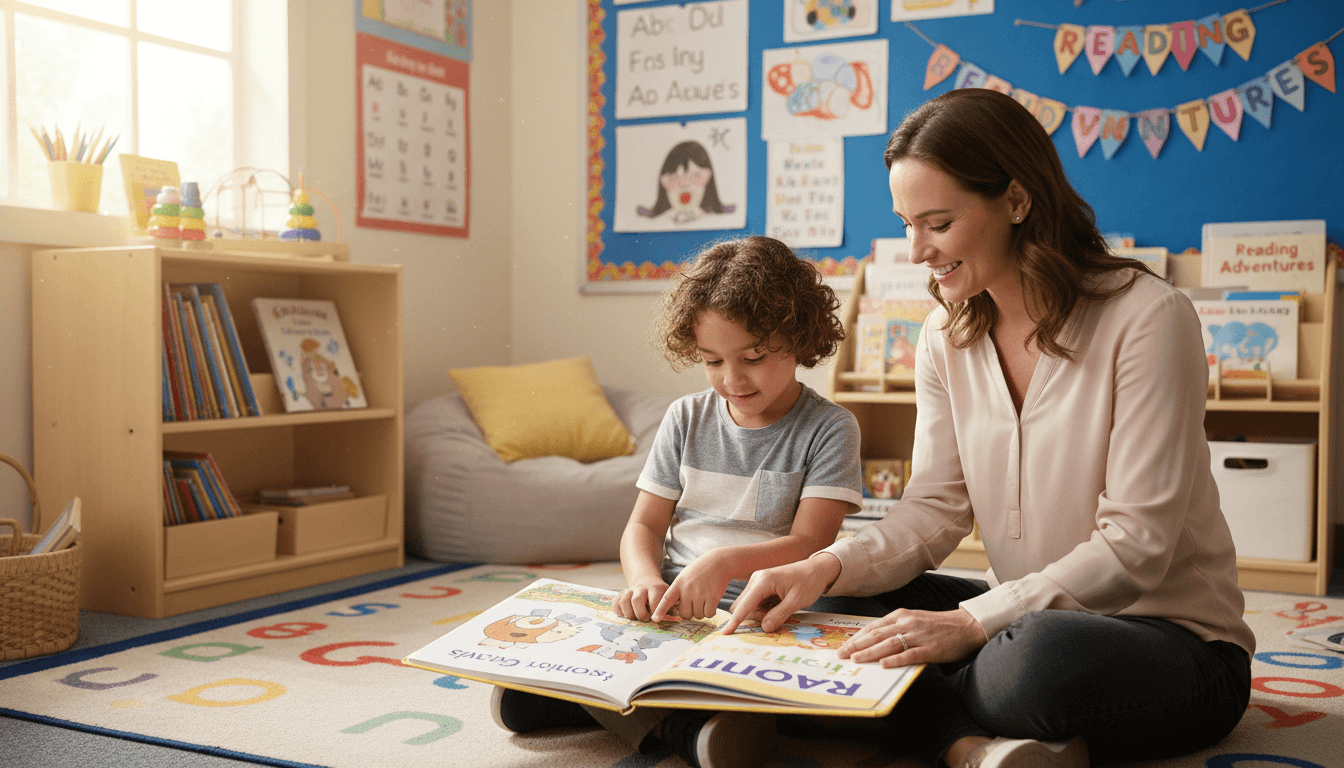
Before reading a single word, flip through the book and look at the pictures. Ask:
- "What do you think this book is about?"
- "Who do you see?"
- "What might happen in this story?"
This activates prior knowledge and gives kids a framework for the text. They're not going in blind.
That said, every child's timeline is different. Trust the process.
2. Stop and Think
Don't wait until the end of a book to ask questions. Stop every few pages:
- "What just happened?"
- "How do you think the character feels?"
- "What do you think will happen next?"
Frequent check-ins prevent kids from zoning out and losing the thread. It also teaches them to monitor their own understanding, a skill called metacognition that matters for years to come.
3. Make Connections
Teach kids to connect what they read to their own lives:
- Text to self: "This reminds me of when I..."
- Text to text: "This is like that other book where..."
- Text to world: "I saw something like this on TV..."
Connections make stories memorable. When a child says "The character is scared, just like I was on the first day of school," they're comprehending deeply.
4. Retelling in Their Own Words
After reading, ask: "Can you tell me what happened? Start from the beginning."
A child who understood the story can retell it. A child who didn't will give you a blank stare or random details. Retelling is one of the most reliable comprehension checks we have.
Structure for first graders: Who was in the story? What happened first? Then what? How did it end?
5. Ask "Why" Questions
"What happened?" checks recall. "Why did it happen?" checks understanding.
- "Why did the bear go into the cave?"
- "Why was the girl sad?"
- "Why do you think the author wrote this book?"
"Why" questions push kids past surface-level reading. They're harder, but that's the point.
6. Vocabulary Before Reading
If a book has words your students won't know, teach those words before they read. Not after.
Pick 2-3 key vocabulary words. Explain them, use them in sentences, act them out. Now when kids encounter them in the text, they won't stumble. They'll understand.
7. Graphic Organizers
Visual tools help first graders organize their thinking:
- Story maps (characters, setting, problem, solution)
- Sequence charts (first, next, then, last)
- Venn diagrams (comparing two characters or stories)
These can feel "advanced" for first grade, but keep them simple and kids will surprise you.
What Does First Grade Comprehension Look Like?
By the end of the year (per Common Core RL.1.1, RL.1.2, RL.1.3), students should be able to:
- Ask and answer questions about key details
- Retell stories with key details
- Describe characters, settings, and major events
- Identify the central message or lesson
These are the building blocks for everything that comes in 2nd and 3rd grade. Get these right and your students will be set up for success.
Read-Aloud: The Secret Weapon
Here's something not every first grade teacher realizes: read-alouds are a comprehension tool, not just a fun activity.
When you read to kids, they can focus entirely on meaning because they're not spending energy on decoding. This is where you can teach the hardest comprehension strategies (inferring, predicting, analyzing) at a level above what they can read independently.
Read aloud every day. Stop and think aloud. Model what good comprehension sounds like: "Hmm, I wonder why the character did that. Let me re-read that part..."
For Parents: How to Help at Home
- Read with your child every night (even 10 minutes counts)
- Ask "What happened?" after each book
- Let your child pick books they're interested in
- Don't correct every reading mistake. Focus on meaning.
- Re-read favorite books (repetition builds fluency AND comprehension)
Keep Reading
- First Grade Sight Words: Complete List and Practice Tips
- How to Teach Reading Comprehension to Kindergartners
- How to Teach Summarizing: Strategies for 2nd Through 4th Graders
- Reading Comprehension Strategies for 3rd to 5th Grade
One Strategy at a Time
Don't try to teach all seven strategies in a week. Pick one. Practice it for two weeks until it becomes a habit. Then add the next one.
By the end of the year, your first graders will be using multiple strategies without even thinking about it. And that's exactly the goal.
Check out our 1st grade reading comprehension worksheets for structured practice that reinforces these strategies with age-appropriate passages and questions.

Adi Ackerman
Head Teacher
Adi is the Head Teacher at ClassWeekly, with years of experience teaching elementary students. She designs our curriculum-aligned worksheets and writes practical guides for teachers and parents.
Keep Reading
Ready to download? Try ClassWeekly free for 30 days.
Unlimited worksheets for PreK through 5th grade. Cancel anytime.