
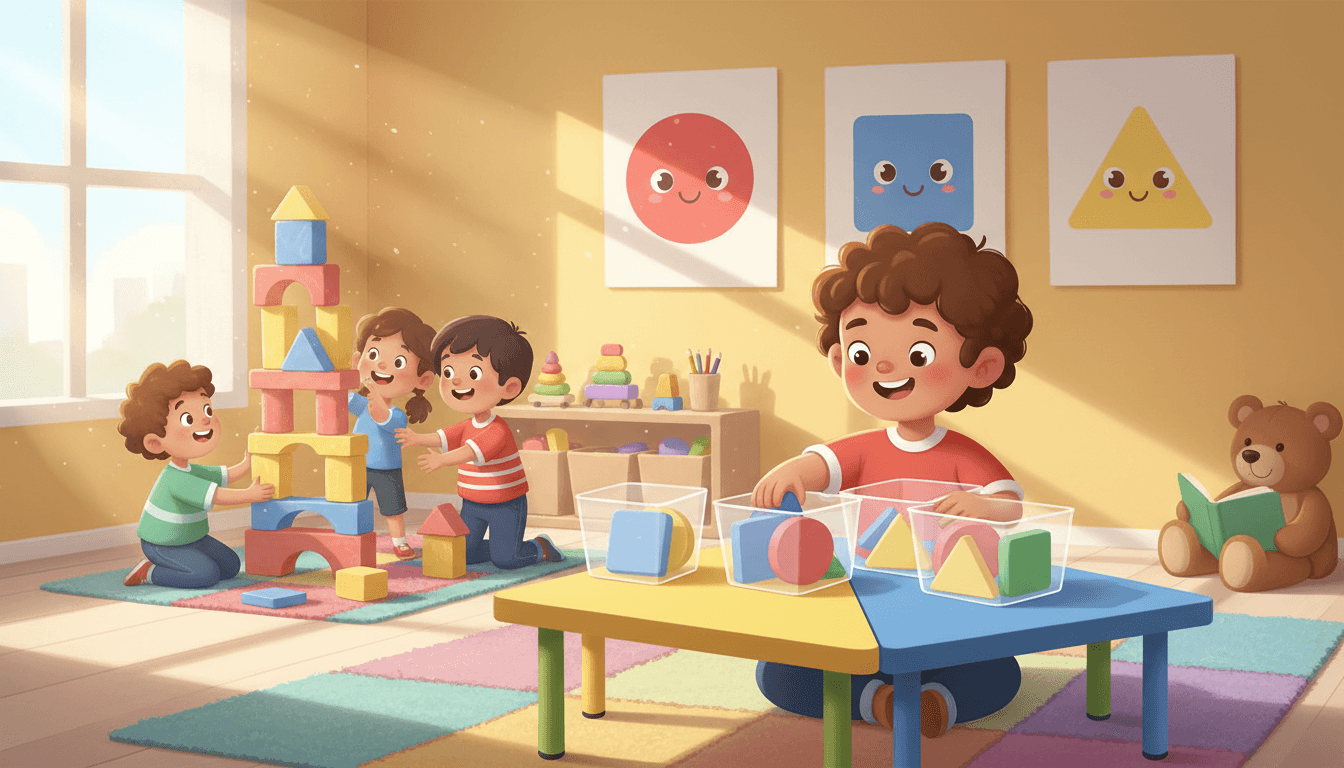
Shape Activities for Preschoolers: Hands-On Geometry Fun
Get 30 days of free worksheet downloads
Key Takeaways
- Start with just four shapes - circle, square, triangle, and rectangle - and spend several days on each before moving on to build a solid foundation.
- Shape hunts are one of the most powerful free activities because they train preschoolers to see everyday objects through a mathematical lens.
- Building shapes with physical materials like popsicle sticks and playdough makes the relationship between sides and corners concrete and memorable.
- Sorting activities teach preschoolers that the same objects can be grouped in different ways, which is a foundational math thinking skill.
- 3D shapes should be introduced after 2D shapes are solid, starting with real objects kids can hold like balls, boxes, and cans before using formal vocabulary.
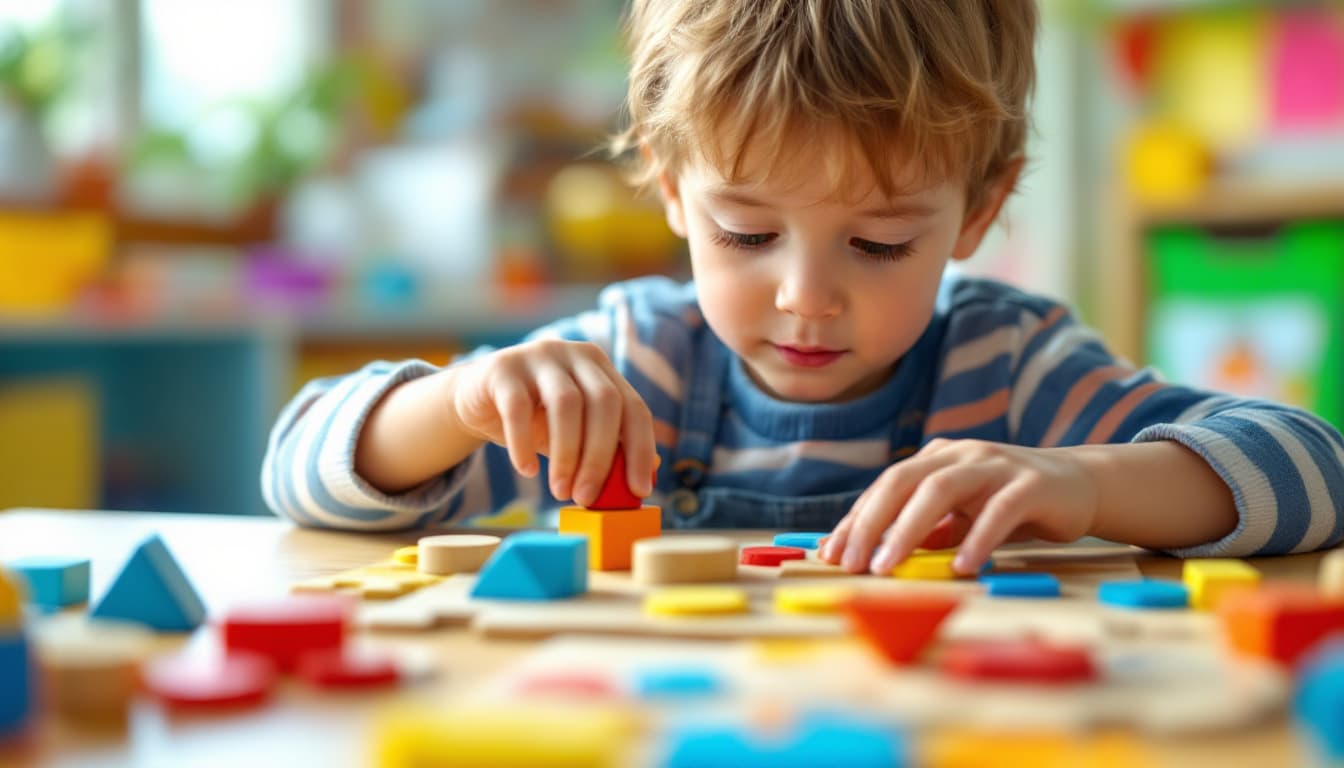
Shapes are one of the first math concepts our kiddos encounter. And honestly, most preschoolers are already noticing them before we even start teaching. That round plate at snack time. The square window. The triangle on the yield sign during the car ride to school.
Our job is to take that natural curiosity and give it language, structure, and a whole lot of hands-on fun.
Why Shapes Matter in Pre-K
Shape recognition is geometry, and geometry is math. But it goes deeper than that.
When preschoolers learn to identify and describe shapes, they're building spatial reasoning. They're learning to compare, categorize, and notice patterns. These are the same thinking skills that will power their math learning for the next decade.
Research consistently shows that early geometry knowledge is one of the strongest predictors of later math achievement. Probably because shapes teach kids to observe carefully and describe what they see. That's mathematical thinking at its core.
And the best part? Shape activities feel like play to a 3 or 4-year-old. They don't know they're doing math. They just know they're having fun.
Free Kindergarten Shape Worksheets


Start With the Big Four (Circle Square Triangle Rectangle)
Don't try to teach all the shapes at once. Start with four: circle, square, triangle, and rectangle.
These are the shapes your kiddos will encounter most often in their world. They're distinct enough that young learners can tell them apart, and simple enough to draw and build.
For each shape, focus on three things:
- What it looks like. "A triangle has three sides and three corners."
- How to find it. "Can you find something triangle-shaped in our room?"
- How to make it. "Can you draw a triangle? Can you build one with sticks?"
Spend a few days on each shape before moving on. There's no rush. A child who really knows their circles, squares, triangles, and rectangles has a solid foundation for everything that comes next.
One thing that helps: use correct vocabulary from the start. Say "sides" and "corners" (or "vertices" if you want to get fancy). Preschoolers can handle bigger words when they come with real objects to point at.
Shape Hunts Around the House and Classroom
Shape hunts are probably the single best shape activity for preschoolers. They're free, they work anywhere, and kids go wild for them.
The idea is simple. Pick a shape. Walk around the room (or the house, or the playground) and find as many examples as possible.
"Today we're looking for rectangles. I see one... the door! Can you find another?"
Here's what makes shape hunts so powerful: they force kids to look at real-world objects through a mathematical lens. A clock isn't just a clock anymore. It's a circle. A book isn't just a book. It's a rectangle.
Try these variations:
- Photo hunt: Give kids a tablet or camera and let them photograph shapes they find. Print the photos and make a class shape collage.
- Clipboard hunt: Draw a simple chart with the four shapes. Kids make tally marks when they find each one.
- Outdoor hunt: Take the hunt to the playground. You'll find triangles in the climbing structure, circles in the wheels, rectangles in the bench slats.
The conversations during shape hunts matter as much as the finding. Ask your students to explain why something is a certain shape. "How do you know that's a square?" pushes thinking way beyond simple identification.
Building and Creating With Shapes
Once kids can recognize shapes, it's time to make them.
Building shapes with different materials helps preschoolers understand what makes each shape unique. A triangle built with popsicle sticks feels different from one drawn with crayons, and both deepen understanding.
Materials that work great for shape building:
- Popsicle sticks and playdough. Use playdough as the "corners" and popsicle sticks as the "sides." This makes the relationship between sides and corners really concrete.
- Pipe cleaners. Bend them into shape outlines. Kids love the flexibility.
- Tangram sets. Even simple ones with just a few pieces let preschoolers combine shapes to make new shapes. That's early spatial reasoning.
- Block building. Challenge kids to build a house using only rectangles and triangles. Or a robot using only squares and circles.
Shape art projects are another winner. Cut out pre-made shapes from construction paper and let kids arrange them into pictures. A house, a cat, a truck. They're composing and decomposing shapes without even knowing it.
Sorting Activities by Shape
Sorting is where math thinking really kicks in. When a preschooler sorts objects by shape, they're classifying. They're deciding what belongs together and what doesn't. That's a foundational skill for all of mathematics.
Start with a big pile of shape cutouts in different colors and sizes. Ask kids to sort them by shape. Then, once they've done that, sort the same pile by color. Then by size.
The key learning moment? The same objects can be grouped in different ways depending on what you pay attention to. That's a surprisingly sophisticated idea for a 4-year-old.
More sorting activities:
- Shape lunchbox: Fill a container with small objects (buttons, erasers, blocks, coins). Kids sort them by shape.
- Shape mats: Make large shape outlines on paper or felt. Kids place matching objects on the correct mat.
- Venn diagram sorting. This one's for the advanced crew. Overlap two hula hoops. One is for "has straight sides," one is for "has four corners." Where do squares go? In the middle. Where do circles go? Outside both hoops.
Don't correct too quickly when kids make mistakes. Ask them to explain their thinking. Sometimes they have a reason that makes sense from their perspective, and the conversation is more valuable than getting the "right" answer.
Introducing 3D Shapes
Once your kiddos are solid with flat (2D) shapes, it's time to go 3D. This is where things get really fun.
Start with shapes they can hold: a ball (sphere), a box (rectangular prism), a can (cylinder), a cone (like an ice cream cone). Use the real objects first. The fancy vocabulary can come later.
The big concept to teach: 3D shapes have faces, and those faces are 2D shapes. A box has rectangle faces. A cylinder has circle faces on top and bottom.
Let kids explore this by tracing. Press a block onto a piece of paper and trace around the bottom. "Look, the face of this box is a rectangle!" Roll a cylinder across paint and onto paper. "The side of the cylinder makes a rectangle when you unroll it."
Building with 3D shapes naturally leads to engineering-style play. Stacking, balancing, figuring out which shapes roll and which ones don't. All of this is geometry in action.
Keep Reading
- Teaching Counting to Preschoolers: Activities That Build Number Sense
- Geometry and Shapes Activities for Kindergarten
- Number Activities for Pre-K: Counting, Sorting, and Early Math
Practice Pages for Shape Recognition
Hands-on activities are essential, but there's a place for pencil-and-paper practice too. Especially for preschoolers who are getting ready for kindergarten.
Good shape practice pages for this age should include tracing, matching, identifying shapes within pictures, and simple sorting tasks. Look for pages that ask kids to color all the triangles blue or circle the shapes that have four sides.
The trick with practice pages at this age is to keep sessions short. Five to ten minutes is plenty. If a child starts losing focus, put the page away and come back to it tomorrow. Shapes aren't going anywhere.
When your kiddos can name the basic shapes, find them in the world, build them with materials, and sort them by attributes, they've got a geometry foundation that will serve them well into kindergarten and beyond. And honestly, that's a lot of math learning disguised as a really good time.

Adi Ackerman
Head Teacher
Adi is the Head Teacher at ClassWeekly, with years of experience teaching elementary students. She designs our curriculum-aligned worksheets and writes practical guides for teachers and parents.
Keep Reading
Ready to download? Try ClassWeekly free for 30 days.
Unlimited worksheets for PreK through 5th grade. Cancel anytime.