
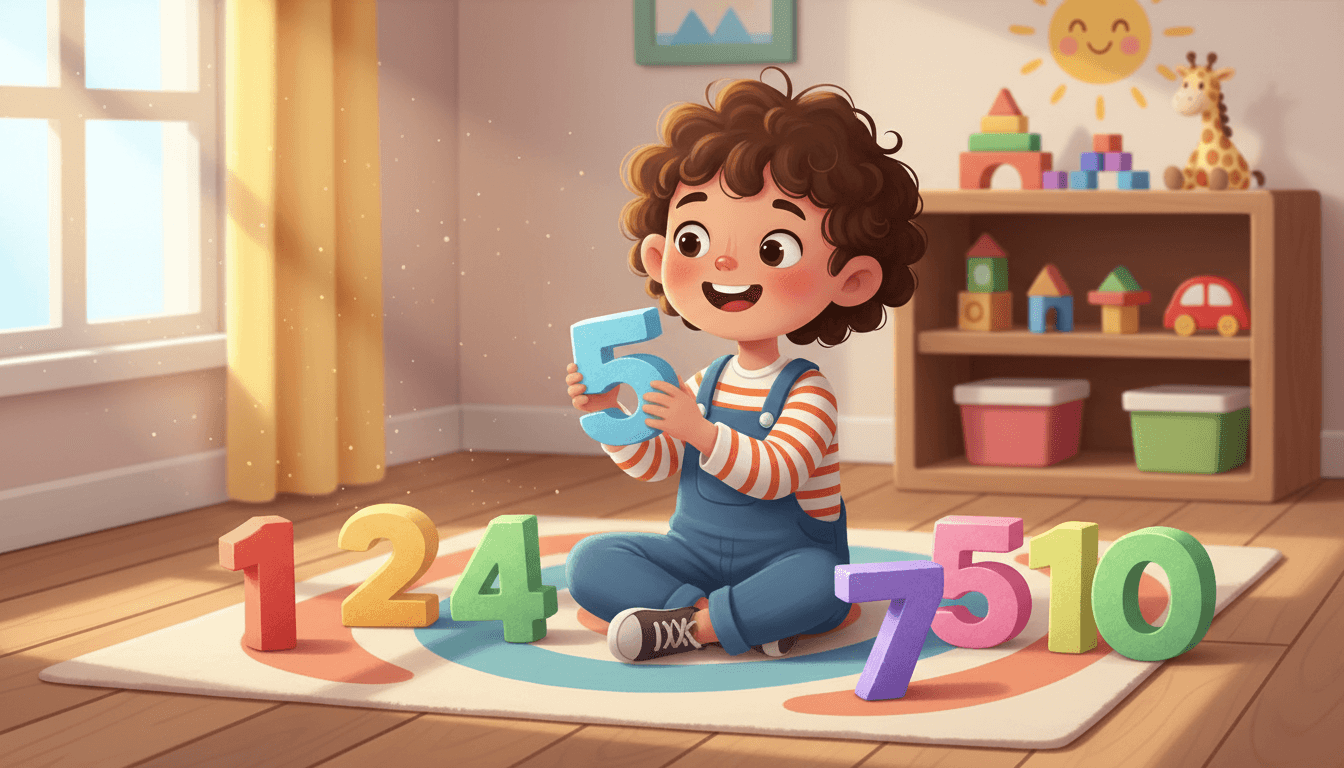
Number Recognition for Preschoolers: Numbers 1 to 20
Get 30 days of free worksheet downloads
Key Takeaways
- Number recognition (identifying the written symbol) and number sense (understanding quantity) are two distinct skills - recognition typically develops first and should be taught before deep quantity work.
- Most children are ready for number recognition practice between ages 2 and 4, but readiness signals like counting objects to 5 and sorting by color matter more than age.
- Sensory activities like sand tracing, playdough shaping, and number hunts help the visual shape of numbers stick far better than flashcard drills.
- The teen numbers (11-20) are genuinely harder in English because the words don't mirror the place-value pattern - use number lines and ten-frames to show the underlying 10-plus structure.
- Short 5-10 minute sessions repeated daily outperform long practice marathons for preschool-age learners, and stopping before frustration is more productive than pushing through.

Number recognition is one of those skills that seems simple until you try to teach it. Your little one can probably count to ten out loud, but ask them to point to the number 7 on a page and you might get a blank stare.
That's completely normal. Reciting numbers and recognizing them are two totally different skills. And honestly, the gap between those two things surprises a lot of parents and teachers.
Here's how to bridge that gap with activities that actually stick.
When Kids Are Ready for Number Recognition
Most children start showing interest in numbers between ages 2 and 4. But "interest" looks different than you might expect. It's not sitting down with flashcards. It's pointing at the number on an elevator button. It's noticing the big "3" on their birthday cake.
Signs your child might be ready:
- They can count objects to at least 5 (touching each one as they count)
- They recognize some letters by sight
- They show interest in books, signs, or labels with numbers on them
- They can sort objects by color or size
If your little one isn't there yet, that's okay. There's a wide range of normal. Pushing too early can actually backfire and make numbers feel stressful instead of fun.
A good rule of thumb: if your child is interested, follow their lead. If they're not, keep reading books together and counting things during everyday routines. The readiness will come.
Free Number Recognition Worksheets


Number Recognition vs Number Sense
These two terms get mixed up a lot, so let's clear it up.
Number recognition is identifying the written symbol. Your child sees "4" and says "four." That's it. It's visual identification, similar to recognizing letters.
Number sense is understanding what that number actually means. Knowing that 4 is more than 3. Knowing that 4 cookies is fewer than 10 cookies. Knowing that if you take one cookie away from 4, you have 3.
You need both, but recognition usually comes first. Think of it like this: your child learns to recognize the word "cat" before they can write a story about cats.
Don't worry about building deep number sense right away. Focus on recognition first, and weave number sense into daily conversations. "You have 3 crackers. Your sister has 2. Who has more?"
Activities for Numbers 1-10
Start small. Numbers 1 through 10 are enough for most preschoolers, and honestly, even mastering 1 through 5 is a win.
Sensory number tracing. Fill a shallow tray with sand, salt, or shaving cream. Write a large number with your finger and have your child trace over it. Say the number name as they trace. The sensory input helps the shape stick in their memory.
Number hunt. Walk around the house or neighborhood and look for numbers. House numbers, clocks, remote controls, recipe books. Make it a game: "Can you find a 2 somewhere in this room?"
Playdough numbers. Roll playdough into snakes and form them into number shapes. This builds fine motor skills and number recognition at the same time.
Number matching. Write numbers 1 through 5 on index cards. Put the matching number of stickers on separate cards. Have your child match the numeral card to the sticker card. This connects the symbol to the quantity.
Dot-to-dot pages. These are probably the most underrated number recognition activity. Kids follow the numbers in order, which reinforces both sequence and symbol recognition.
Keep sessions short. Five to ten minutes is plenty for a 3 or 4 year old. If they start squirming, stop. Come back tomorrow.
Expanding to Numbers 11-20
Once your child confidently recognizes 1 through 10, the teens are the next step. And fair warning: the teens are weird.
Think about it from a kid's perspective. "Thirteen" doesn't sound anything like "three-ten." In many other languages, the teen numbers are literally described as "ten-three." English makes this harder than it needs to be.
Use a number line. Tape a number line from 1 to 20 on the wall at your child's eye level. Point to numbers during daily routines. "We're eating dinner at 6. Can you find 6 on the number line?"
Hundred chart (just the first two rows). Print a hundred chart and cover everything below 20. Let your child explore the pattern: 1 through 10 on top, 11 through 20 on the bottom. The visual alignment helps them see that 11 is "10 and 1 more."
Counting collections. Give your child a pile of small objects (buttons, pasta, coins) and have them count out specific amounts. "Can you count out 14 buttons?" Use a ten-frame to organize: fill the first row of 10, then add the extras below.
Number of the day. Pick a number each morning. Write it on a whiteboard. Count that many jumps, claps, or snacks throughout the day. By the end of the day, that number is an old friend.
The key with teens is patience. These numbers take longer to learn, and that's not a sign of a problem. It's just how English works.
Games That Make Number Practice Fun
The fastest way to kill a preschooler's interest in numbers is to make it feel like work. Games keep it light.
Number bingo. Make simple bingo cards with numbers 1 through 10 (or 1 through 20 for older preschoolers). Call out numbers and have kids cover them with buttons or cereal pieces. First to fill a row wins.
Number bowling. Write numbers on 10 plastic cups. Stack them in a triangle. Roll a ball to knock them down, then have your child identify which numbers they knocked over.
Hide and seek numbers. Write numbers on sticky notes and hide them around the room. Your child finds them and sticks them on the wall in order. This combines movement, recognition, and sequencing.
Card games. A regular deck of cards (aces through 10, face cards removed) works great. Play Go Fish, War, or Memory. Your child has to read the number on the card to play.
Cooking together. Recipes are full of numbers. "We need 2 cups of flour. Can you find the 2 on the measuring cup?" Real-world context makes numbers feel useful, not abstract.
The best game is whatever your child wants to play again tomorrow. If they ask to play number bingo three days in a row, that's working.
Signs Your Child Needs More Time
Every child develops at their own pace, and number recognition is no exception. But there are a few signals that your little one might need extra support or simply more time.
Consistently confusing similar-looking numbers. Mixing up 6 and 9, or 1 and 7, is normal for a while. If it's still happening after months of practice, try focusing on just those two numbers side by side.
Frustration or avoidance. If your child gets upset during number activities, pull back. Pushing through tears doesn't build number skills. It builds anxiety. Take a break and try a completely different approach next week.
No progress after consistent practice. If you've been doing short, fun number activities several times a week for a few months and your child still can't recognize any numbers, it's worth mentioning to their pediatrician. It's probably nothing, but early screening can catch things like dyscalculia.
Recognizes numbers but can't connect them to quantities. If your child can name every number but has no idea that "5" means five things, shift your focus to counting objects. Recognition without meaning isn't the goal.
Most importantly: comparison is not helpful here. The fact that your neighbor's kid could recognize numbers at 2 doesn't mean anything about your child. Development is not a race, and late recognizers catch up quickly once they click.
Keep Reading
- Teaching Counting to Preschoolers: Activities That Build Number Sense
- Number Activities for Pre-K: Counting, Sorting, and Early Math
- Pre-K Math Activities: Building Number Sense Before Kindergarten
Practice Pages for Number Recognition
Once your child can identify a few numbers by sight, printable practice pages help reinforce what they've learned. But they work best as a follow-up to hands-on activities, not a replacement for them.
Look for practice pages that combine tracing with counting. The best ones ask kids to trace the number AND count or circle the matching quantity. That dual task connects recognition to meaning.
For beginners, start with pages that focus on one number at a time. A whole page about the number 3 is more effective than a page with all the numbers jumbled together.
For kids who are further along, number sequencing activities (fill in the missing number) and number matching pages add a nice challenge without being overwhelming.
Keep it short. One or two pages per sitting is plenty for a preschooler. And always, always make it feel optional. The moment practice pages feel like homework, they stop working.
Number recognition is a marathon, not a sprint. Your kiddos will get there. Keep it playful, keep it low-pressure, and one day they'll point to every number on the cereal box at breakfast and tell you exactly what it says.

Adi Ackerman
Head Teacher
Adi is the Head Teacher at ClassWeekly, with years of experience teaching elementary students. She designs our curriculum-aligned worksheets and writes practical guides for teachers and parents.
Keep Reading
Ready to download? Try ClassWeekly free for 30 days.
Unlimited worksheets for PreK through 5th grade. Cancel anytime.