
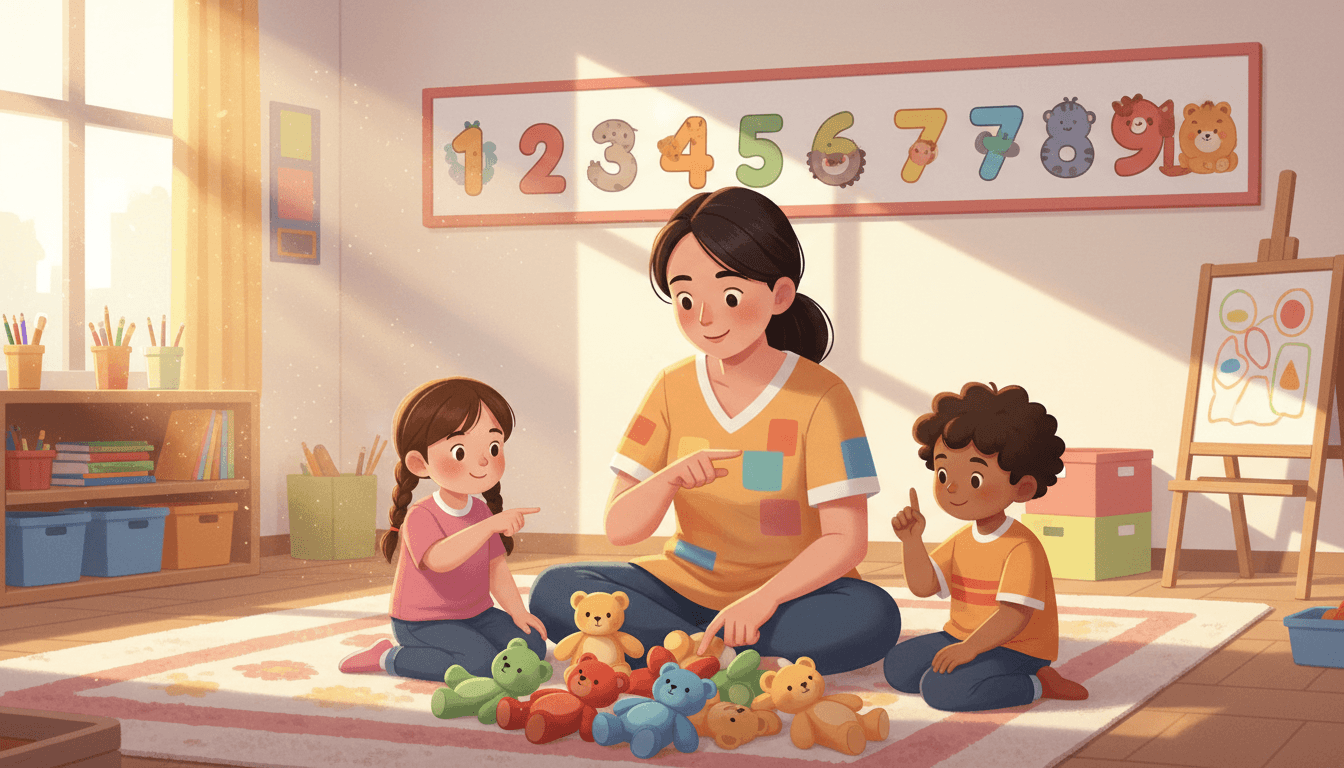
What Is One-to-One Correspondence? (Pre-K to K)
Get 30 days of free worksheet downloads
Key Takeaways
- One-to-one correspondence means matching exactly one number word to one object while counting, and it is the single most important pre-math skill for preschoolers and kindergartners to develop.
- Children who can recite numbers fluently may still lack one-to-one correspondence because verbal counting and physical object-tagging are two separate skills that must be synchronized.
- Moving objects from one container to another as they count is the most effective fix for children who count too fast or double-count, because the physical transfer enforces a natural pause between numbers.
- Mastery shows when a child slows their verbal count to match their pointing, self-corrects mistakes, and can count objects in any arrangement without losing track.
- Paper practice pages work best as a follow-up to hands-on manipulative work, not a replacement - if a child is still struggling with physical objects, more worksheets will not close the gap.
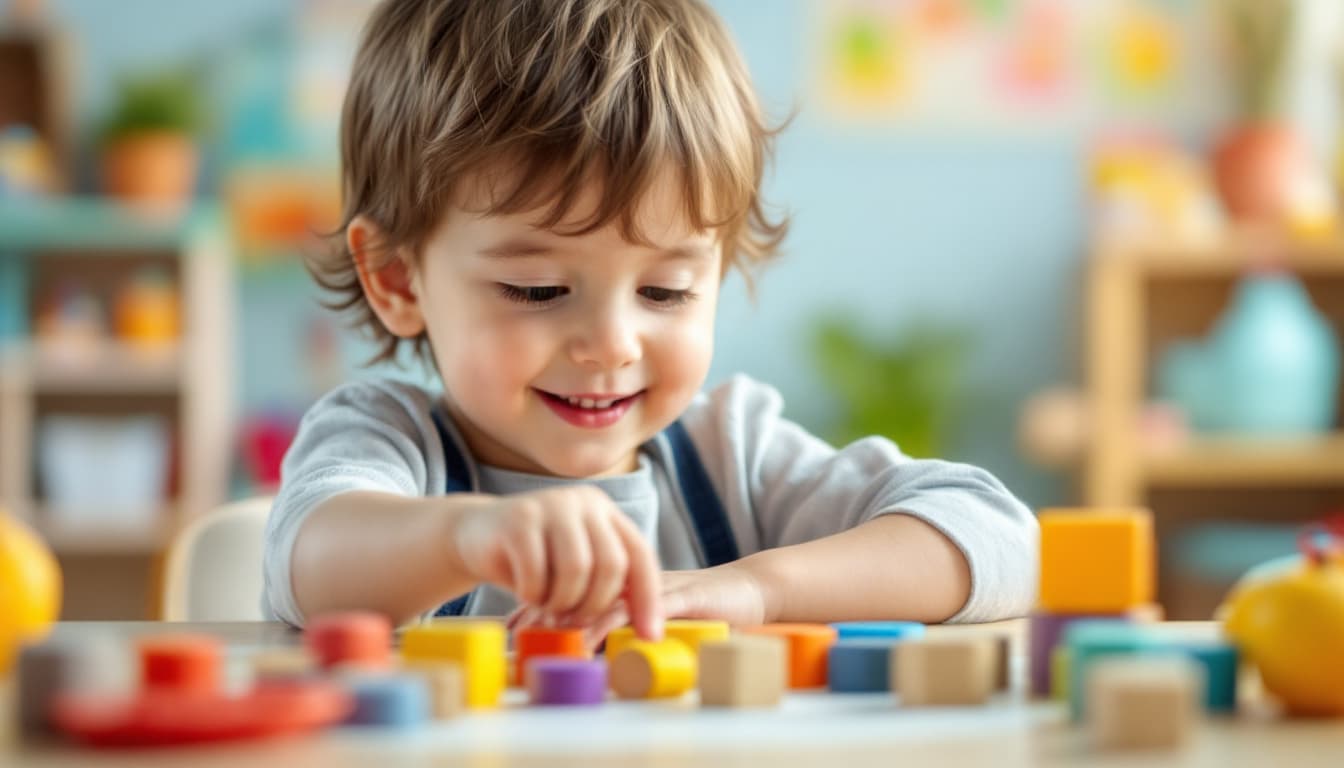
Before your kiddos can add, subtract, or do anything meaningful with numbers, they need to understand one simple idea: each object gets exactly one count.
That's one-to-one correspondence. And honestly, it's probably the most overlooked skill in early math. We assume children just "get" counting because they can recite numbers. But saying "1, 2, 3, 4, 5" and actually counting five objects are two very different things.
Let's break down what this skill really is, why it matters so much, and how to build it with your Pre-K and kindergarten learners.
What Is One-to-One Correspondence
One-to-one correspondence means matching one number word to one object, and only one, while counting. It sounds simple. It is not.
Watch a three-year-old count a row of blocks. You'll probably see them skip a block, count one block twice, or say the numbers faster than their finger moves. That's because they haven't connected the verbal sequence ("one, two, three") to the physical act of touching or pointing to each item once.
This skill has two parts working together:
- Verbal counting: Saying number words in the correct order.
- Object tagging: Touching, pointing to, or moving each item as you say a number.
When these two parts sync up, your child is demonstrating one-to-one correspondence. When they don't sync up, the count is unreliable. And every math skill that comes after counting depends on that count being reliable.
Free Counting Objects Worksheets


Why It Is the Foundation of Counting
Think about what happens when a child learns to add. They need to count a group, count another group, then count the total. If they can't count accurately in the first place, addition falls apart.
One-to-one correspondence is the gateway to:
- Cardinality: Understanding that the last number you say represents the total. ("I counted to 5, so there are 5.")
- Comparing quantities: "Which group has more?" only works if both groups were counted correctly.
- Number conservation: Knowing that rearranging objects doesn't change the amount.
- Addition and subtraction: Every early operation starts with a reliable count.
Without this foundation, children often develop what researchers call "rote counting." They can recite numbers beautifully but have no idea what those numbers actually mean. They're performing a song, not doing math.
This is why rushing past counting to "real math" backfires. If your students are still working on one-to-one correspondence in kindergarten, that's completely normal. Better to build it right than to push ahead with a shaky foundation.
Activities That Build One-to-One Skills
The best activities are hands-on, multi-sensory, and give children something physical to do as they count. Here are ones that work consistently.
Touch and count with objects. Line up 5 blocks. Have your child touch each block while saying the number. Start with small sets (3-5 objects) and work up. If they skip or double-count, gently reset: "Let's try again. One touch for each block."
Move and count. Instead of touching objects in a line, have children move each item from one pile to another as they count. Moving is even more concrete than touching because the object physically changes location. You can use buttons, pom-poms, or cereal pieces.
Sticker counting. Give children a paper with drawn circles (3 to 8 circles). They place one sticker inside each circle while counting aloud. The circle acts as a visual boundary. One circle, one sticker, one number.
Egg carton counting. Put a number card (say, "6") next to a 12-cup egg carton. The child drops one small object (marble, bean, pom-pom) into each cup while counting, stopping at the target number. The cups enforce the one-object-per-space rule naturally.
Dot plate flashes. Make paper plates with dot patterns (like a die). Flash a plate for 2 seconds. Ask "How many?" Then let the child count the dots by touching. Over time, they'll start recognizing small quantities without counting. That's subitizing, and it grows directly from solid one-to-one skills.
Key principle: Always start with fewer objects and increase gradually. Mastery at 5 objects before moving to 8. Mastery at 8 before moving to 12.
Games That Make Practice Fun
Games disguise practice as play. And for Pre-K and kindergarten learners, play is the most effective teacher.
Board games with spinners or dice. Classic board games where children move a piece one space per number are brilliant for one-to-one correspondence. The child rolls a 3, then moves their piece one, two, three spaces. Each space = one count. Games like Chutes and Ladders or Hi Ho! Cherry-O work perfectly.
"Feed the monster" counting game. Draw a monster face on a box with an open mouth. Roll a die. Feed the monster that many pom-poms, one at a time, counting aloud. Kids will do this a dozen times and never get bored.
Matching games. Lay out number cards 1 through 5. Place a bowl of small objects nearby. The child draws a number card, then counts out that many objects and places them next to the card. Self-checking: does the group next to "4" actually have four objects?
Counting collections. This is exactly what it sounds like. Give each child a bag of random small objects (buttons, shells, toy animals) and ask them to count their collection. They can organize objects in rows, use ten frames, or sort by type first. The open-ended nature of this activity lets every child work at their level.
Outdoor counting walks. Count steps to the playground. Count rocks in the garden. Count birds on the fence. Real-world counting builds the connection between numbers and the physical world in a way that worksheets alone never will.
Signs Your Child Has Mastered It
How do you know when one-to-one correspondence has clicked? Look for these behaviors:
✅ Points to or touches each object exactly once while counting, without skipping or double-counting.
✅ Slows down their verbal count to match their pointing. Early on, kids say numbers faster than they can point. When they slow their words to match their hands, that's a sign of real coordination.
✅ Stops at the right number. When asked to "give me 4 blocks," they count out exactly 4 and stop. Not 3, not 5.
✅ Self-corrects. If they realize they miscounted, they go back and start over. This is actually a great sign. It means they know the count needs to be accurate.
✅ Can count different arrangements. Objects in a line, a circle, a scattered pile. The arrangement doesn't throw them off.
✅ Answers "how many?" with the last number they said. This is cardinality, and it rides directly on top of one-to-one correspondence. If they recount when you ask "how many?", they might have correspondence but haven't yet grasped cardinality.
Don't expect all of these to appear at once. Mastery develops gradually across ages 3 to 5 for most children.
Common Struggles and How to Help
Counting too fast. The mouth moves faster than the hand. This is the most common issue. Fix: have the child physically move objects into a new container (bowl, bag, cup) as they count. The act of transferring slows them down.
Skipping objects. Especially in scattered arrangements. Fix: teach children to organize objects into a line before counting. Or use a "counting mat" with outlined spaces. Structure reduces errors.
Double-counting. Touching the same object twice. Fix: have children push each counted object to the side or flip it over after counting. Visual separation between "counted" and "not yet counted" helps enormously.
Losing track of where they started. When objects are arranged in a circle, children sometimes count around and around. Fix: place a finger or small marker next to the first object as a "start" signal.
Getting the sequence wrong. If a child says "1, 2, 3, 5, 7," the issue isn't one-to-one correspondence. It's verbal counting sequence. These are different skills. Work on number word order separately before combining with object counting.
Frustration or avoidance. Some children get upset when they miscount. Keep the mood light. "Oops, tricky! Let's try again." Never frame a miscount as failure. Counting is a skill that develops with practice, just like tying shoes or writing letters.
The single most helpful thing you can do: model slow, deliberate counting yourself. Let children see you touch each object and pause between numbers. They learn the rhythm from watching you.
Keep Reading
- Teaching Counting to Preschoolers: Activities That Build Number Sense
- Pre-K Math Activities: Building Number Sense Before Kindergarten
- How to Teach Number Recognition to Toddlers and Preschoolers
Practice Pages for Counting With Confidence
Once your students can reliably count physical objects, it's time to bridge to paper-based practice. This is where printable counting activities come in.
The best practice pages for one-to-one correspondence have children:
- Count objects and circle the matching number. A picture of 6 apples, with choices 5, 6, and 7.
- Draw a line from each object to a number. Five dogs matched to numbers 1 through 5.
- Color a specific number of items. "Color 4 stars." The page has 6 stars. Can they stop at 4?
- Cut and paste the right number of items. Multi-step activities that combine counting with fine motor skills.
Important: practice pages work best as a follow-up to hands-on activities, not a replacement. If a child is still struggling with physical objects, more paper practice won't fix the gap. Go back to manipulatives.
Start with sets of 1-5. Once those are solid, move to 6-10. For kindergartners who are ready, extend to 11-20 with the support of ten frames and number lines.
The beautiful thing about one-to-one correspondence is that once it clicks, it clicks for good. Your students won't unlearn it. And every number concept they encounter from here on out, addition, subtraction, place value, measurement, builds directly on this foundation.
Take your time with it. Your kiddos are building something that lasts 🧮

Adi Ackerman
Head Teacher
Adi is the Head Teacher at ClassWeekly, with years of experience teaching elementary students. She designs our curriculum-aligned worksheets and writes practical guides for teachers and parents.
Keep Reading
Ready to download? Try ClassWeekly free for 30 days.
Unlimited worksheets for PreK through 5th grade. Cancel anytime.