What Is Decoding in Reading?
Taught in US schools
Key Takeaways
- Decoding means using letter-sound knowledge (phonics) to read words you haven't memorized.
- Decoding is one of the two foundational reading components (along with language comprehension) in the Simple View of Reading.
- Strong decoding in early grades predicts reading fluency and comprehension in later grades.
- Decoding builds on phonemic awareness and phonics instruction and develops rapidly in K-2.
What Is Decoding?
Decoding is the ability to use letter-sound knowledge to sound out and read written words. It is the alphabetic foundation of reading - the process by which black marks on a page become meaningful words.
Decoding draws on phonics (knowing which letters represent which sounds) and phonemic awareness (the ability to hear and manipulate individual sounds). Together, these skills allow readers to work through unfamiliar words systematically rather than guessing from context or pictures alone.
How Decoding Works
When a beginning reader encounters an unfamiliar word:
- Sound out each letter or spelling pattern (grapheme-phoneme correspondence)
- Blend the sounds together from left to right
- Self-monitor: Does that sound like a real word? Does it make sense in the sentence?
- Build automaticity: With repetition, the word becomes recognized instantly
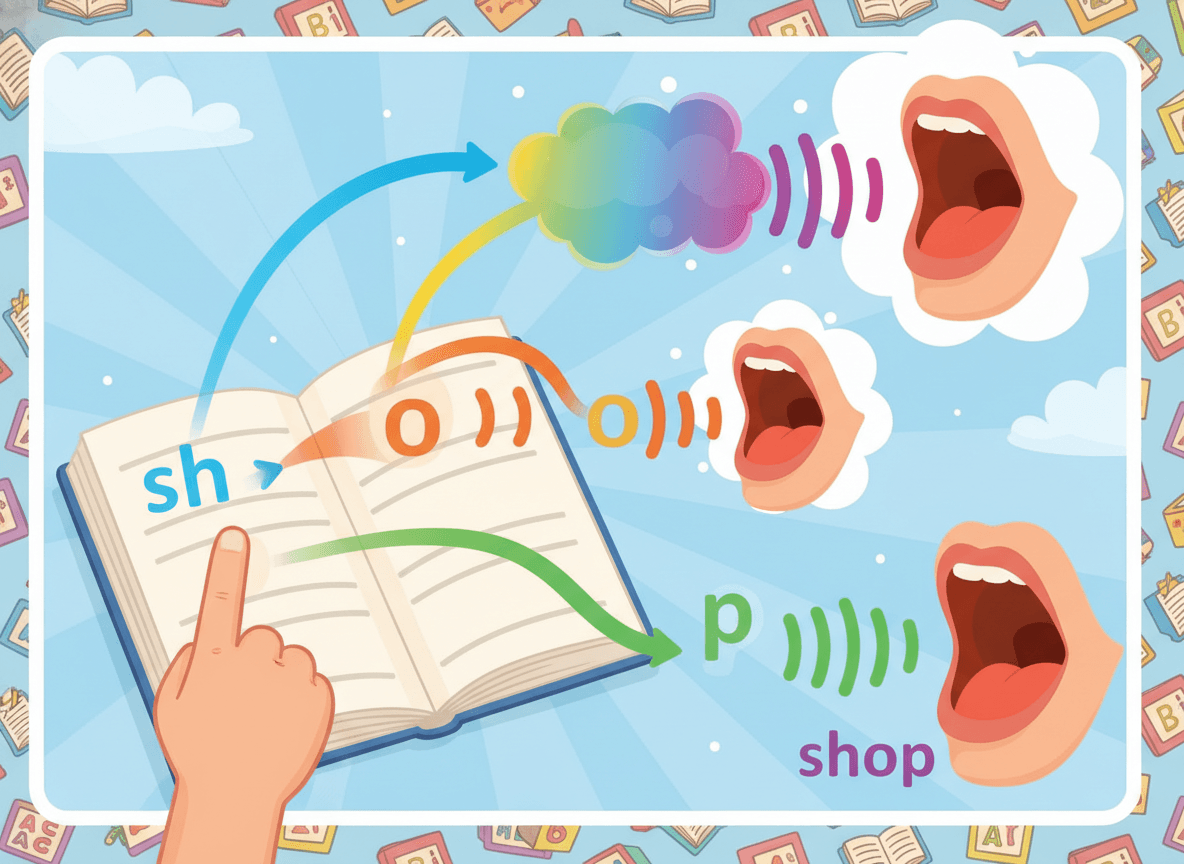
Example: Decoding "ship"
- sh = /ʃ/ (digraph: two letters, one sound)
- i = /ɪ/
- p = /p/
- Blend: /ʃɪp/ → "ship" ✓
What Decoding Is Not
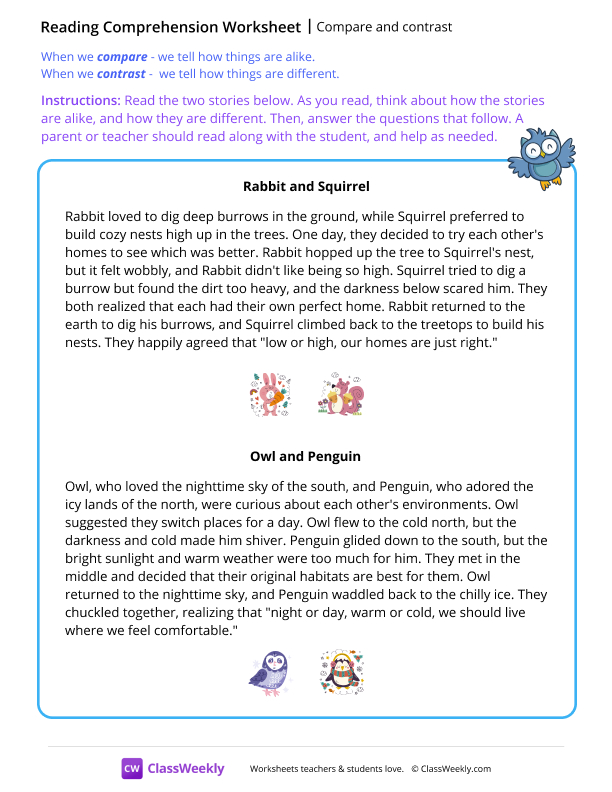
Decoding is not guessing from pictures, context clues alone, or memorizing whole-word shapes. These strategies are limited. Students who rely on guessing cannot decode new or rare words. Systematic phonics instruction provides a reliable, generative system for approaching any word in English.
Scope of Decoding Skills (K-2)
Kindergarten: Letter-sound correspondences (CVC words like cat, him, bug); simple digraphs.
1st grade: Blends (slip, crab), long vowel patterns (make, bike, coat), more digraphs (ch, th, wh, sh), vowel teams (rain, play).
2nd grade: R-controlled vowels (car, bird, corn), diphthongs (coin, out), multisyllabic words, prefixes and suffixes.
What Grade Do Kids Learn Decoding?
Kindergarten (RF.K.3): Students decode simple CVC words and one-syllable words with common letter patterns.
1st grade (RF.1.3): Students decode regularly spelled one-syllable words using phonics knowledge; read common high-frequency words.
2nd grade (RF.2.3): Students decode regularly spelled two-syllable words with long and short vowel patterns.
Common Misconceptions
Smart kids don't need phonics: All readers benefit from phonics instruction. Even strong readers decode unfamiliar words. Phonics instruction speeds up the path to fluency.
Context clues can replace decoding: Context helps confirm a decoded word, but guessing from context without decoding leads to inaccurate reading and limits vocabulary growth. Decoding must come first.
Decoding is just a beginner skill: Decoding applies to longer, more complex words through all grades. Fifth graders decode multisyllabic words (pre-de-ter-mined) using the same phonics logic learned in 1st grade.
Practice Activities
-
Word family sorts: Sort cards with words sharing the same rime pattern (-at, -ig, -ump).
-
Sound boxes (Elkonin boxes): Students push a chip into a box for each sound they hear while sounding out a word.
-
Nonsense word reading: Practice decoding accuracy by reading made-up words (no context, no guessing).
-
Decodable text reading: Read books specifically written with controlled phonics patterns matched to current instruction.
-
Phonics dictation: Teacher says a word; students write it, drawing on learned spelling patterns.
Frequently Asked Questions
What is decoding in reading?
Decoding is the process of translating printed letters and patterns into sounds, then blending those sounds together to recognize a word. It is how beginning readers 'sound out' unfamiliar words using their knowledge of letter-sound relationships. For example, seeing 'c-a-t' and mapping /k/ + /æ/ + /t/ → 'cat' is decoding.
How is decoding different from sight word reading?
Decoding uses letter-sound knowledge to work through a word systematically. Sight words are words that students recognize immediately from memory without needing to sound them out. Proficient readers actually decode most words, even 'sight words' - repeated decoding makes words automatic. The term 'sight word' refers to words students have encountered enough to recognize instantly.
What skills does decoding require?
Decoding requires: (1) Phonemic awareness - the ability to hear and manipulate individual sounds. (2) Phonics - knowledge of which letters and letter patterns represent which sounds. (3) Blending - the ability to push sounds together smoothly to form a word. All three work together during decoding.
What is the Simple View of Reading and how does decoding fit in?
The Simple View of Reading is a formula: Reading Comprehension = Decoding × Language Comprehension. Decoding is the word recognition component - the ability to read words accurately. Language comprehension is understanding what those words mean in context. Both are necessary: students who can decode but lack vocabulary won't comprehend; students with rich vocabulary who can't decode can't access the text.
When should decoding be fluent?
By the end of 2nd grade, most students should be able to decode grade-level words accurately and with increasing fluency. By 3rd grade, most common word patterns should be automatic. Students who still struggle with decoding in 3rd grade often need structured literacy intervention using systematic phonics instruction.
Free Decoding Worksheets
Curriculum-aligned printable worksheets for Kindergarten – 2nd Grade. Download free.