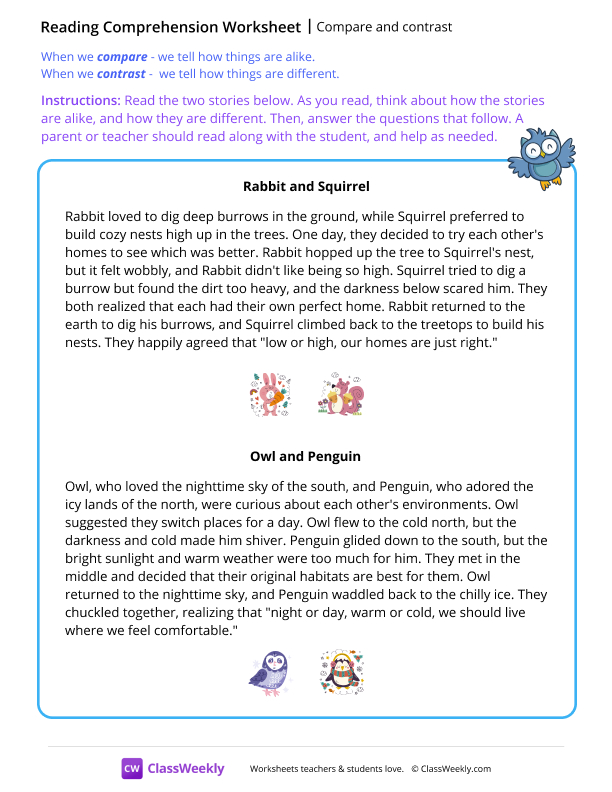
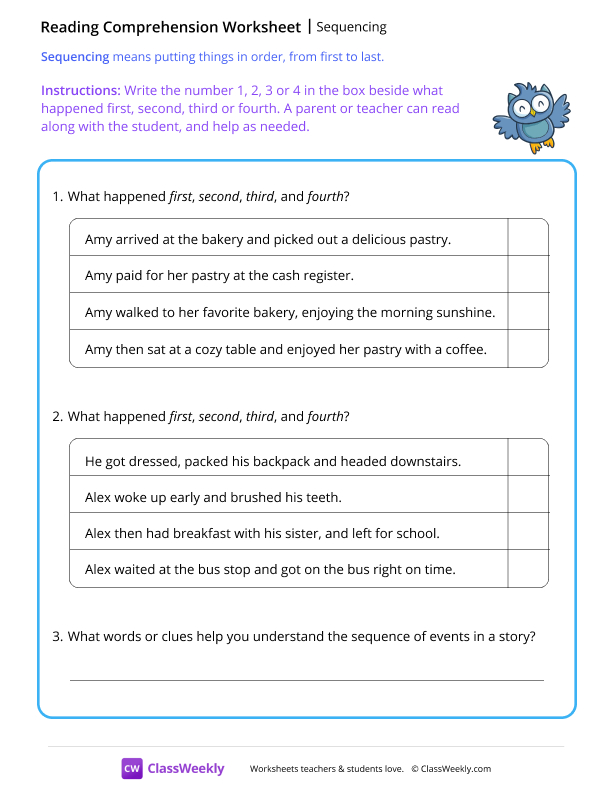
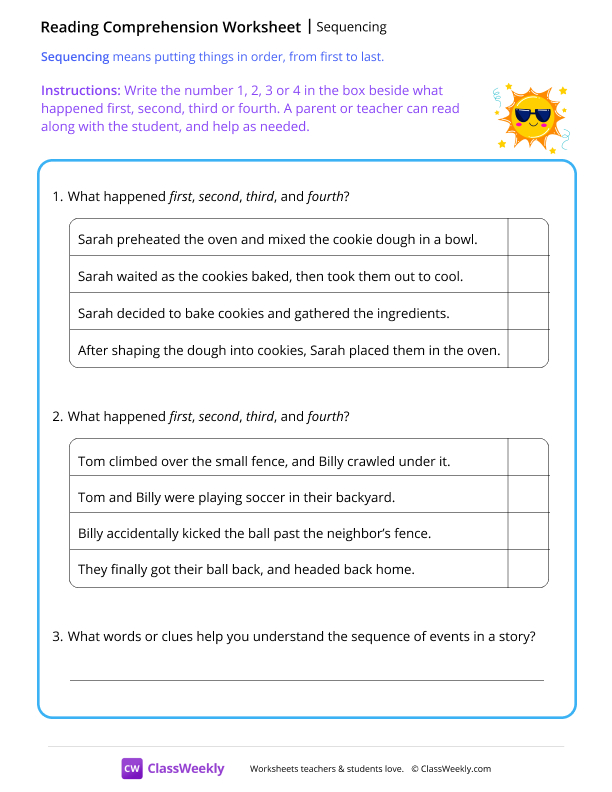
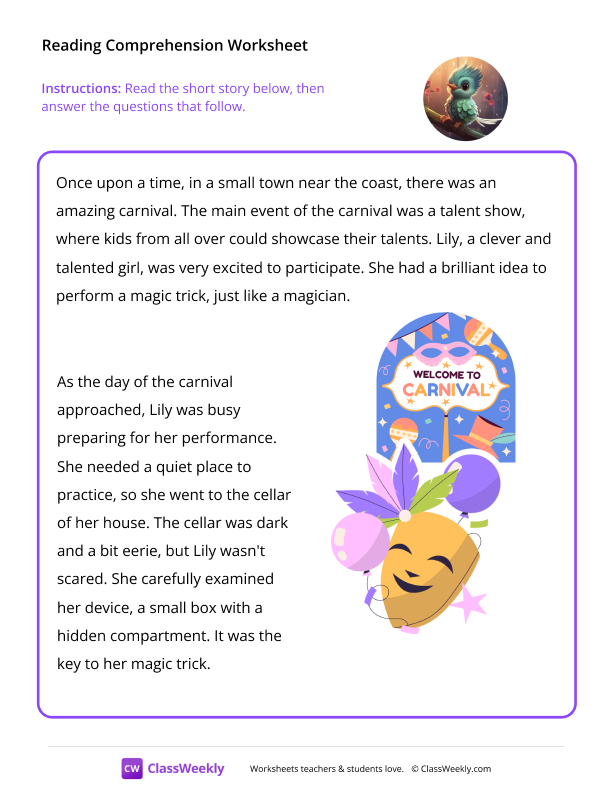
What Is Phonemic Awareness?
Taught in US schools

Key Takeaways
- Phonemic awareness is about SOUNDS only - it's oral and auditory, not written.
- A phoneme is the smallest unit of sound: 'cat' has 3 phonemes - /k/ /æ/ /t/.
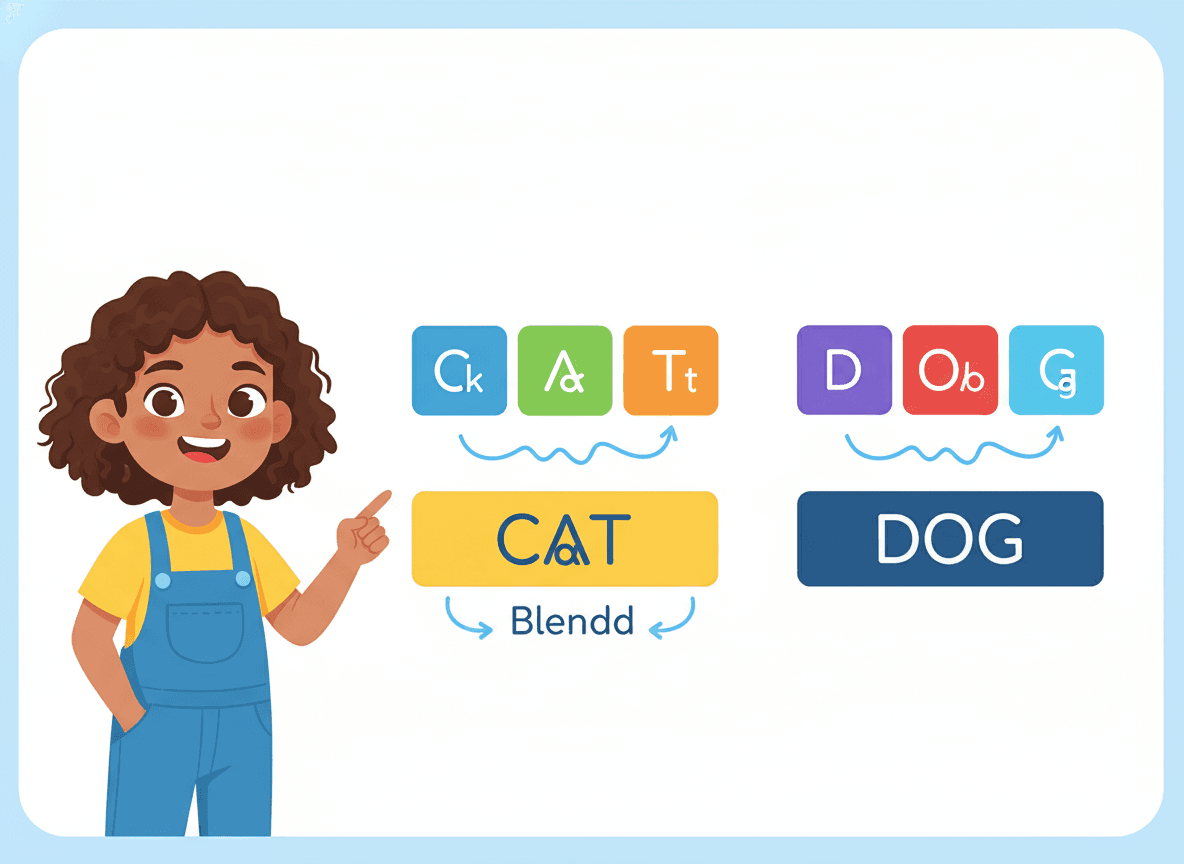
- Key skills: blending (/k/ /æ/ /t/ → 'cat'), segmenting ('cat' → /k/ /æ/ /t/), and deleting/substituting sounds.
- Phonemic awareness predicts reading success better than IQ or vocabulary - it's the foundation of decoding.
What Is Phonemic Awareness?
Phonemic awareness is the ability to hear, identify, and manipulate individual sounds (phonemes) in spoken words.
Key distinction: phonemic awareness is 100% oral. No letters, no print. It's the ability to hear that "cat" is made up of three sounds - /k/, /æ/, and /t/ - and to work with those sounds independently.
A child with strong phonemic awareness can:
- Blend three sounds into a word: /d/ /o/ /g/ → "dog"
- Segment a word into sounds: "ship" → /sh/ /ɪ/ /p/
- Delete a sound: "smile" without /s/ → "mile"
- Substitute a sound: change /p/ in "pig" to /b/ → "big"
Why It Matters
Phonemic awareness is one of the strongest predictors of reading success identified by reading research. The Simple View of Reading describes decoding (phonics × language comprehension) as the path to reading - and decoding depends entirely on the ability to hear the sounds that letters represent.
Children who cannot segment and blend phonemes cannot benefit fully from phonics instruction, even if they can recite letter sounds.
The Phonemic Awareness Skills (Developmental Order)
- Rhyme recognition - "Do cat and hat rhyme?" (K)
- Syllable segmentation - clap the syllables in "rainbow" (K)
- Onset-rime - split "cat" into /c/ and /at/ (K)
- Phoneme isolation - "What's the first sound in 'dog'?" (K)
- Phoneme blending - /k/ /æ/ /t/ → "cat" (K–1)
- Phoneme segmentation - "cat" → /k/ /æ/ /t/ (K–1)
- Phoneme deletion - "Say 'smile' without /s/" → "mile" (1)
- Phoneme substitution - "Change /p/ in 'pig' to /b'" → "big" (1–2)
Blending and segmenting are the highest priority - these are the skills most directly tied to reading and spelling.
What Grade Do Kids Learn Phonemic Awareness?
Kindergarten: Rhyming, syllable clapping, isolating initial/final sounds, basic blending with 3-phoneme words.
1st Grade: Segmenting and blending all phonemes in one-syllable words, phoneme deletion and substitution.
2nd Grade: Applying phonemic skills to more complex words; phonemic awareness becomes increasingly integrated with phonics.
Common Misconceptions
"Phonemic awareness and phonics are the same thing." Phonemic awareness works only with sounds; phonics adds letters. You can test phonemic awareness with lights off.
"Kids pick it up naturally." Roughly 20-30% of children do not develop phonemic awareness spontaneously and need explicit instruction. It's teachable - and the research on its impact is very strong.
"Older students don't need it." Students who struggled with early reading often have persistent gaps in phoneme segmentation. Brief targeted instruction even in 3rd grade can unblock decoding progress.
Practice Activities
-
Elkonin (sound) boxes: Say a word, push a chip into a box for each phoneme. Concrete, multisensory, evidence-based.
-
Blending chains: Teacher says sounds slowly; students blend to say the word. Start with 3-phoneme words (CVC).
-
Sound deletion games: "Say 'park.' Now say it without /p/." → "ark"
-
Phoneme substitution: "What word do you get if you change /b/ in 'bat' to /s/?" → "sat"
-
Sorting by sound: Picture cards sorted into columns by initial/final sound.
Frequently Asked Questions
What is the difference between phonemic awareness and phonics?
Phonemic awareness is purely auditory - working with sounds in spoken language, no letters. Phonics connects letters (graphemes) to sounds (phonemes) in print. A child can demonstrate phonemic awareness with eyes closed. Phonemic awareness is the prerequisite: children who can't hear and manipulate sounds struggle to map letters onto them. Typically, phonemic awareness is developed in kindergarten and early 1st grade, followed by systematic phonics instruction.
What is a phoneme?
A phoneme is the smallest unit of sound that distinguishes one word from another. 'Cat' and 'hat' differ by one phoneme - /k/ vs /h/. English has approximately 44 phonemes despite having only 26 letters. Many phonemes are represented by letter combinations (th, sh, ch). Phonemic awareness instruction works at the phoneme level - counting, blending, segmenting, and manipulating individual sounds.
What are the key phonemic awareness skills?
Rhyming: recognizing and producing words that rhyme. Syllable segmentation: clapping syllables. Onset-rime: splitting words into onset (/c/) and rime (/at/). Phoneme isolation: identifying the first, middle, or last sound. Phoneme blending: /k/ /æ/ /t/ → cat. Phoneme segmentation: cat → /k/ /æ/ /t/. Phoneme deletion: 'cat' without /k/ = 'at'. Phoneme substitution: replace /k/ with /b/ = 'bat'. Blending and segmenting are the most important for reading and spelling.
How long does phonemic awareness instruction take?
Phonemic awareness can be developed quickly. Research shows that 15-20 hours of explicit instruction over kindergarten and 1st grade is sufficient for most students. Short sessions (10-15 minutes) are more effective than long ones. Instruction should focus on 1-2 phoneme types at a time, not all skills simultaneously. By the end of 1st grade, most students should be able to segment and blend phonemes fluently.
What does phonemic awareness instruction look like in the classroom?
Oral games: 'I say three sounds - /d/ /o/ /g/ - what word?' (blending). Puppet talk: a slow-speaking puppet says /m/ /ā/ /p/ and children translate. Sound counting: tap chips for each sound in a word. Sound sorting: pictures sorted by initial sound. Elkonin boxes: push a chip into a box for each phoneme while saying the word. All activities are done out loud, without printed letters, to keep the focus on sounds.
Free Phonemic Awareness Worksheets
Curriculum-aligned printable worksheets for Kindergarten – 2nd Grade. Download free.