What Is Rhyming?
Taught in US schools
Key Takeaways
- Rhyming words share the same ending sound: cat/hat/bat all end in -at.
- Rhyme recognition (do these rhyme?) develops before rhyme production (name a word that rhymes with cat).
- Rhyming is a gateway to phonological awareness - it tunes children into the sound units of language.
- Onset-rime: 'cat' splits into onset /c/ and rime /at/ - the rime is what rhyming words share.
What Is Rhyming?
Rhyming is the matching of ending sounds in words.
Cat and hat rhyme because they both end in the sound /at/. Dog and log rhyme because they both end in /og/. Rain, train, and plane all rhyme - they share the /ain/ sound.
Rhyming is one of the earliest phonological awareness skills children develop, and an important gateway to understanding how sounds work in language.
Onset and Rime
Every single-syllable word splits into two parts:
-
Onset - the consonant(s) before the vowel
-
Rime - the vowel and everything after it
cat: /c/ - /at/
hat: /h/ - /at/
string: /str/ - /ing/
night: /n/ - /ight/ Words that share a rime rhyme. Word families (the -at family, the -ight family) are rime-based groups.
Word Families
Word families group words by their shared rime:
-at: cat, bat, hat, mat, sat, rat, flat, that
-an: can, man, pan, ran, tan, van, plan
-ight: light, night, right, sight, fight, tight
-ame: came, game, name, same, tame, flame Learning to read in word families is a bridge from rhyming to phonics - once a child can read cat, the -at pattern unlocks all other family members.
Rhyme Recognition vs. Production
Recognition (easier, develops first): "Do cat and hat rhyme?" The child identifies matching ending sounds.
Production (harder, develops after): "Tell me a word that rhymes with cat." The child must generate a new word with the matching sound unit.
Both are part of phonological awareness development. Kindergarten standards include rhyme recognition; production follows as children build phonological confidence.
Rhyming and Learning to Read
Rhyming helps children notice that words have sound parts - an awareness that underpins all phonics learning. It's an early step toward:
- Recognizing onset-rime structure
- Segmenting individual phonemes
- Decoding by analogy (if I know cat, I can decode flat)
Rhyming is not the most powerful phonological awareness skill for predicting reading success - phoneme segmentation and blending are more directly tied to decoding. But rhyming is the most accessible and playful entry point.
What Grade Do Kids Learn Rhyming?
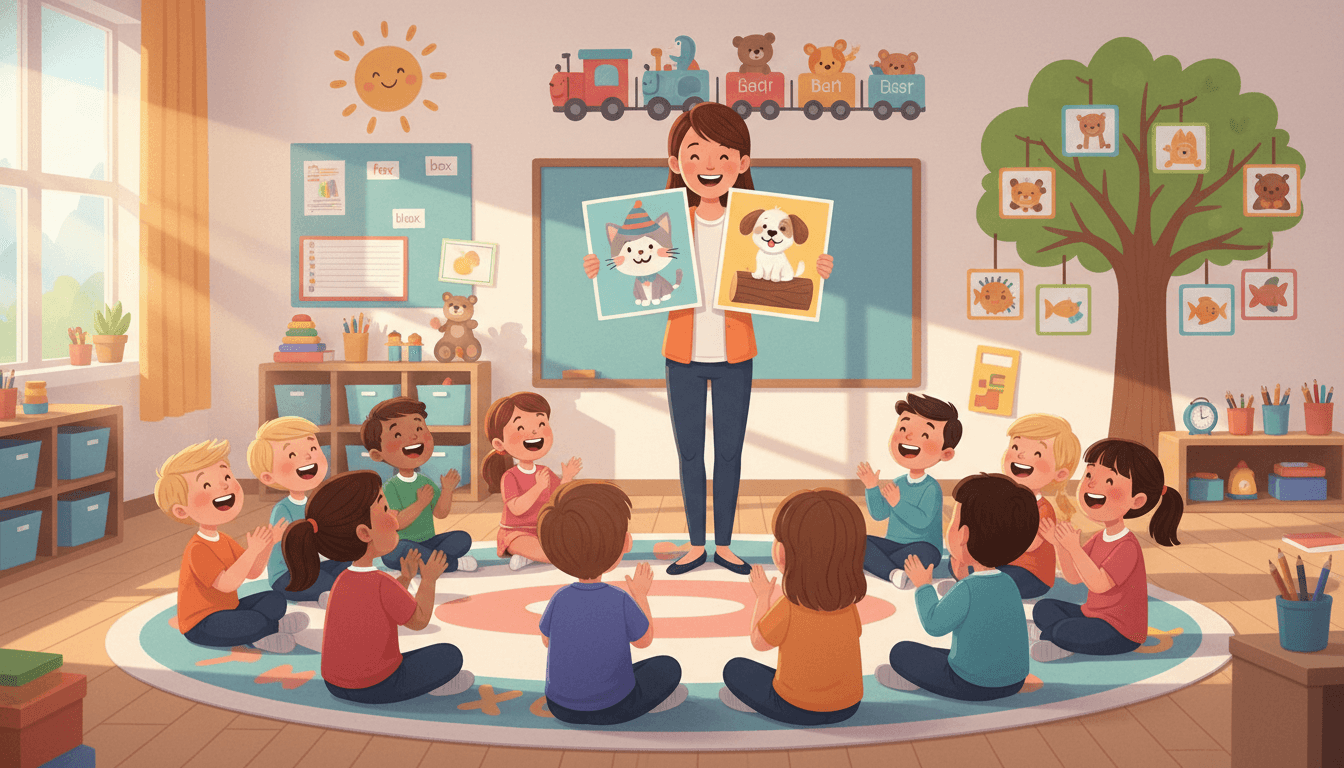
Kindergarten: Recognize and produce rhyming words (RF.K.2a). This is the first phonological awareness standard in Common Core.
1st Grade: Rhyming awareness continues through phonics - word families, rime-based decoding. The focus shifts to full phoneme segmentation and blending.
Common Misconceptions
"Spelling determines rhyming." Rhyming is about SOUND, not spelling. Night and write rhyme even though they look completely different. Love and move look similar but don't rhyme. Always emphasize sound, not appearance.
"Rhyming means the same word ending." Rain and vein rhyme even though the spelling is different. Focus on the shared sound: /ain/.
"Rhyming ability = reading readiness." Rhyming is one of many phonological awareness skills. Some children who struggle with later phoneme-level tasks pass rhyming assessments easily. Don't conflate rhyming skill with overall reading readiness.
Practice Activities
-
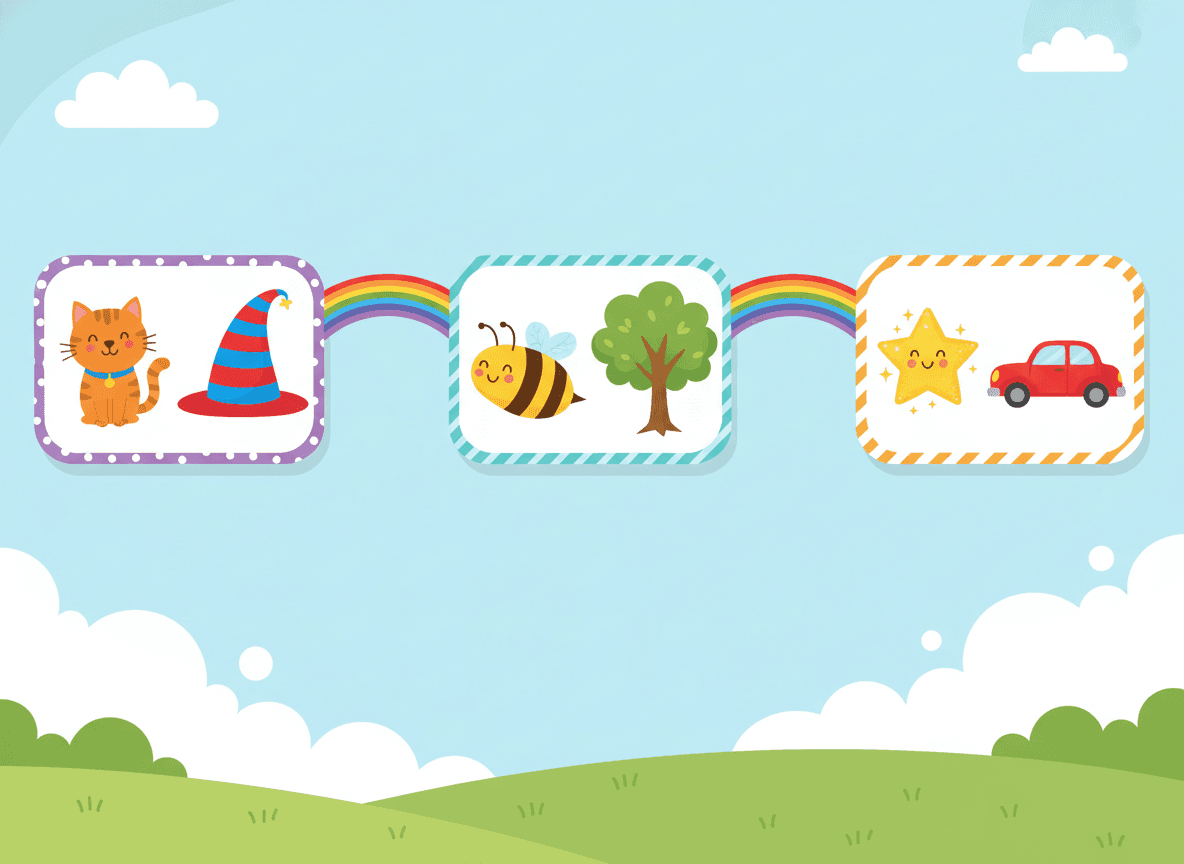
Rhyme sorting: Picture cards sorted into rhyming pairs or families.
-
Rhyming books read-aloud: Dr. Seuss, Shel Silverstein, nursery rhymes - pause before the rhyming word and let children predict it.
-
Rhyming chain: Go around the circle - each student adds a word that rhymes with the starting word until the chain breaks.
-
Find the rhyme: Circle the two pictures on a page that rhyme.
-
Word family mats: Build word families using letter cards or magnetic letters - swap the onset, keep the rime.
Frequently Asked Questions
What is the difference between rhyme recognition and rhyme production?
Rhyme recognition is easier and develops first: 'Do cat and hat rhyme? Do dog and hat rhyme?' The child identifies whether two words share the same ending sound. Rhyme production is harder and develops after recognition: 'Tell me a word that rhymes with cat.' Now the child must generate a new word with the matching sound unit. Both skills are part of phonological awareness. Rhyme recognition is typically a kindergarten expectation; rhyme production follows. Some children with phonological awareness difficulties struggle specifically with production even after mastering recognition.
How does rhyming connect to learning to read?
Rhyming tunes children into the sound structure of spoken language, particularly the rime unit (/at/ in cat, hat, bat, mat). This awareness is an early step toward phonological awareness - the ability to hear and manipulate sounds. Children who can rhyme have begun to notice that words have sound parts, which is the foundation for segmenting and blending phonemes. However, rhyming is one of the earlier, less powerful phonological awareness skills - segmenting and blending individual phonemes predicts reading success more strongly than rhyming alone.
What is onset and rime?
Every single-syllable word can be split into two parts: the onset (the initial consonant or consonant cluster before the vowel) and the rime (the vowel and everything after it). In 'cat': onset = /c/, rime = /at/. In 'string': onset = /str/, rime = /ing/. Words that share a rime rhyme: cat, hat, bat, mat, fat all share the rime /at/. Onset-rime awareness is an intermediate step between syllable awareness and full phoneme awareness. Word families in early reading instruction (at-words, an-words, op-words) are essentially rime-based groupings.
What are word families?
Word families are groups of words that share the same rime (ending sound pattern). The -at family: cat, bat, hat, mat, sat, rat. The -an family: can, man, pan, ran, tan, van. The -ight family: light, night, right, sight, tight, fight. Word families provide a bridge from rhyming (sound awareness) to phonics (sound-letter correspondence). Once a child can read 'cat,' they can decode all words in the -at family using the same pattern. Word family instruction is a foundational element of early phonics.
What about rhyming in poetry - how does that connect to the classroom?
Rhyme in poetry creates rhythm, aids memory, and makes language pleasurable - qualities that motivate young readers and listeners. Nursery rhymes, Dr. Seuss, Shel Silverstein, and traditional children's songs exploit rhyme for these effects. Exposure to rhyming poetry builds phonological awareness naturally, through enjoyment. Reading and reciting rhyming texts is one of the most effective (and joyful) ways to develop early phonological sensitivity before formal phonics instruction. The playfulness of rhyme is not a distraction from reading development - it IS reading development.
Free Rhyming Worksheets
Curriculum-aligned printable worksheets for Kindergarten – 1st Grade. Download free.
Common Core Standards