What Are ELL Students (English Language Learners)?
Taught in US schools
Key Takeaways
- ELL students are developing English proficiency while simultaneously learning grade-level academic content.
- ELL proficiency levels (Entering, Emerging, Developing, Expanding, Bridging) guide the level of language support needed.
- Effective ELL instruction uses scaffolding, visual supports, sentence frames, and peer support without watering down content.
- Home language is a cognitive asset - bilingualism strengthens academic language development, not hinders it.
What Are English Language Learners (ELL)?
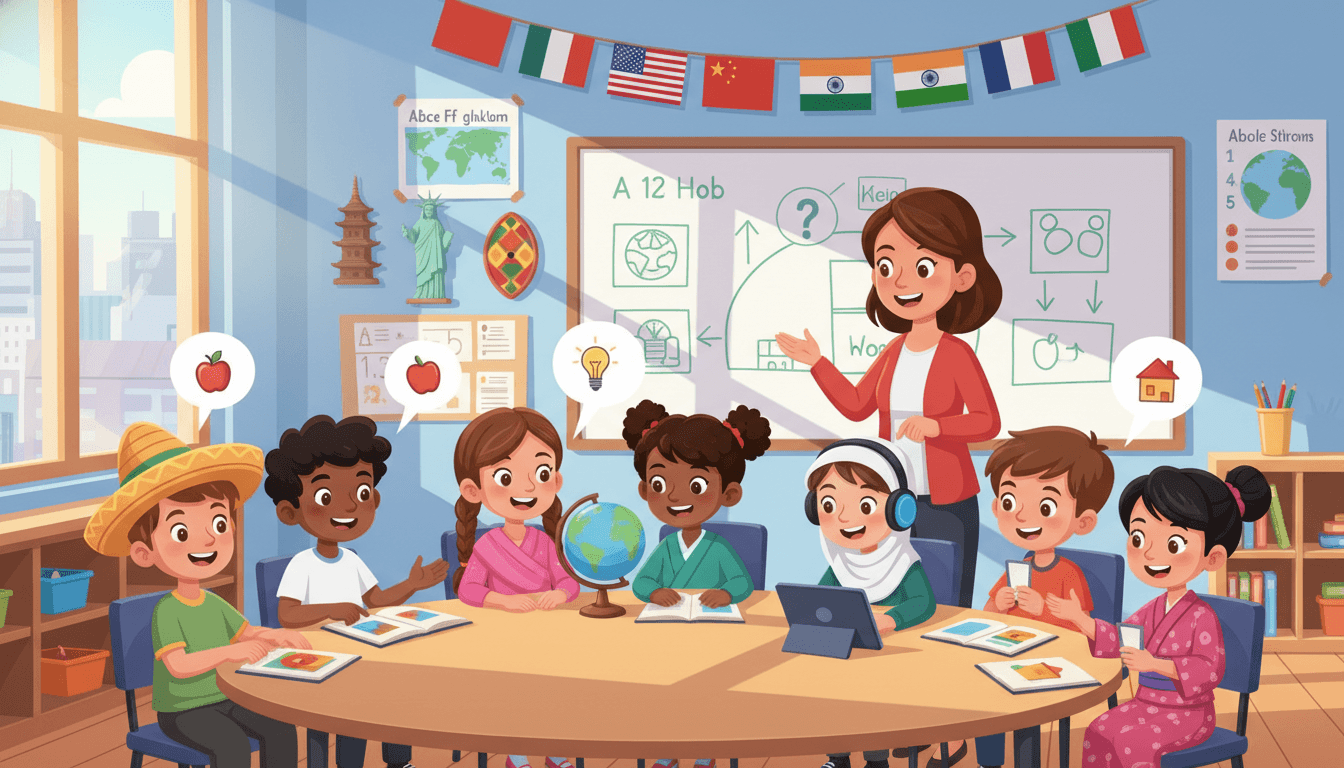
English Language Learners (ELL) are students in the process of developing proficiency in English whose home language is a language other than English. In the United States, ELL students represent the fastest-growing student population - approximately 5 million students (about 10% of K-12 enrollment) are classified as ELL.
ELL students face a uniquely challenging task: they must simultaneously learn English AND learn grade-level academic content through that emerging language. Effective ELL instruction makes grade-level content accessible without lowering expectations.
ELL Proficiency Levels
The WIDA English Language Development Standards, used by most US states, describe five proficiency levels:
Level 1: Entering Very limited English. Relies on visual supports, home language, and gestures. Can respond with single words or simple phrases.
Level 2: Emerging Can communicate in simple sentences in familiar contexts. Needs heavy scaffolding for academic tasks.
Level 3: Developing Can participate in routine classroom tasks with vocabulary and language support. Beginning to engage with academic content in English.
Level 4: Expanding Can handle most grade-level content with some scaffolding. Academic vocabulary and complex grammar still developing.
Level 5: Bridging Near grade-level English proficiency. Minimal scaffolding needed. May still struggle with advanced academic language.
Key ELL Instructional Strategies
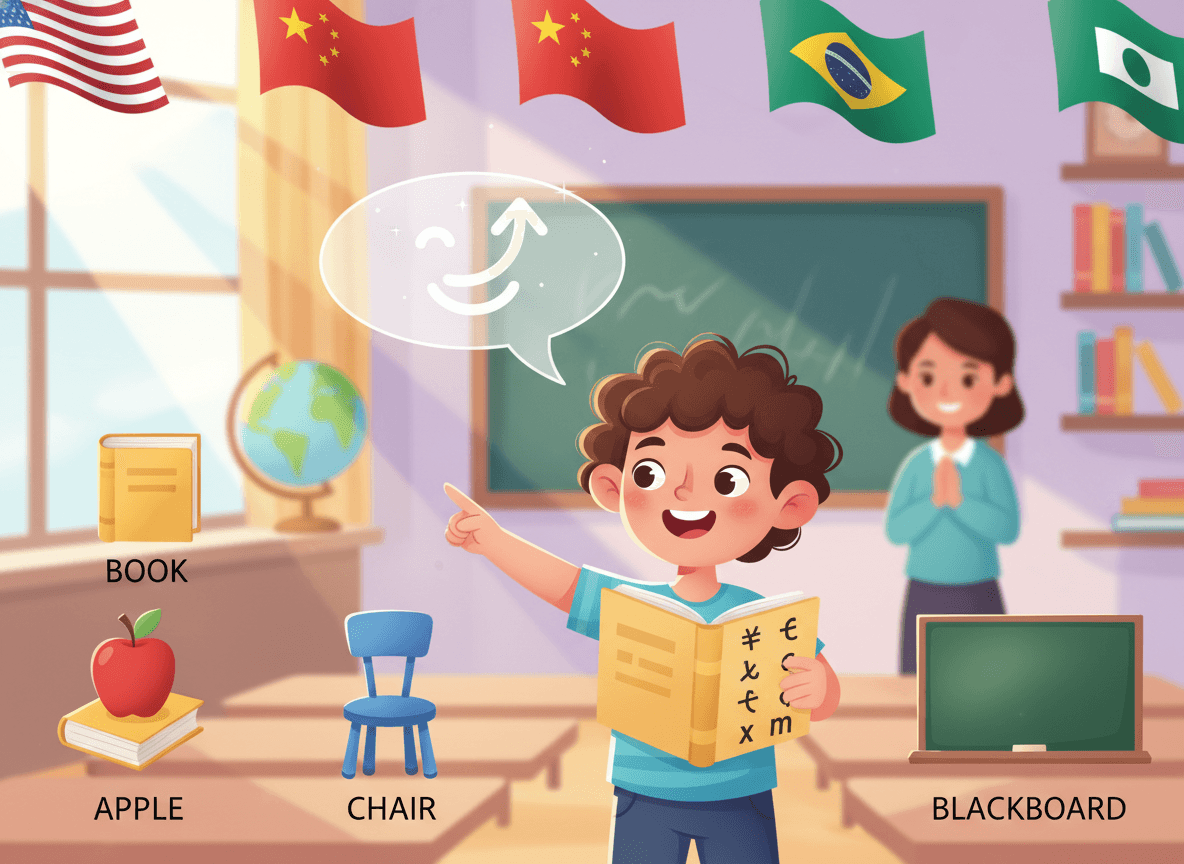
Visual supports: Pictures, diagrams, anchor charts, graphic organizers, and realia reduce language load while keeping content rigorous.
Sentence frames: Structured sentence starters ("The character felt ___ because ___") give students the language tools to participate in academic discussion without having to generate academic sentence structure from scratch.
Pre-teaching vocabulary: Introduce key content vocabulary before a lesson using visuals, examples, and context - not just definitions.
Think time and partner talk: ELL students need processing time. Pair discussion before whole-class sharing lowers the stakes and provides practice.
Cooperative structures: Think-Pair-Share, partner reading, and small group work give ELL students more language practice time per class period than whole-class formats.
Home language as asset: Allowing students to use their home language for thinking, discussing, and drafting supports comprehension and does not delay English development.
BICS vs. CALP: Why Conversational English Isn't Enough
Researcher Jim Cummins distinguishes two types of language:
Full name: Basic Interpersonal Communication Skills
Examples: Playground conversation, chatting
Development time: 1-3 years
Context: Rich context clues
The critical implication: A student who speaks English fluently on the playground may still need significant scaffolding for academic reading, writing, and discussion. BICS fluency does not equal CALP proficiency.
What Grade Are ELL Supports Used?
ELL supports are used K-12, but K-5 is particularly critical because:
- Foundational literacy is being established while language is also developing
- Academic language demands increase sharply from K to 5th grade
- Early language support prevents achievement gaps from widening
Common Misconceptions
ELL students should stop using their home language at school: Research consistently shows that strong home language development supports English acquisition. Bilingualism is a cognitive advantage. Instructional approaches that leverage the home language (translanguaging, bilingual programs) produce stronger English outcomes, not weaker ones.
If a student speaks English on the playground, they're ready for grade-level academic work without support: Conversational fluency (BICS) and academic language proficiency (CALP) are distinct. The 5-7 year timeline for CALP means many students who sound fluent still benefit from academic language scaffolding.
ELL instruction means lower expectations: Effective ELL instruction maintains grade-level content expectations while scaffolding the language - providing access, not watering down. The rigor stays; the language support changes.
Practice Activities
-
Vocabulary preview: Before a content lesson, introduce 5-7 key terms with pictures, definitions, and examples in a visual vocabulary card format.
-
Sentence frames for discussion: Provide different frame levels for different proficiency levels (entering students get more support than bridging students).
-
Partner reading with comprehension check: Pair ELL students with supportive English-proficient partners; alternate reading and summarizing.
-
Total Physical Response (TPR): Use actions and movement to teach vocabulary (students act out words) - reduces the language demand of early vocabulary learning.
-
Language objectives + content objectives: Write both for every lesson. Content objective: "Students will compare the water cycle stages." Language objective: "Students will use sequence words (first, then, finally) to describe the water cycle."
Frequently Asked Questions
What does ELL stand for, and who are ELL students?
ELL stands for English Language Learner. ELL students are children whose home language is a language other than English and who are in the process of developing English proficiency. In the US, ELL students come from hundreds of language backgrounds; Spanish is the most common home language, but ELL populations include speakers of Vietnamese, Arabic, Chinese, Somali, Portuguese, and many others. ELL status is determined by a home language survey at enrollment followed by a proficiency assessment.
What are the ELL proficiency levels?
English language proficiency is typically described in levels. The WIDA framework (used by most US states) uses five levels: (1) Entering - very limited English, relies heavily on home language and visual support. (2) Emerging - can communicate simply in familiar contexts. (3) Developing - can participate in routine academic tasks with support. (4) Expanding - can engage with grade-level content with some scaffolding. (5) Bridging - near-proficient, minimal scaffolding needed. Understanding a student's proficiency level helps teachers calibrate the right level of language support.
How should classroom teachers support ELL students?
Classroom teachers (not just ELL specialists) are responsible for ELL students' learning. Effective strategies include: providing visual supports (pictures, diagrams, graphic organizers), using sentence frames and word banks, allowing think time and partner discussion before whole-class sharing, pre-teaching academic vocabulary, making content comprehensible through demonstrations and hands-on activities, accepting and building on the home language, and using cooperative structures where language can be practiced with peers. The goal is access to grade-level content with appropriate language scaffolding.
What is the difference between BICS and CALP?
BICS (Basic Interpersonal Communication Skills) and CALP (Cognitive Academic Language Proficiency) are two types of language proficiency identified by researcher Jim Cummins. BICS is conversational fluency - the ability to chat with peers on the playground - and typically develops in 1-3 years. CALP is academic language proficiency - the ability to read textbooks, write arguments, and participate in formal academic discussion - and takes 5-7 years to develop. A common mistake is assuming an ELL student who speaks conversational English fluently is ready for unscaffolded academic work. Academic language takes much longer.
How do you assess ELL students fairly?
ELL students face a dual challenge: learning content AND learning the language of the content at the same time. Fair assessment practices include: allowing extra time, providing bilingual glossaries or dictionaries, allowing responses in the home language when assessing content knowledge (not language), using performance-based assessments (demonstrations, diagrams) alongside written tests, scaffolding test language without changing the rigor of the content, and distinguishing between errors that reflect language development vs. content misunderstanding. ELL students must not be over-identified for special education based on language difference alone.
Free English Language Learners (ELL) Worksheets
Curriculum-aligned printable worksheets for Kindergarten – 5th Grade. Download free.