What Is Emotional Intelligence?
Taught in US schools
Key Takeaways
- Emotional intelligence (EQ) is the ability to recognize, understand, manage, and use emotions.
- It includes self-awareness, self-management, social awareness, and relationship skills.
- EQ is teachable - explicit instruction, modeling, and classroom culture all contribute.
- Research links high EQ to better academic achievement, social relationships, and life outcomes.
What Is Emotional Intelligence?
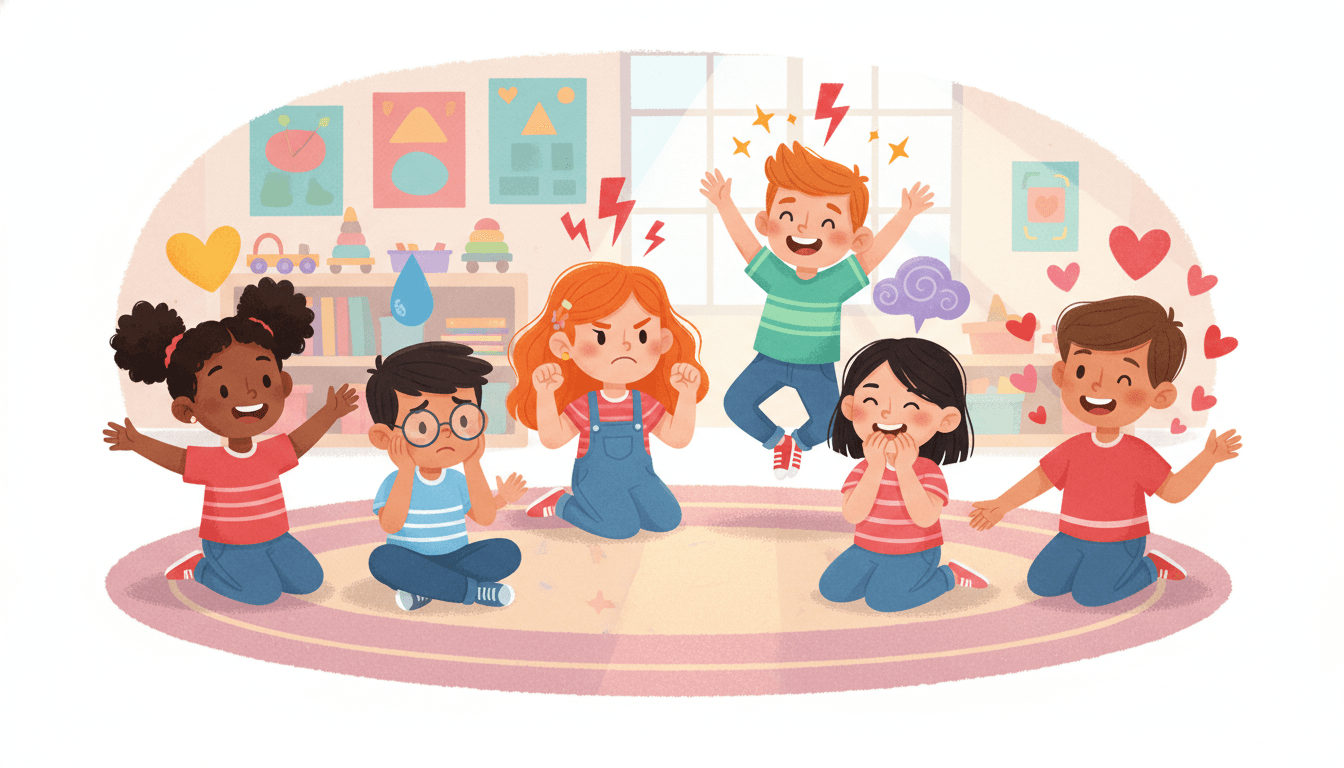
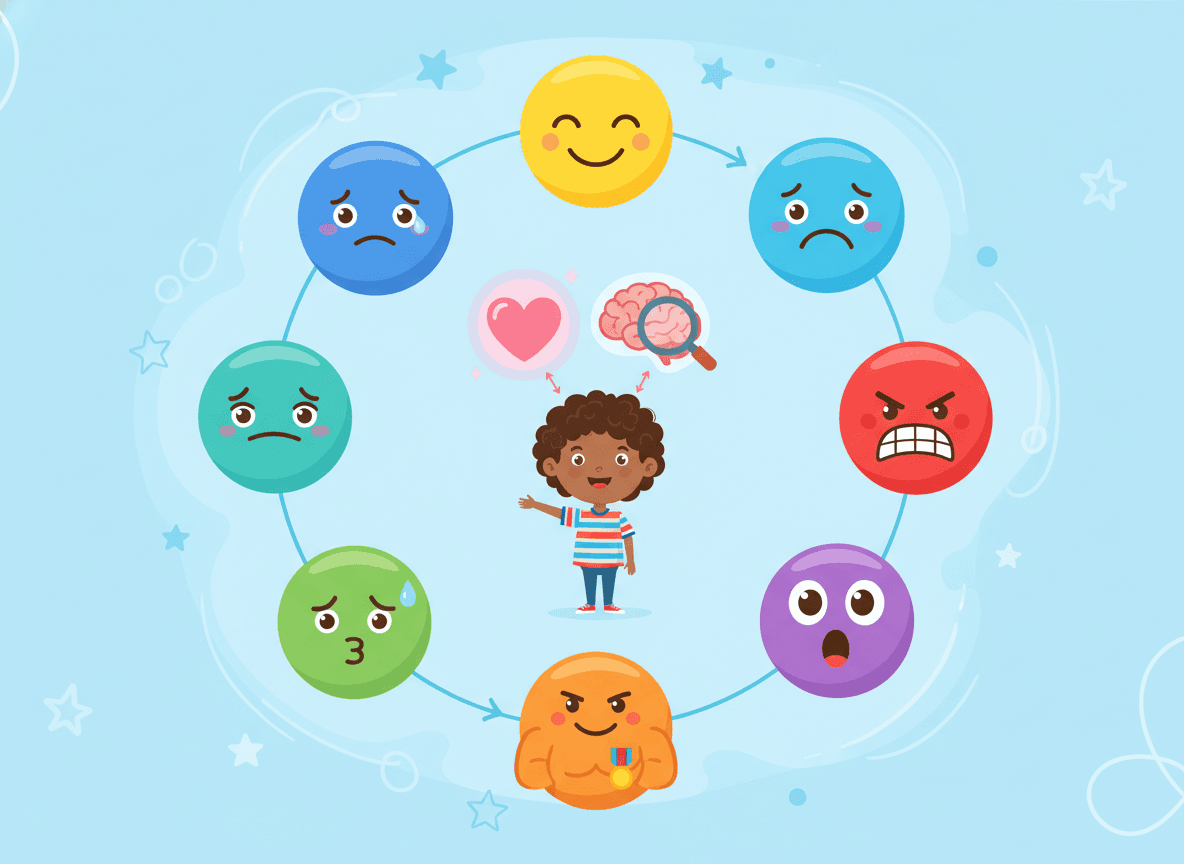
Emotional intelligence (EQ) is the ability to recognize, understand, manage, and effectively use emotions - both your own and those of the people around you.
The concept, developed by psychologists Peter Salovey and John Mayer and popularized by Daniel Goleman, suggests that success in life depends not just on cognitive ability (IQ) but on emotional and social competencies. Research consistently supports this: students with higher EQ have better relationships, perform better academically, and handle stress more effectively.
The Five Components of Emotional Intelligence
1. Self-Awareness Recognizing your own emotions as they happen. Knowing that you are feeling frustrated, excited, anxious, or proud - and understanding why. In the classroom: Students learn an emotion vocabulary. They can name feelings with specificity: not just "mad" but "disappointed," "frustrated," "embarrassed."
2. Self-Regulation Managing emotional responses so that you act thoughtfully rather than impulsively. Taking a breath before responding. Choosing not to say something hurtful even when upset. In the classroom: Students learn and practice calming strategies: deep breathing, counting to 10, asking for a break, using a calm-down corner.
3. Motivation Using emotions as fuel for goals. Persisting through frustration because you care about the outcome. Recognizing that hard feelings like boredom or anxiety are manageable, not reasons to quit. In the classroom: Connected to growth mindset - "I can't do this yet" rather than "I can't do this."
4. Empathy Recognizing and understanding other people's emotional states. Perspective-taking - imagining how a situation feels from another person's point of view. In the classroom: Literature is a powerful empathy tool - asking "How do you think the character felt? Why?" builds empathic thinking.
5. Social Skills Using emotional awareness to navigate relationships - listening actively, resolving conflicts, working collaboratively, communicating clearly, and reading social situations. In the classroom: Cooperative learning, partner work, and explicit conflict-resolution protocols all build social skills.
Building Emotional Intelligence in the Classroom
-
Model it - name your own emotions out loud: "I'm feeling frustrated right now, so I'm going to take a breath before I respond."
-
Emotion vocabulary walls - post a feeling chart with nuanced emotion words; reference it regularly.
-
Morning meetings - daily community-building routines create safety and reinforce social skills.
-
Literature discussions - use characters' emotional experiences as practice for understanding real emotional situations.
-
Restorative circles - after conflicts, structured conversations focus on feelings and impact rather than punishment.
Practice Activities
- "Emotion charades" - students draw emotion cards and act them out while others guess.
- Journaling prompt: "What emotion did you feel most strongly today? What caused it? How did you handle it?"
- Read a picture book, then ask: "What emotions did the character feel? What would you have felt? Why?"
- Role-play scenarios: "Someone takes your pencil by accident. What do you feel? What are three ways you could respond?"
Frequently Asked Questions
What is emotional intelligence?
Emotional intelligence (EQ) is the ability to recognize emotions in yourself and others, understand what those emotions mean and why they occur, manage your emotional reactions, and use emotional awareness to navigate social situations effectively. Psychologists Peter Salovey and John Mayer developed the concept; Daniel Goleman popularized it in his 1995 book.
What are the components of emotional intelligence?
The most widely used model identifies five components: (1) self-awareness - knowing your own emotions; (2) self-regulation - managing your emotional responses; (3) motivation - using emotions to pursue goals; (4) empathy - recognizing and understanding others' emotions; and (5) social skills - managing relationships effectively. In K-5, these are taught as naming feelings, calming strategies, empathy, and conflict resolution.
Can emotional intelligence be taught in school?
Yes. Research shows that explicit social-emotional learning (SEL) programs that teach emotional skills improve academic achievement, reduce behavioral problems, and improve classroom climate. Schools don't need a separate EQ curriculum - emotional intelligence is taught through how teachers model emotional language, how they handle conflicts, how they build relationships with students, and how they structure opportunities for students to practice emotional skills.
Free Emotional Intelligence Worksheets
Curriculum-aligned printable worksheets for Kindergarten – 5th Grade. Download free.