What Is Social-Emotional Learning (SEL)?
Taught in US schools
Key Takeaways
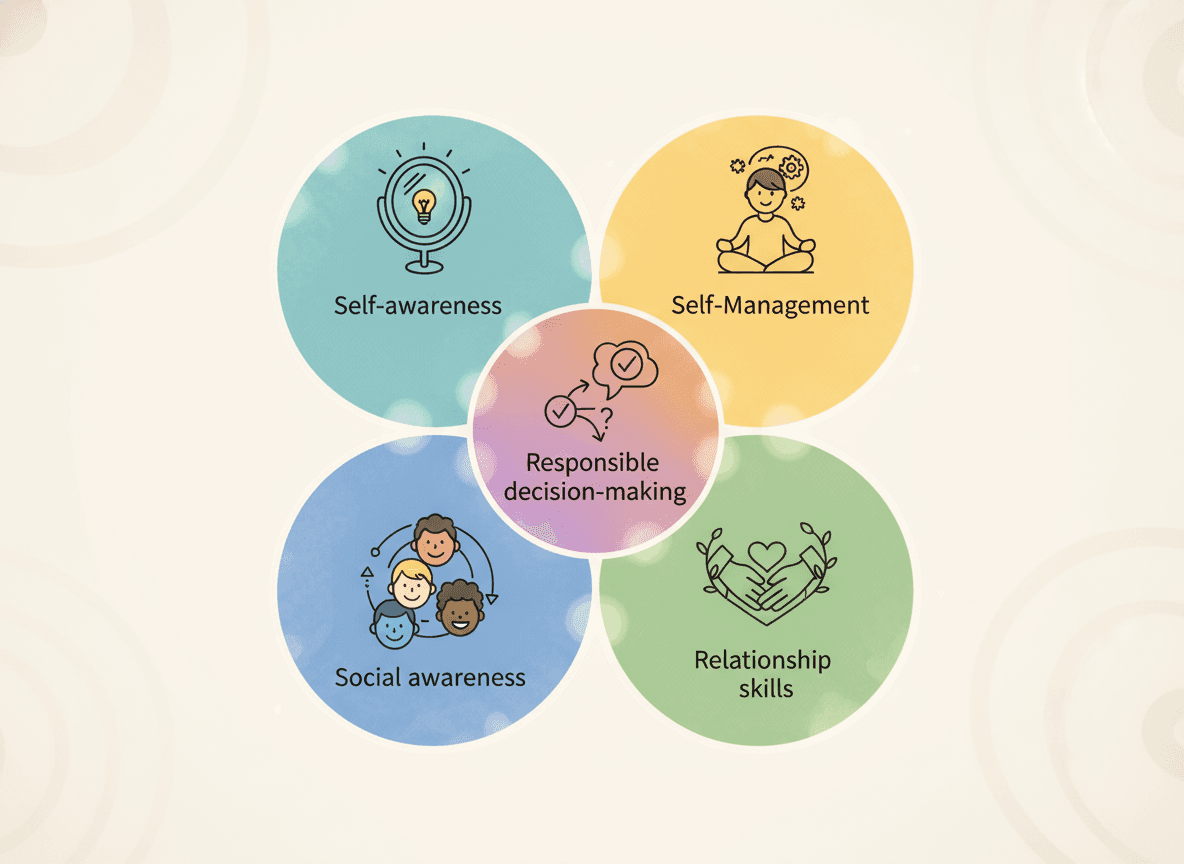
- SEL teaches five core competencies: self-awareness, self-management, social awareness, relationship skills, and responsible decision-making.
- Research shows SEL programs improve academic achievement by an average of 11 percentile points.
- SEL is not a separate subject - it is woven into classroom culture, routines, and relationships.
- The CASEL framework (Collaborative for Academic, Social, and Emotional Learning) is the most widely used SEL model.
What Is Social-Emotional Learning?
Social-emotional learning (SEL) is the process by which children and adults develop the knowledge, skills, and attitudes needed to understand and manage emotions, build healthy relationships, make responsible decisions, and achieve personal and academic goals.
SEL addresses the human side of learning - the part that academic content alone cannot reach. A student who cannot manage frustration cannot persist through challenging work. A student who cannot read social cues cannot collaborate effectively. A student who doesn't know how to resolve conflict becomes trapped in it.
The CASEL Five Core Competencies
The Collaborative for Academic, Social, and Emotional Learning (CASEL) is the leading organization in SEL research and practice. Their framework identifies five core competencies:
1. Self-Awareness Recognizing your own emotions, thoughts, and values, and understanding how they influence behavior. Knowing your strengths and limitations. Having a growth mindset. In the classroom: Students name their feelings, reflect on their behavior, and identify their strengths.
2. Self-Management Regulating emotions and behaviors, setting and working toward goals, managing stress, and maintaining motivation through challenges. In the classroom: Students use calming strategies, set learning goals, and persist through difficulty.
3. Social Awareness Understanding others' perspectives, showing empathy, and appreciating diversity. Recognizing social norms and feeling a sense of belonging. In the classroom: Literature discussions, community circles, and perspective-taking activities build empathy.
4. Relationship Skills Communicating clearly, listening actively, cooperating, negotiating conflict, and asking for help. In the classroom: Partner work, group projects, and explicit conflict-resolution protocols practice relationship skills.
5. Responsible Decision-Making Making ethical, constructive choices about personal and social behavior. Evaluating consequences, considering others' wellbeing, and taking responsibility. In the classroom: Class meetings, classroom government, and discussions of real dilemmas practice decision-making.
SEL and Academic Achievement
SEL is not in competition with academic goals - it enables them. A meta-analysis of 213 school-based SEL programs (Durlak et al., 2011) found that students in SEL programs showed:
- 11 percentile point improvement in academic achievement
- Better school attendance
- More positive classroom behavior
- Fewer mental health problems
- Better peer relationships and school climate
The mechanism is straightforward: students who feel emotionally safe, socially connected, and able to manage their emotions are better able to focus, learn, and engage with challenging academic work.
Practice Activities
- Morning meeting: a daily community-building ritual that builds all five SEL competencies in 20-30 minutes.
- Class meetings: student-led discussions of community issues using structured problem-solving (Describe the problem → Generate solutions → Choose and try a solution → Reflect).
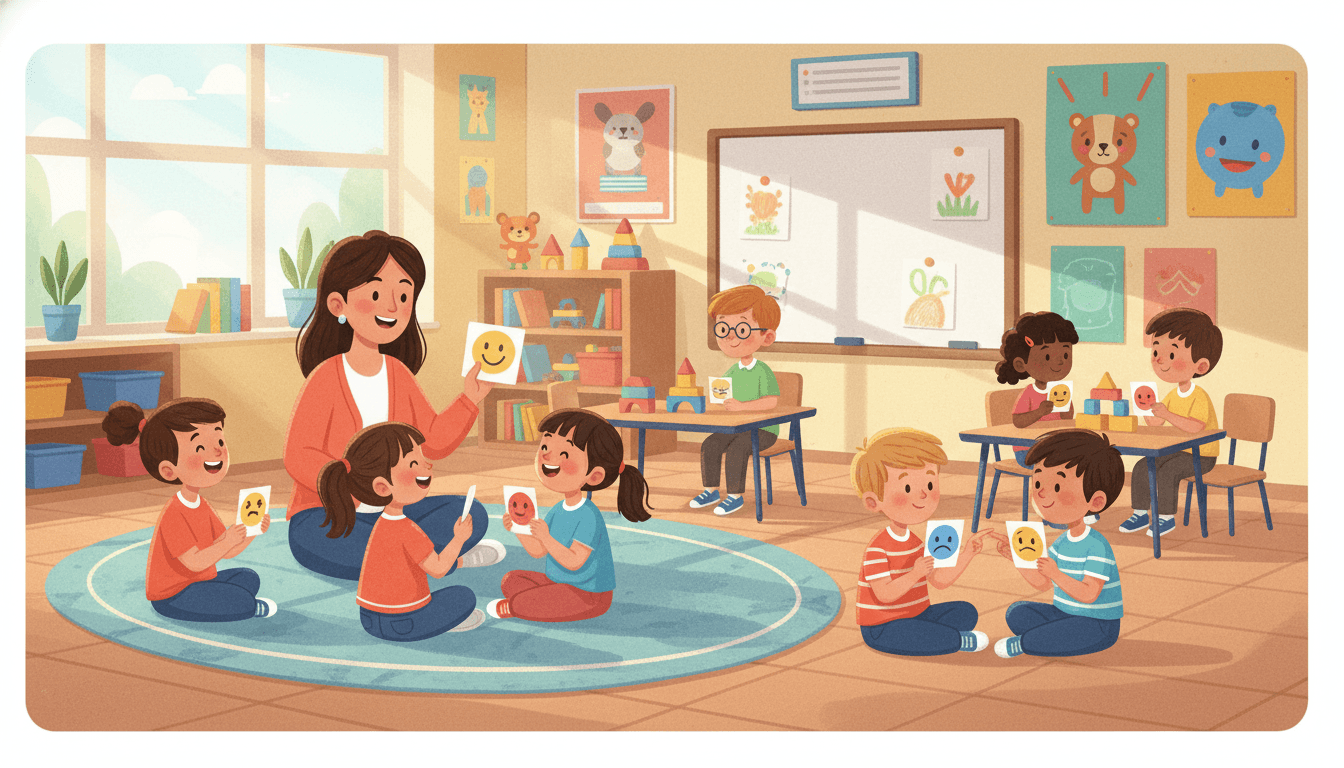
- Emotion check-ins: brief daily practice - students check in about how they're feeling (mood meter, emoji, word, or number scale).
- Role-play conflict resolution: practice the sequence: Stop + breathe → Name feelings → Say what you need → Listen to the other person → Find a solution together.
Frequently Asked Questions
What is social-emotional learning?
Social-emotional learning (SEL) is the process by which children and adults develop the skills, attitudes, and knowledge needed to manage emotions, build relationships, make responsible decisions, and achieve both personal and academic goals. SEL teaches the human skills that classroom content cannot: how to handle frustration, work with others, empathize, and make thoughtful choices.
What are the five SEL competencies?
The CASEL framework identifies five core SEL competencies: (1) Self-awareness - recognizing your own emotions, strengths, and values; (2) Self-management - regulating emotions, setting goals, and staying motivated; (3) Social awareness - understanding others' perspectives and showing empathy; (4) Relationship skills - communicating clearly, collaborating, and resolving conflict; (5) Responsible decision-making - making ethical, constructive choices about behavior.
Does SEL actually improve academic outcomes?
Yes. A landmark 2011 meta-analysis by Durlak and colleagues examined 213 school-based SEL programs involving over 270,000 students and found that SEL programs improved academic achievement by an average of 11 percentile points. Students in SEL programs also showed better attendance, fewer disciplinary problems, and improved mental health. The key finding: when students' emotional and social needs are met, academic learning improves.
Free Social-Emotional Learning Worksheets
Curriculum-aligned printable worksheets for Kindergarten – 5th Grade. Download free.