What Is Self-Regulation in School?
Taught in US schools
Key Takeaways
- Self-regulation is the ability to manage emotions, attention, and behavior to achieve a goal.
- It is an executive function skill - developed in the prefrontal cortex and maturing through early adulthood.
- Self-regulation predicts academic success as strongly as IQ in early childhood.
- It can be taught and strengthened through explicit instruction, modeling, and consistent practice.
What Is Self-Regulation?
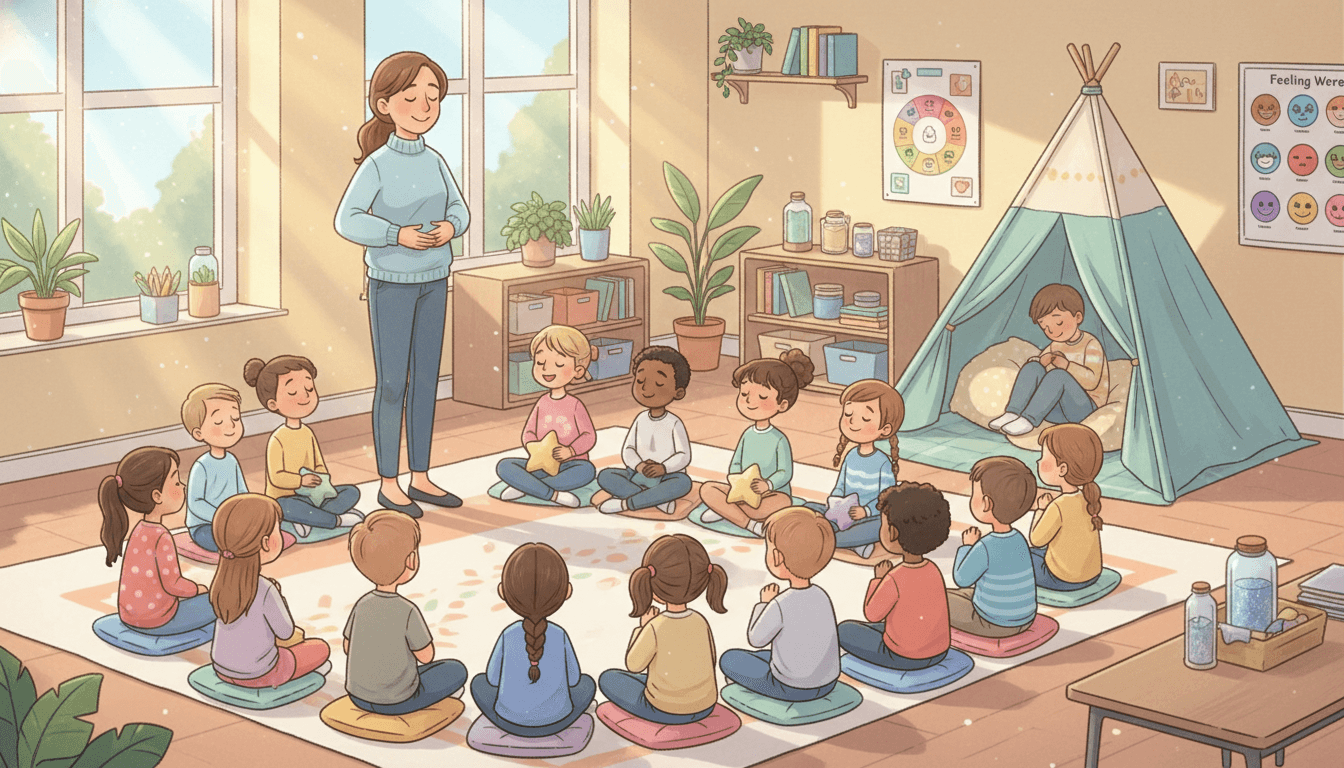
Self-regulation is the ability to manage your own emotions, attention, and behavior in order to pursue a goal. It is the ability to say to yourself: "I'm frustrated right now, but I'm going to take a breath and keep working." Or: "I want to call out the answer, but I'm going to wait my turn."
Self-regulation is a collection of executive function skills - abilities that are managed primarily by the prefrontal cortex of the brain, which continues developing until approximately age 25. This is why self-regulation is genuinely hard for children - their brains are still building the architecture for it.
What Self-Regulation Looks Like in School
Self-regulation in academic settings includes:
Emotional regulation: Managing the intensity and expression of emotions. Feeling frustrated but not throwing materials. Feeling excited but staying calm enough to work.
Attention regulation: Choosing where to direct your attention and maintaining it. Staying focused on a task even when something more interesting is happening nearby.
Behavioral regulation: Controlling impulses. Waiting your turn. Raising your hand. Not calling out. Walking instead of running.
Cognitive regulation: Monitoring your own thinking. Checking your work. Adjusting your approach when something isn't working.
Why It Matters So Much
Research by Walter Mischel (the famous "marshmallow test") and many subsequent studies has shown that self-regulation in early childhood is one of the strongest predictors of academic achievement and life outcomes - sometimes more predictive than IQ.
Students who can regulate their attention, emotions, and impulses:
- Sustain focus on challenging work longer
- Recover from setbacks more quickly
- Collaborate more effectively with peers
- Make better decisions under pressure
- Develop stronger relationships with teachers
How Self-Regulation Is Developed
Self-regulation is teachable - but it develops through experience, not lecture. Key supports:
Consistent, predictable environments - routines reduce the regulatory load; when students know what's happening next, they don't have to spend energy managing uncertainty.
Co-regulation - adults who stay calm and regulated when students are dysregulated provide the scaffolding that helps students regulate themselves. The teacher's nervous system helps regulate the student's.
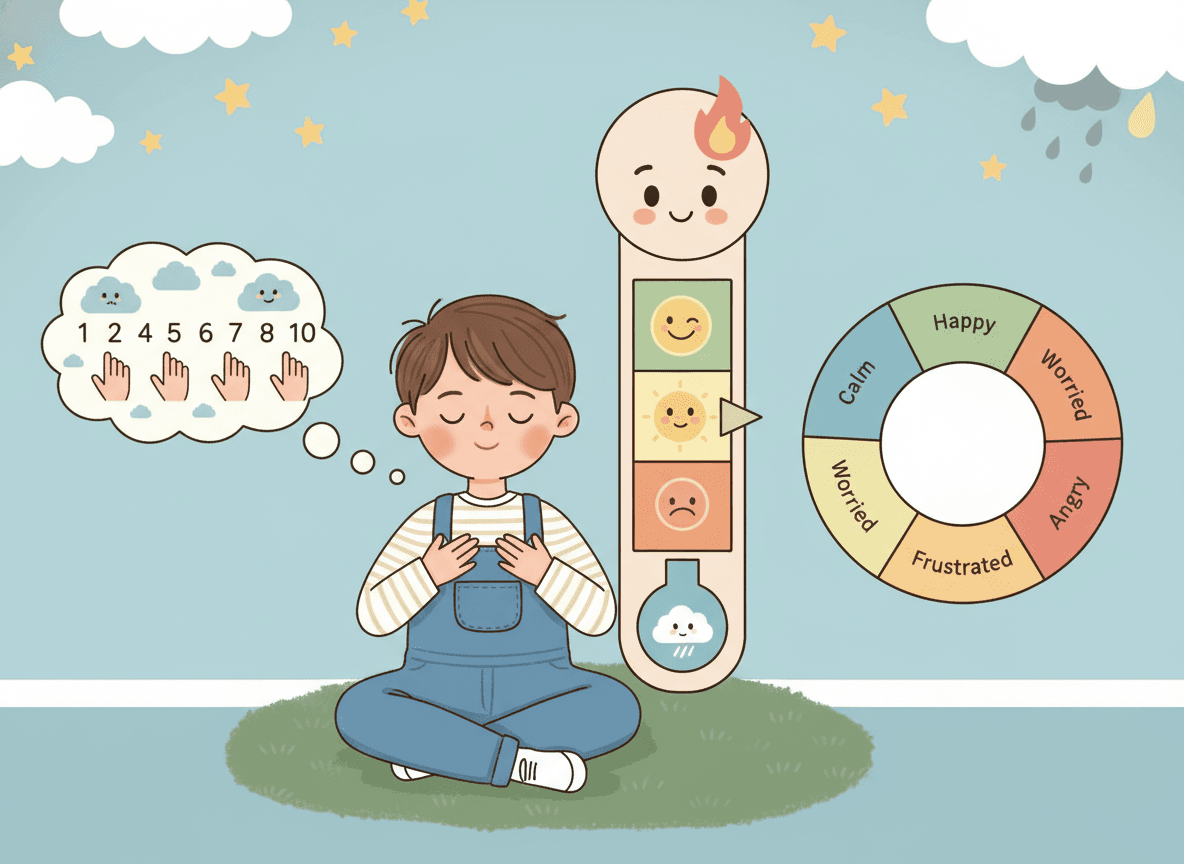
Explicit strategy instruction - teach specific strategies: belly breathing, counting to 10, "zones of regulation," sensory tools, and movement breaks.
Practice opportunities - every time students wait their turn, choose to keep working when frustrated, or calm down after a conflict, they are building the neural pathways of self-regulation.
Practice Activities
- Teach the "Zones of Regulation" framework: Blue (low energy), Green (ready to learn), Yellow (heightened/excited), Red (intense emotions). Students learn to identify their zone and what to do in each.
- Practice the "stop, breathe, think" sequence regularly - not just in conflicts, but as a routine.
- Role-play scenarios: "What would you do if someone bumped your tower and it fell?" Students practice choosing a regulated response before they're actually dysregulated.
- Build self-monitoring into daily work: students set one goal for managing their attention or behavior each morning and reflect at the end of the day.
Frequently Asked Questions
What is self-regulation?
Self-regulation is the ability to monitor and manage your own emotions, thoughts, and behaviors in order to pursue a goal. In school, it means being able to stay focused during a lesson even when distracted, calm down after a conflict instead of escalating, persist through frustration instead of giving up, and make intentional choices rather than impulsive ones.
Why is self-regulation important for academic success?
Research shows that self-regulation in early childhood predicts academic achievement as strongly as IQ - and in some studies, more strongly. Students who can regulate their attention, emotions, and impulses are better able to sustain focus on tasks, manage the frustration of challenging work, collaborate with peers, and make good decisions. These skills matter across every subject and social context.
How can teachers support self-regulation development?
Teachers support self-regulation by: teaching and modeling emotional vocabulary (naming feelings); providing consistent, predictable routines (reduces the regulatory demand); using co-regulation strategies (staying calm and responsive when a student is dysregulated); teaching and practicing specific calming strategies (breathing, counting, taking a break); using natural wait time and turn-taking structures that practice impulse control; and celebrating effort and persistence, not just outcome.
Free Self-Regulation Worksheets
Curriculum-aligned printable worksheets for Kindergarten – 5th Grade. Download free.