What Is an Exit Ticket?
Taught in US schools

Key Takeaways
- An exit ticket is a short formative assessment (1-3 questions) completed at the END of a lesson to check student understanding before dismissal.
- Exit tickets give teachers immediate feedback about who understood the lesson, who is confused, and what misconceptions need to be addressed.
- Common exit ticket formats include 3-2-1 (3 things learned, 2 questions, 1 connection), a quick problem to solve, and an emoji or thumb check-in.
What Is an Exit Ticket?
An exit ticket is a brief formative assessment given at the end of a lesson. Before students leave class (or before the class transitions to the next activity), they answer 1 to 3 short questions or respond to a prompt. The teacher collects the responses and uses them to understand what students learned - and what they didn't.
Exit tickets are one of the most widely used formative assessment tools in K–12 education because they are fast, low-stakes, and immediately actionable.
Purpose of Exit Tickets
Exit tickets serve several key purposes:
-
Check for understanding - did students actually learn what was taught?
-
Identify misconceptions - what do students think is correct that isn't?
-
Inform instruction - what does tomorrow's lesson need to address?
-
Give students a voice - students have a moment to communicate confusion or questions.
-
Metacognition - students reflect on their own learning.
Common Exit Ticket Formats
3-2-1
Students write:
-
3 things they learned
-
2 questions they still have
-
1 connection to something they already knew
Quick Problem
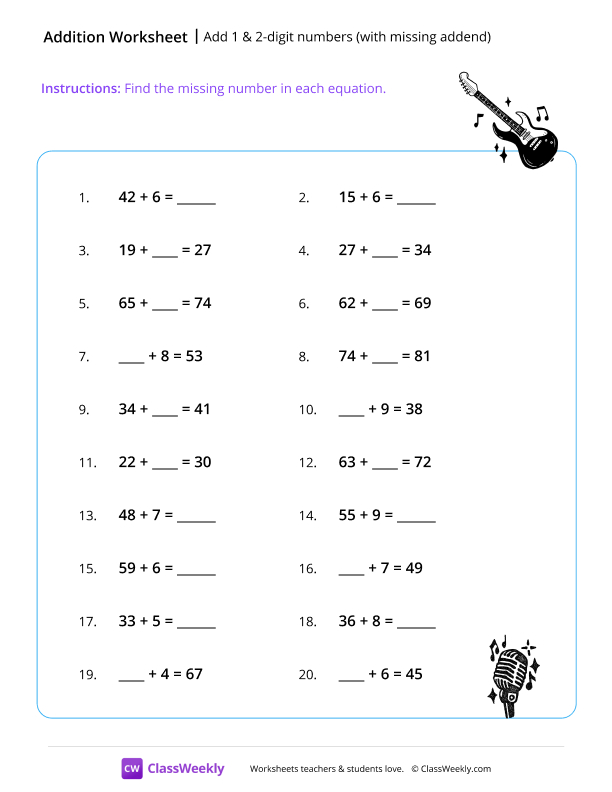
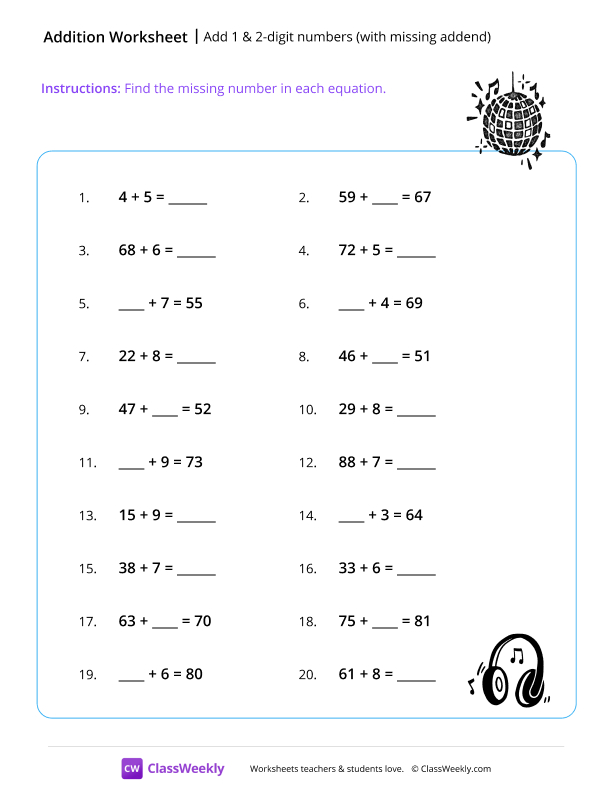
Students solve one practice problem similar to what was taught. Fast, concrete, specific.
One-Sentence Summary
Students write a single sentence summarizing the main idea of the lesson.
Question Card
Students write one question they still have about today's topic.
Emoji/Thumb Check-In
Students circle or draw a face/thumb: "I understand completely" / "I understand most of it" / "I'm confused." Good for K-2 and quick whole-class pulse checks.
"The Muddiest Point"
Students write what was most confusing or unclear. Powerful for identifying consistent misconceptions across the class.
What Exit Tickets Are NOT
-
A quiz - exit tickets are ungraded and low-stakes
-
A homework preview - they should be completable in 1-5 minutes in class
-
A reward or punishment - every student completes one, every lesson
How to Use Exit Ticket Data
The real power of exit tickets is in what happens after they are collected:
- Sort - divide responses into piles: Got It / Almost / Not Yet
- Notice patterns - which questions or concepts confused most students?
- Plan - adjust the next lesson based on what the data shows:
- Most students got it → move on
- About half got it → spend 5-10 minutes re-teaching before continuing
- Few students got it → reteach the concept using a different approach
If exit ticket data is never looked at, the exit ticket has no value.
Exit Tickets vs. Other Formative Assessments
Exit ticket: End of lesson - 1-3 questions - Quick comprehension check
Observation: During lesson - Teacher notes - Real-time monitoring
Thumbs up/down: During lesson - Nonverbal - Whole-class pulse check
Benchmark: 3x per year - Standardized test - Progress monitoring
Practice Activities
- Design an exit ticket for a specific lesson - write two versions: one for early finishers (higher-level Bloom's) and one for students who struggled.
- Sort a set of sample exit ticket responses into Got It / Almost / Not Yet groups and discuss: what would you do next?
- Introduce the 3-2-1 format to students and model completing one together before they do it independently.
- Use exit ticket data from a single lesson to write a "data memo" to yourself: who needs a small group? What do I re-teach tomorrow?
- Try a digital exit ticket tool and compare the experience (speed, data summary) to paper-based collection.

Frequently Asked Questions
How is an exit ticket different from a quiz?
An exit ticket is short (1-5 minutes), informal, and ungraded - it is not meant to evaluate students but to inform the teacher. A quiz is typically longer, more formal, and graded. Exit tickets are formative (ongoing checks during learning); quizzes are often summative (assessments of learning at the end of a unit). The low-stakes nature of an exit ticket encourages honest responses from students.
What should teachers do with exit ticket data?
After collecting exit tickets, teachers sort them into groups: students who clearly got it, students who partially got it, and students who are still confused. This data directly informs the next lesson: the teacher may start with a brief re-teach for the confused group while others work independently, pull a small group, or adjust the pacing. Exit tickets only work as a formative tool if the data is actually used.
Can exit tickets be digital?
Yes - many teachers use digital tools like Google Forms, Padlet, Seesaw, Kahoot, or Mentimeter to collect exit ticket responses digitally. Digital exit tickets allow for faster data sorting and can generate automatic summaries. They also work well for distance or hybrid learning. Both paper and digital formats are effective; the choice depends on classroom context and available technology.
Free Exit Ticket Worksheets
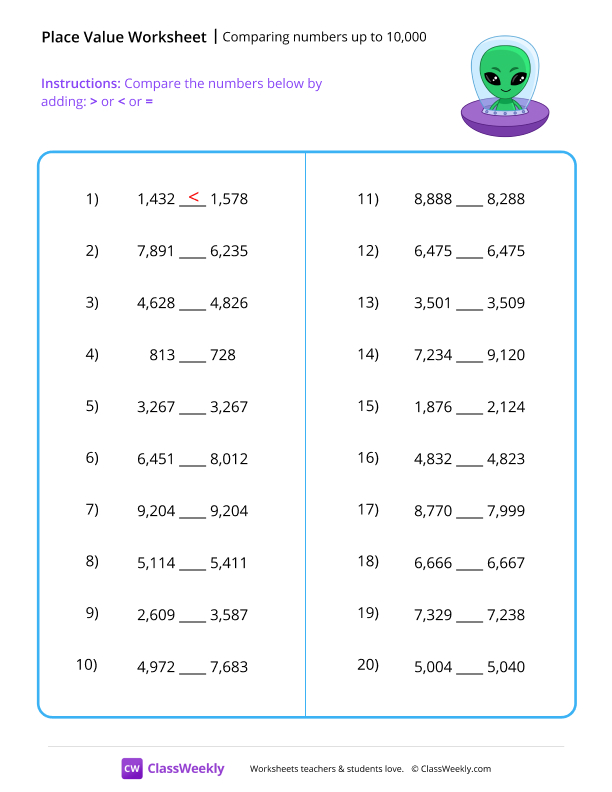
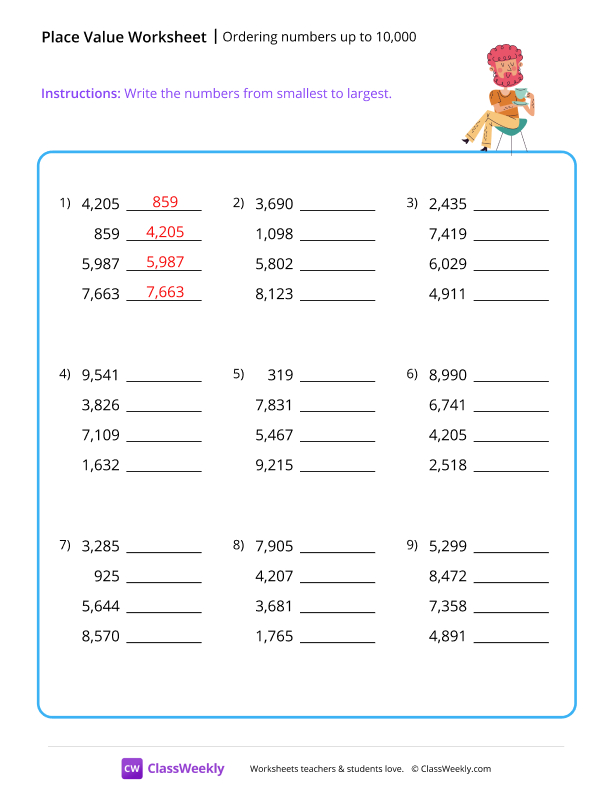
Curriculum-aligned printable worksheets for Kindergarten – 5th Grade. Download free.