Who Were Lewis and Clark?
Taught in US schools
Key Takeaways
- Meriwether Lewis and William Clark led the Corps of Discovery (1804-1806) commissioned by President Jefferson to explore the Louisiana Purchase territory and find a route to the Pacific Ocean.
- Sacagawea, a Shoshone woman, joined the expedition as a guide and interpreter and was crucial to its success - her presence signaled peaceful intentions to many tribes they encountered.
- The expedition traveled about 8,000 miles, documented hundreds of plant and animal species, and produced detailed maps that strengthened U.S. claims to the Pacific Northwest.
Who Were Lewis and Clark?
Meriwether Lewis (1774–1809) and William Clark (1770–1838) were the leaders of the Corps of Discovery - the first American overland expedition to the Pacific Coast and back. Commissioned by President Thomas Jefferson in 1803 and completed in 1806, their journey of approximately 8,000 miles is one of the great explorations in American history.
Why Jefferson Sent the Expedition
In 1803, President Jefferson completed the Louisiana Purchase, buying roughly 828,000 square miles of territory from France. This vast land west of the Mississippi River was largely unknown to European Americans.
Jefferson had three main goals for the expedition:
- Find a navigable water route to the Pacific Ocean (a hoped-for "Northwest Passage" for trade)
- Produce scientific records of plants, animals, geology, and climate
- Establish relations with Native American nations and assert U.S. claims to the Pacific Northwest
The Two Leaders
Meriwether Lewis was Jefferson's personal secretary and a skilled frontiersman. Jefferson selected him to lead the expedition and asked him to choose a co-commander.
William Clark was Lewis's friend and a former military officer with expertise in mapmaking and wilderness survival. Together, they commanded approximately 33 people, known as the Corps of Discovery.
The Journey (1804-1806)
May 1804: Departed Camp Dubois, near St. Louis, Missouri
Summer 1804: Traveled up the Missouri River
Winter 1804-05: Spent winter at Fort Mandan (present-day North Dakota)
Spring 1805: Continued west with Sacagawea and Charbonneau
August 1805: Crossed the Rocky Mountains (most grueling portion)
November 1805: Reached the Pacific Ocean
September 1806: Returned to St. Louis after 28 months
Sacagawea: Essential Partner
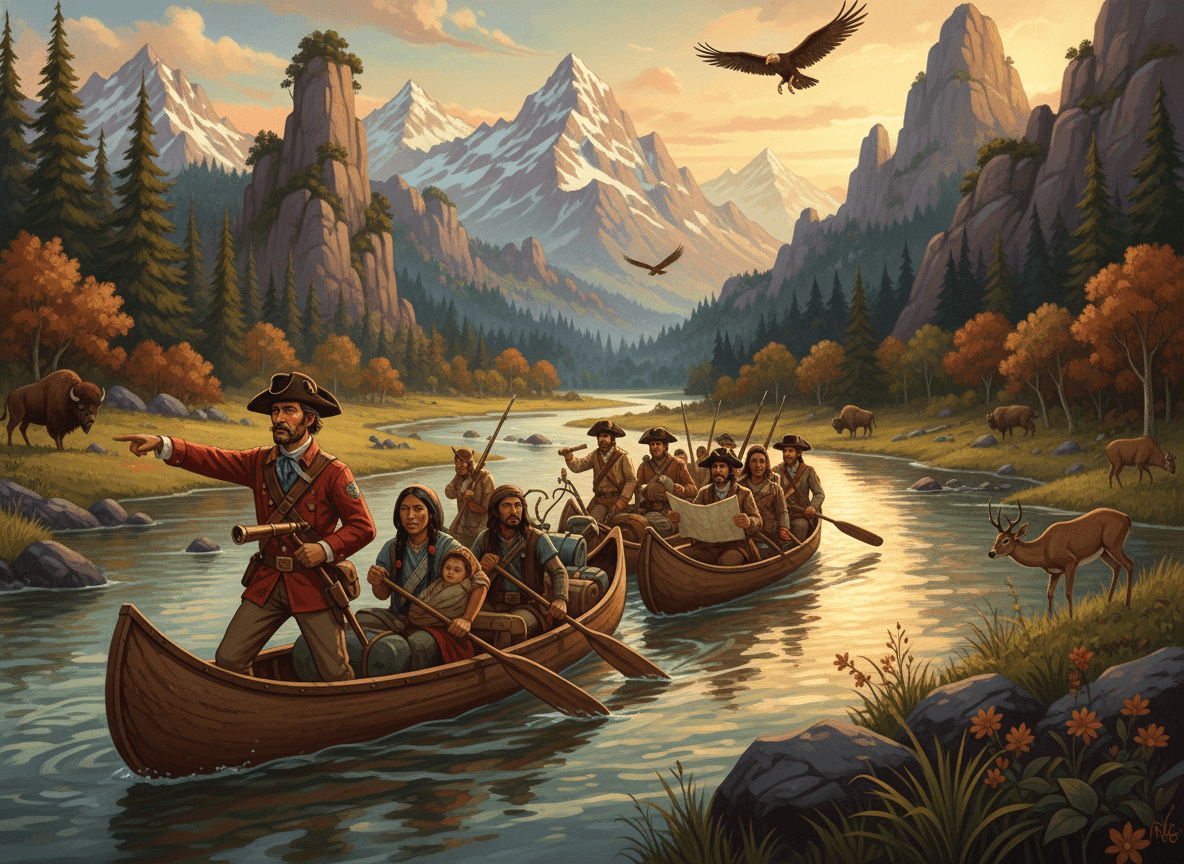
Sacagawea (c. 1788–1812 or 1884) was a Shoshone woman who joined the expedition at Fort Mandan with her husband Toussaint Charbonneau, carrying her infant son Jean-Baptiste. Her contributions were invaluable:
- Served as a Shoshone interpreter, helping the expedition obtain horses to cross the Rockies
- Recognized landmarks in her homeland, helping navigation
- Her presence as a young mother with an infant signaled peace to tribes they encountered
- Negotiated with her own brother, a Shoshone chief, to obtain critical horses
Scientific Discoveries
The Corps of Discovery documented:
- Approximately 178 new plant species
- Approximately 122 new animal species to European science - including the grizzly bear, pronghorn antelope, mountain goat, and prairie dog
- Detailed maps of the Missouri River, Rocky Mountains, and Columbia River
The Rocky Mountains: A Surprise
Lewis and Clark discovered that the Rockies were far larger than Jefferson had hoped. There was no easy water route to the Pacific - the mountains required weeks of brutal overland travel. The Northwest Passage that Jefferson had imagined did not exist.
Legacy
The expedition:
- Produced the first detailed maps of the western United States
- Opened the way for future American settlement of the West
- Strengthened U.S. claims to the Pacific Northwest (disputed with Britain)
- Established relationships - not always lasting - with dozens of Native American nations
Practice Activities
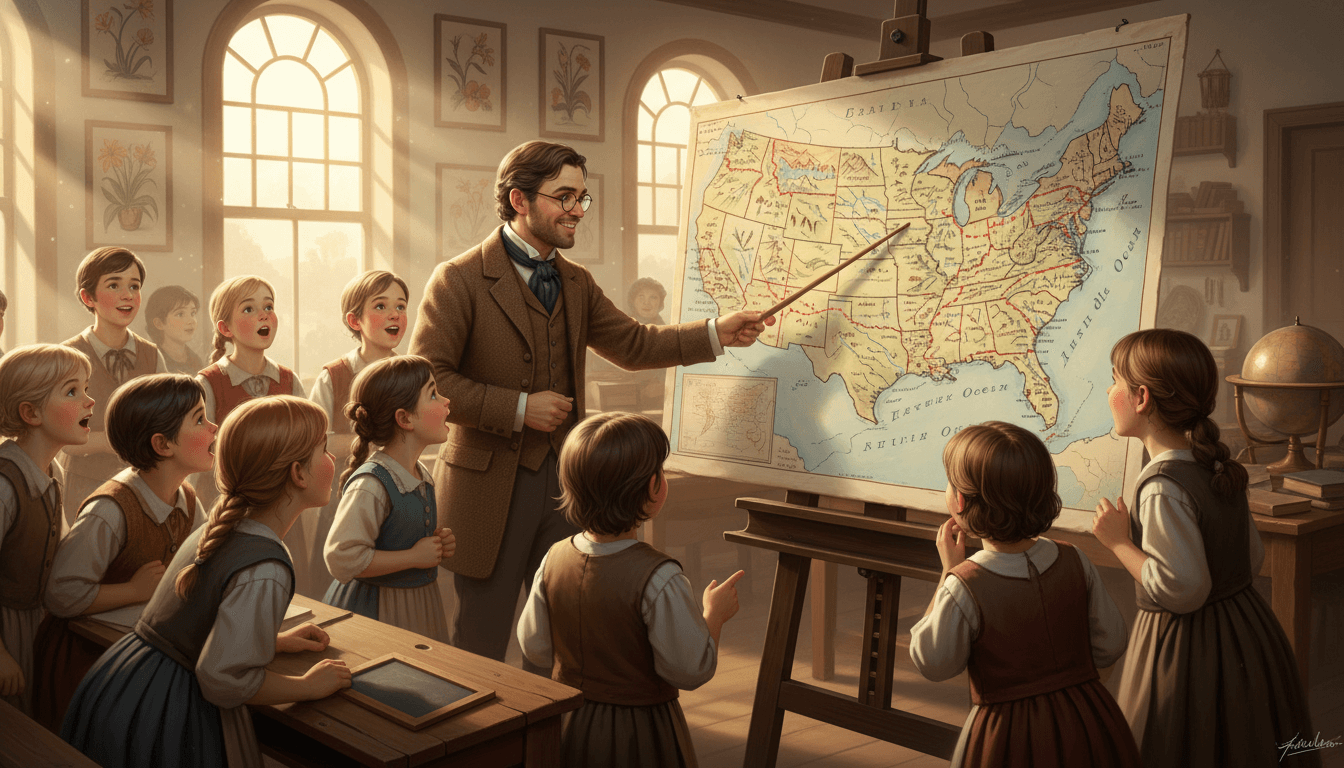
- Trace the Lewis and Clark route on a map - identify major landmarks: Fort Mandan, the Rocky Mountains, the Columbia River, the Pacific Coast.
- Research Sacagawea's life before and after the expedition - what do we know? What is uncertain?
- Read a journal entry from Lewis or Clark and analyze it as a primary source - what do they describe? What perspective is missing?
- Compare what Jefferson hoped to find vs. what was actually discovered - how did the reality differ from the expectation?
- Connect to the Louisiana Purchase: show how much territory the expedition covered on a map that also shows the original 13 states.
Frequently Asked Questions
Why did President Jefferson send Lewis and Clark west?
In 1803, President Jefferson completed the Louisiana Purchase, roughly doubling the size of the United States. He needed the territory explored and mapped. He also hoped Lewis and Clark would find a water route connecting the Missouri River to the Pacific Ocean (a 'Northwest Passage') that could serve as a trade route. Additionally, Jefferson wanted detailed scientific reports on the plants, animals, and peoples of the West, and he wanted to strengthen U.S. claims to the Pacific Northwest against British and Spanish interests.
Who was Sacagawea?
Sacagawea was a Shoshone woman who was enslaved by a Hidatsa raiding party as a child and later became the wife of French-Canadian fur trader Toussaint Charbonneau. Lewis and Clark hired Charbonneau as an interpreter for the expedition, and Sacagawea accompanied them carrying her infant son Jean-Baptiste. She served as an interpreter with Shoshone bands, recognized landmarks in her homeland, helped the expedition obtain horses, and her presence as a young mother with a baby signaled to tribes that the expedition was peaceful, not a war party.
What did Lewis and Clark find?
The expedition found that there was no easy water route to the Pacific - the Rockies were far larger and more formidable than expected. They documented approximately 300 plant species and 122 animal species previously unknown to European science, including the grizzly bear and pronghorn antelope. They produced detailed maps of the western territory, recorded information about dozens of Native American nations, and reached the Pacific Ocean in November 1805.
Free Lewis and Clark Worksheets
Curriculum-aligned printable worksheets for 4th – 5th Grade. Download free.