Who Was Thomas Jefferson?
Taught in US schools
Key Takeaways
- Thomas Jefferson was the primary author of the Declaration of Independence (1776) and the 3rd President of the United States (1801-1809).
- The Louisiana Purchase (1803), negotiated during his presidency, roughly doubled the size of the United States for about $15 million.
- Jefferson's legacy is complex: he wrote 'all men are created equal' but was a slaveholder who enslaved more than 600 people over his lifetime.
Who Was Thomas Jefferson?
Thomas Jefferson (1743–1826) was one of the most influential Founding Fathers of the United States. He was a lawyer, philosopher, architect, farmer, scientist, and statesman who served as the 3rd President of the United States and was the primary author of the Declaration of Independence.
His life and legacy are complex: he championed liberty and democracy while also enslaving hundreds of people.
Early Life
Thomas Jefferson was born on April 13, 1743, at Shadwell plantation in Virginia. His family was wealthy and he received an excellent education, graduating from the College of William and Mary. He became a lawyer and entered Virginia politics, gaining a reputation for his powerful writing.
The Declaration of Independence (1776)
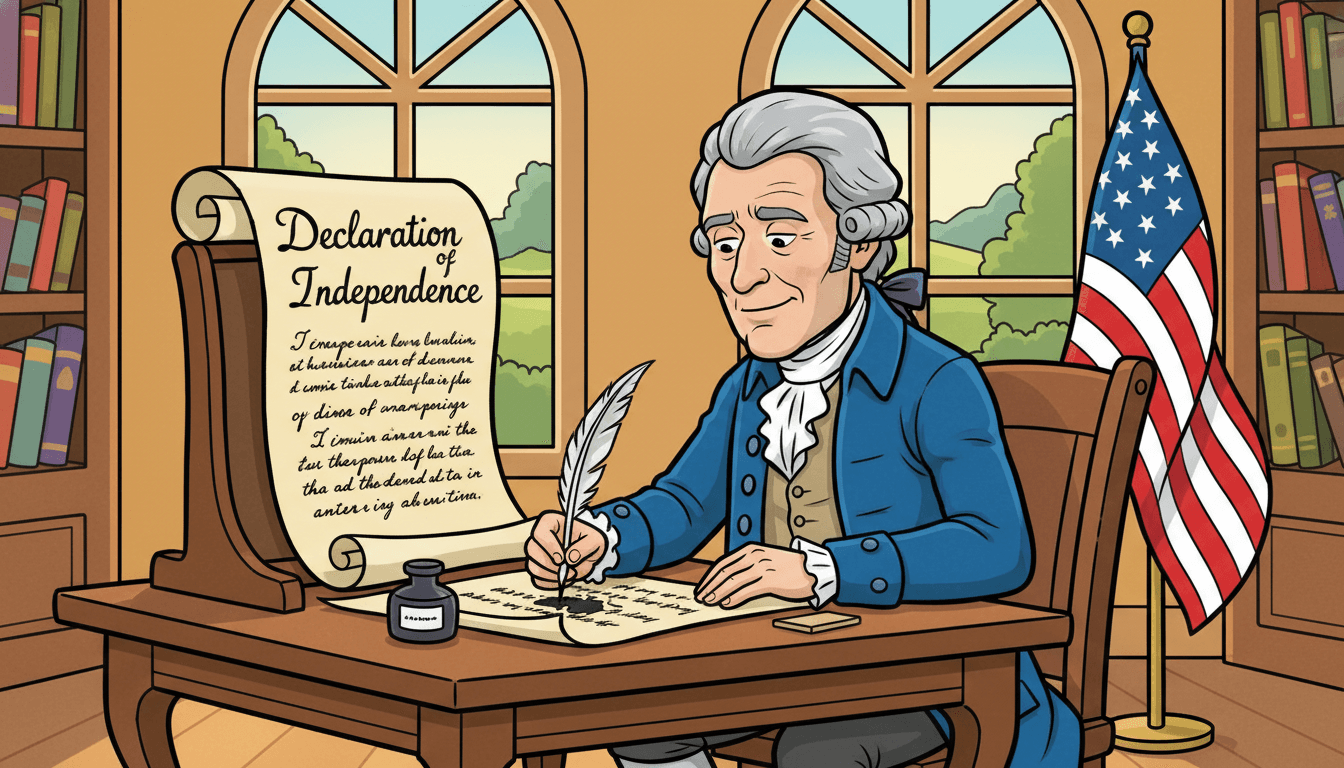
Jefferson's most lasting contribution to history came in the summer of 1776, when the Continental Congress asked him to draft a declaration announcing America's independence from Britain.
The Declaration, adopted July 4, 1776, contains some of the most celebrated words in American political history:
"We hold these truths to be self-evident, that all men are created equal, that they are endowed by their Creator with certain unalienable Rights, that among these are Life, Liberty and the pursuit of Happiness."
The document also listed 27 specific grievances against King George III of Britain, justifying the decision to break away.
Political Career
Virginia delegate to Continental Congress: 1775–1776
Governor of Virginia: 1779–1781
U.S. Minister (Ambassador) to France: 1784–1789
First U.S. Secretary of State: 1790–1793
2nd Vice President of the United States: 1797–1801
3rd President of the United States: 1801–1809
The Louisiana Purchase (1803)
One of the defining events of Jefferson's presidency was the Louisiana Purchase - perhaps the greatest land deal in American history.
In 1803, Napoleon Bonaparte of France agreed to sell the Louisiana Territory - approximately 828,000 square miles - to the United States for about $15 million. This roughly doubled the size of the United States and opened the vast interior of North America to American exploration and settlement.
Jefferson commissioned the Lewis and Clark Expedition (1804–1806) to explore the new territory, reaching all the way to the Pacific Ocean.
Monticello and the University of Virginia
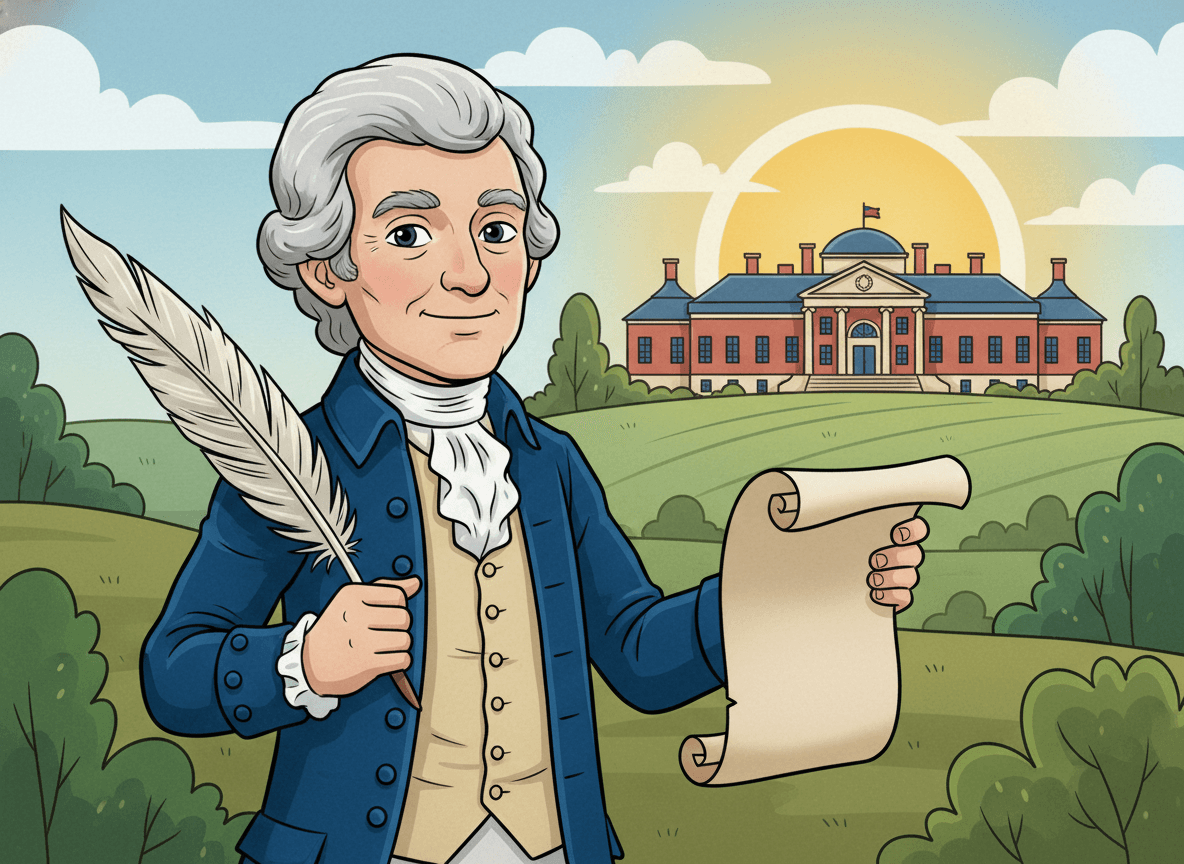
Jefferson designed his own home, Monticello, in Virginia - an architectural masterpiece he worked on for 40 years. He also founded the University of Virginia in 1819, believing strongly in public education.
Jefferson's Complex Legacy
Jefferson wrote that "all men are created equal" - yet he enslaved more than 600 people over his lifetime. This contradiction is central to understanding Jefferson and American history.
Historians and students continue to grapple with this tension: Jefferson articulated the ideals of freedom and democracy that inspired generations, yet he did not extend those ideals to the people he enslaved. Addressing this complexity honestly is essential to understanding the full history of the United States.
Thomas Jefferson died on July 4, 1826 - the 50th anniversary of the Declaration of Independence, the same day as John Adams.
Practice Activities
- Read and analyze the preamble to the Declaration of Independence - what do the key phrases mean in modern language?
- Map the Louisiana Purchase: show the original 13 states, then the territory added in 1803 - how did it change the size of the nation?
- Primary source analysis: read a short excerpt of Jefferson's writing and identify his main argument.
- Discuss: can we both appreciate someone's contributions and criticize their failures? How does this apply to Jefferson?
- Compare the rights Jefferson described in the Declaration to the rights that were and weren't available to different groups in 1776.
Frequently Asked Questions
What did Thomas Jefferson write in the Declaration of Independence?
Jefferson wrote the famous preamble, which includes the line: 'We hold these truths to be self-evident, that all men are created equal, that they are endowed by their Creator with certain unalienable Rights, that among these are Life, Liberty and the pursuit of Happiness.' He also listed the colonists' grievances against King George III of Britain. The document was adopted by the Continental Congress on July 4, 1776.
What was the Louisiana Purchase?
The Louisiana Purchase was a land deal in 1803 in which the United States bought approximately 828,000 square miles of territory from France (led by Napoleon Bonaparte) for about $15 million - roughly 3 cents per acre. This territory stretched from the Mississippi River to the Rocky Mountains and from the Gulf of Mexico to Canada. It roughly doubled the size of the United States and opened the door to western expansion. Jefferson commissioned the Lewis and Clark Expedition to explore this new land.
How do we address Jefferson's ownership of enslaved people in the classroom?
Jefferson enslaved more than 600 people over his lifetime, including at his plantation Monticello. This is a historical fact that students in 4th and 5th grade can and should grapple with. It is important to acknowledge that Jefferson's words about liberty and equality were not applied to all people in his time, and to discuss how this contradiction shaped American history. Presenting Jefferson fully - as both a visionary founder and a slaveholder - helps students think critically about history.
Free Thomas Jefferson Worksheets
Curriculum-aligned printable worksheets for 4th – 5th Grade. Download free.