What Is the Declaration of Independence?
Taught in US schools
Key Takeaways
- The Declaration of Independence was adopted on July 4, 1776, officially announcing that the 13 colonies were separating from Britain to become an independent nation.
- Thomas Jefferson was the primary author; the document contains the famous phrase 'all men are created equal' and lists 27 grievances against King George III.
- John Hancock signed his name in the largest and most famous signature, and the date July 4, 1776 is still celebrated as Independence Day (the Fourth of July).
What Is the Declaration of Independence?
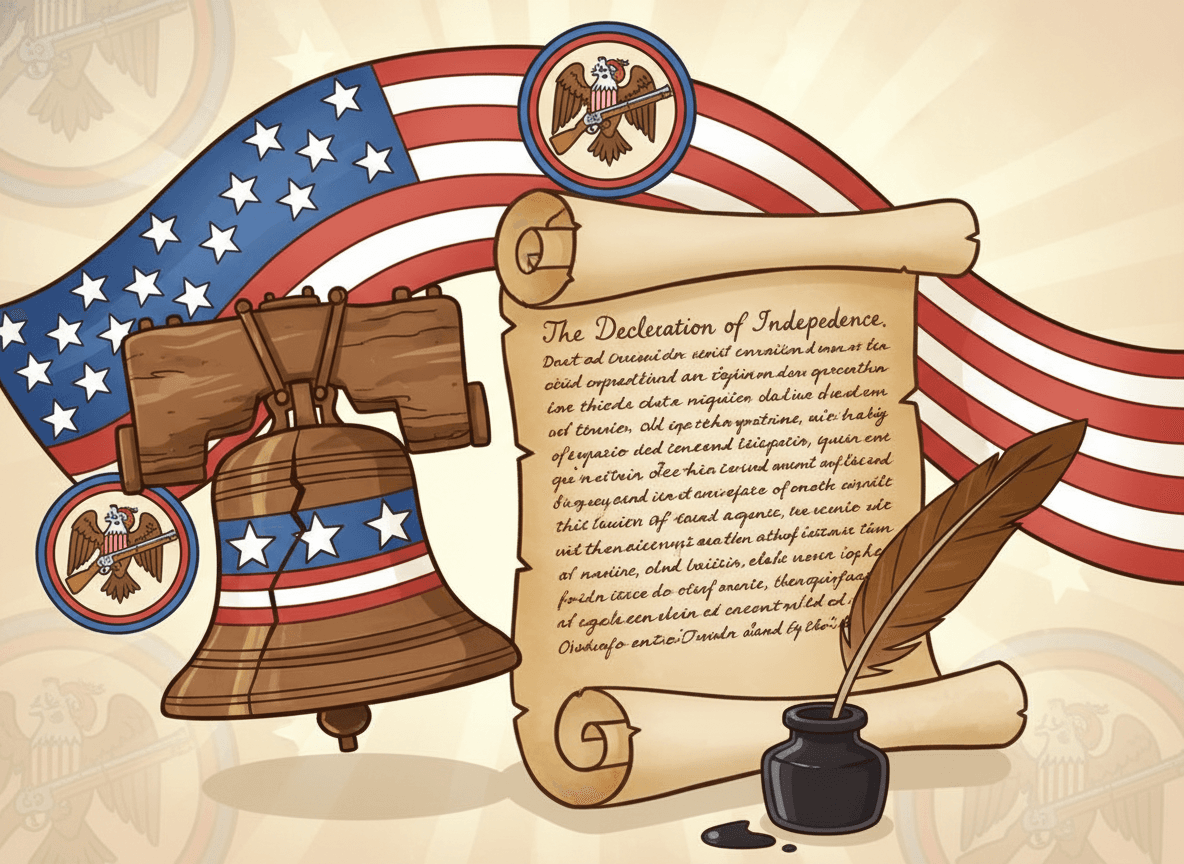
The Declaration of Independence is one of the most important documents in American and world history. Adopted by the Continental Congress on July 4, 1776, it officially announced that the 13 American colonies were breaking away from British rule and establishing themselves as a free and independent nation - the United States of America.
Background: Why Was It Written?
By 1776, tensions between the American colonies and Britain had been building for more than a decade:
- Britain imposed taxes on the colonies without giving them representation in Parliament ("No taxation without representation")
- British soldiers were quartered in colonists' homes
- Colonial trade was tightly restricted by British laws
- Colonists' petitions and complaints were repeatedly ignored or denied
In the spring of 1776, the Continental Congress decided that reconciliation with Britain was no longer possible. They needed a formal declaration of their independence and their reasons for it.
Thomas Jefferson and the Writing
The Continental Congress asked a Committee of Five to draft the declaration:
- Thomas Jefferson (primary author)
- John Adams
- Benjamin Franklin
- Roger Sherman
- Robert R. Livingston
Thomas Jefferson wrote the bulk of the document over about two weeks in June 1776. The Congress debated and revised it before adopting it on July 4, 1776.
Structure of the Declaration
The Declaration has four main parts:
1. Preamble - explains why the document is being written.
2. Declaration of Rights - the famous philosophical section:
"We hold these truths to be self-evident, that all men are created equal, that they are endowed by their Creator with certain unalienable Rights, that among these are Life, Liberty and the pursuit of Happiness."
3. List of Grievances - 27 specific complaints against King George III of Britain, providing the evidence for why independence was justified.
4. Declaration of Independence - the formal announcement that the colonies are free and independent states.
Key Phrases
"Self-evident truths": Facts that are obvious and need no proof
"Unalienable rights": Rights that cannot be taken away
"Life, liberty, and the pursuit of happiness": The three fundamental rights of all people
"Consent of the governed": Government authority comes from the people
The Signing
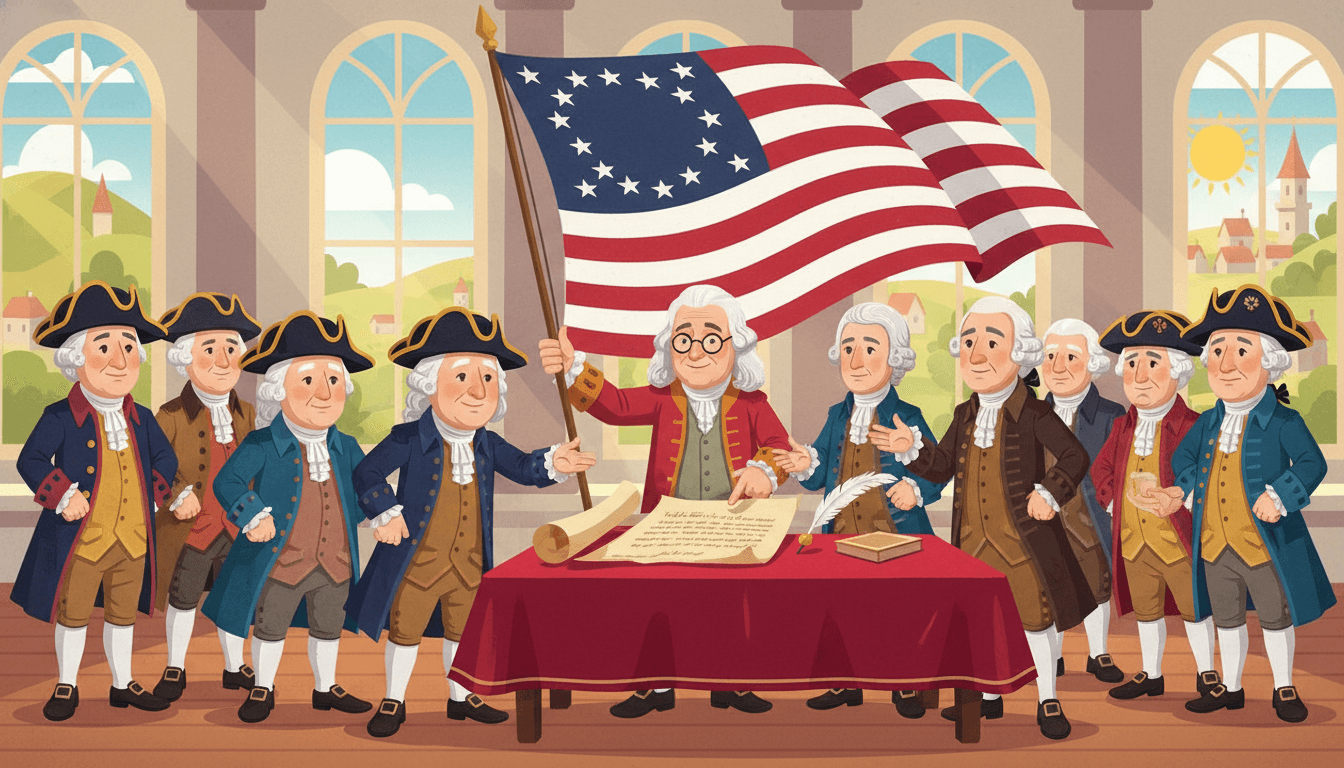
The Declaration was signed by 56 delegates to the Continental Congress. The most famous signature is that of John Hancock, who signed his name very large - tradition says so King George could read it without his glasses.
The signing took place primarily on August 2, 1776, though July 4 is celebrated as Independence Day because that is when the document was adopted by Congress.
Impact and Legacy
The Declaration established three principles that have shaped American democracy and inspired freedom movements worldwide:
- All people have natural, unalienable rights.
- Government's purpose is to protect those rights.
- When a government fails to protect rights, the people have the right to change or replace it.
The words "all men are created equal" - though not applied equally in 1776 - became the foundation for later movements to expand rights to enslaved people, women, and all Americans.
The original Declaration is displayed at the National Archives in Washington, D.C.
Practice Activities
- Read the preamble together and paraphrase each sentence in modern language - what is Jefferson actually saying?
- Create a T-chart: grievances listed in the Declaration (left column) and what modern right or law addresses each (right column).
- Research John Hancock - why was his signature so large? What does the phrase "put your John Hancock here" mean today?
- Compare the ideals of the Declaration to who actually had rights in 1776 vs. today - how has America moved toward or away from those ideals?
- Write your own declaration: if students were declaring independence from an unfair rule at school, what grievances would they list?
Frequently Asked Questions
Why did the colonists want independence from Britain?
The colonists had many grievances against the British government. They were taxed without having representatives in the British Parliament ('No taxation without representation'). The British quartered soldiers in colonial homes, restricted colonial trade, and denied colonists the right to trial by jury. After years of failed petitions, many colonists believed they could not have their rights respected under British rule and that independence was the only path forward.
Who signed the Declaration of Independence?
56 delegates to the Continental Congress signed the Declaration of Independence. The most famous signature is that of John Hancock, president of the Continental Congress, who signed his name very large - legend says he wanted King George to be able to read it without his glasses. Other signers included Benjamin Franklin, John Adams, and Roger Sherman. Thomas Jefferson, the primary author, also signed.
What does 'all men are created equal' mean in the Declaration?
Jefferson wrote that 'all men are created equal' and have unalienable rights to 'life, liberty, and the pursuit of happiness.' In 1776, these words applied only to white men - women, enslaved people, and Native Americans were excluded in practice. However, the words became a powerful ideal that later generations - abolitionists, suffragists, civil rights activists - used to argue for extending equal rights to all Americans. The gap between the Declaration's ideals and the reality of who was included has shaped American history ever since.
Free Declaration of Independence Worksheets
Curriculum-aligned printable worksheets for 4th – 5th Grade. Download free.