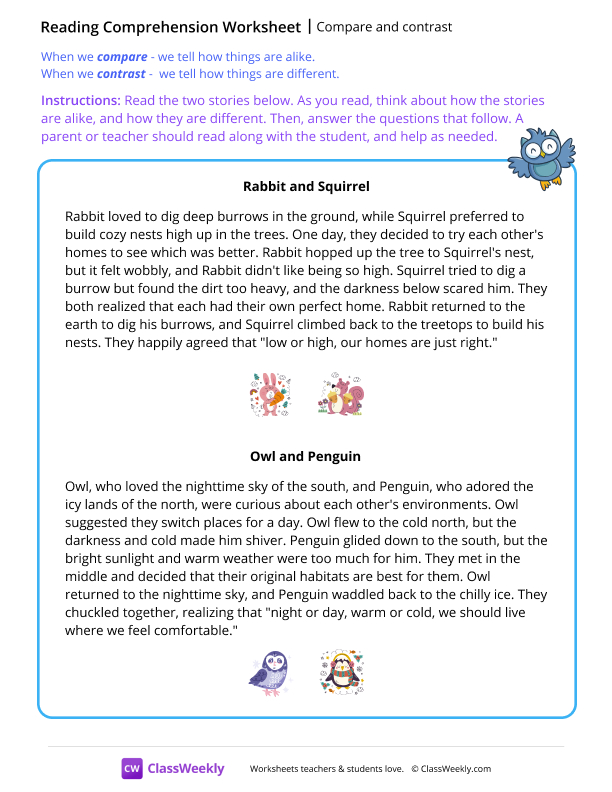
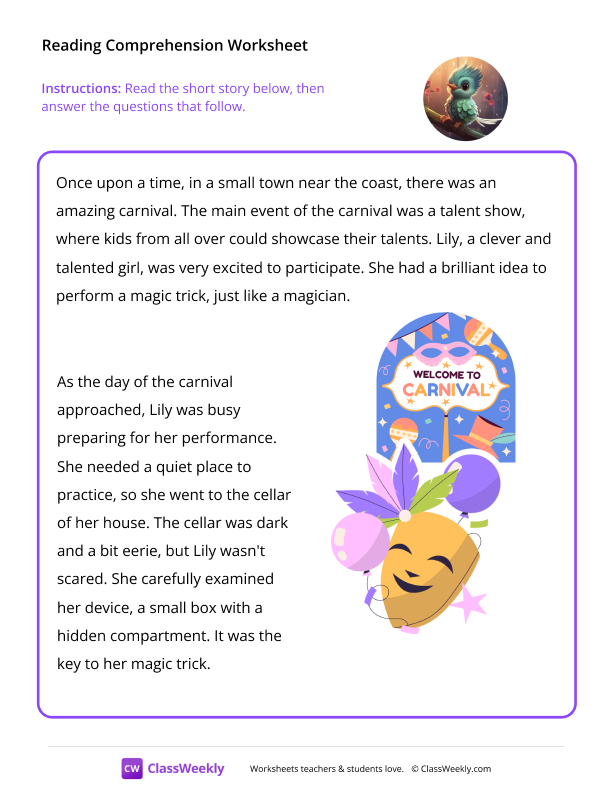
What Are the Parts of a Book?
Taught in US schools
Key Takeaways
- Books are organized into front matter, body, and back matter - each section has a specific purpose for the reader.
- The table of contents helps readers find chapter topics by page number; the index lists specific topics alphabetically.
- The glossary defines key vocabulary words found in the book, making it a built-in dictionary for that topic.
What Are the Parts of a Book?
Books are carefully organized so readers can find information, understand the author's message, and navigate the content efficiently. Most nonfiction books have three main sections: front matter, the body, and back matter.
Front Matter
Front matter appears before the main content of the book.
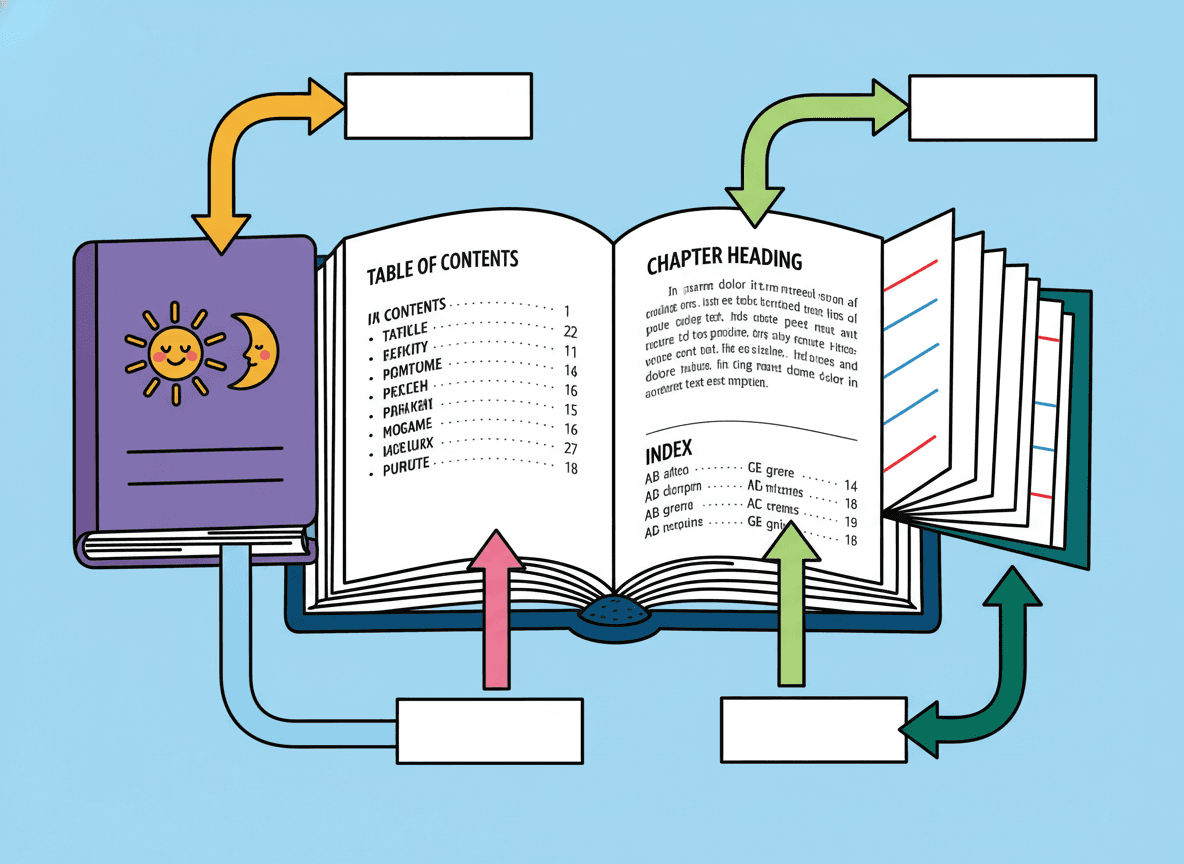
Cover: Displays the title, author, and an illustration that hints at the topic
Title Page: Lists the full title, author, illustrator, and publisher
Copyright Page: Gives publication date, copyright information, and publisher details
Table of Contents: Lists chapter or section titles with page numbers - in order
Author's Note / Introduction: The author explains their purpose, background, or why they wrote the book
Tip: When starting a nonfiction book, always check the table of contents first. It gives you a map of the entire book so you can find exactly what you need.
Body: The Main Content
The body is the largest part - this is where the actual information lives.
Chapters: The main divisions of the book, each covering a related topic
Headings: Titles within a chapter that introduce major sections
Subheadings: Smaller titles that break a section into even smaller parts
Photos, Diagrams, Captions: Visual supports that illustrate and extend the text
Sidebars: Boxes of extra information related to the main topic
Back Matter
Back matter appears after the main content and provides additional resources.
Glossary: Alphabetical list of key vocabulary words with definitions
Index: Alphabetical list of specific topics with page numbers
Appendix: Additional data, charts, or information that supports the text
Bibliography / Further Reading: List of sources the author used or books for readers who want to learn more
About the Author: A short biography of the author
Table of Contents vs. Index
Students often confuse these two parts:
Location: Front of book
Organization: In reading order
What it lists: Chapters/sections
Best for: Finding what chapter covers a topic
Example: To find "what chapter covers volcanoes" - use the table of contents. To find every page that mentions "magma" - use the index.
Practice Activities
- Give students a nonfiction book and a scavenger hunt: find the glossary definition of a key word, the index entry for a person, and the page number for a specific chapter.
- Have students create their own book parts for a nonfiction report they write, including a title page, table of contents, and glossary.
- Compare the table of contents and index of the same book - what can each one do that the other cannot?
- Use the index to answer specific questions rather than reading the whole book - practice efficient information retrieval.
- Make a class anchor chart mapping each book part to its purpose and location (front/body/back).
Frequently Asked Questions
What is the difference between a table of contents and an index?
A table of contents appears at the front of the book and lists chapters or major sections in order by page number. An index appears at the back, listing specific topics, people, and terms alphabetically with all the page numbers where each is mentioned.
What is a glossary?
A glossary is an alphabetical list of key vocabulary words from the book, along with their definitions as used in that text. It appears at the back of many nonfiction books and acts as a mini-dictionary for that subject.
Do all books have all these parts?
No. Fiction books usually have only a cover, title page, and table of contents (if any). The glossary, index, appendix, and bibliography are most common in nonfiction and academic books.
Free Parts of a Book Worksheets
Curriculum-aligned printable worksheets for Kindergarten – 3rd Grade. Download free.