What Are Primary and Secondary Sources?
Taught in US schools
Key Takeaways
- A primary source is created by someone who directly witnessed or participated in an event - letters, diaries, photographs, speeches, and artifacts are all primary sources.
- A secondary source is created later by someone who was not present - it analyzes, interprets, or summarizes primary sources. Textbooks, biographies, and documentaries are secondary sources.
- Historians use both types of sources, but they evaluate each carefully for bias, perspective, and reliability.
What Are Primary and Secondary Sources?
Primary sources and secondary sources are the two main categories of evidence that historians, researchers, and students use to investigate the past and understand current events.
Learning to identify, evaluate, and use both types is a key social studies and research skill in 4th and 5th grade.
Primary Sources: Firsthand Accounts
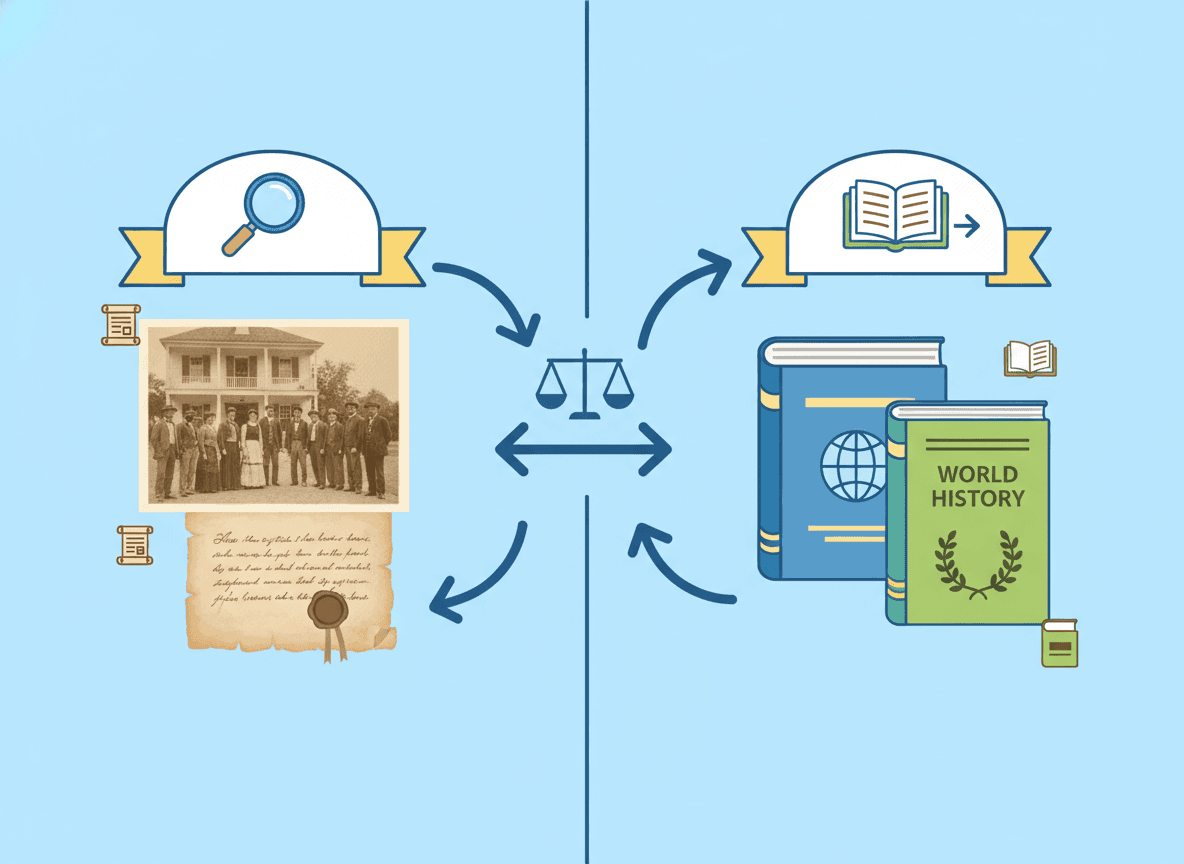
A primary source is created by someone who directly witnessed, participated in, or experienced the event being studied. It is an original document or artifact from the time period.
Examples of Primary Sources
Written documents: Letters, diaries, journals, speeches, laws, treaties
Official records: Government documents, census records, birth certificates
Photographs: Photos taken at the time of the event
Artifacts: Tools, clothing, weapons, art objects
Audio/Video: Recorded speeches, newsreel footage, interviews
Newspapers: Articles published at the time of the event
Example: Abraham Lincoln's Gettysburg Address is a primary source - Lincoln wrote and delivered it in 1863 at the dedication of a Civil War cemetery.
Secondary Sources: Interpreted Accounts
A secondary source is created after the event, typically by someone who was not present. Secondary sources interpret, analyze, or summarize primary sources.
Examples of Secondary Sources
Textbooks: School history textbooks
Biographies: A book about Lincoln's life written in 2010
Encyclopedias: Reference articles summarizing an event or person
Documentaries: Films analyzing a historical event
Scholarly articles: Academic papers analyzing primary sources
Example: A textbook chapter about Abraham Lincoln is a secondary source - it was written long after Lincoln's death by an author who interpreted existing documents and scholarship.
How to Tell Them Apart
Ask these questions:
-
Was this created during or right after the event? → Primary
-
Was this created by someone who was there? → Primary
-
Was this created by someone analyzing or summarizing the event later? → Secondary
****Created when?: At the time of the event
****Created by whom?: An eyewitness or participant
Purpose: Record, communicate
Evaluating Sources: Reliability and Bias
Not all sources - primary or secondary - are equally reliable. Good researchers ask:
-
Who created this source? What was their role and perspective?
-
When was it created? How close in time to the event?
-
Why was it created? What was the author's purpose?
-
What does it leave out? Whose perspective is missing?
-
What biases might it contain? Everyone has a point of view.
Why Historians Use Both
Historians use primary sources as direct evidence - the "raw material" of history. They use secondary sources to understand how experts have interpreted that evidence. Using both gives a fuller, more accurate picture of the past.
Practice Activities
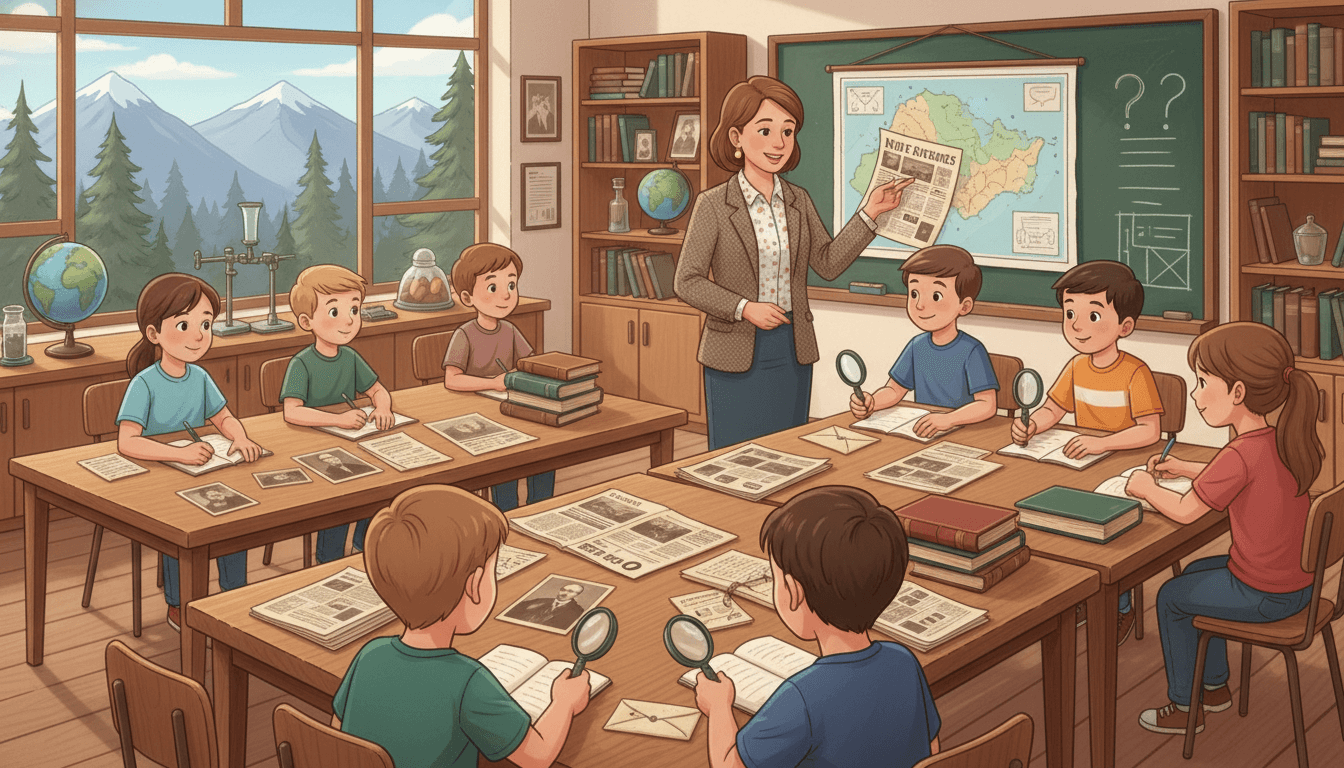
- Give students a set of cards and have them sort into "primary" or "secondary" source categories, then explain their reasoning.
- Analyze a historical photograph: what does it tell you directly (primary source)? What questions does it raise that you'd need a secondary source to answer?
- Locate one primary source (e.g., a transcribed speech or letter) and one secondary source (textbook page) on the same topic and compare what each tells you.
- Evaluate bias: read two accounts of the same event written from different perspectives - how do they differ? What might each be leaving out?
- Research project: students must include at least one primary source in a social studies research project and explain how they identified it.
Frequently Asked Questions
What is an example of a primary source vs. a secondary source on the same event?
Consider the Civil Rights Movement. A primary source might be the text of Martin Luther King Jr.'s 'I Have a Dream' speech, a photograph of the March on Washington, or Rosa Parks's account of her arrest. A secondary source would be a textbook chapter about the Civil Rights Movement, a biography of Rosa Parks, or a documentary film made decades later. The primary sources come from the time; the secondary sources interpret those events afterward.
Are secondary sources less valuable than primary sources?
No - secondary sources are extremely valuable because they synthesize and contextualize information from many primary sources. A historian reading thousands of letters can identify patterns a reader of just one letter would miss. Secondary sources also provide expert analysis and make history more accessible. The key is to use both types thoughtfully and to evaluate each for reliability and bias.
What is bias in a historical source?
Bias means that a source reflects a particular point of view, perspective, or agenda - consciously or unconsciously. A diary written by a Confederate soldier will present the Civil War from one perspective; a diary written by an enslaved person presents a very different perspective. Both are primary sources; both contain bias. Historians read multiple sources to build a more complete picture.
Free Primary and Secondary Sources Worksheets
Curriculum-aligned printable worksheets for 4th – 5th Grade. Download free.