What Is Text Evidence?
Taught in US schools
Key Takeaways
- Text evidence means citing specific words, phrases, or sentences from the text to back up an answer or opinion.
- Students can quote directly (exact words in quotation marks) or paraphrase (restate the idea in their own words) and then explain how the evidence supports their point.
- Sentence stems like 'According to the text...' and 'In paragraph 2, it states...' help students structure evidence-based responses.
What Is Text Evidence?
Text evidence means going back to the text and finding specific words, phrases, or sentences that support your answer, opinion, or claim. Instead of answering from memory or personal opinion alone, students are expected to point to exactly where in the text they found their support.
This skill is required by the Common Core State Standards beginning in 3rd grade for both literary (RL) and informational (RI) texts.
Direct Quotes vs. Paraphrasing
There are two ways to cite text evidence:
1. Direct Quote - copy the author's exact words and put them in quotation marks.
The text states, "The cheetah can reach speeds of 70 miles per hour in just a few seconds."
2. Paraphrase - restate the idea in your own words without changing the meaning.
According to the text, cheetahs are extremely fast and can accelerate to high speeds very quickly.
Both are valid forms of text evidence. A good response often combines a paraphrase with a brief direct quote.
Sentence Stems for Text Evidence
Using sentence stems helps students structure evidence-based answers. Post these in the classroom:
- "According to the text, ..."
- "The author states that ..."
- "In paragraph ___, it says ..."
- "The text explains that ..."
- "Based on the text, ..."
- "Evidence from the text shows ..."
- "The author supports this by saying ..."
The Three-Step Process: Claim → Evidence → Explanation
A complete evidence-based response has three parts:
Claim: States your answer or opinion - "The main character is brave."
Evidence: Quotes or paraphrases from the text - "The text states she 'ran into the burning building without hesitating.'"
Explanation: Explains HOW the evidence proves your claim - "This shows she was willing to risk her own safety for others." This structure is sometimes called CEI (Claim-Evidence-Interpretation) or CER (Claim-Evidence-Reasoning).
Text Evidence in Literary vs. Informational Texts
****Literary (fiction/poetry): Character actions, dialogue, descriptions, word choice
****Informational (nonfiction): Facts, statistics, definitions, examples, expert quotes In both cases, the evidence must come from the text - not from outside knowledge.
Common Mistakes to Avoid
-
Dropping a quote without explanation - evidence alone doesn't make an argument. Always explain how the quote connects to your claim.
-
Using "I think" or "I feel" without backing it up - personal opinions need textual support.
-
Evidence that doesn't match the claim - students sometimes cite real text evidence that isn't relevant to the specific question.
Practice Activities
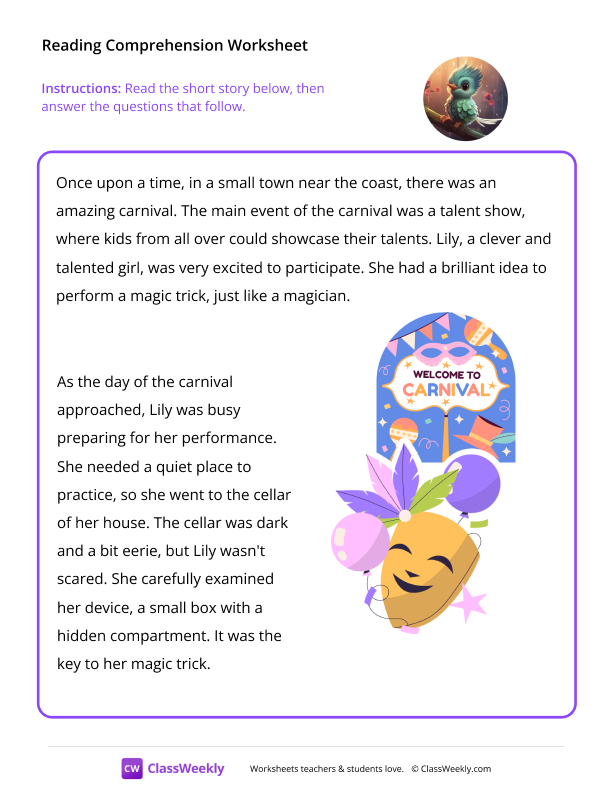
- Give students a short passage and three comprehension questions; require a sentence stem, a piece of evidence, and one sentence of explanation for each answer.
- Play "Prove It" - teacher makes a statement about a shared text and students race to find the evidence in their books.
- Use a two-column graphic organizer: left column = question or claim; right column = evidence + paragraph number.
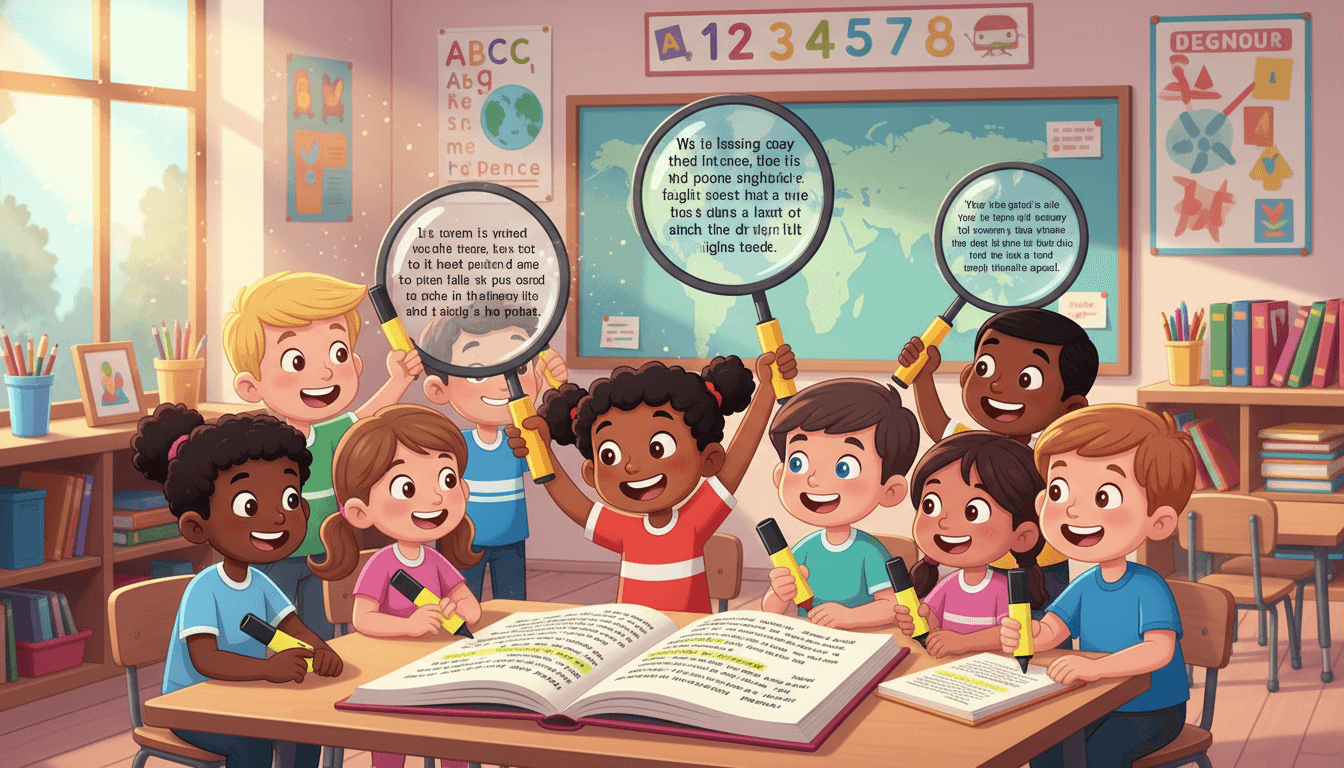
- Highlight hunt: students read a paragraph and highlight the single sentence that best supports a given statement.
- Have students write a "book review" paragraph about a read-aloud, requiring at least two pieces of text evidence.

Frequently Asked Questions
What is the difference between a direct quote and a paraphrase?
A direct quote uses the author's exact words, placed inside quotation marks. A paraphrase restates the idea in the reader's own words. Both count as text evidence. In elementary school, students typically learn to paraphrase first, then practice direct quoting. Either way, they must include where in the text the evidence comes from.
Why do teachers require text evidence instead of letting students answer from memory?
Requiring text evidence ensures that answers are grounded in what the author actually wrote, not in a student's prior knowledge or assumptions. It teaches students to read carefully, think critically, and communicate with precision - skills essential for middle school, high school, and beyond.
How do students cite where evidence comes from?
For shorter texts, students can say 'in the text' or 'the author says.' For longer texts, they can refer to paragraph numbers, page numbers, or chapter titles: 'In paragraph 3, the author states...' In upper elementary, teachers may also introduce formal citation formats.
Free Text Evidence Worksheets
Curriculum-aligned printable worksheets for 3rd – 5th Grade. Download free.