What Are Syllables?
Taught in US schools
Key Takeaways
- A syllable is a unit of sound with exactly one vowel sound - every syllable has one beat.
- There are six syllable types in English: closed, open, vowel-consonant-e, vowel team, r-controlled, and consonant-le.
- Knowing syllable types helps students decode unfamiliar multi-syllable words by breaking them into manageable chunks.
What Are Syllables?
A syllable is a unit of sound that contains exactly one vowel sound. Every word is made up of one or more syllables, and the number of syllables equals the number of "beats" you hear when you say the word aloud.
-
cat = 1 syllable (1 beat)
-
rab-bit = 2 syllables (2 beats)
-
fan-tas-tic = 3 syllables (3 beats)
-
un-be-liev-a-ble = 5 syllables (5 beats)
How to Count Syllables
Three popular classroom strategies:
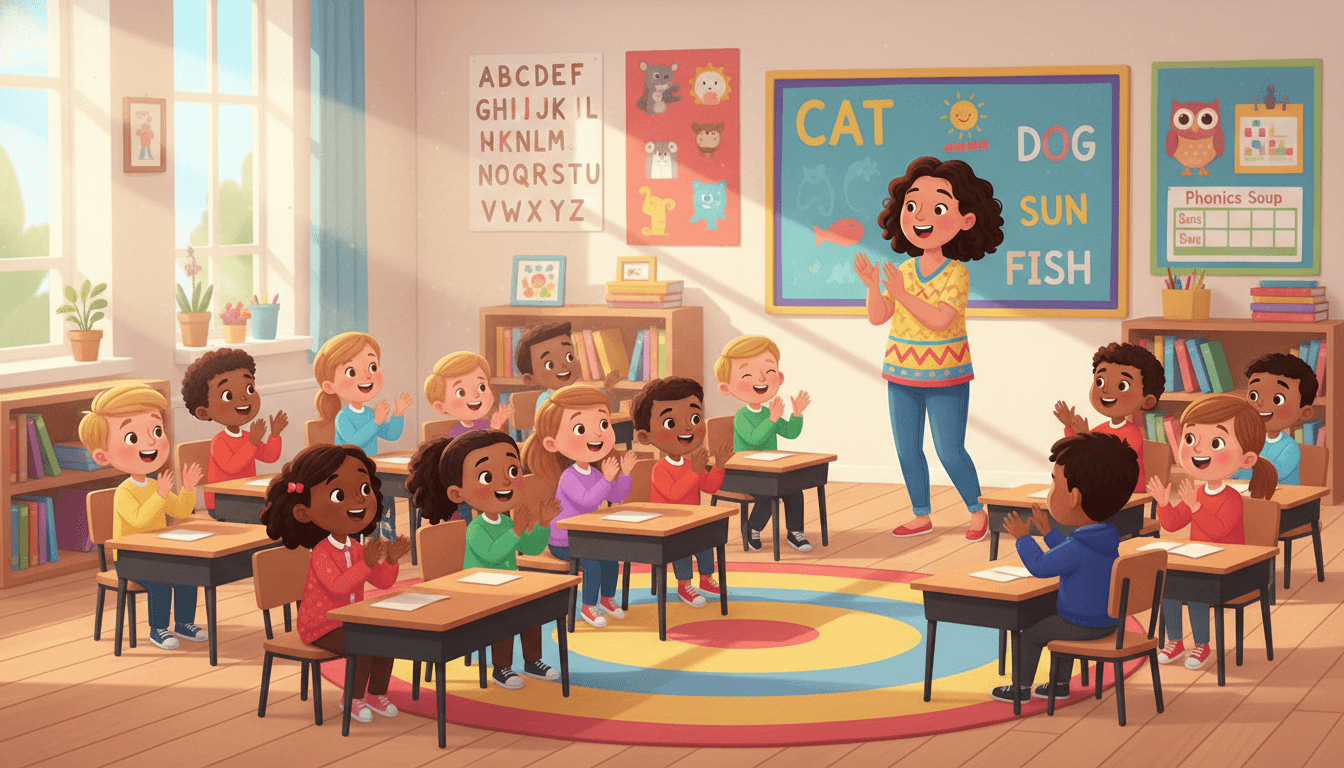
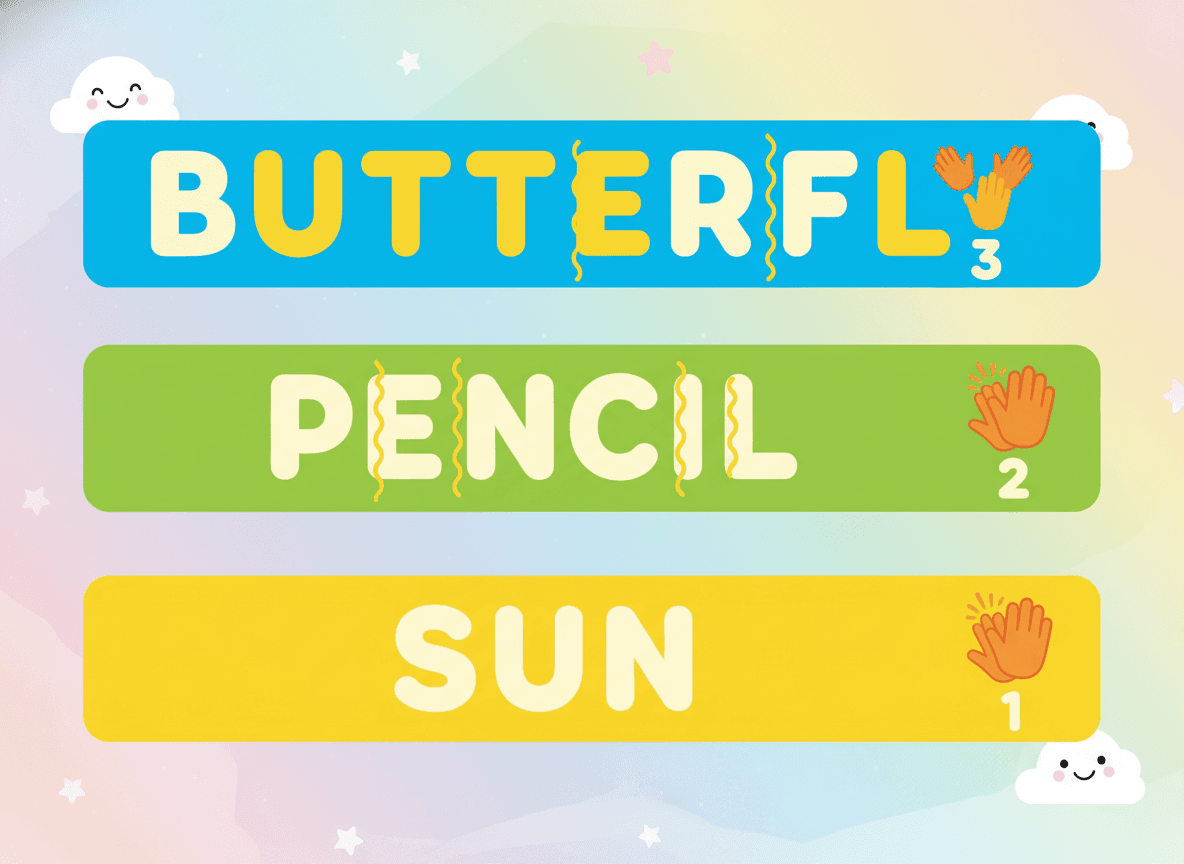
- Clapping Method - say the word and clap once for each beat/syllable.
- Chin-Drop Method - place one hand gently under your chin; each time your jaw drops, that's a syllable.
- Rubber Band Method - stretch a rubber band for each syllable as you say the word.
All three methods help students feel the rhythm of spoken language.
The Six Syllable Types
English has six syllable types. Knowing them helps students decode and spell any word:
Closed: Ends in one or more consonants - Short - cat, hop, big
Open: Ends in a vowel - Long - me, go, hi, ba-by
****Vowel-Consonant-e (VCe): Vowel + consonant + silent e - Long - cake, bite, home
Vowel Team: Two vowels together = one sound - Varies - rain, boat, feet
R-Controlled: Vowel + r - Changed by r - car, bird, corn
Consonant-le: Consonant + le at end of word - Schwa - tur-tle, ap-ple
Why Syllable Types Matter for Decoding
When a student reads an unfamiliar word, identifying syllable type helps predict vowel sounds:
- A closed syllable has a short vowel: cat, stop, big
- An open syllable has a long vowel: the first syllable of robot is ro- (open) → long O
- A VCe syllable has a long vowel: cake → long A
Example: The word hoping breaks into hop-ing. The first syllable is closed (hop), so the vowel is short. Compare to ho-ping, where the first syllable is open - long O.
Syllable Division Rules
When dividing a two-syllable word, two common patterns guide where to split:
-
VC/CV (vowel-consonant / consonant-vowel): split between the two consonants. Example: rab-bit, nap-kin
-
V/CV (vowel / consonant-vowel): split before the consonant, leaving an open syllable. Example: ro-bot, ti-ger
These rules are taught in 2nd–3rd grade as students encounter longer words.
Syllables in Spelling
Syllable awareness also supports spelling:
- Students can spell one syllable at a time, reducing working memory load.
- Knowing syllable boundaries prevents errors like writing "recieve" instead of "receive."
- R-controlled syllables (ar, er, ir, or, ur) have predictable spellings once students learn the pattern.
Practice Activities
- Clap out syllables in students' names as a warm-up activity on the first day learning the concept.
- Sort a set of picture cards or word cards by number of syllables (1, 2, or 3 columns).
- Practice the six syllable types using color coding: assign each type a color and highlight multi-syllable words accordingly.
- Play "Syllable Detectives" - teacher reads a word aloud; students write the number of syllables on their mini-whiteboard.
- Have students break apart compound words (basketball = bas-ket-ball) to see that syllable boundaries often fall between meaningful word parts.
Frequently Asked Questions
How can students count syllables in a word?
The most common methods are the clapping method (clap once for each syllable while saying the word), the chin-drop method (place your hand under your chin and count how many times your jaw drops - each drop is a syllable), and the rubber-band method (stretch a rubber band for each syllable). All three work well for young learners.
What are the six syllable types?
The six syllable types are: (1) Closed - one vowel closed in by a consonant, vowel is short (cat, hop); (2) Open - ends in a vowel, vowel is long (me, go, hi); (3) Vowel-consonant-e (VCe) - silent e at the end makes the vowel long (cake, bike); (4) Vowel team - two vowels together make one sound (rain, boat); (5) R-controlled - vowel followed by r, vowel sound changes (car, bird, fork); (6) Consonant-le - ends in consonant + le, last syllable (turtle, apple).
Why is syllable division important for decoding?
When students encounter a long, unfamiliar word, dividing it into syllables makes it manageable. Instead of trying to decode 'fantastic' all at once, a student can break it into fan-tas-tic and decode each part. Syllable division is one of the most powerful strategies for reading multi-syllable words.
Free Syllables Worksheets
Curriculum-aligned printable worksheets for Kindergarten – 3rd Grade. Download free.
Common Core Standards