What Are Digraphs?
Taught in US schools
Key Takeaways
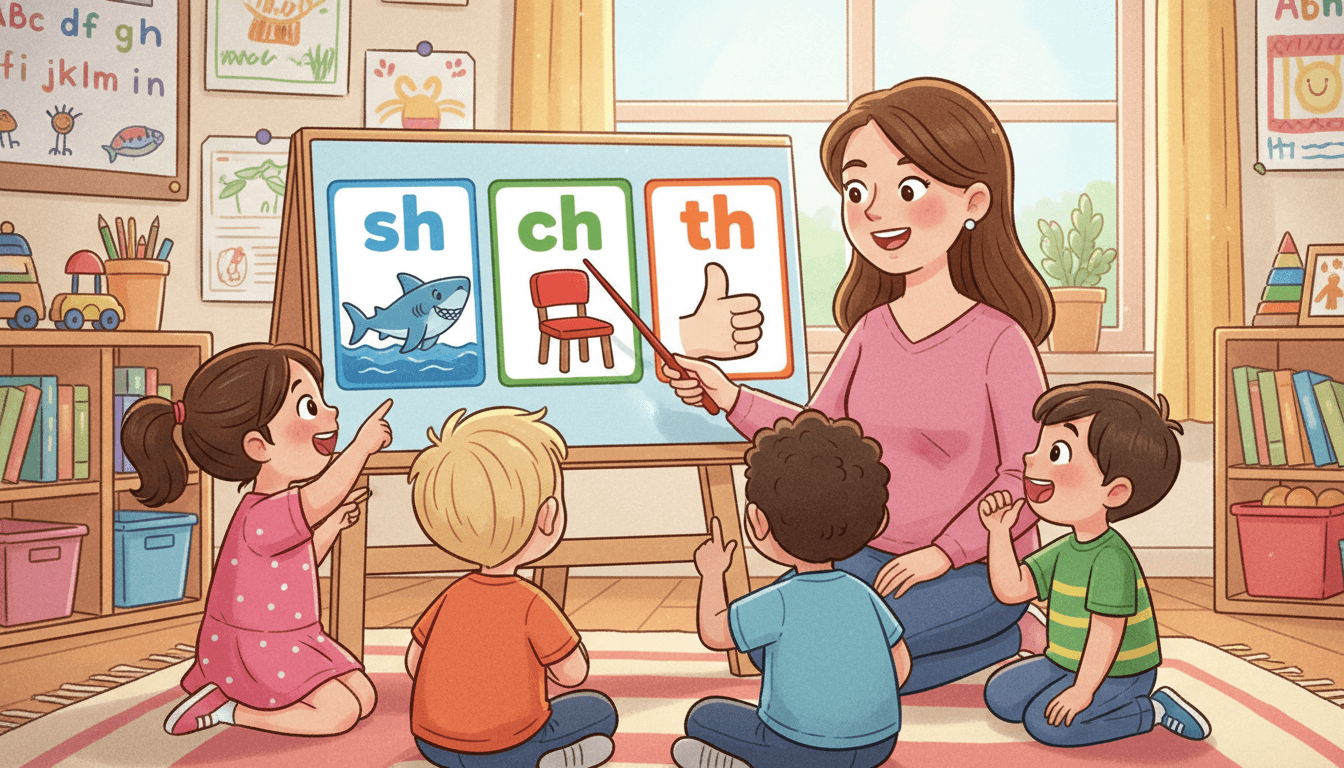
- A digraph is two letters that together make ONE sound - neither letter makes its own individual sound in the pair.
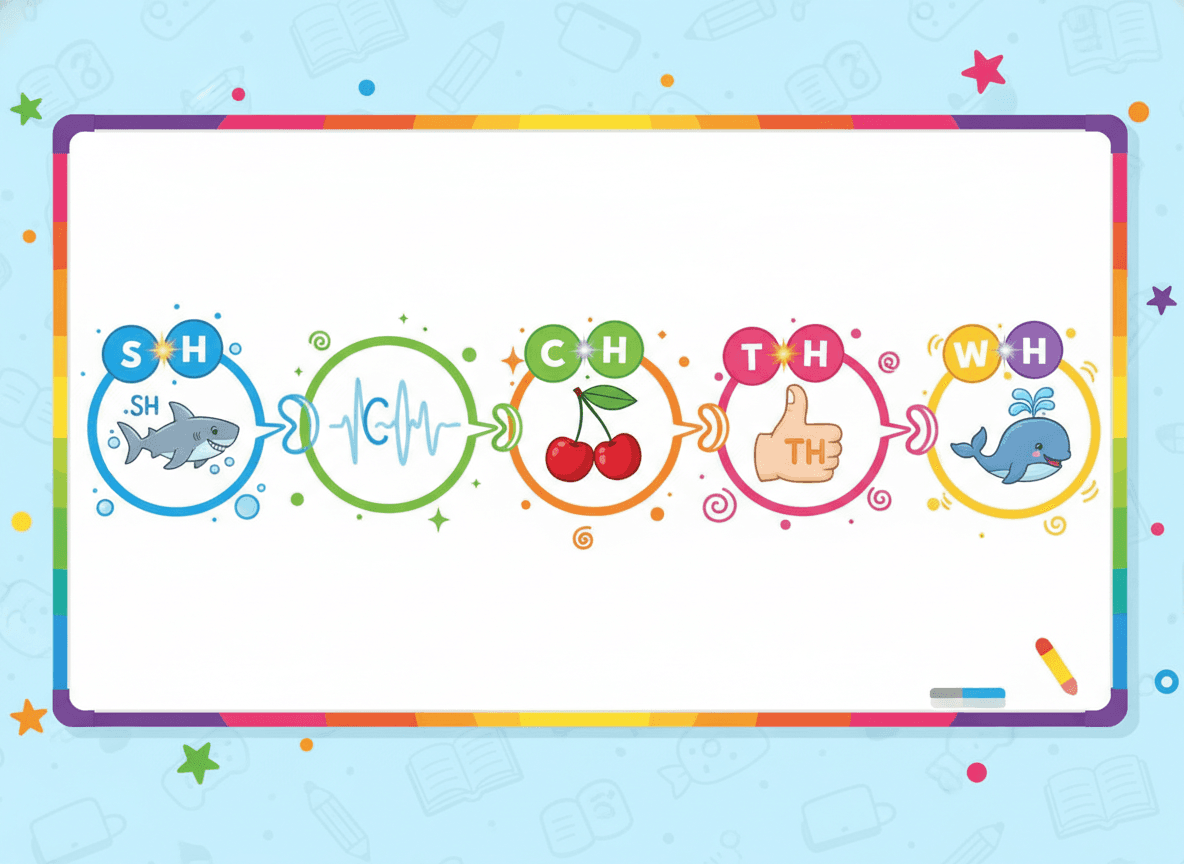
- Common consonant digraphs include ch (chair), sh (ship), th (thin), wh (whale), ph (phone), ck (duck), and ng (ring).
- The key decoding strategy for digraphs is to treat the two letters as a single unit - one sound, not two.
What Are Digraphs?
A digraph is a pair of letters that work together to produce a single sound. The key characteristic is that neither letter makes its own individual sound - together they create a completely new sound.
The word digraph comes from the Greek: di- (two) + graph (written) - literally "two letters."
Consonant Digraphs
The most commonly taught digraphs are consonant digraphs:
ch: /ch/ - chair, cheese, lunch, teach
sh: /sh/ - ship, fish, shell, brush
th: /th/ (voiced or voiceless) - this, that, think, thin
wh: /w/ or /hw/ - whale, wheel, when, white
ph: /f/ - phone, photo, graph, elephant
ck: /k/ - duck, rock, black, stick
ng: /ng/ - ring, sing, king, strong
Two Sounds of "th"
The digraph th is unique because it represents two slightly different sounds:
-
Voiceless th - airflow only, no vibration: think, thin, three, bath
-
Voiced th - slight vocal vibration: this, that, the, them, there
Most students learn both naturally through reading, even if the distinction isn't explicitly taught.
Vowel Digraphs
Vowel digraphs are two vowel letters that together make one vowel sound:
ai: long A - rain, tail, paint
ea: long E (usually) - beach, read, neat
oa: long O - boat, road, coat
ee: long E - tree, feet, green
oo: /oo/ or /ʊ/ - moon, food, book, look
Note: The rule "when two vowels go walking, the first one does the talking" is a helpful rhyme, but it applies to only about 60% of vowel digraphs. Teach it as a starting strategy, not an absolute rule.
Digraphs vs. Blends
Students often confuse digraphs with consonant blends. Here is the key difference:
Definition: Two letters = ONE sound
Example: sh → /sh/ (one sound)
****Can you hear both letters?: No
Teaching Digraphs: The One-Sound Rule
The most important decoding lesson: treat the two letters as one unit. When students see sh, they should not say /s/ then /h/ - they should immediately say /sh/.
A helpful classroom anchor: use a "digraph house" - draw a small roof over the two letters to show they live together and make one sound.
Sequence of Instruction
Digraphs are typically taught in this approximate sequence:
- Kindergarten: ch, sh, th (beginning and ending positions)
- 1st Grade: wh, ph, ck, ng; vowel digraphs ai, ea, oa, ee
- 2nd Grade: Review and extend; oo, ew, and less common digraphs
Practice Activities
- Word sort: give students a set of picture cards and have them sort by beginning digraph (sh, ch, th) into labeled columns.
- "Digraph of the Week" - feature one digraph each week; students hunt for words in the classroom and in their reading books.
- Quick-fire phonics: flash two-letter cards (sh, ch, th, ph) and students say the sound as fast as possible.
- Digraph word building: use letter tiles to build words by adding a digraph to familiar word families (e.g., _at → chat, that, shat).
- Play "Read My Lips" - say a digraph word without sound; students identify whether it starts with sh, ch, or th by watching your mouth.
Frequently Asked Questions
What is the difference between a digraph and a blend?
A digraph is two letters that make ONE new sound (e.g., sh makes the /sh/ sound - you cannot hear a separate /s/ and /h/). A blend is two or three letters where each letter's sound is still heard, just quickly blended together (e.g., bl in 'blue' - you can hear both /b/ and /l/). This distinction is important for phonics instruction.
What are vowel digraphs?
Vowel digraphs are two vowel letters that together make one vowel sound. Common examples: ai (rain), ea (beach), oa (boat), oo (moon or book), ee (tree). The old phonics rhyme 'when two vowels go walking, the first one does the talking' applies to some - but not all - vowel digraphs, so it is taught as a general rule with exceptions.
Why is ph a digraph?
The letters p and h together make the /f/ sound (as in phone, photo, dolphin). This happens because many English words with ph come from Greek, where the letter phi (φ) made an /f/-like sound. Students learn ph as part of their phonics sequence, typically in 1st or 2nd grade.
Free Digraphs Worksheets
Curriculum-aligned printable worksheets for Kindergarten – 2nd Grade. Download free.