What Are Weathering and Erosion?
Taught in US schools
Key Takeaways
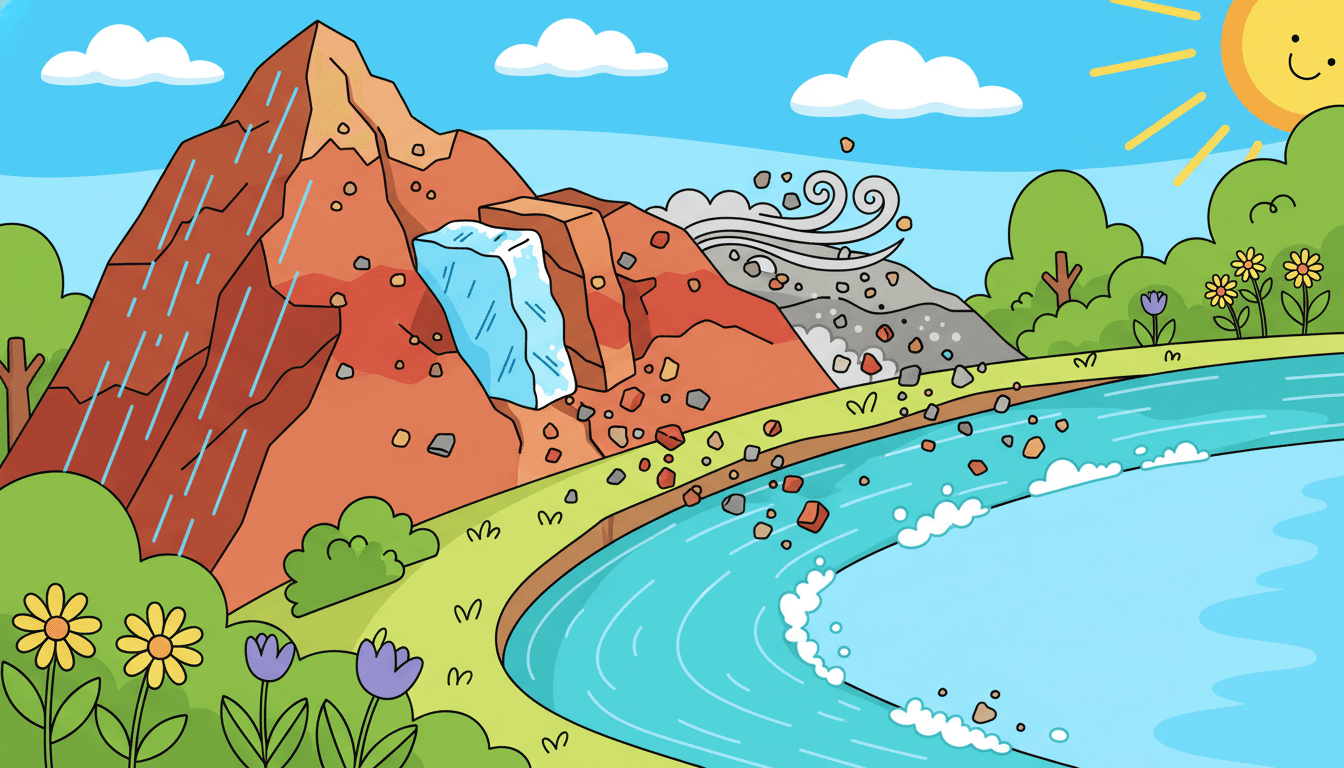
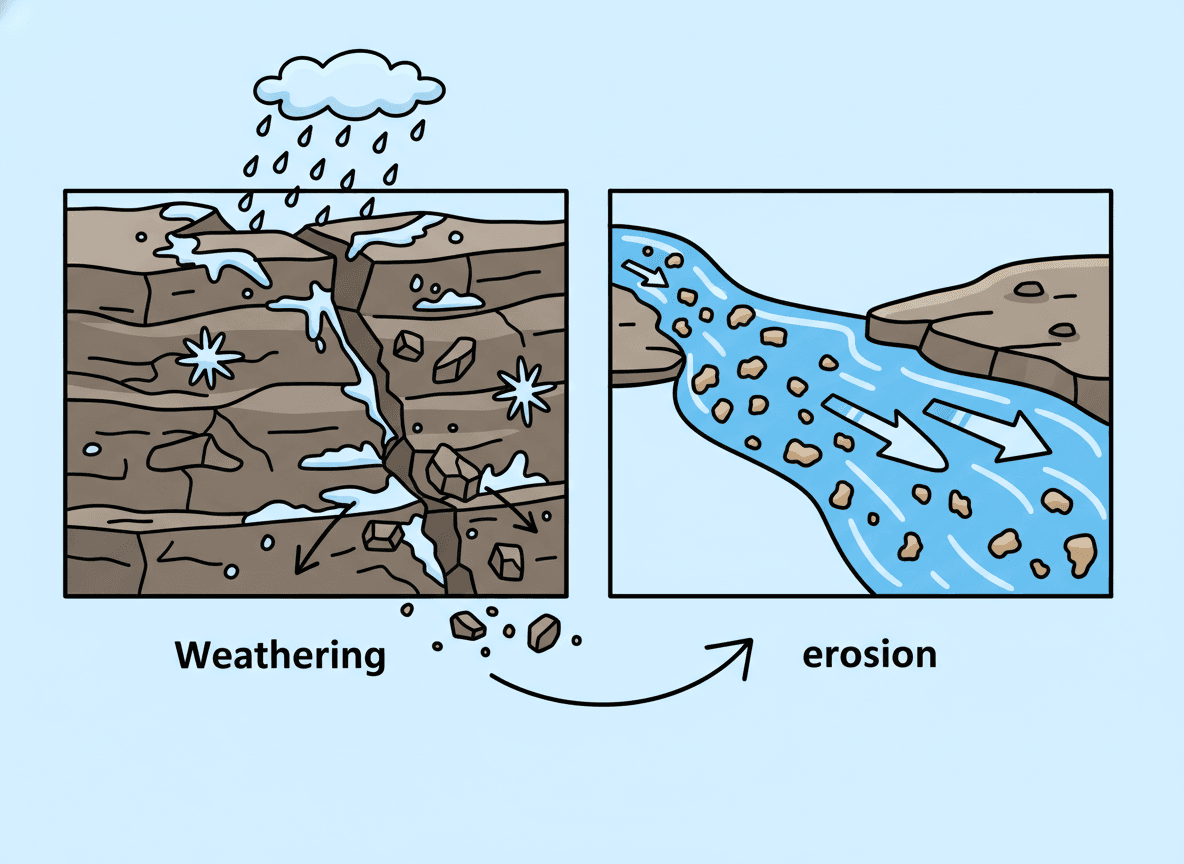
- Weathering is the process by which rocks are broken down into smaller pieces by physical or chemical forces - the rock stays in place.
- Erosion is the movement of weathered material (sediment) from one place to another by water, wind, ice, or gravity.
- Deposition is the settling of eroded material in a new location - the three processes (weathering, erosion, deposition) work together to shape Earth's surface.
What Are Weathering and Erosion?
Weathering, erosion, and deposition are three connected geological processes that work together over millions of years to shape Earth's surface - carving canyons, building beaches, forming river deltas, and creating the landscapes we see today.
Weathering: Breaking Down Rocks
Weathering is the process by which rocks are broken down into smaller pieces called sediment (gravel, sand, silt, clay). The rock breaks apart or changes, but the material stays roughly in place.
There are two types of weathering:
Physical (Mechanical) Weathering
The rock is broken into smaller pieces without changing its chemical composition.
****Water (ice): Water seeps into cracks; when it freezes it expands, widening cracks (ice wedging/frost action)
Wind: Carries particles that scrape and abrade rock surfaces (sandblasting effect)
Temperature changes: Rock expands when hot, contracts when cold - repeated cycles cause cracking
Plant roots: Roots grow into cracks and pry rock apart
Animals: Burrowing and digging break rock and loosen soil
Chemical Weathering
The rock is changed by a chemical reaction that alters its mineral composition.
Dissolution: Limestone dissolves in slightly acidic rainwater, forming caves and sinkholes
Oxidation: Iron in rocks reacts with oxygen and water to form rust-colored iron oxides
Carbonation: Carbon dioxide in water forms carbonic acid, dissolving calcium carbonate rocks
Erosion: Moving the Pieces
Erosion is the movement of weathered rock and soil from one location to another, carried by agents of erosion:
****Water (rivers/streams): Rock and soil - Colorado River carved the Grand Canyon
Waves: Coastal rock and sand - Cliff erosion along ocean shores
Wind: Dry soil and sand - Sand dunes, dust storms
****Ice (glaciers): Rock and sediment - U-shaped valleys
Gravity: Soil and rock - Landslides, mudflows
Deposition: Settling in New Places
Deposition occurs when the agent of erosion slows down and drops the sediment it was carrying.
Examples:
- A river slows near its mouth → deposits sediment → forms a delta (like the Mississippi River Delta)
- Wind drops sand → builds a sand dune
- A glacier melts → deposits rocky debris called a moraine
How These Processes Work Together
Rock → WEATHERING (broken down) → EROSION (carried away) → DEPOSITION (settled)
Over millions of years, these three processes:
- Carved the Grand Canyon (Colorado River erosion)
- Created the beaches along coastlines (wave erosion and deposition)
- Built the Mississippi River Delta (river deposition)
- Formed river valleys and gorges
Preventing Erosion
Erosion can be harmful to farmland, communities, and ecosystems. Methods to slow it:
-
Plant vegetation - roots hold soil in place
-
Contour farming - plowing across slopes instead of up and down
-
Retaining walls - structures that hold back soil
-
Windbreaks - rows of trees that slow wind
Practice Activities
- Erosion simulation: build a small hill of soil in a tray; pour water slowly over it; observe how the water moves and deposits soil at the bottom.
- Compare photos of the Grand Canyon, sand dunes, and a river delta - identify which processes shaped each landform.
- Sort "weathering vs. erosion vs. deposition" scenario cards into the correct category.
- Investigate local erosion: examine a stream or hill near school and identify evidence of erosion (undercut banks, exposed roots, sediment deposits).
- Research and present: pick one major landform (e.g., river delta, sand dune, limestone cave) and explain how weathering, erosion, and deposition created it.
Frequently Asked Questions
What is the difference between weathering and erosion?
Weathering BREAKS rocks down - the rock crumbles, cracks, or dissolves, but the resulting material stays roughly in place. Erosion MOVES the broken pieces - water, wind, ice, or gravity carries the sediment to a new location. A helpful memory trick: weathering is like 'wearing away' (breakdown); erosion is like 'erasing from the map' (removal and movement).
What is chemical weathering?
Chemical weathering occurs when the chemical composition of a rock changes due to reactions with water, oxygen, acids, or other chemicals. Examples: limestone dissolving in acidic rainwater (forming caves), iron in rocks rusting (oxidation), and plant roots releasing acids that break down rock. The rock changes in composition, not just size.
What is deposition?
Deposition is the process by which eroded material (sediment) is dropped and settles in a new location when the force carrying it slows down or stops. Rivers deposit sediment at their mouths, forming deltas. Wind deposits sand to form dunes. Glaciers deposit rock debris called moraines. Deposition builds up new land over time.
Free Weathering and Erosion Worksheets
Curriculum-aligned printable worksheets for 4th – 5th Grade. Download free.


