What Is a Word Wall?
Taught in US schools
Key Takeaways
- A word wall is an organized classroom display of key words students reference during reading and writing.
- Common word walls feature high-frequency sight words organized alphabetically.
- Word walls can also be content-specific: vocabulary words for a science unit, math terms, story words.
- Word walls are most effective when they are interactive - used actively, not just posted.
What Is a Word Wall?
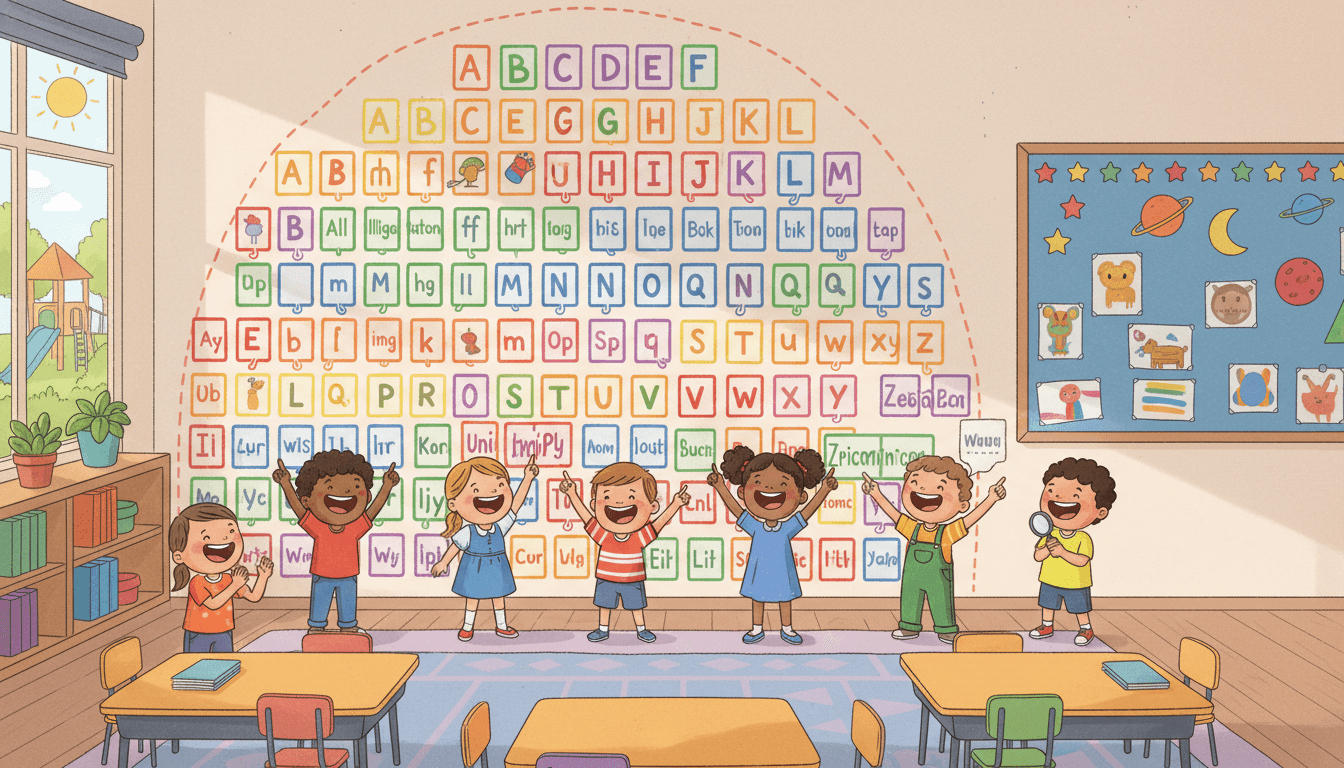
A word wall is a classroom display of important words, organized for easy access and reference. It is posted prominently on a wall or bulletin board at students' eye level and serves as a permanent, visible reference during reading and writing activities.
The most common type of word wall features high-frequency sight words - words that appear most often in texts and that students should recognize instantly. Content word walls add vocabulary specific to a topic or subject area.
Types of Word Walls
Sight word wall: High-frequency words arranged alphabetically (Dolch or Fry sight word lists). Added gradually, 3-5 words at a time. Common in K-2 classrooms.
Vocabulary word wall: Key words from a current reading unit, topic, or genre. Often thematic - words from a current novel, science unit, or social studies topic.
Math word wall: Mathematical terms organized by concept (multiplication, fractions, geometry). Helpful in all elementary grades.
Content area word wall: Science, social studies, or other subject-area vocabulary during a unit of study.
Student-generated word wall: Words students have found interesting or challenging in their independent reading - empowers student voice in vocabulary selection.
Making Word Walls Interactive
A word wall only works if students use it. Strategies for active engagement:
-
Word wall warm-up: Daily 5-minute practice - teacher calls a word, students find it, spell it, write it.
-
Word wall walking: Students read every word on the wall during transitions.
-
Word wall games: Word wall bingo, "I'm thinking of a word that...," around-the-room scavenger hunts.
-
Reference during writing: Students explicitly check the word wall before asking the teacher how to spell a word.
-
Word wall connections: When a word from the wall appears in reading, students point it out.
What Grade Are Word Walls For?
Kindergarten–1st grade: Primary use for high-frequency sight words. Students build automatic recognition of the most common words.
2nd–3rd grade: Continue with sight words; begin content vocabulary walls for science and social studies.
4th–5th grade: Word walls shift to academic vocabulary and content-area terms. The concept remains the same; the words become more complex.
Common Misconceptions
Word walls are just decoration: A word wall that students never reference is indeed just decoration. Regular, intentional use - through games, warm-ups, and writing practice - is what makes a word wall valuable.
All words should go on the wall: Selectivity matters. A wall crowded with hundreds of words is unusable. Choose the most important, most frequently needed words. Add new words only after older ones are solidly known.
Word walls are only for struggling readers: All students benefit from having vocabulary visible and accessible. Word walls support vocabulary development, spelling, and writing for students at every level.
Practice Activities
-
Word wall addition ceremony: When a new word is added, class reads it together, spells it together, and writes it in notebooks.
-
Alphabetical addition: Students help decide which section of the wall a new word goes in.
-
Speed read: Class reads every word on the wall as fast as possible - time yourself and try to beat your record.
-
Sentence starters: Teacher frames word wall words in sentence starters; students finish with original thoughts.
-
Word wall writing: Students use 5 word wall words in one original story or paragraph.
Frequently Asked Questions
What is a word wall?
A word wall is a classroom wall display featuring important words, typically arranged alphabetically or by category. The most common type features high-frequency sight words (the, and, said, because, they) that appear often in texts and that students should learn to read and write automatically. Word walls serve as a permanent reference students can consult during independent reading and writing.
Why are word walls important?
Word walls make vocabulary visible and accessible at all times. Students who need a word during writing don't have to ask the teacher or search through a book - they look up at the wall. This independence is especially important for developing readers and writers. Word walls also signal that words and language are valued in the classroom environment.
What words go on a word wall?
The most common word wall type features high-frequency words (Dolch or Fry sight words) added gradually, one letter at a time. Content word walls display key vocabulary from a unit or subject (e.g., science words: hypothesis, observation, variable). Academic vocabulary walls feature tier 2 words important across subjects (analyze, conclude, evidence). Many classrooms have multiple targeted word walls.
How should teachers add words to a word wall?
Words should be introduced explicitly before going on the wall: teach the word, practice reading and writing it, then add it to the wall with ceremony. Adding 3-5 words at a time (not all at once) allows students to actually learn each word. Words should be written large enough to read from anywhere in the room. Color and font can help distinguish word families or categories.
How do students use the word wall actively?
Active word wall strategies: Students look for words on the wall during independent writing. Teachers conduct 'word wall warm-ups' - chanting, clapping, spelling, and reading words from the wall at the start of each day. Students play games using word wall words. Teachers use word wall words in sentence frames and discussions. The wall is referenced constantly, not just displayed.
Free Word Wall Worksheets
Curriculum-aligned printable worksheets for Kindergarten – 3rd Grade. Download free.