What Is Vocabulary?
Taught in US schools

Key Takeaways
- Vocabulary knowledge strongly predicts reading comprehension - you can't understand text whose words you don't know.
- There are four types: listening, speaking, reading, and writing vocabulary - in that developmental order.
- Tier 2 words (sophisticated, cross-domain: 'analyze,' 'summarize,' 'adjacent') are the most important to teach explicitly.
- Deep word knowledge means knowing a word in multiple contexts - not just a definition.
What Is Vocabulary?
Vocabulary is the collection of words a person knows and can use. In reading, it specifically refers to knowing word meanings well enough to understand what you read.
There are four types of vocabulary, in developmental order:
- Listening vocabulary - words understood when heard (develops first)
- Speaking vocabulary - words used in conversation
- Reading vocabulary - words recognized in print
- Writing vocabulary - words used in writing (develops last)
Building vocabulary is not just learning definitions - it's building rich, flexible knowledge of how words work in context.
The Three-Tier Model
Research by Beck, McKeown, and Kucan identifies three tiers of word importance:
Tier 1 - Basic words: Everyday words children typically know by kindergarten: dog, run, happy, big. Rarely need explicit instruction.
Tier 2 - Academic vocabulary: High-frequency words that appear in written texts across all subjects: analyze, significant, contrast, accumulate, justify, elaborate. Critical for academic success. Highest priority for direct instruction.
Tier 3 - Domain-specific words: Technical terms for specific content areas: photosynthesis, denominator, amendment. Taught within subject areas as they arise.
The most valuable vocabulary instruction targets Tier 2 words - they appear constantly in academic reading across all grades and subjects.
How Vocabulary Is Learned
Wide reading is the primary source of vocabulary growth - children learning 3,000-5,000 new word meanings per year, most from reading. Students who read extensively outpace non-readers in vocabulary by thousands of words.
Explicit instruction accounts for about 300-400 words per year but provides deeper knowledge than incidental acquisition.
Root word knowledge (Latin and Greek roots, prefixes, suffixes) multiplies vocabulary. Knowing that bio = life unlocks biology, biography, biodiversity, antibiotics.
Depth of Word Knowledge
Knowing a word exists on a spectrum:
-
Level 1: Never heard it
-
Level 2: Seen it; no meaning
-
Level 3: Vague sense in one context
-
Level 4: Knows definition, can use it accurately
-
Level 5: Rich knowledge - connotations, variations, collocations
Explicit instruction should target Level 4-5 for Tier 2 words. Dictionary definitions alone rarely get past Level 3.
What Grade Do Kids Learn Vocabulary?
Vocabulary development spans all grades. The Common Core Language Standards (L.K-5.4-6) address:
K-2: Use context to clarify word meaning; understand common prefixes/suffixes; use glossaries; distinguish shades of meaning (big/huge/gigantic).
3rd-5th Grade: Use a range of context clue types; understand figurative language (idioms, metaphors); use roots and affixes to determine meaning; distinguish among word relationships (synonyms, antonyms, homonyms).
Common Misconceptions
"Vocabulary instruction means teaching definitions." A definition is the starting point. Deep knowledge requires using the word in multiple contexts over time - 10-12 meaningful encounters for most Tier 2 words.
"Look it up in the dictionary." Dictionary definitions are often circular or technical and don't build usable word knowledge. Context + instruction + practice builds vocabulary.
"Good vocabulary is about knowing big words." Academic vocabulary (Tier 2) matters more than obscure or fancy words. Students need the words that appear constantly in textbooks and tests.
Practice Activities
-
Word web: Center: the word. Branches: definition, synonyms, antonyms, sentence, illustration. Builds multiple connections.
-
Frayer model: 4 quadrants - definition, characteristics, examples, non-examples.
-
Word sorts: Sort vocabulary words into categories - morphologically, conceptually, or by part of speech.
-
Vocabulary journals: Students track new words, write sentences, illustrate meanings.
-
Read-aloud with word stops: Read aloud and pause briefly at Tier 2 words to name and contextualize them - builds listening vocabulary.
-
Root word wall: Display Latin/Greek roots with example words; add new words as they appear.
Frequently Asked Questions
What are Tier 1, Tier 2, and Tier 3 words?
Tier 1 (basic words): Common, everyday words most children know by school entry: 'dog,' 'run,' 'happy.' Rarely need direct instruction. Tier 2 (academic vocabulary): High-frequency, cross-domain words used in written language across many subjects: 'analyze,' 'significant,' 'contrast,' 'accumulate,' 'inevitable.' These appear constantly in academic texts and are the highest priority for explicit instruction. Tier 3 (domain-specific words): Technical terms within a content area: 'photosynthesis,' 'denominator,' 'amendment.' Taught within the subject area as they're encountered.
How many words do children learn per year?
Children learn an estimated 3,000-5,000 new word meanings per year during elementary school, primarily through reading and listening. However, only about 300-400 words per year are learned through explicit instruction. The rest come from incidental exposure through wide reading. This is why reading volume matters enormously - a child who reads extensively encounters and absorbs tens of thousands of words that a non-reading child never encounters.
What is the difference between knowing a word and not knowing it?
Word knowledge exists on a spectrum, not a binary. Level 1: Never seen it. Level 2: Seen it but can't define it. Level 3: Vague sense of meaning in one context. Level 4: Knows the meaning and can use it accurately. Level 5: Rich, flexible knowledge - knows connotations, related forms, collocations, and can recognize nuance. Instruction should aim for Level 4-5 for Tier 2 words. A dictionary definition alone often produces only Level 2-3 knowledge.
What are the most effective vocabulary instruction strategies?
Wide reading: the primary source of vocabulary growth. Context clue instruction: teaches students to extract meaning from surrounding text. Explicit instruction in Tier 2 words: introducing words before reading, multiple encounters, using words in varied contexts. Semantic mapping/word webs: exploring word relationships. Root word instruction: Latin and Greek roots, prefixes, suffixes that unlock dozens of related words. Word sorts: organizing words by category or relationship. Multiple exposures over time - research suggests 10-12 meaningful encounters before a word is known at Level 4.
How does oral vocabulary connect to reading vocabulary?
Listening vocabulary (words understood when heard) develops first. Speaking vocabulary follows. Reading vocabulary lags for most children because written language uses rarer, more sophisticated words than everyday speech. A child who knows 'angry' orally can read it when they decode it - the sound matches the known word. But a child who encounters 'livid' in print needs to have heard it before, OR to use context clues, OR to be taught it directly. Building oral vocabulary through read-alouds expands the vocabulary available for decoding.
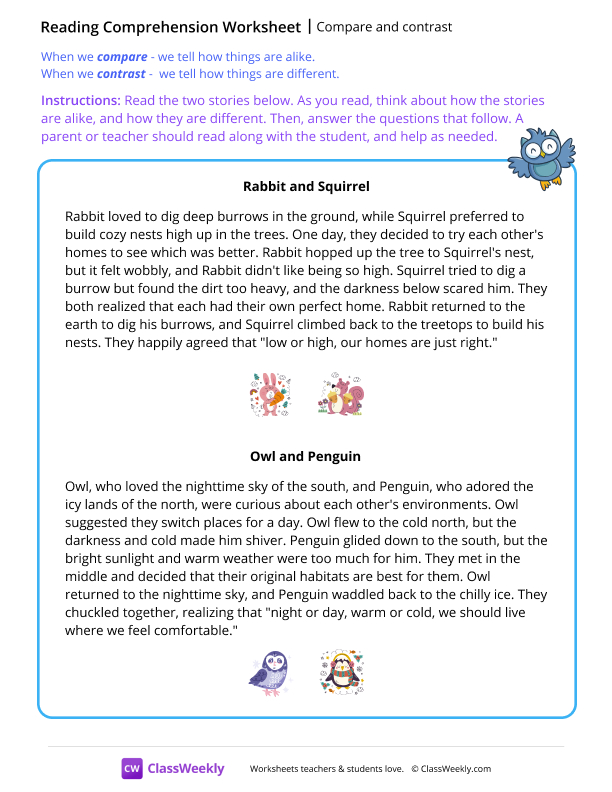
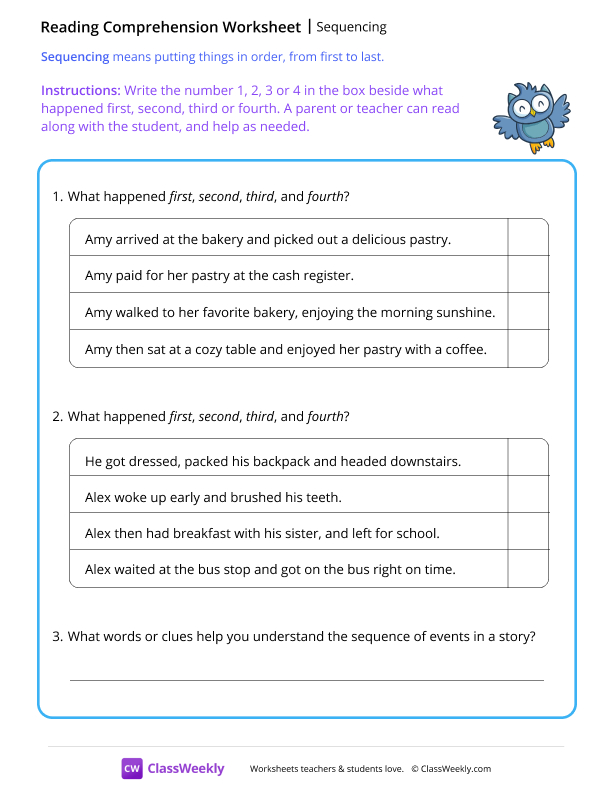
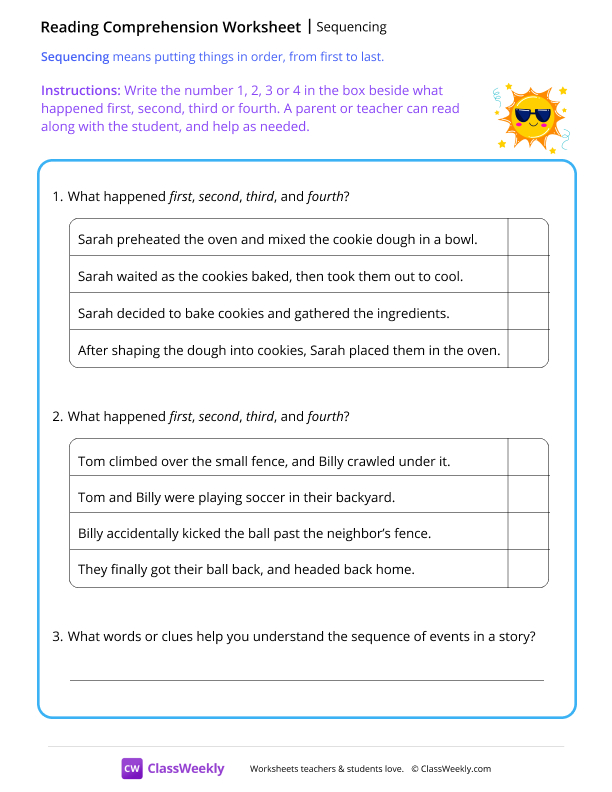
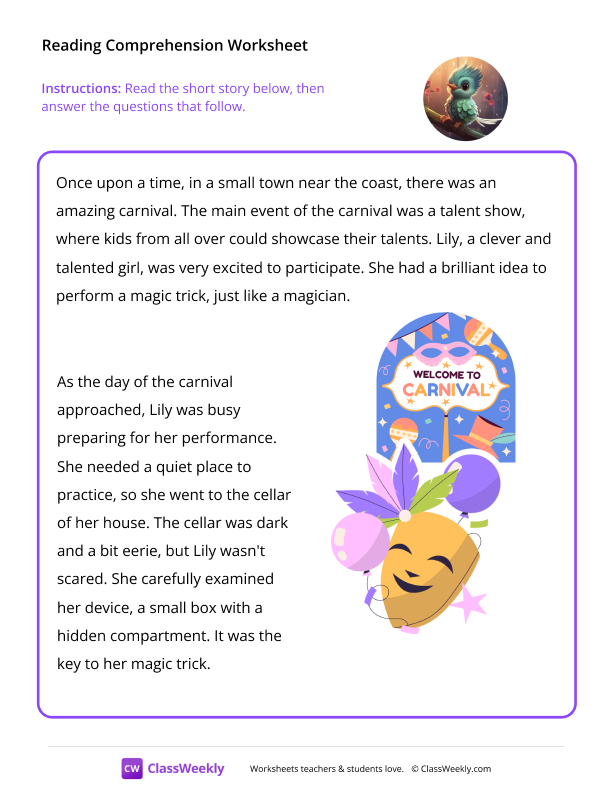
Free Vocabulary Worksheets
Curriculum-aligned printable worksheets for Kindergarten – 5th Grade. Download free.